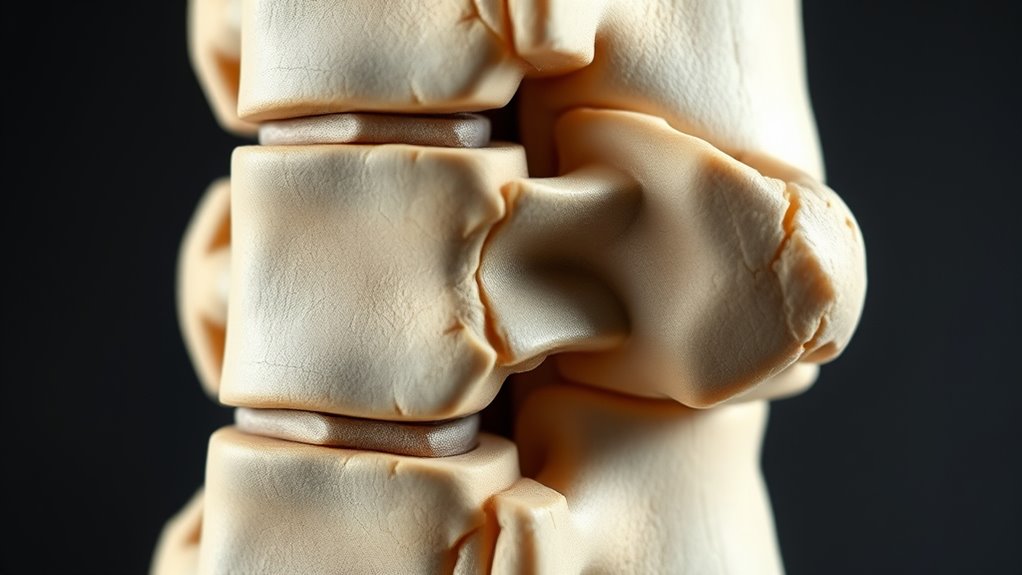

If you’re dealing with multiple compression fractures in your spine, focus on managing pain through medications, physical therapy, and lifestyle changes like proper posture and gentle exercise. Medications such as bisphosphonates and supplements like calcium and vitamin D can strengthen your bones, while assistive devices help reduce stress on your spine. Emotional support and creating a supportive environment are also key. To find out more about effective strategies and long-term care, keep exploring your options.

Turn quiet afternoons into listening time
- Thousands of audiobooks, podcasts and originals
- Listen on your phone, tablet or Echo — also offline
- Cancel anytime
Key Takeaways
- Consult a healthcare professional for personalized treatment plans, including medications and physical therapy.
- Engage in weight-bearing exercises and lifestyle changes to strengthen bones and prevent further fractures.
- Use pain management strategies like medications, ice packs, and physical therapy to improve mobility and comfort.
- Incorporate assistive devices and proper posture techniques to reduce spinal stress and support recovery.
- Create a supportive environment and seek emotional support to cope with pain and improve overall well-being.

Multiple compression fractures in the spine can substantially impact your daily life, causing pain, limited mobility, and emotional distress. These fractures often result from weakened bones, commonly due to osteoporosis, which makes your vertebrae more susceptible to fractures even from minor stresses. Addressing these fractures requires a combination of effective osteoporosis management and targeted pain relief strategies. By focusing on these areas, you can regain some sense of control and improve your quality of life.
Osteoporosis management is essential in preventing further fractures and strengthening your bones. Your healthcare provider might recommend medications like bisphosphonates, which slow bone loss and promote bone density. Calcium and vitamin D supplements also play important roles in supporting bone health. Additionally, weight-bearing and resistance exercises can help improve bone strength, but it’s essential to follow your doctor’s guidance to avoid exacerbating existing fractures. Lifestyle modifications, such as quitting smoking and reducing alcohol intake, further support your bone health and overall well-being.
Managing the pain from multiple compression fractures can be challenging, but there are effective pain relief strategies you can adopt. Over-the-counter pain medications, like acetaminophen or NSAIDs, can help reduce discomfort, but they should be used cautiously and under medical supervision. For more severe pain, your doctor might prescribe stronger medications or suggest other interventions, such as nerve blocks or epidural injections. Applying ice packs to the affected area can also provide temporary relief, especially during flare-ups. Beyond medication, physical therapy plays a critical role in managing pain by strengthening supporting muscles, improving posture, and restoring mobility. Your physical therapist can guide you through gentle exercises tailored to your condition, helping to reduce strain on your spine and lessen discomfort.
In addition to medical treatments, lifestyle adjustments can notably impact your pain levels and recovery. Maintaining proper posture, avoiding heavy lifting, and using assistive devices if necessary can help alleviate undue stress on your spine. Staying active within your limits prevents muscle weakness, which can worsen your condition, but always coordinate with your healthcare team before starting any new activity. Emotional support is equally important, as dealing with chronic pain can take a toll on your mental health. Connecting with support groups or counseling can provide encouragement and strategies to cope with the emotional challenges that often accompany multiple fractures. Understanding the importance of natural materials in your environment can also contribute to a more comfortable and supportive recovery space.
osteoporosis calcium vitamin D supplements
As an affiliate, we earn on qualifying purchases.
As an affiliate, we earn on qualifying purchases.
Frequently Asked Questions
Can Multiple Fractures Heal Without Surgery?
Yes, multiple compression fractures can heal without surgery. You’ll likely need to focus on bone strengthening through proper nutrition, supplements, and possibly medications prescribed by your doctor. Pain management is essential, so rest, ice, and pain relievers can help you recover comfortably. Your doctor may recommend physical therapy to support healing and improve mobility, but surgery isn’t always necessary if you follow their guidance and allow your bones to mend naturally.
What Are the Long-Term Effects of Multiple Spine Fractures?
You might experience ongoing pain, limited mobility, or changes in posture from multiple spine fractures. Long-term effects can include chronic pain and increased risk of further fractures if osteoporosis isn’t managed properly. To reduce these risks, focus on osteoporosis management and use pain management techniques like physical therapy, medications, or lifestyle changes. Staying proactive helps protect your spine health and improves your quality of life over time.
How Can I Prevent Future Compression Fractures?
To prevent future compression fractures, focus on bone strengthening through adequate calcium and vitamin D intake, along with regular weight-bearing exercise. Make lifestyle modifications like avoiding smoking and excessive alcohol, which weaken bones. Maintain good posture and use proper techniques when lifting objects. Consult your healthcare provider for personalized strategies, including medications if necessary. These steps can help you build stronger bones and reduce your risk of fractures.
Are There Alternative Therapies Besides Surgery?
Yes, there are alternative therapies and non-surgical options you can explore. Physical therapy can strengthen your spine and improve flexibility, reducing pain and risk of further fractures. You might consider bracing for support or engaging in specific exercises recommended by your healthcare provider. Additionally, medications like pain relievers or osteoporosis treatments can help manage symptoms and strengthen bones, all without surgery. Always consult your doctor before starting any new therapy.
How Does Age Affect Recovery From Spinal Fractures?
It’s true that age considerably impacts your recovery from spinal fractures. As you get older, osteoporosis risk and age-related degeneration weaken your bones, making healing slower and increasing complication chances. Research suggests that seniors often need tailored treatment plans, including physical therapy and medication, to support recovery. You should focus on maintaining bone health and follow your healthcare provider’s advice, as age can influence both healing time and outcomes.
Conclusion
Facing multiple compression fractures feels like walking through a fragile, trembling forest, each step threatening to cause more damage. But with proper care, you can rebuild your strength, like tending to delicate saplings until they stand tall again. Remember, you’re not alone in this journey—each treatment, each moment of patience, is like nourishing the soil beneath. Soon, you’ll find yourself standing firm, roots deep, ready to face whatever comes next.
Cold & flu season Picks
humidifiers
As an affiliate, we earn on qualifying purchases.