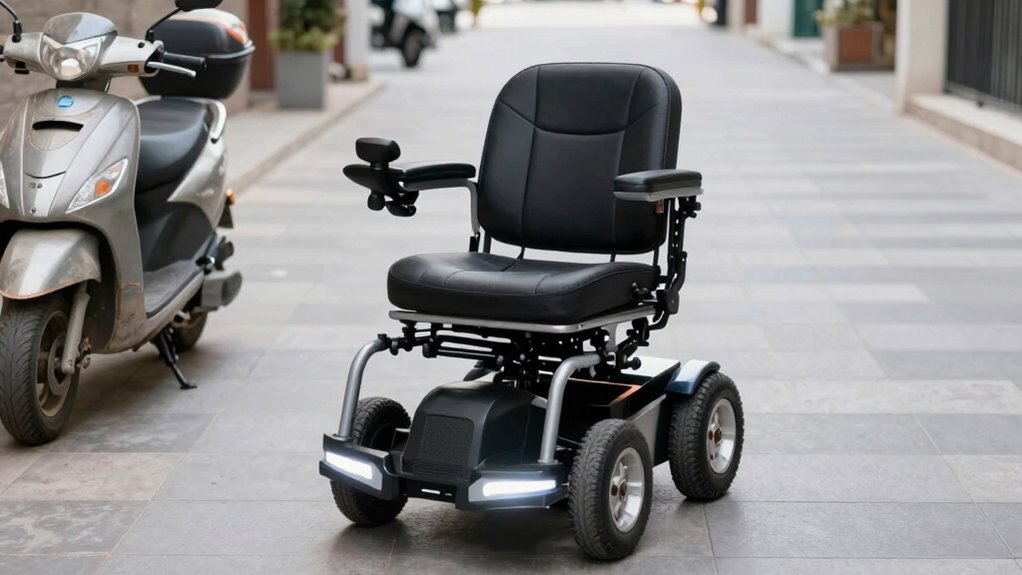

If you find your scooter struggles on uneven terrain, or you experience discomfort, instability, or limited maneuverability indoors, it may be time to contemplate a power chair. Signs like frequent breakdowns, safety concerns, or health changes indicate you need more support and control. Upgrading can improve comfort, stability, and independence. Keep exploring for a clearer understanding of when a power chair might be the better choice for your needs.

Turn quiet afternoons into listening time
- Thousands of audiobooks, podcasts and originals
- Listen on your phone, tablet or Echo — also offline
- Cancel anytime
Key Takeaways
- Difficulty handling uneven terrain or outdoor environments suggests a power chair’s better stability and suspension.
- User weight exceeding scooter capacity or frequent device breakdowns indicate the need for a more robust power chair.
- Persistent safety concerns, like instability or risk of tipping, favor a power chair’s enhanced support.
- Long outings requiring extended battery life and comfort often necessitate the features of a power chair.
- Limited indoor maneuverability and tight space navigation are better served by the precise control of a power chair.
power wheelchair with extended battery life
As an affiliate, we earn on qualifying purchases.
As an affiliate, we earn on qualifying purchases.
Is It Time to Switch From Your Scooter to a Power Chair?
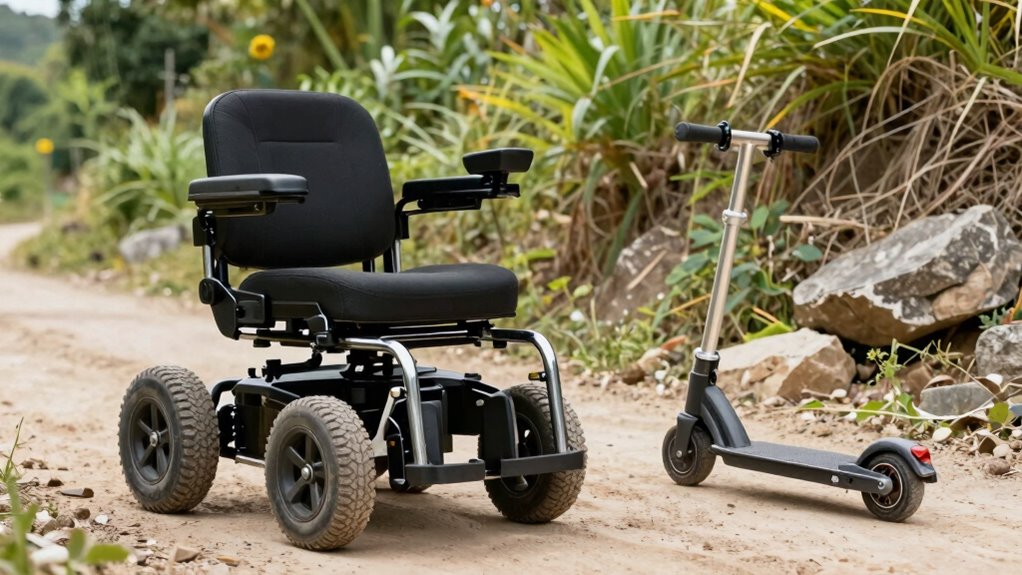
Deciding when to switch from a scooter to a power chair can considerably improve your comfort and mobility. One key factor is battery life; if your scooter’s battery drains quickly or struggles to hold a charge, it indicates you might benefit from a power chair with a larger, more reliable battery. Additionally, consider your user weight. If your weight exceeds your scooter’s capacity, it can cause performance issues, reduced battery life, and safety concerns. Power chairs are often better suited for individuals with higher weights, offering increased stability and support. If you find yourself frequently needing to recharge or experiencing difficulty with your scooter, it’s a sign that a switch to a power chair could enhance your daily mobility and comfort. Moreover, understanding the role of contrast ratio can help you select equipment that offers better visibility and ease of use in various environments. Recognizing performance limitations is also critical in making an informed decision about switching. Being aware of essential features can further guide you toward choosing the most suitable mobility aid for your needs, especially those designed for greater stability and support. Additionally, paying attention to vetted wave and wind features can ensure your equipment performs reliably in different weather conditions.
How Do You Know Your Scooter Isn’t Meeting Your Needs?

If your scooter no longer keeps up with your daily needs, it’s a clear sign that it might not be meeting your requirements. You may notice issues like decreased battery life, which limits how far you can travel before recharging. Additionally, limited transportation options can hinder your independence, especially if you struggle to navigate rough terrain or tight spaces. Other signs include difficulty maintaining speed, frequent breakdowns, or feeling unsafe on your scooter. If your current scooter no longer supports your lifestyle, it’s time to contemplate whether a power chair might be a better fit. Upgrading can provide improved stability, comfort, and a broader range of transportation options to meet your evolving needs. Safety considerations and proper maintenance are also crucial factors when choosing between a scooter and a power chair. Knowing the appropriate size and load capacity can help ensure your device safely meets your daily demands. Moreover, understanding the thermal behavior of your mobility device can influence its performance and longevity, especially when used in various outdoor environments. Being aware of device cooling needs can help prevent overheating and maintain optimal operation during extended use. Additionally, considering device durability can ensure your mobility device withstands outdoor conditions and regular use over time.
Signs You Need Better Support and Stability

When your scooter starts to feel unstable or you find yourself needing to make frequent adjustments to stay balanced, it’s a clear sign you require better support and stability. An ergonomic design is essential for maintaining proper posture and reducing strain during rides. If your scooter lacks this, you may feel discomfort or imbalance over time. Additionally, a decline in battery lifespan can indicate that your scooter isn’t providing consistent support, forcing you to compensate with poor posture or unstable movements. These issues highlight the need for a device that offers improved stability and ergonomic features. Upgrading to a power chair with better support ensures safety, reduces fatigue, and enhances your overall mobility experience. Paying attention to filtration and support systems can help you identify devices that meet your stability needs more effectively. Incorporating adaptive support features can further improve comfort and safety during extended use, especially as your support needs evolve over time. Recognizing signs like postural alignment issues can also guide you toward more suitable mobility devices.
Are Comfort Issues Making Your Scooter Uncomfortable?

Comfort issues can substantially impact your riding experience, making every trip less enjoyable and more tiring. If your scooter’s seat cushion feels hard or causes discomfort, it’s a sign your seating might need an upgrade. An ergonomic design is vital for proper support and reducing fatigue during longer rides. Maximizing your truck bed’s potential involves understanding how to adapt your equipment for comfort and efficiency on the go. Consider these points: – Your seat cushion lacks sufficient padding or support – The current seat causes pressure points or soreness – The ergonomic design doesn’t conform to your body’s shape – Adjustments or replacements could improve overall comfort. Additionally, exploring ergonomic features in your seating can make a significant difference in comfort and support. Upgrading to a power chair with a better seat cushion and ergonomic features might be a better fit if these issues persist. Prioritizing comfort guarantees you stay relaxed and alert, making every trip smoother and more enjoyable. Incorporating pressure distribution technology can also help reduce soreness during extended rides. Recognizing the importance of personalized seating options can further enhance your overall riding experience.
Do Terrain Challenges Make Your Scooter Difficult to Use?
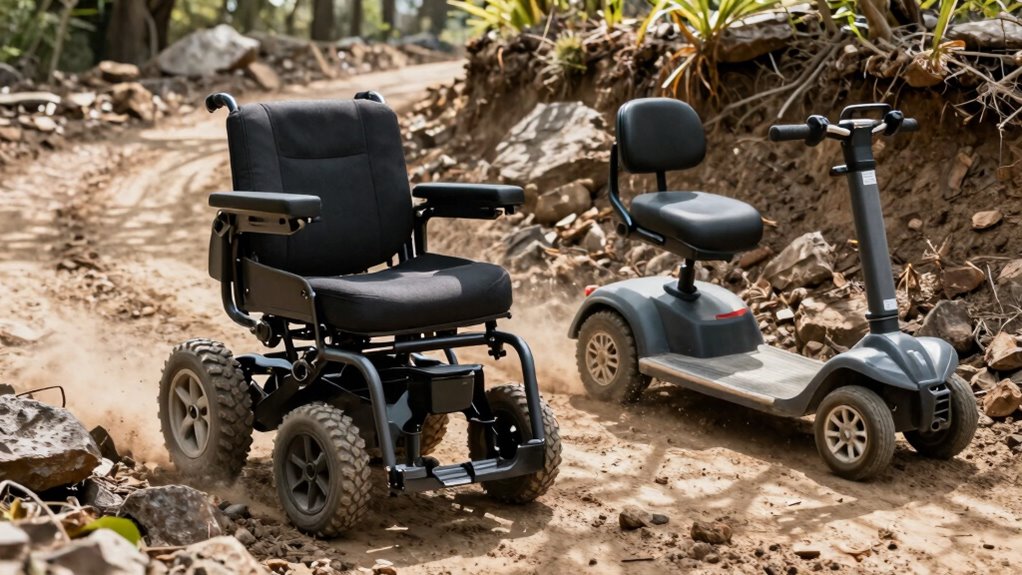
Even with a comfortable seat, challenging terrain can make your scooter difficult to handle. Terrain difficulties, like uneven surfaces, gravel, or steep inclines, can limit your mobility outdoors. These outdoor challenges often expose the scooter’s limitations, causing instability or slow progress. You might find yourself struggling on dirt paths, grass, or uneven sidewalks, which can be frustrating and even unsafe. Scooters are generally designed for smooth, paved surfaces, so rough terrain can reduce control and increase the risk of tipping or getting stuck. If outdoor terrain presents consistent obstacles, a power chair with better stability, larger wheels, and enhanced suspension might be a smarter choice. Recognizing how terrain difficulties impact your scooter’s performance is key to making the right mobility decision. Additionally, best exterior home security cameras of 2024 are built to withstand outdoor conditions, much like power chairs designed for rough terrain. Being aware of mobility device capabilities can help you select the most suitable option for your outdoor needs. Understanding terrain adaptability can further guide your decision-making process when choosing between a scooter and a power chair. Considering wheel size and suspension can also improve your outdoor experience and safety. Moreover, insulated jackets for winter can help keep you warm if outdoor conditions become cold and harsh.
Are Scooters Less Practical in Indoor or Tight Spaces?
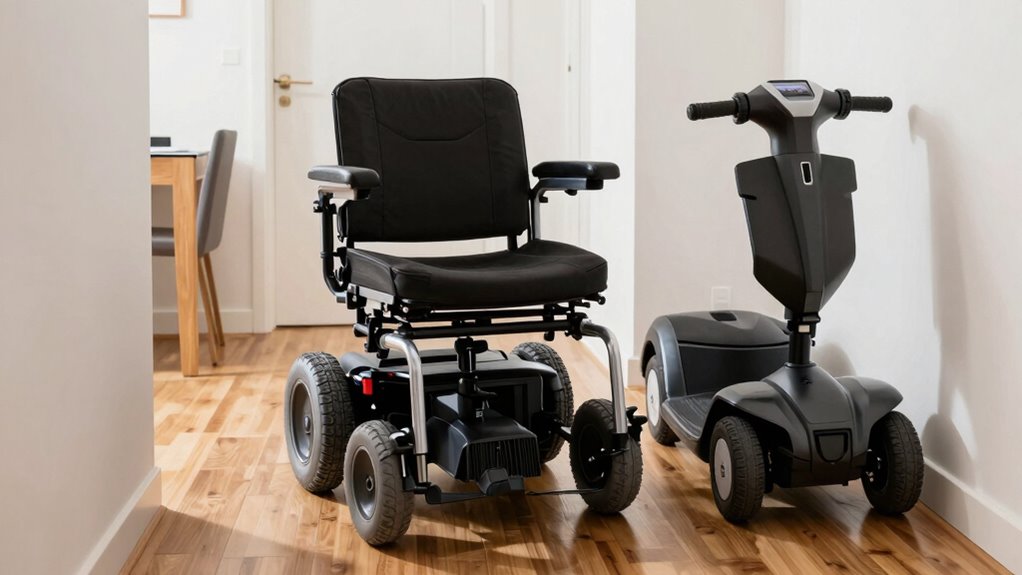
Are scooters less practical when maneuvering indoor or tight spaces? If you frequently navigate narrow hallways or crowded rooms, a scooter’s larger size can hinder indoor maneuverability. You might find it challenging to turn sharply or fit through tight doorways. Poor tight space navigation can make daily tasks frustrating and even unsafe. Consider these factors:
- Limited turning radius restricts smooth indoor navigation
- Larger footprint makes fitting into tight spaces difficult
- Reduced agility hampers quick adjustments in confined areas
- Smaller, more precise movements are harder with a scooter
- Navigation and mapping capabilities are typically less sophisticated in scooters, impacting their effectiveness indoors
- Additionally, the indoor maneuverability of a scooter can be significantly affected by its design and weight distribution, further complicating tight space navigation
If indoor maneuverability is a priority, a power chair often offers better control and easier navigation through tight spaces. Scooters tend to be less practical when space is restricted, making a power chair a smarter choice for indoor use.
Is Safety Being Compromised When Using a Scooter?
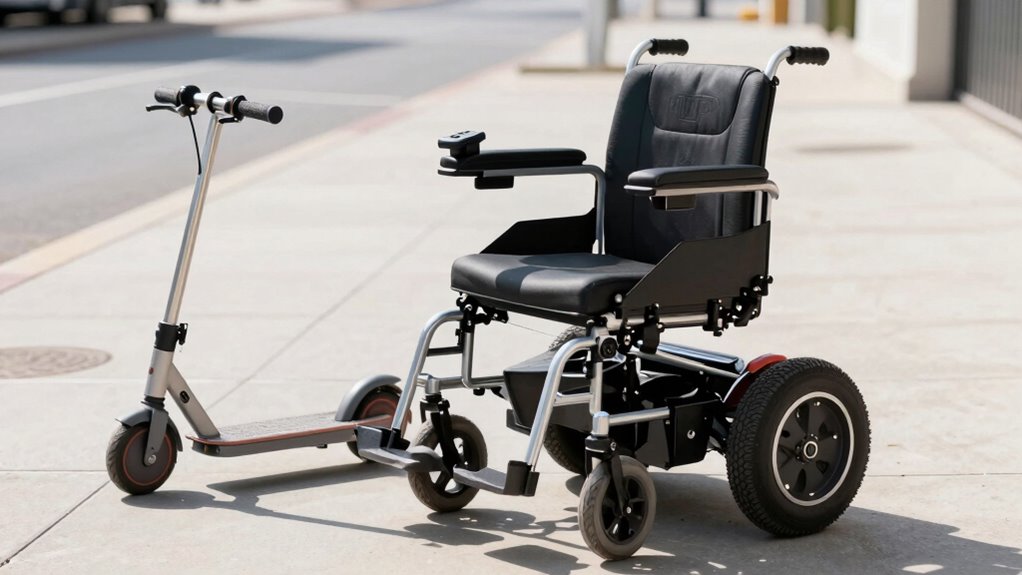
Using a scooter can sometimes raise safety concerns, especially if terrain affects stability or if your speed and control feel limited. You might find that uneven surfaces or tight turns make it harder to stay balanced. Are these factors putting your safety at risk?
Stability Concerns in Terrain
When steering uneven or challenging terrain, the stability of a scooter can become a real concern. Scooters often struggle with terrain adaptability, making you feel unsteady or at risk of tipping. Stability concerns arise when maneuvering gravel, grass, or inclines, especially if the scooter isn’t designed for rough surfaces. You might find yourself constantly adjusting your position or worried about losing control. To stay safe, consider these factors:
- Limited ground clearance reduces ability to handle rough terrain
- Narrow wheelbase affects overall stability
- Smaller tires struggle with uneven surfaces
- Lack of advanced suspension can cause jolts and instability
If terrain challenges threaten safety, a power chair with better stability features might be the right choice.
Speed and Control Limitations
While scooters offer convenience and portability, their speed and control limitations can raise safety concerns, especially in unpredictable environments. Many scooters have restricted battery life, which can suddenly leave you stranded if not monitored carefully. Their maneuverability is often less responsive, making quick adjustments difficult in crowded or uneven terrain. This can increase the risk of accidents, particularly at higher speeds or in tight spaces. If you require a consistent, controlled ride, these limitations can compromise your safety. Power chairs, on the other hand, typically provide better control with smoother acceleration and deceleration, and their batteries tend to last longer during extended use. Recognizing these speed and control constraints helps determine whether a scooter meets your needs or if a power chair is a safer, more reliable choice.
Have Your Health or Mobility Changed Significantly?
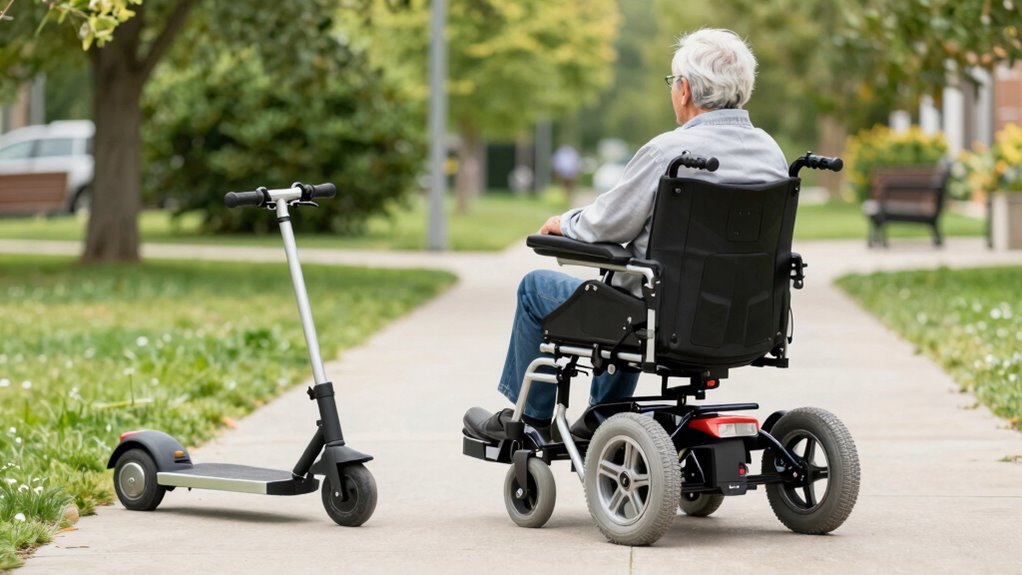
If your health or mobility has recently changed considerably, it’s important to reassess whether your current mobility device still meets your needs. You might find that your daily activities require different features or increased support. Changes could impact how you handle battery maintenance or storage tips, especially if you need to use your device more frequently or for longer periods. Consider whether your current scooter still provides sufficient comfort and stability, or if a power chair might better serve your new requirements. Upgrading can improve safety and independence. Keep an eye on:
If your mobility needs change, consider upgrading for better safety and comfort.
- Increased fatigue or pain during use
- Difficulty steering your environment
- Need for more precise control
- Battery performance issues due to increased use
Adjusting your mobility device ensures better functionality and safety.
What Are the Long-Term Benefits of Upgrading to a Power Chair?

Upgrading to a power chair can substantially boost your mobility and independence over time. You’ll also enjoy greater comfort and support, making daily activities easier and more comfortable. Plus, investing in a power chair can lead to long-term cost savings by reducing maintenance and replacement needs.
Enhanced Mobility and Independence
Choosing a power chair over a scooter can substantially boost your long-term mobility and independence. With better stability and control, you can navigate various environments more confidently. Power chairs often have improved battery life, allowing you to go longer without recharging, which enhances your ability to perform daily tasks. Their aesthetic design tends to look more streamlined and personalized, making you feel more comfortable and confident. You’ll find it easier to handle uneven terrain and tight spaces, expanding your freedom. Additionally, power chairs often include features like adjustable seating and better maneuverability, giving you greater control over your mobility. These benefits combine to help you stay active and independent for years to come.
- Longer battery life for extended outings
- Sleeker, more personalized aesthetic design
- Increased stability on different surfaces
- Greater control and maneuverability
Improved Comfort and Support
Investing in a power chair offers significant long-term comfort and support that can greatly enhance your quality of life. With ergonomic design and seating customization, you’ll experience better posture and reduced fatigue during extended use. Power chairs often feature adjustable cushions, lumbar support, and tailored configurations that adapt to your needs, unlike scooters. This personalized support minimizes pressure points and discomfort, helping prevent pain over time. The table below highlights key comfort features:
| Feature | Benefit |
|---|---|
| Ergonomic design | Promotes proper posture |
| Seating customization | Ensures tailored comfort |
| Adjustable components | Fits your body perfectly |
| Pressure relief | Reduces aches and pains |
These enhancements make long-term use more comfortable and support your overall well-being.
Long-Term Cost Savings
Although power chairs often have higher upfront costs, they can save you money in the long run by reducing maintenance expenses and replacing parts more efficiently. Power chairs typically require less frequent repairs and are designed for durability, which lowers ongoing costs. Proper battery maintenance guarantees longer-lasting power and reduces replacement frequency. Additionally, investing in good storage solutions helps protect your chair from environmental damage, extending its lifespan.
- Lower repair and replacement costs over time
- Better battery longevity with proper maintenance
- Increased durability reduces frequent replacements
- Efficient storage solutions prevent damage and extend lifespan
Frequently Asked Questions
Can a Power Chair Improve My Daily Mobility More Than a Scooter?
A power chair can improve your daily mobility more than a scooter if you need better support and comfort. Its ergonomic design helps reduce strain during longer use, and comfort features like adjustable seating make a big difference. Unlike scooters, power chairs offer superior stability and maneuverability indoors and on uneven terrain. If you value enhanced comfort and independence, a power chair might be the better choice for your daily needs.
What Features Differentiate a Power Chair From a Scooter?
Imagine the difference between a trusty steed and a nimble bicycle. A power chair features enhanced seating adjustability and longer battery life, making it ideal for all-day comfort and extended outings. Unlike scooters, power chairs typically have a more stable design, better maneuverability indoors, and customizable seating. If you need personalized support and extended independence, these features set power chairs apart from scooters, helping you stay mobile with ease.
Are Power Chairs More Cost-Effective Long-Term Than Scooters?
Yes, power chairs can be more cost-effective long-term than scooters. They often have better battery life, meaning fewer replacements and longer usage before charging or swapping batteries. Additionally, maintenance costs tend to be lower because power chairs are built for durability and stability, reducing repairs. While the initial investment might be higher, the overall savings on battery replacements and repairs make them a smarter choice for long-term use.
How Does Indoor Maneuverability Compare Between Power Chairs and Scooters?
Indoor maneuverability is a breeze with power chairs, giving you a tight grip on narrow spaces, thanks to their compact design aesthetics. They often have better battery efficiency for quick turns and precise control, making them feel like a natural extension of you. Scooters, on the other hand, may feel more like trying to fit a square peg in a round hole. Power chairs truly adapt to your indoor environment effortlessly.
When Should I Consult a Healthcare Professional About Switching Devices?
You should consult a healthcare professional when you notice your current mobility device no longer meets your needs. Schedule a medical evaluation or mobility assessment if you experience increased difficulty with movement, discomfort, or safety concerns. A professional can help determine if switching to a power chair is appropriate, ensuring you get the right device for your condition and maintaining your independence and safety.
Conclusion
Knowing when to switch from your scooter to a power chair is like tending a garden—you must recognize when your current tools no longer support your growth. If comfort, stability, or safety are slipping away, it’s time to upgrade. Don’t ignore these signs; instead, embrace the change as a sturdy bridge guiding you toward renewed independence. Your mobility journey deserves the right support—every step forward should feel like walking on solid ground.
Halloween Picks
halloween
As an affiliate, we earn on qualifying purchases.