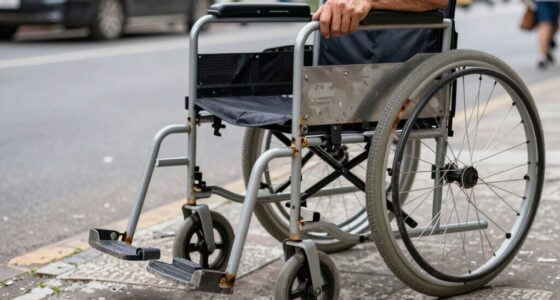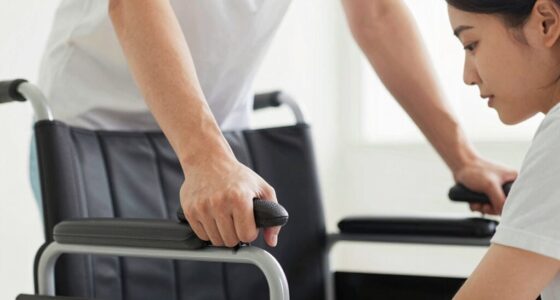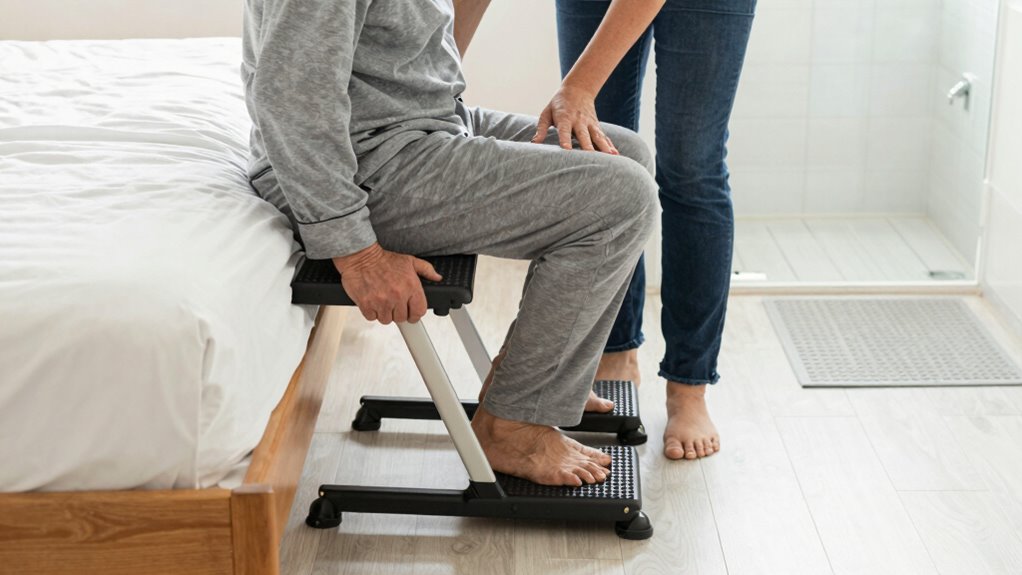
To make bedside to bathroom transfers safer, guarantee the area is clear of obstacles and use good lighting. Use proper technique by sitting up slowly, engaging your core, and moving at a steady pace. Support devices like grab bars, transfer belts, and non-slip mats boost stability. Seek help if needed and practice regularly to build confidence. Taking these steps reduces fall risks and keeps you safer; further tips can help make every transfer more secure.

Turn quiet afternoons into listening time
- Thousands of audiobooks, podcasts and originals
- Listen on your phone, tablet or Echo — also offline
- Cancel anytime
Key Takeaways
- Use assistive devices like grab bars and transfer belts for added support and stability.
- Ensure pathways are obstacle-free and well-lit to prevent trips and falls.
- Practice proper transfer techniques, including controlled movements and engaging core muscles.
- Seek caregiver assistance if strength or balance is limited for added safety.
- Take time, plan movements carefully, and avoid rushing to reduce fall risk during transfers.
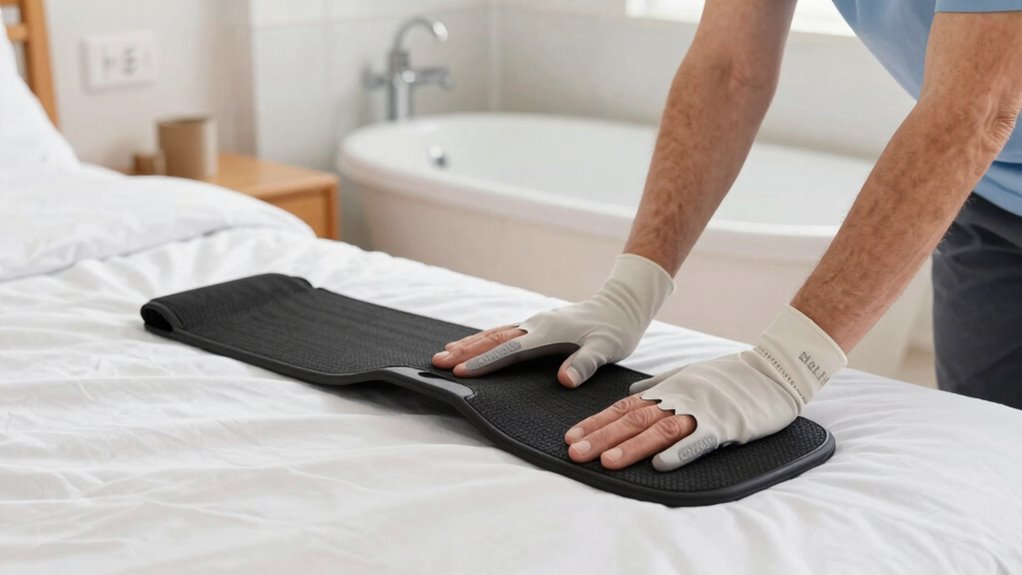
Moving safely from your bed to the bathroom is a common daily task that requires proper technique and awareness. When you approach this transfer with care, you reduce the risk of falls and make the process smoother. Fall prevention is key, especially if you have limited mobility or balance issues. To make these transfers safer, it’s important to plan ahead and use available support devices. Mobility assistance devices like grab bars, transfer belts, and non-slip mats can provide extra stability and confidence, helping you move more securely.
Before you start, ensure the area around your bed and bathroom is clear of obstacles. Good lighting is essential, so turn on the lights or use night lights to see clearly. Sitting up slowly from your bed helps prevent dizziness or lightheadedness, which can lead to falls. Once seated, place your feet flat on the floor and use your legs to push yourself into a standing position. If you have difficulty standing or feel unsteady, use a transfer belt around your waist for added support. Grip sturdy furniture or use grab bars if they’re available, and take your time to avoid rushing. Moving at a steady, controlled pace is crucial for fall prevention.
When you reach the edge of the bed, pause briefly to ensure you’re balanced before attempting to stand. Engage your core muscles and keep your back straight to maintain good posture and stability. If you’re using mobility assistance devices, position yourself close to your support tools, such as grab bars or a walker, before attempting to stand. Proper use of assistive devices can significantly enhance safety during transfers. Incorporating proper technique into your routine can also help prevent injuries and make the process more comfortable. Practicing these techniques regularly can also help improve your confidence and reduce the risk of accidents, especially when combined with proper planning and awareness of your surroundings. Additionally, understanding the importance of Biodiversity and conservation can contribute to creating safer, more sustainable environments for all, especially in settings like healthcare facilities.
As you approach the bathroom, continue to use support devices if needed. Keep your steps deliberate, and don’t rush through the transfer. If you’re using a walker, ensure it’s locked and positioned correctly. For individuals with limited strength or coordination, assistance from a caregiver can make a significant difference. They can help guide your movements, support your balance, and ensure you’re safe throughout the transfer. Remember, the goal is to minimize the risk of falls by using proper technique, planning your movements, and leveraging mobility assistance devices. With patience and caution, you can make your bedside to bathroom transfers safer and less stressful.
As an affiliate, we earn on qualifying purchases.
Frequently Asked Questions
What Are Common Errors During Bedside to Bathroom Transfers?
A common error during bedside to bathroom transfers is neglecting proper patient communication, which can lead to confusion or fear. You might also misuse transfer equipment, like not securing the gait belt or failing to check wheel locks. Always guarantee you’re clear with the patient, explaining each step, and double-check that transfer devices are correctly positioned. These actions help prevent falls and make the transfer safer for both of you.
How Do Transfer Techniques Vary for Different Mobility Levels?
For different mobility levels, your transfer techniques vary based on strength and stability. If you have limited mobility, you’ll rely more on assistive devices like walkers or grab bars, and proper transfer education helps guarantee safety. For those with better mobility, you can use less assistance but still focus on correct posture and technique. Always adapt your approach to each person’s needs, prioritizing safety and comfort during transfers.
Are There Specific Safety Devices Recommended for Transfers?
Think of safety devices as your trusted allies in a brave voyage. You should use assistive devices like transfer belts, grab bars, and gait belts to guarantee stability. Always follow safety guidelines to prevent falls and injuries. These devices act like sturdy anchors, giving you confidence and security during transfers. Incorporating them into your routine makes each move safer, protecting you like a loyal companion on your journey to independence.
How Can Caregivers Prevent Falls During Transfers?
You can prevent falls during transfers by using assistive devices like grab bars, transfer belts, and sliding boards. Make environmental adjustments such as ensuring the bathroom floor is dry, well-lit, and clutter-free. Always position yourself securely, communicate clearly with the person you’re assisting, and encourage them to use their strength and balance. These steps help create a safer environment and reduce the risk of falls during bedside to bathroom transfers.
What Training Is Needed for Proper Transfer Procedures?
You need thorough caregiver training to guarantee proper transfer procedures. This training should cover how to use transfer equipment like gait belts, slide boards, and hoyer lifts safely and effectively. You’ll learn proper body mechanics, communication techniques, and safety checks before each transfer. Regular refreshers help maintain skills and adapt to new equipment or patient needs, reducing fall risks and ensuring safer bedside to bathroom transfers.
Conclusion
By mastering safe bedside to bathroom transfers, you’re like a skilled navigator steering through calm waters, avoiding rough seas and potential pitfalls. With proper techniques, assistive devices, and clear communication, you can turn an intimidating task into a smooth journey. Remember, each safe transfer is a step toward greater independence and confidence. Keep practicing and stay mindful—your efforts help create a safer, more comfortable environment where you’re the captain of your own well-being.
Fall Picks
fall essentials
As an affiliate, we earn on qualifying purchases.