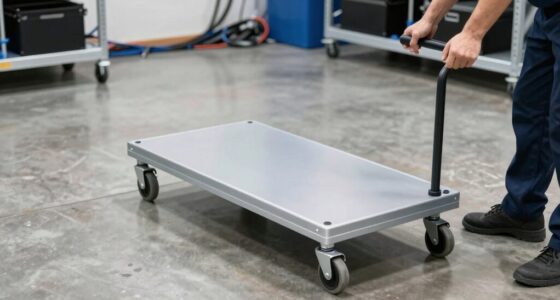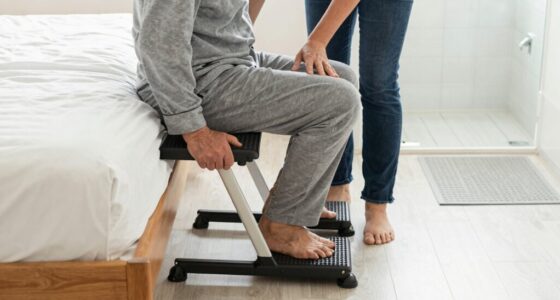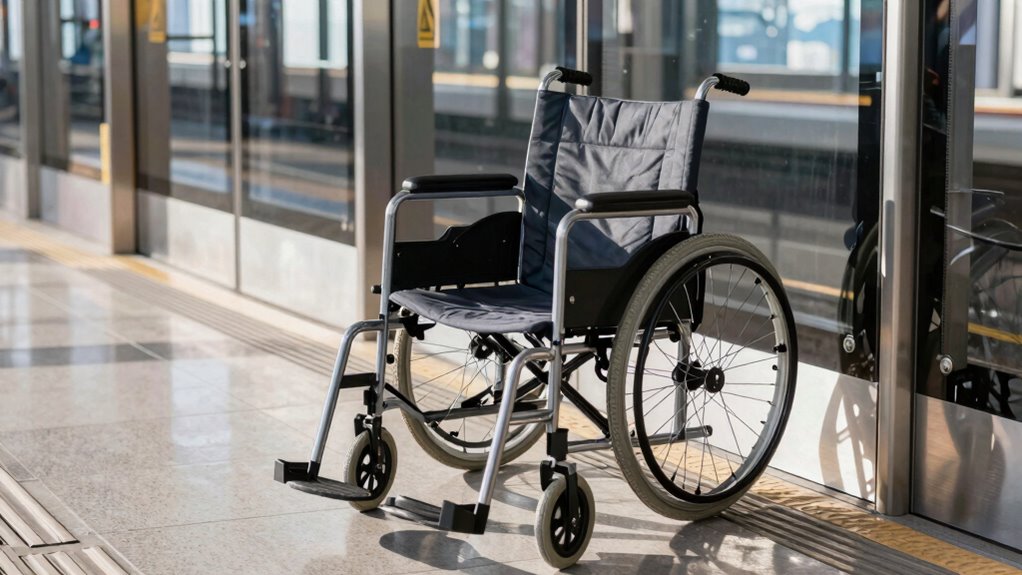

Transfer chairs fill the gap between wheelchairs and lifts by offering a portable and easy-to-use solution for transfers. They let you move safely and independently without needing complex equipment or electricity. Lightweight and foldable, they are perfect for limited spaces at home, in vehicles, or healthcare settings. Their ergonomic design keeps you comfortable and secure while reducing caregiver strain. To discover more about how they can help simplify your mobility routines, keep exploring the options available.

Turn quiet afternoons into listening time
- Thousands of audiobooks, podcasts and originals
- Listen on your phone, tablet or Echo — also offline
- Cancel anytime
Key Takeaways
- Transfer chairs offer a portable, manual alternative that bridges the gap between bulky lifts and traditional wheelchairs.
- They facilitate easier, safer transfers without requiring electricity or complex equipment.
- Their foldable, lightweight design allows use in tight spaces and easy transportation.
- Transfer chairs provide independence and reduce caregiver physical strain during transfers.
- They are versatile for various environments, ensuring safe mobility in homes, vehicles, or crowded areas.
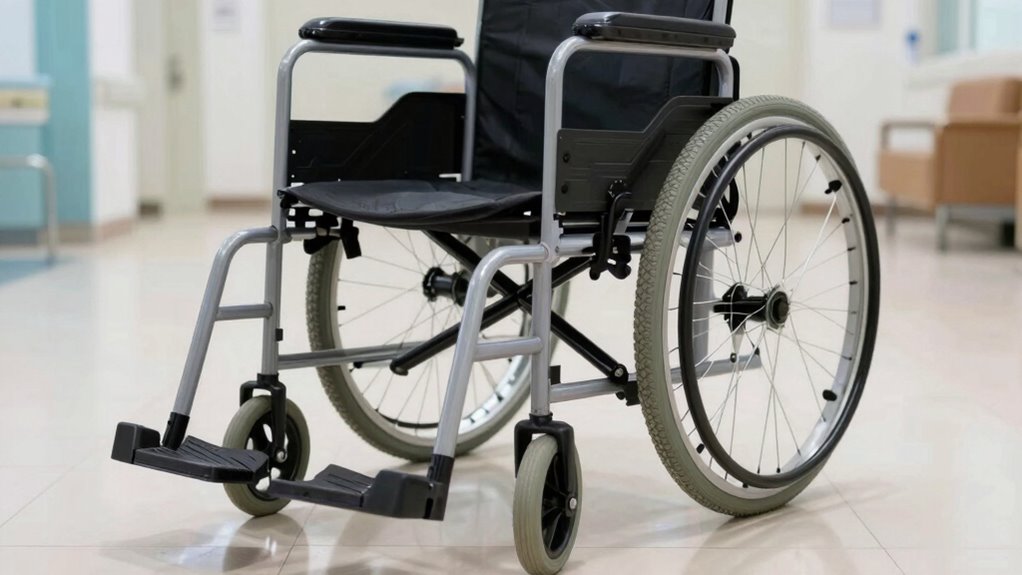
Have you ever wondered how to bridge the gap between traditional wheelchairs and full-sized lifts? That’s where transfer chairs come in, offering a practical solution that combines portability with functionality. Unlike bulky lifts, transfer chairs are designed to be lightweight and easy to maneuver, making them ideal for situations where a full-sized lift isn’t feasible. They provide a comfortable middle ground, allowing users to switch smoothly from a wheelchair to a vehicle or different seating arrangement without the need for complex equipment.
One of the key advantages of transfer chairs is their manual operation. You don’t need to rely on electricity or batteries; instead, you control the chair with your own strength. This makes them incredibly reliable, especially in environments where power sources might be limited or inconsistent. With manual operation, you have immediate control over the transfer process, giving you peace of mind knowing that you can operate the chair independently or assist someone else quickly and easily. It also simplifies maintenance, since there are fewer parts that can break or require servicing. Plus, manual transfer chairs tend to be more affordable, making them accessible for many users and caregivers.
Another feature that sets transfer chairs apart is their compact design. They’re built to be lightweight and foldable, so you can store or transport them with minimal effort. This shift is vital if you have limited space at home, in a vehicle, or at a healthcare facility. You don’t have to worry about bulky equipment taking up too much room or being difficult to handle. Instead, you can carry the transfer chair in your car trunk or store it discreetly when not in use. Their small footprint also makes them easier to maneuver through tight spaces, such as narrow doorways or crowded areas, which is often a challenge with larger lifts. Additionally, their design aligns with home safety principles by promoting easier, safer transfers in various environments. Incorporating a transfer chair into your mobility routine can enhance independence and reduce the physical strain on caregivers, making it a versatile addition to mobility solutions. Furthermore, their reliability and simplicity make them a preferred choice in many settings, ensuring consistent performance when it matters most. The ergonomic design of transfer chairs also helps prevent discomfort and strain during transfers, benefiting both users and caregivers. When choosing a transfer chair, understanding the lightweight and foldable features can significantly improve ease of use and storage options.
As an affiliate, we earn on qualifying purchases.
Frequently Asked Questions
Are Transfer Chairs Suitable for Outdoor Use?
Yes, transfer chairs can be suitable for outdoor use if they have good outdoor durability and weather resistance. Look for models with sturdy frames, rust-resistant materials, and non-slip wheels designed for uneven terrain. These features help guarantee safety and stability outside. However, not all transfer chairs are made for outdoor conditions, so double-check the product specifications to find one that can handle the elements and provide reliable support outdoors.
How Do Transfer Chairs Differ From Standard Wheelchairs?
Think of transfer chairs as the Swiss Army knives of mobility; they’re designed to bridge the gap. Unlike standard wheelchairs, transfer chairs prioritize safety features and ergonomic design, making transfers easier and more secure. They’re lighter, more maneuverable, and often have armrests and footrests that fold away. This makes them ideal for quick, safe transfers from a wheelchair to a bed or car seat, providing comfort and confidence where standard wheelchairs might fall short.
What Weight Capacity Do Transfer Chairs Typically Have?
Transfer chairs typically have weight limits around 250 to 350 pounds, depending on the model. You should consider material durability, as sturdy frames made from steel or reinforced aluminum support higher weight capacities. Always check the specific weight limits of the chair to guarantee safety and comfort. Choosing a transfer chair with appropriate weight capacity and durable materials helps provide reliable support during transfers, reducing the risk of damage or accidents.
Can Transfer Chairs Be Used on Stairs?
Transfer chairs generally aren’t designed for stair navigation, so you shouldn’t use them on stairs. They’re mainly meant for indoor mobility on flat surfaces, helping you move comfortably between chairs or beds. If stairs are involved, consider using stair lifts or stair-climbing wheelchairs instead. Transfer chairs excel at bridging the gap between wheelchairs and lifts, but for stairs, specialized equipment guarantees safety and ease of movement.
Are Transfer Chairs Easier to Transport Than Lifts?
Yes, transfer chairs are easier to transport than lifts, offering unmatched mobility convenience. You’ll find them lightweight and compact, making storage solutions simple for home or travel. Ironically, while lifts provide stair access, their bulkiness often complicates transport. Transfer chairs bridge that gap, giving you quick, portable mobility options without the hassle of heavy equipment, so you can move freely and store effortlessly wherever life takes you.
Conclusion
Transfer chairs seamlessly bridge the gap between wheelchairs and lifts, offering you a practical solution for easier mobility. Imagine this: over 60% of wheelchair users face daily challenges with transfers, yet many overlook transfer chairs as a game-changer. By choosing one, you gain independence and confidence, reducing strain on caregivers. So, next time you need to move comfortably and safely, remember that transfer chairs are designed to make your journey smoother, empowering you every step of the way.
Cold & flu season Picks
humidifiers
As an affiliate, we earn on qualifying purchases.