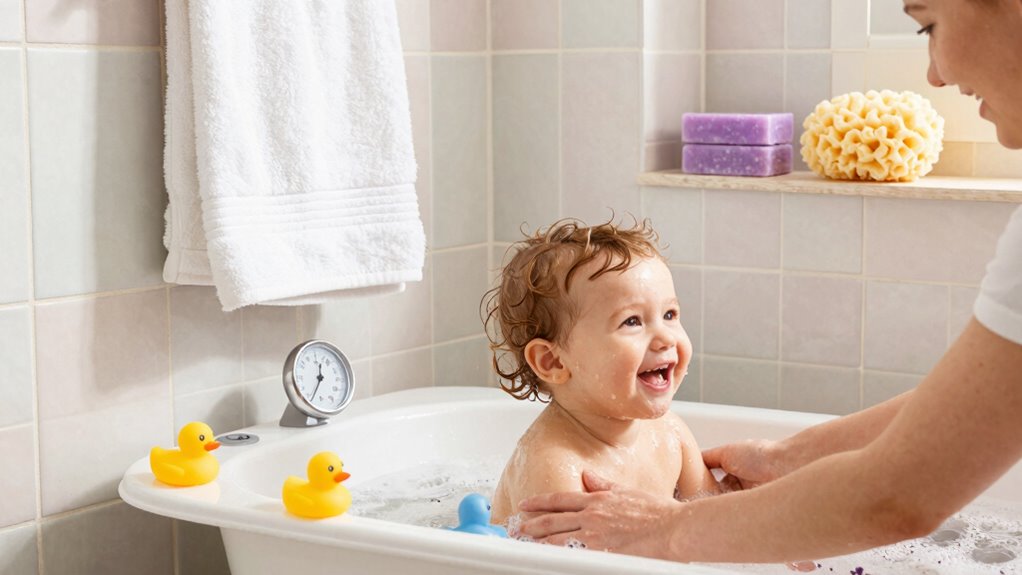

To make bath time less stressful, create a calm environment using soothing movements, calming scents, soft lighting, and minimal noise. Use gentle touch, reassuring words, and maintain eye contact to build trust. Prepare everything beforehand and stick to a predictable routine, explaining steps simply or singing. Take your time, pause if needed, and use distraction techniques. Focusing on patience and positive interactions helps turn bath time into a peaceful, bonding experience—discover more ways to make this easier.

Get comfort and care essentials delivered free — and shop member deals
- Fast, free delivery on millions of items
- Access to Prime Big Deal Days deals on October 6–7
- Prime Video, Amazon Music and more included
Key Takeaways
- Maintain a calm environment with soothing scents, soft lighting, and minimal noise to promote relaxation.
- Use gentle touch, reassuring words, and eye contact to foster a sense of safety and trust.
- Prepare all supplies beforehand and follow a consistent routine to reduce unpredictability and stress.
- Take your time, incorporate distraction techniques, and pause if the child becomes distressed.
- Build a positive routine gradually, emphasizing patience and familiar cues to create a peaceful experience.

Bathing can be a stressful experience for both children and caregivers, especially when emotions run high or routines feel overwhelming. To make this daily task more manageable, focus on creating a calm environment that encourages relaxation. Using a gentle touch during bath time can make a significant difference; it reassures your child and helps them feel safe. Instead of rushing through the process, take your time, and use slow, soothing movements. This gentle approach reduces anxiety and makes the experience more enjoyable for everyone involved.
Create a calm, gentle environment with slow movements and soothing touch to make bath time relaxing for your child.
Incorporating calming scents is another effective strategy. A few drops of lavender or chamomile in the water or on a washcloth can help relax your child’s mind and body. These scents have natural soothing properties that can turn bath time into a calming ritual rather than a stressful chore. Be mindful of your child’s reactions—if they seem overwhelmed or uncomfortable, adjust the scents or skip them altogether. The key is to create a sensory environment that promotes peace, not agitation.
Preparation is essential to reducing stress. Gather all the supplies you need before you start, so you’re not scrambling during bath time. Fill the tub with comfortably warm water and check the temperature carefully—nothing should be too hot or too cold. A consistent routine can also help your child know what to expect, making the experience feel predictable and secure. If they resist, try explaining what’s happening in simple terms or singing a favorite song to distract them and create a positive association with bath time. Additionally, understanding the importance of routine in reducing stress can help you establish a more predictable and comforting experience. Establishing a routine can also help your child feel more in control and reduce unexpected surprises. Creating a calm environment with soft lighting and minimal noise can further enhance relaxation and cooperation.
As you bathe your child, keep your voice calm and reassuring. Use simple, comforting words, and maintain eye contact if possible. Your calm demeanor can influence their emotions, helping them stay relaxed. If your child becomes distressed, pause and give them a moment to settle down. Sometimes, a quick hug or a gentle stroke on their back can help ease their anxiety. Remember, patience is essential. If they’re particularly resistant, it’s okay to take a break and try again in a few minutes. Building a positive bath time routine gradually can help your child develop a sense of security and trust during this daily activity. Creating a consistent environment with familiar routines and cues can further ease their discomfort and foster cooperation.
calming lavender bath products for children
As an affiliate, we earn on qualifying purchases.
As an affiliate, we earn on qualifying purchases.
Frequently Asked Questions
How Can I Ensure Safety During Bath Time for Elderly or Disabled Individuals?
To guarantee bath safety for elderly or disabled individuals, you should follow elderly precautions like using non-slip mats and grab bars. Always stay nearby to offer support and prevent falls. Adjust the water temperature to avoid burns and keep the environment warm. Use a shower chair if needed, and never leave them unattended. These steps help create a safe, stress-free bathing experience, reducing risks and promoting comfort.
What Are Some Effective Ways to Calm a Crying or Anxious Child During Baths?
To calm a crying or anxious child during baths, use a gentle touch and speak softly to reassure them. Incorporate calming scents like lavender or chamomile in the bathwater or nearby diffuser to create a soothing environment. Keep the water warm but comfortable, and maintain a relaxed attitude to help your child feel safe. Distract them with toys or singing, making bath time a calming, enjoyable experience.
How Do I Manage Bathing Multiple Children at the Same Time Efficiently?
Managing bathing multiple children is like orchestrating a symphony—you need coordination. Start by setting a consistent water temperature to keep everyone comfortable. Use soap choices suited for each child’s skin to prevent fussiness. Batch the baths close together or simultaneously if possible, and assign specific tasks to each child, like rinsing or washing. Stay calm, keep routines predictable, and you’ll handle multiple baths more efficiently and smoothly.
What Are the Best Bath Products for Sensitive or Allergy-Prone Skin?
You should opt for gentle cleansers formulated for sensitive or allergy-prone skin, as they clean without irritation. Look for products labeled hypoallergenic, fragrance-free, and dermatologist-tested. After bathing, apply hypoallergenic lotions to lock in moisture and soothe skin. Avoid harsh soaps or products with artificial fragrances. Using these gentle, skin-friendly products helps reduce irritation, making bath time more comfortable and less stressful for everyone involved.
How Can I Involve Reluctant Family Members in Bath Routines?
You can turn bathing routines into a gentle dance by fostering open family communication. Talk with reluctant members, listen to their worries, and involve them in choosing bath products or setting the scene. Make it feel like a shared adventure rather than a chore. When everyone has a voice, the routine becomes a harmonious rhythm, easing resistance and transforming bath time into a bonding moment rather than a battle.
Conclusion
By following these tips, you’ll find bathing becomes a more peaceful experience for everyone involved. Remember, it’s okay to take things slowly and keep a calm, reassuring tone. If your child resists, try making it fun or offering choices to give them a sense of control. With patience and consistency, bathing can transform from a stressful chore into a bonding moment. You’ve got this—just stay patient and positive, and the stress will fade away.
Fall Picks
fall essentials
As an affiliate, we earn on qualifying purchases.