
To make cooking easier when arthritis affects your hands, use ergonomic tools with cushioned grips and organize your kitchen to reduce unnecessary movement. Prepare ingredients in advance and choose simple recipes that require less chopping or stirring. Incorporate batch cooking to save effort and focus on anti-inflammatory ingredients. Maintaining an orderly, accessible workspace can also lessen joint strain. Want to discover more tips? Keep exploring ways to cook comfortably with arthritis.
Key Takeaways
- Use ergonomic utensils and knives with cushioned grips to reduce hand fatigue during cooking.
- Organize the kitchen with frequently used tools within easy reach to minimize unnecessary movement.
- Incorporate adaptive kitchen tools designed specifically for arthritis sufferers to improve grip and safety.
- Plan simple recipes with fewer steps and less chopping or stirring to lessen joint strain.
- Implement batch cooking and pre-prepared ingredients to decrease repetitive motions and effort.
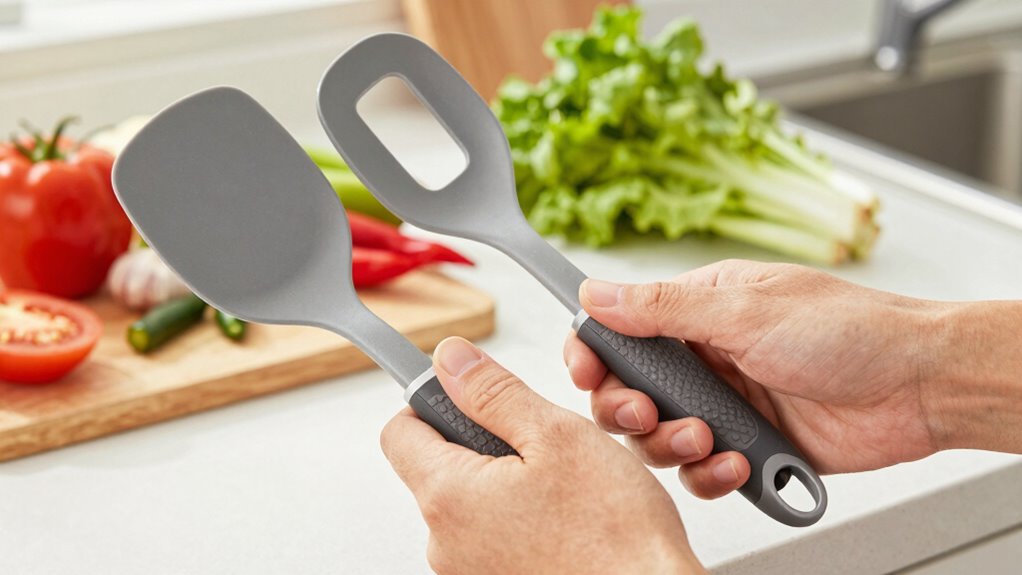
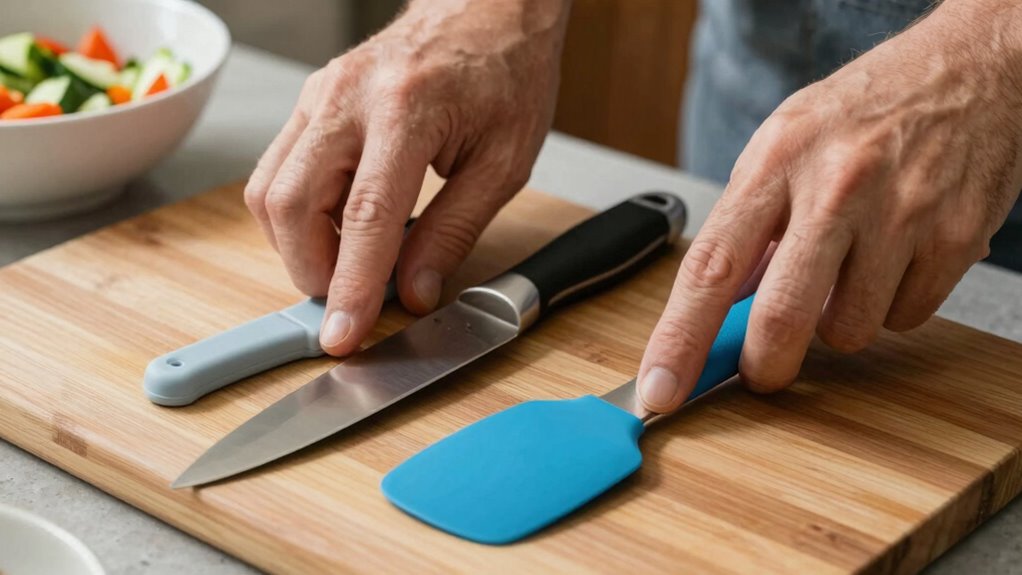
Living with arthritis can make cooking a frustrating and painful task, especially when it affects your hands. The simple act of chopping vegetables or opening jars can become painful hurdles. To make your time in the kitchen safer and more manageable, focusing on kitchen safety is essential. You want to prevent slips, cuts, and strains that could worsen your condition. Using non-slip mats, keeping your workspace organized, and choosing tools with ergonomic handles can reduce the physical strain. For example, opting for knives with wider, cushioned grips allows you to cut more comfortably without putting extra pressure on your joints. When working with hot surfaces or sharp objects, always prioritize safety to prevent accidents that could further complicate your arthritis. Incorporating specialized kitchen tools designed for arthritis sufferers can also significantly ease the cooking process and improve safety. Meal planning becomes a powerful tool in managing your cooking challenges. When you plan ahead, you can select recipes that require less chopping or stirring, minimizing joint strain. Preparing ingredients in advance, like pre-cut vegetables or cooked proteins, reduces the number of steps needed during cooking. This approach not only saves time but also limits the repetitive motions that can aggravate your hands. Additionally, choosing ergonomic tools and adaptive kitchen equipment can further enhance comfort and safety during cooking. Using ergonomic utensils can help reduce hand fatigue and improve grip stability. Incorporating adaptive tools can make a significant difference in reducing joint stress during meal prep. Moreover, proper kitchen organization can streamline your cooking process and reduce unnecessary movements that might cause discomfort. Finally, batch cooking into your routine allows you to create larger portions that can be stored and reheated later, lessening the frequency of cooking sessions. Meal planning also allows you to choose nutritious, arthritis-friendly ingredients, supporting overall joint health with foods rich in omega-3 fatty acids, antioxidants, and anti-inflammatory spices.
ergonomic kitchen utensils for arthritis
As an affiliate, we earn on qualifying purchases.
As an affiliate, we earn on qualifying purchases.
Frequently Asked Questions
What Are the Best Kitchen Tools for Arthritis Sufferers?
You should choose ergonomic utensils and adaptive cookware to make cooking easier with arthritis. Ergonomic utensils have cushioned, non-slip grips that reduce strain, while adaptive cookware features easy-to-handle lids and lightweight materials. These tools help you maintain independence in the kitchen, minimize pain, and improve safety. Incorporating these aids into your cooking routine allows you to prepare meals more comfortably and confidently despite arthritis challenges.
How Can I Prevent Joint Pain During Cooking?
Think of yourself as a seasoned chef from a bygone era—your joints deserve the same care. To prevent joint pain during cooking, focus on joint protection and pain management strategies. Use ergonomic tools, take frequent breaks, and avoid overexertion. Keep your hands warm and stay mindful of your movements. These steps help reduce strain, prevent flare-ups, and make cooking more comfortable, so you can enjoy your culinary creations without pain.
Are There Specific Diets to Reduce Arthritis Symptoms?
Yes, adopting an anti-inflammatory diet can help reduce arthritis symptoms. Focus on joint-friendly foods like fatty fish, berries, leafy greens, and nuts, which are rich in omega-3s and antioxidants. Avoid processed foods and added sugars that may trigger inflammation. By consistently eating these foods, you can potentially lessen joint pain and stiffness, making daily activities more manageable and improving your overall comfort.
How Can I Modify Recipes for Easier Preparation?
You can modify recipes for easier preparation by using adaptive utensils and ergonomic gadgets that reduce strain. Swap traditional tools for ones with non-slip grips, larger handles, or lightweight designs. Pre-cut ingredients, use food processors, and employ slow cookers or pressure cookers to minimize manual effort. These modifications help you stay independent in the kitchen, making cooking more manageable and enjoyable despite arthritis-related hand difficulties.
What Exercises Can Improve Hand Strength for Cooking?
Imagine Sarah, who struggled with arthritis but improved her hand strength through daily hand stretches and grip exercises. You can try simple hand stretches like finger bends and wrist circles, or grip exercises using stress balls or therapy putty. These exercises help increase flexibility and strength, making cooking easier. Regular practice boosts your grip, reduces pain, and improves dexterity, empowering you to handle kitchen tasks with less discomfort.
Conclusion
So, now that you’ve mastered the art of fuss-free cooking with arthritis, who knew that a jar opener and a splash of humor could turn your kitchen into a pain-free playground? Embrace these hacks and laugh in the face of those stubborn utensils. After all, if arthritis can’t stop you from whipping up a storm, then nothing can—except maybe a stubborn blender. Happy cooking, and may your hands stay happy and your meals even happier!