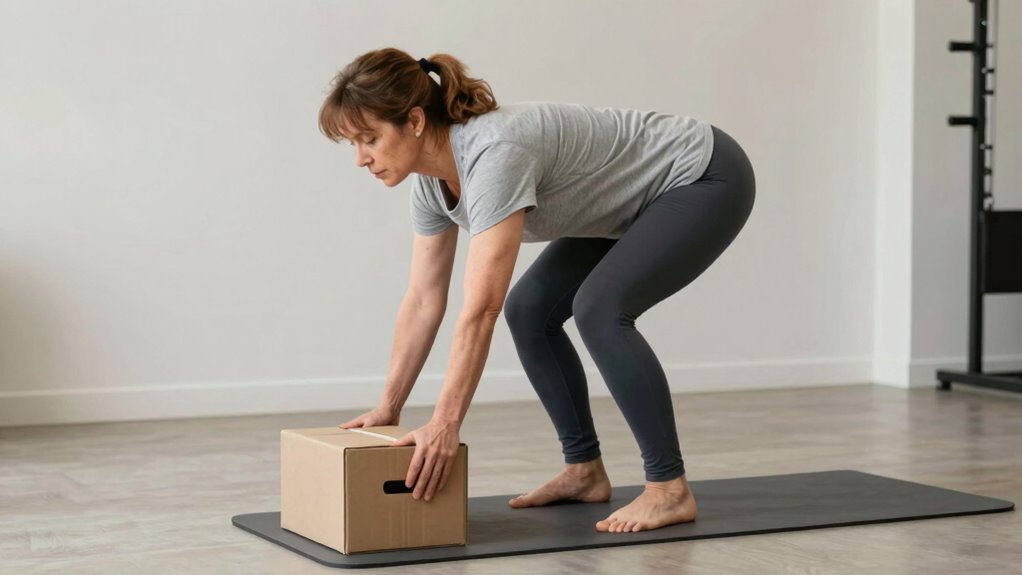
To protect your bones, always bend at your hips and knees instead of rounding your back. Keep your back straight and engage your core muscles for support. Use your legs to lift heavy objects, keeping them close to your body, and avoid twisting. Use assistive devices like dollies or grab bars when needed, and set items down gently. Maintaining good posture and being mindful of your surroundings can greatly reduce fracture risk—continue to learn how to stay safe.

Turn quiet afternoons into listening time
- Thousands of audiobooks, podcasts and originals
- Listen on your phone, tablet or Echo — also offline
- Cancel anytime
Key Takeaways
- Hinge at hips and keep your back straight when bending to reduce spinal strain.
- Use your legs, not your back, to lift heavy objects safely.
- Keep loads close to your body to lessen leverage and support your spine.
- Utilize assistive devices like dollies or grab bars for heavy or awkward items.
- Practice good posture and avoid twisting to prevent fractures and maintain safety.
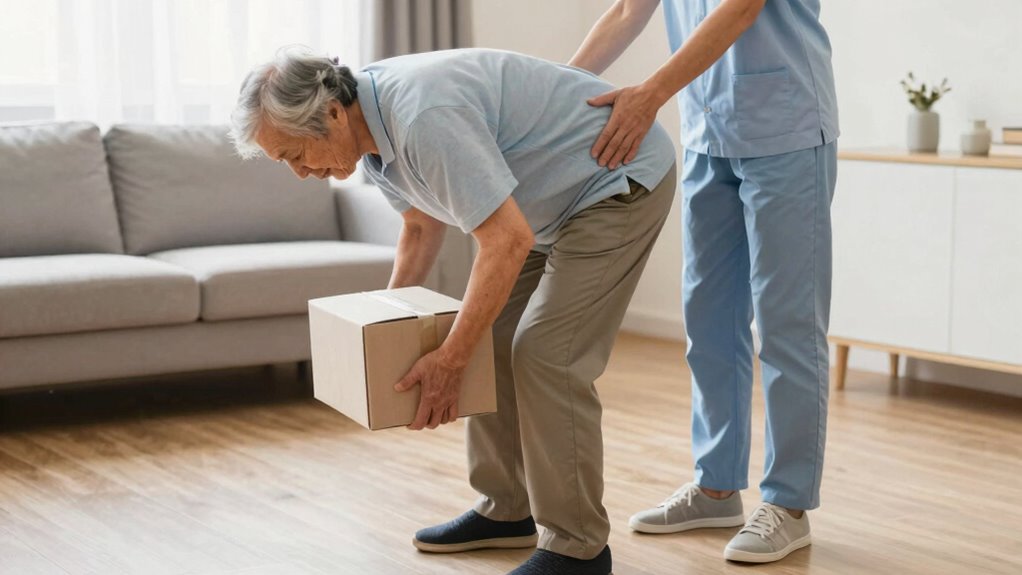
If you have osteoporosis, understanding safe bending and lifting techniques is vital to prevent fractures and injuries. Your goal is to minimize strain on your bones and joints, which means adopting ergonomic techniques that promote proper body mechanics. When you bend, always hinge at your hips rather than rounding your back. Keep your back straight, engage your core muscles, and bend your knees slightly. This technique distributes the effort more evenly across your stronger leg muscles and reduces pressure on your spine. When lifting objects, avoid twisting your torso; instead, pivot with your feet to turn your entire body. Lifting with your legs rather than your back is essential because the larger, stronger muscles in your legs can handle the load better. Always assess the weight of the object beforehand. If it’s too heavy or awkward, don’t attempt to lift it alone. Instead, use assistive devices like a dolly, hand truck, or grab bars, which can notably reduce the physical effort and risk of injury. These tools help you maintain proper posture and keep the load close to your body, decreasing the strain on your spine and hips. Additionally, practicing proper body mechanics can significantly reduce the risk of injury during daily activities. Being mindful of ergonomic techniques can further improve safety during lifting tasks. When bending to pick something up, keep your feet shoulder-width apart for stability. Bend at your hips and knees, not your waist. Keep the object close to your body as you lift, which minimizes leverage and reduces stress on your back. Once you lift, avoid twisting or jerking motions; instead, move smoothly and steadily. If you need to place the object down, do so carefully by reversing the lifting process—bend at your hips and knees, keep your back straight, and set the item down gently. Using assistive devices becomes especially important for heavier or awkward items. For example, grab bars in the bathroom or a reacher can help you pick things up from the ground safely without excessive bending. Keep frequently used objects within easy reach to avoid unnecessary bending or stretching. Incorporating proper body positioning and awareness of your surroundings can further enhance your safety and reduce injury risk. Remember that maintaining good posture and body awareness is crucial for preventing fractures and supporting your overall bone health. Regularly practicing safe lifting techniques can also help you develop habits that protect your bones over time.
ergonomic lifting assistive devices
As an affiliate, we earn on qualifying purchases.
As an affiliate, we earn on qualifying purchases.
Frequently Asked Questions
Can Osteoporosis Patients Perform Yoga Poses Safely?
Yes, you can perform yoga poses safely if you have osteoporosis, but it’s important to focus on gentle movements. Incorporate balance exercises to improve stability and reduce fall risk. Use proper breathing techniques to enhance relaxation and control during poses. Always listen to your body, avoid twisting or bending too deeply, and consult your healthcare provider or a qualified yoga instructor to tailor poses specifically for your osteoporosis needs.
Are There Specific Footwear Recommendations for Safe Bending?
For safe bending, choose footwear with good footwear safety features, like non-slip soles and proper arch support. Bending footwear should provide stability and cushioning to help you maintain balance and reduce strain. Avoid high heels or loose-fitting shoes, as they can compromise your footing. Always wear sturdy, supportive shoes that keep your feet secure, especially when bending or lifting, to protect your bones and prevent falls.
How Can Caregivers Assist With Safe Lifting Techniques?
Think of lifting as sailing a boat—balance and proper support keep you steady. You can assist by guiding your loved one to use proper support and body mechanics, encouraging them to bend at the hips and knees, not the waist. Offer a steady, supportive stance, and help them lift with their legs, not their back. Your role is to make sure they maintain proper support, reducing strain and preventing injury during lifts.
What Are Alternative Exercises for Those Unable to Bend or Lift?
If you can’t bend or lift, try modified exercises like seated workouts to stay active safely. You can do seated leg lifts, arm raises, or gentle stretches while sitting in a sturdy chair. These exercises help strengthen muscles and improve flexibility without risking injury. By focusing on seated workouts, you maintain mobility and support bone health without the need to bend or lift, making movement safer and more comfortable.
How Often Should Osteoporosis Patients Review Their Safety Routines?
You should review your safety routines at least every six months. For example, Jane, a patient with osteoporosis, found her routine outdated after her medication changed and her bone density monitoring showed improvement. Regular reviews help you stay aware of medication adherence and adjust safety practices accordingly. This proactive approach guarantees you’re consistently implementing the best strategies to protect your bones, reducing fracture risks and maintaining your overall health.
Conclusion
By mastering these safe bending and lifting rules, you’re building a sturdy bridge over the river of osteoporosis challenges. Think of each careful movement as laying strong stones in your foundation, supporting your daily journey with confidence. Embrace these habits like a trusty compass guiding you through rough waters, ensuring your path stays steady and secure. With each mindful step, you’re shaping a resilient future, turning gentle precautions into powerful armor for your bones.
Fall Picks
fall essentials
As an affiliate, we earn on qualifying purchases.