
To reduce fall risks with osteoporosis, make sure your shoes fit snugly but comfortably, allowing toe movement. Choose supportive, low-heeled shoes with firm soles and good grip, and avoid high heels or thin soles. Use a shoehorn and double-check that laces are secure before walking. Regularly inspect your footwear for wear and replace worn shoes promptly. Maintaining these habits can help you stay safe and confident every step of the way. Keep going to discover more helpful tips.

Turn quiet afternoons into listening time
- Thousands of audiobooks, podcasts and originals
- Listen on your phone, tablet or Echo — also offline
- Cancel anytime
Key Takeaways
- Regularly inspect shoes for wear and replace worn-out footwear to ensure optimal support and safety.
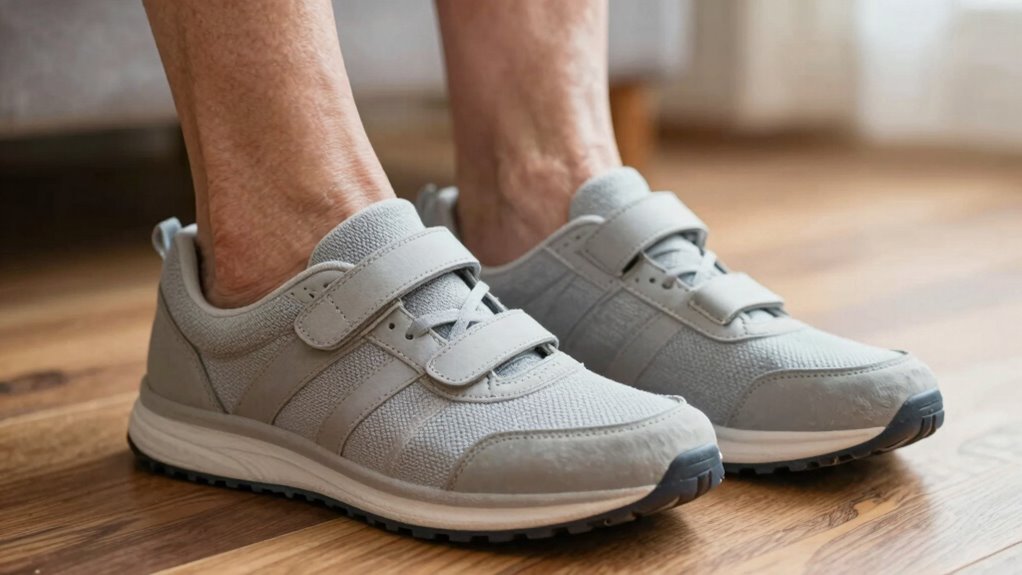
- Choose shoes with a wide toe box, firm soles, and low heels to enhance stability and reduce fall risk.
- Always try on shoes later in the day when feet are slightly swollen for a proper fit.
- Use a shoehorn to prevent heel damage and ensure secure fastening before walking.
- Prioritize slip-resistant, supportive footwear that distributes weight evenly and maintains balance.
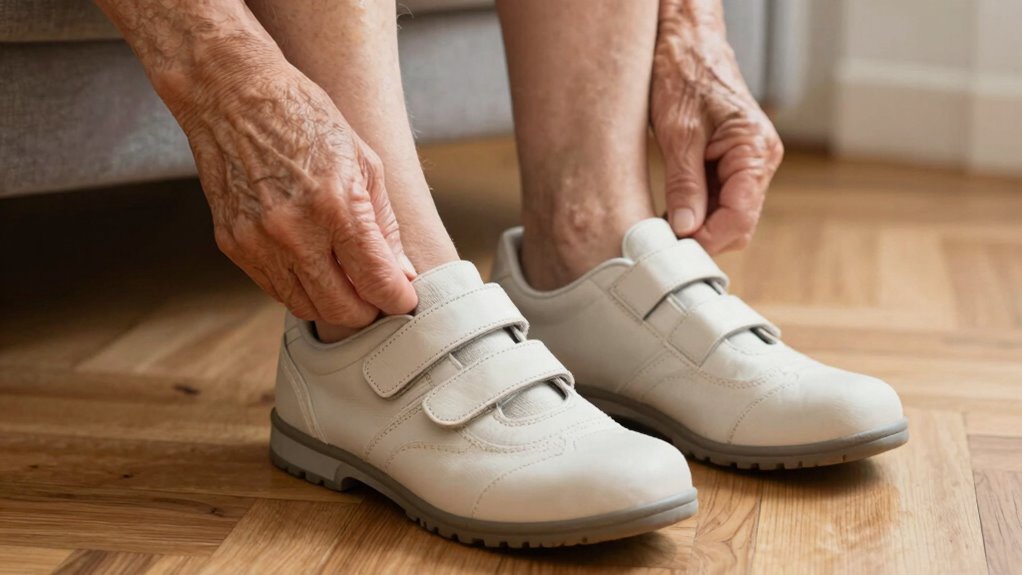
Choosing the right footwear is essential for seniors with osteoporosis, as it can markedly reduce the risk of falls and fractures. When it comes to injury prevention, the proper fit plays a pivotal role. Ill-fitting shoes can cause instability, blisters, or even pressure points that increase your risk of losing balance. To protect yourself, select shoes that fit snugly without being tight, allowing enough room for your toes to move comfortably. Proper footwear fit supports your arches and helps distribute weight evenly, which is critical for maintaining stability and avoiding falls.
Properly fitting shoes improve stability, reduce pressure points, and lower fall risk for seniors with osteoporosis.
You should always try on shoes later in the day when your feet are slightly swollen to guarantee the best fit. Avoid shoes that are too tight or too loose, as both can compromise your balance. Look for shoes with a wide toe box to prevent pinching and discomfort, which can lead to shifting or slipping inside the shoe. When trying on new footwear, walk around to test comfort and stability. If you feel any pinching, slipping, or uneven pressure, keep searching until you find a pair that fits well. Remember, securing the heel snugly in the shoe minimizes the chance of your foot slipping out during movement. Additionally, paying attention to footwear durability can ensure your shoes remain supportive and safe over time. Regularly checking your shoes for signs of wear can help maintain optimal footwear safety****.
Injury prevention isn’t just about fit; it also involves choosing footwear with the right support features. Opt for shoes with a firm, non-flexible sole that offers good grip and traction. Avoid high heels or shoes with thin, flat soles, as they can impair your balance and increase fall risk. Shoes with low, stable heels—ideally under 2 inches—offer better support and reduce the strain on your ankles and knees. Slip-resistant soles are a must, especially if your home or outdoor surfaces are often wet or uneven. Additionally, considering biodiversity in your footwear choices—such as selecting eco-friendly or sustainably produced shoes—can contribute to more sustainable living practices. Incorporating proper footwear maintenance—like regular cleaning and sole checks—can prolong the lifespan of your shoes and ensure continued safety. Regularly inspecting your shoes for wear and tear can help prevent deterioration that could lead to accidents.
In addition to selecting the right shoes, developing good footwear habits can make a difference. Replace worn-out shoes promptly—no matter how comfortable they seem—since worn soles or damaged support can compromise safety. When putting on shoes, use a shoehorn to prevent damaging the heel and to make it easier to slip into your footwear, reducing strain on your back and joints. Always double-check that your shoes are securely fastened before standing or walking. Making these habits part of your routine will help you stay steady and safe as you move through your day, giving you peace of mind and greater independence.
supportive slip-resistant shoes for seniors
As an affiliate, we earn on qualifying purchases.
As an affiliate, we earn on qualifying purchases.
Frequently Asked Questions
How Often Should Seniors Replace Their Footwear to Prevent Falls?
You should replace your footwear every 6 to 12 months to guarantee ideal shoe durability and footwear longevity. Worn-out shoes lose their support and grip, increasing your risk of falls, especially with osteoporosis. Regularly check for signs like uneven wear, flattened soles, or damaged heels. When you notice these issues, it’s time to get new shoes. Staying proactive helps protect your balance and keeps you safe.
Are There Specific Brands Recommended for Osteoporosis-Friendly Shoes?
Yes, there are specific brands known for osteoporosis footwear, offering extra support and stability. Brands like New Balance, Vionic, and Orthofeet provide shoe recommendations designed for seniors with osteoporosis. These shoes feature cushioning, non-slip soles, and proper arch support, reducing fall risk. When selecting osteoporosis footwear, prioritize comfort, fit, and support over style, and consult with a healthcare professional to guarantee the best shoe recommendations for your needs.
Can Footwear Modifications Improve Balance for Seniors With Osteoporosis?
Research shows footwear modifications can indeed improve balance for seniors with osteoporosis by enhancing footwear comfort and gait stability. You can add supportive insoles, use non-slip soles, or choose shoes with a wider base to help prevent falls. These adjustments make a noticeable difference, boosting confidence and reducing injury risk. Prioritizing proper footwear helps you stay steady on your feet, making daily activities safer and more comfortable.
What Role Does Shoe Material Play in Foot Health for Osteoporosis?
Shoe material plays a vital role in foot health for osteoporosis by providing essential foot support and comfort. Opt for shoes made of breathable, flexible materials like leather or mesh that conform to your foot shape, reducing pressure points. These materials help absorb shock, minimize injury risk, and promote better circulation. Selecting the right shoe material guarantees your feet stay supported and healthy, helping you stay active and comfortable daily.
How Can Seniors Identify Signs of Footwear That No Longer Provide Adequate Support?
Think of your shoes as a sturdy foundation for a house—you’ll notice signs when they crumble. If your footwear lacks proper arch support or heel cushioning, you might feel persistent foot pain, uneven wear, or instability. Feel your feet after walking—if they ache or your heels lack soft padding, it’s time to replace your shoes. Trust these clues to identify when your footwear no longer offers the support your bones need.
Conclusion
By choosing the right footwear habits, you not only protect your bones but also enjoy the simple pleasures of daily life—like slipping into comfortable shoes after a long walk or feeling confident during outings. Sometimes, it’s the small changes, like ensuring proper support or avoiding slippery surfaces, that make a big difference. When your shoes support your steps, you’ll find yourself more enthusiastic to embrace each day’s adventures, no matter the season.
Fall Picks
fall essentials
As an affiliate, we earn on qualifying purchases.