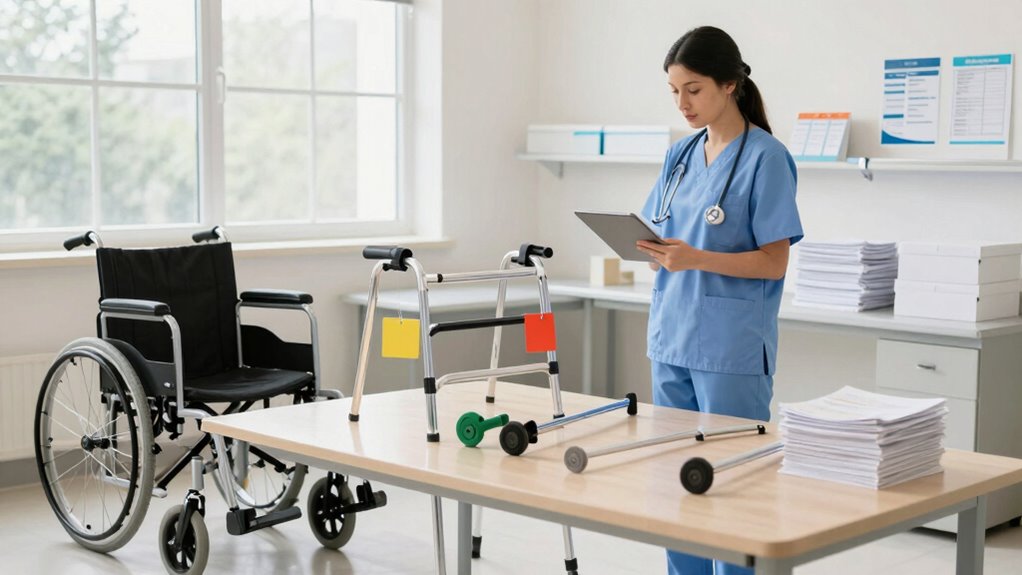
To budget for mobility equipment without panic, start by understanding your insurance coverage and check what expenses they may cover. Explore financing options or rental programs to spread out costs and consider total ownership, including maintenance. Set a realistic budget based on your income, prioritize essential features, and track your spending. Planning ahead and knowing your options can make this process more manageable—keep going to discover expert tips that can ease your worries.
Listen free for 30 days with Audible
Thousands of audiobooks and originals — cancel anytime.
As an affiliate, we earn on qualifying purchases.
Key Takeaways
- Research insurance coverage and pre-authorize to avoid unexpected costs and reduce financial stress.
- Explore financing, rental, or community assistance options to make payments manageable.
- Calculate total ownership costs, including maintenance and accessories, beyond the initial purchase.
- Set a realistic budget prioritizing essential features and compare discounts or refurbished options.
- Regularly review and adjust your budget as needed to stay aligned with changing needs and financial situations.

Budgeting for mobility equipment can seem overwhelming, but with a clear plan, you can make informed decisions that fit your financial situation. The first step is understanding what options are available to ease the cost burden. One of the most important considerations is insurance coverage, which varies widely depending on your provider and the type of equipment you need. Some insurance plans, including Medicare and Medicaid, may cover parts or all of the cost for certain mobility devices, like wheelchairs or scooters. It’s crucial to check with your insurance provider beforehand to determine what’s covered and what isn’t. Gathering documentation and pre-authorization can help you avoid unexpected expenses, and knowing your coverage limits allows you to plan more accurately.
Understanding insurance coverage helps manage costs and avoid unexpected expenses when acquiring mobility equipment.
In addition to insurance, financing options can help you spread out payments over time, making larger purchases more manageable. Many medical equipment suppliers partner with financing companies that offer installment plans, often with low or zero-interest options. Taking advantage of these plans can prevent you from depleting your savings all at once. Before committing, review the terms carefully—look for hidden fees or high-interest rates that could increase the total cost. Some providers also offer leasing options or rental programs, which might be more cost-effective if you only need the equipment temporarily or if your needs might change.
As you build your budget, consider the total cost of ownership beyond the initial purchase. Maintenance, repairs, and accessories can add up, so include these in your calculations. Shopping around for the best prices is essential; sometimes, local vendors may offer discounts or refurbished equipment that fits your budget. Don’t forget to compare warranties and after-sales support, which can save you money in the long run. It’s also wise to explore community resources or charitable organizations that sometimes provide financial assistance or free equipment to those in need. Additionally, understanding medical equipment options can help you select the most cost-effective and suitable device for your needs. Being aware of available assistance programs can further ease the financial burden. Knowing about insurance coverage can also help you maximize your benefits and reduce out-of-pocket expenses. Moreover, researching cost-saving strategies may uncover additional ways to minimize expenses. Recognizing the importance of proper equipment maintenance can also prolong the lifespan of your devices and prevent costly repairs down the line.
Finally, set a realistic budget based on your income and expenses. Prioritize essential features and consider what compromises you’re willing to make without sacrificing safety or usability. Keep track of your spending and revisit your budget regularly as your situation changes. By understanding your insurance coverage, exploring financing options, and planning for all related costs, you’ll feel more confident in managing the financial aspect of acquiring mobility equipment. With the right approach, you can secure the mobility tools you need without panic or financial strain.
electric wheelchair financing options
As an affiliate, we earn on qualifying purchases.
As an affiliate, we earn on qualifying purchases.
Frequently Asked Questions
Are There Government Grants Available for Mobility Equipment?
Yes, government funding is available for mobility equipment. You can explore various grants by researching local, state, or federal programs designed to assist with mobility needs. When applying, make sure to complete your grant applications carefully, providing all necessary documentation. These grants can considerably ease your financial burden, so don’t hesitate to reach out to relevant agencies or organizations that can guide you through the application process.
How Can I Compare Prices Across Different Suppliers?
You can compare prices across different suppliers easily by researching their websites, requesting quotes, and checking reviews. Use online price comparison tools and contact multiple suppliers to understand their pricing options. Don’t forget to ask about any discounts or bundled deals. By exploring various supplier options and conducting thorough price comparison, you guarantee you get the best value for your mobility equipment, helping you stay within your budget.
What Payment Plans Do Providers Typically Offer?
Providers typically offer a variety of payment plans to make mobility equipment affordable, including financing options and payment flexibility. You might find options like monthly installment plans, rent-to-own programs, or deferred payments that ease the financial burden. These plans are designed to be as flexible as a gymnast, allowing you to choose what best fits your budget. Always ask providers about their available payment options to find the most manageable solution.
How Often Should Mobility Equipment Be Replaced?
You should replace mobility equipment based on its maintenance schedule and lifespan expectations. Usually, wheelchairs or scooters last 3-5 years with proper care, but you’ll want to replace them sooner if they show signs of significant wear or safety issues. Regularly check for mechanical issues, and consult your provider’s guidelines. Staying proactive guarantees your equipment remains safe and functional, preventing unexpected costs or emergencies.
Can Insurance Cover the Full Cost of Mobility Devices?
Think of insurance coverage like a safety net—it’s there to catch you, but it might not cover everything. Typically, insurance policies can cover a significant portion of mobility device costs, but coverage limitations often apply. To avoid surprises, review your policy carefully and speak with your provider. While some expenses may be fully covered, be prepared for out-of-pocket costs if your insurance doesn’t cover the full amount.
Conclusion
Budgeting for mobility equipment can feel intimidating, but with careful planning, you’ll navigate it smoothly—like a skilled sailor steering through choppy waters. Keep track of costs, explore insurance options, and consider financing if needed. Remember, each step you take brings you closer to greater independence. Stay organized, be patient, and trust your ability to manage expenses. With perseverance, you’ll find that budgeting becomes less formidable and more a tool for empowering your mobility journey.
Fall Picks
fall essentials
As an affiliate, we earn on qualifying purchases.