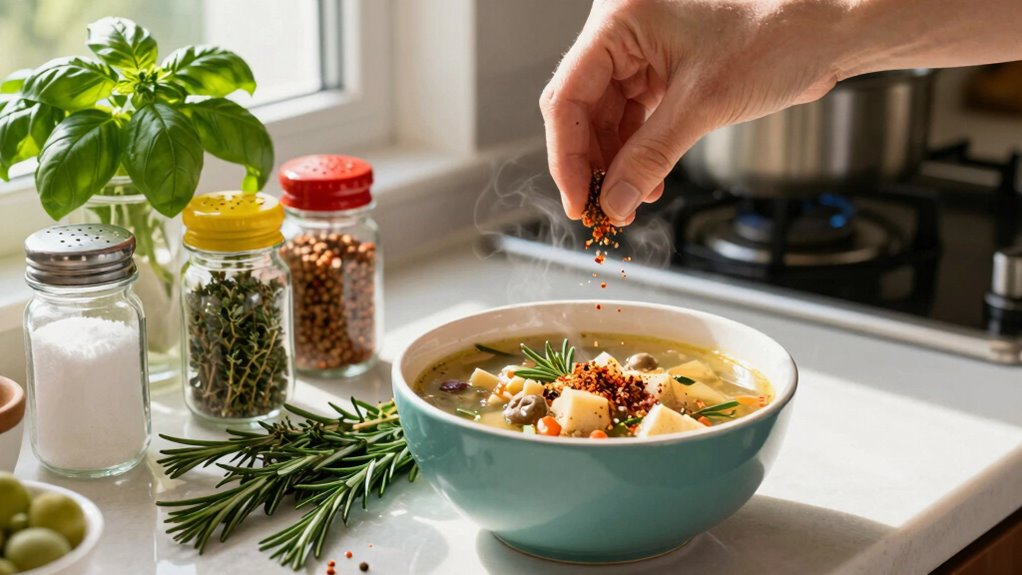

To avoid miserable-tasting low-sodium dishes, use herb-infused oils, citrus zest, and bold spices like cumin or paprika to add flavor and aroma. Incorporate garlic, shallots, or vinegar to boost richness and brightness, making meals more satisfying. These swaps provide depth without salt, helping you enjoy flavorful bites while meeting your health goals. Keep exploring, and you’ll discover more easy ways to enhance your dishes naturally.

Turn quiet afternoons into listening time
- Thousands of audiobooks, podcasts and originals
- Listen on your phone, tablet or Echo — also offline
- Cancel anytime
Key Takeaways
- Use herb-infused oils to add aroma and flavor without salt, enhancing dishes naturally.
- Incorporate citrus zest for bright, tangy notes that mimic saltiness.
- Add garlic or shallots for depth, enriching flavors without sodium.
- Boost flavor with acids like lemon juice or vinegar for brightness and balance.
- Season with spices such as cumin or paprika to create warmth and complexity without salt.
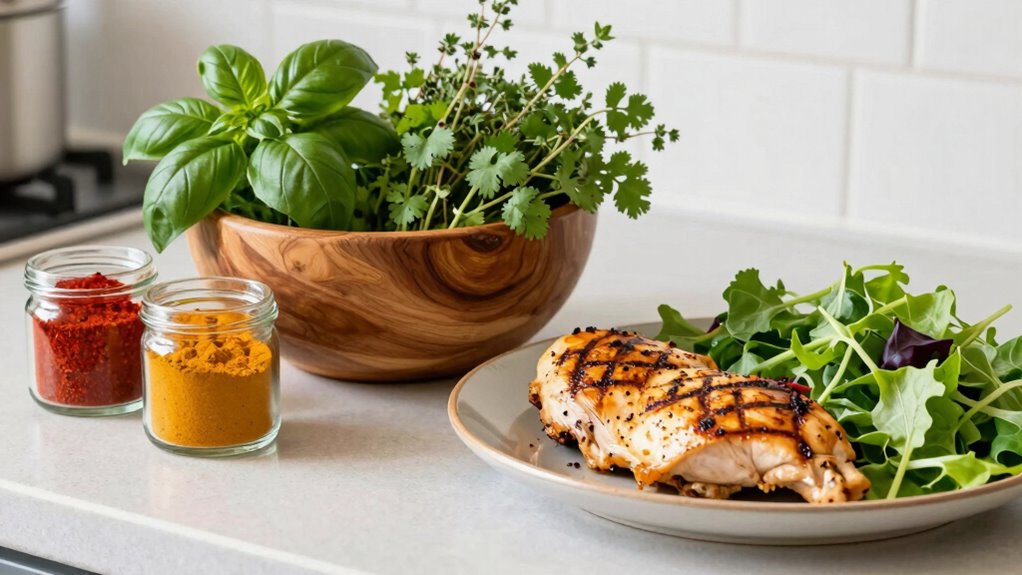
Reducing sodium intake doesn’t mean sacrificing flavor. In fact, you can elevate your dishes with simple, natural ingredients that add depth without the salt. One of the easiest ways to do this is by using herb infused oils. These oils are created by steeping herbs like rosemary, thyme, or basil in high-quality olive oil. When drizzled over salads, roasted vegetables, or grilled meats, they impart a burst of aromatic flavor that makes the dish memorable. Herb infused oils are versatile and can be customized to suit your taste, helping you cut back on salt without losing that satisfying flavor punch. Additionally, experimenting with flavor enhancement techniques can further elevate your dishes and make them more satisfying without sodium. Another powerful technique involves citrus zest enhancements. Zesting lemons, limes, or oranges adds a bright, tangy note that lifts the entire dish. A pinch of citrus zest can mimic the freshness that salt usually provides, making it especially effective in seafood, poultry, and vegetable dishes. Plus, citrus zest contains essential oils that release a vibrant aroma, invigorating your senses and making every bite more appealing. When combined with herbs or infused oils, the citrus zest creates a complex flavor profile that satisfies the palate without relying on sodium. Incorporating natural flavor boosters like garlic or shallots can also add depth and richness to your meals without the need for salt, transforming even simple dishes into flavorful ones. You might also consider experimenting with vinegar or acid-based ingredients. A splash of balsamic, apple cider vinegar, or a squeeze of fresh lemon juice can elevate flavors and bring a sense of brightness to your meal. These acids help to balance flavors and can make dishes taste more vibrant, reducing the need for salt. Incorporate them into marinades, dressings, or even in cooking water for grains or vegetables. The key is to taste as you go, adjusting acidity levels to match your preference and maximize flavor. Additionally, spices such as cumin, paprika, or turmeric can add warmth and complexity to your dishes, making them more satisfying without extra sodium. Using these spices in conjunction with herb infused oils and citrus zest creates a layered flavor experience that keeps your meals exciting. Remember, the goal isn’t just to mimic salty flavors but to develop a new palette of tastes that are equally engaging. Incorporating biodiversity-friendly ingredients can also enhance the nutritional value of your meals and support sustainable food practices. Ultimately, you don’t have to settle for bland food when reducing salt. By incorporating herb infused oils, citrus zest enhancements, and other flavor-boosting ingredients, you can enjoy vibrant, delicious meals that support your health goals. These swaps not only help you cut down on sodium but also encourage exploring new flavor combinations, making your culinary journey both nutritious and enjoyable.
As an affiliate, we earn on qualifying purchases.
Frequently Asked Questions
Can I Use These Swaps in All Recipes?
You can use these low-sodium swaps in many recipes, but flavor compatibility and cooking versatility vary. Some swaps work well in soups or stews, while others might not suit delicate dishes like salads or raw foods. Always consider the ingredients and flavors involved. Experiment gradually to see how the swaps impact taste and texture, and adjust seasonings accordingly to maintain your dish’s overall appeal.
Are Low-Sodium Options More Expensive?
Low-sodium options can sometimes be more expensive, but it’s not always a huge difference—you might find it a tiny bit pricier, or sometimes the same. Salt alternatives and flavor enhancers often cost a little extra, but they’re worth it for better health. Think of it as an investment in your well-being. Shop smart, compare brands, and you’ll find affordable options that make your dishes flavorful without breaking the bank.
How Long Does It Take to Notice a Flavor Difference?
You’ll typically notice a flavor difference within a few days of making low-sodium swaps. Your taste buds go through a flavor adaptation process, gradually adjusting to less salt. At first, food may taste bland, but with consistent taste adjustment, your palate becomes more sensitive to natural flavors. Keep experimenting with herbs and spices, and you’ll find that your perception of flavor improves, making healthier, low-sodium meals more enjoyable over time.
Can These Swaps Help Reduce Blood Pressure?
Yes, these swaps can help reduce your blood pressure by lowering sodium intake. They enhance flavor without sacrificing taste satisfaction, making your meals more enjoyable. As you incorporate herbs, spices, and other flavor enhancers, you may notice a gradual improvement in your blood pressure levels. Consistent use of these swaps helps create healthier eating habits, supporting your overall heart health while still delivering delicious, satisfying meals.
Are There Any Health Risks With These Substitutions?
There are minimal health risks with these sodium reduction swaps when used properly. However, some people might experience digestive discomfort or allergic reactions if they’re sensitive to certain ingredients like herbs or spices. Always read labels carefully, and if you have kidney issues or other health concerns, consult your doctor before making significant changes. Overall, these substitutions are a safe way to cut sodium without compromising flavor or health.
Conclusion
Switching to low-sodium flavor swaps is like finding a hidden garden in your backyard—surprising and full of new delights. When I first tried swapping soy sauce for coconut aminos, I thought, “This won’t taste the same,” but I was blown away by the rich, savory flavor without the salt rush. Remember, small changes can blossom into flavorful habits. Embrace the journey, and soon, your meals will be just as satisfying—without the excess sodium.
Cold & flu season Picks
humidifiers
As an affiliate, we earn on qualifying purchases.