
This checklist is for caregivers and older adults comparing aids for safer movement and transfers around the home. Use it to identify which support may fit a particular task, then check the manufacturer’s instructions and consult a qualified clinician when needs or abilities are changing.

Turn quiet afternoons into listening time
- Thousands of audiobooks, podcasts and originals
- Listen on your phone, tablet or Echo — also offline
- Cancel anytime
The sections follow common mobility and transfer needs, from walking indoors and moving between surfaces to sitting, reaching a doorway, and getting in or out of bed. Some slots offer advice only; the others name a product pick to investigate.
Start with the person’s daily routine and the places where assistance is needed. Before choosing equipment, confirm fit, compatibility, and safe use for the person, caregiver, and home. A product name alone does not establish suitability for a specific individual.
Indoor Rollators
An indoor rollator may be worth considering when someone needs a handhold while moving between rooms. The right choice depends on the person’s balance, walking ability, and ability to manage the device. Ask a clinician or therapist to assess whether a rollator is appropriate and to demonstrate safe use.
Common mistakes include choosing by appearance alone, assuming a device that works outdoors will suit narrow indoor routes, or overlooking the space needed to turn and park it. Measure doorways and frequently used paths, and consider thresholds, rugs, furniture, and storage. The person should be able to reach and operate the controls as directed, and the device should be adjusted to the user according to its instructions.
Practice on the actual surfaces and routes where it will be used, with supervision appropriate to the person’s needs. If steering, braking, or maneuvering is difficult, pause and seek professional guidance. Fit and safe handling matter more than a feature list.
What to look for:
- A width that fits the home’s doorways and paths
- Handle adjustment suited to the user
- Controls the user can operate as instructed
- A turning footprint that works in tight spaces
- Clear manufacturer guidance for indoor use
Transfer Boards
A transfer board can help bridge a small gap between two surfaces for some people, but it is not suitable for every transfer. The person’s strength, balance, ability to follow directions, and the surfaces involved all affect whether a board is appropriate. Ask a clinician or therapist to assess the transfer and teach the caregiver and user how to perform it safely.
A common mistake is assuming a board makes every move easier or safer. Surface heights, stability, spacing, clothing, and the person’s ability to reposition all matter. Check that the intended surfaces are compatible with the method recommended by the clinician, and follow any guidance about positioning, assistance, and supervision. Do not improvise a transfer when the person’s abilities or condition have changed.
Practice the specific transfer with qualified instruction before relying on it during daily care. The board should be used only as directed and in the situations for which it has been assessed. Individual technique and compatibility are central to choosing and using this aid.
What to look for:
- Professional assessment of the specific transfer
- Compatibility with both transfer surfaces
- Appropriate surface height and spacing
- Clear instructions for positioning and assistance
- Training for both the user and caregiver
Gait Belts
A gait belt may be considered when a caregiver has been instructed to assist someone with standing or walking. This checklist’s pick is the Gait Belt Transfer Belt with 5 Handles and Quick Release Buckle – Anti. The product name identifies multiple handles and a quick release buckle, but it does not establish the belt’s fit, construction, instructions, or suitability for a particular person.
A common mistake is treating a belt as a lifting device or using one without training. Ask a clinician or therapist whether a gait belt is appropriate, where it should be positioned, and how the caregiver should assist. Check the manufacturer’s sizing and use instructions, confirm the buckle can be secured and released as directed, and make sure the handles can be reached for the prescribed technique. Consider the user’s clothing and comfort, and follow professional guidance about any conditions that affect use.
Have the caregiver practice the recommended method before using the belt during a transfer or walk. Stop and seek guidance if the person’s needs change or the belt does not fit as instructed. Training and proper fit are essential parts of this choice.
What to look for:
- Sizing guidance that fits the intended user
- Clear instructions for positioning the belt
- Buckle operation explained by the manufacturer
- Handle placement suited to the taught technique
- Professional guidance on appropriate use
Gait Belt Transfer Belt with 5 Handles and Quick Release Buckle – Anti‑Slip Nylo

This sturdy gait belt is made from high‑quality nylon and drop‑plastic fabric with sponge padding for comfort. It features five ergonomically placed handles, upgraded quick‑release buckles, and anti‑slip technology to securely assist caregivers in lifting and transferring patients.
Pros:
- Adjustable length fits a wide range of patients
- Five handles provide multiple leverage points for safer transfers
- Quick‑release buckles allow fast on/off during emergencies
- Anti‑slip design reduces belt movement on clothing
Cons:
- Limited color options may not match all settings
- Bulkier width could be cumbersome in tight spaces
Best for: Caregivers instructed to use a gait belt
Not ideal for: Anyone seeking a belt without fit checks or training
Bottom line: Confirm fit and learn the recommended technique before using this belt.
Lift Recliner Chairs
A lift recliner chair may be relevant when a person needs help moving between sitting and standing, or wants a chair with multiple position options. The pick is the Triple Motor Large-Wide Lift Chair with Infinite Position, 180° Lay Fl. Its name describes a triple motor design and positioning language, but the name alone does not verify dimensions, operation, or whether it suits the user.
Measure the intended space, including clearance for the chair’s movement, and compare the user’s body dimensions with the manufacturer’s fit guidance. Check doorway access for delivery and confirm that the chair can be placed near a suitable power source if required by its instructions. A common mistake is selecting based on a “large-wide” label or position description without confirming seat width, depth, height, and the person’s ability to use the controls.
Review operating and safety instructions with the intended user and caregiver. Ask a clinician or therapist whether this type of chair fits the person’s transfer needs, especially if those needs are changing. Room clearance and user fit should guide the decision alongside features.
What to look for:
- Seat dimensions matched to the user
- Space for the chair’s full movement
- Doorway and delivery access measurements
- Controls the user can operate as instructed
- Manufacturer guidance for setup and operation
Triple Motor Large-Wide Lift Chair with Infinite Position, 180° Lay Flat, Massag
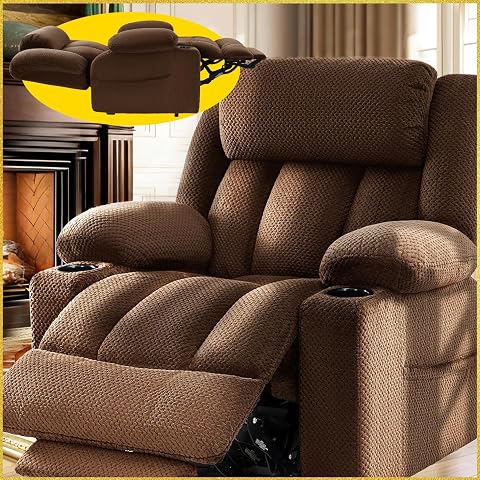
This power lift recliner features three motors for independent adjustment of the headrest, backrest, and footrest, allowing for infinite comfort positions from 45° to 180° flat. Designed for larger users, it includes massage and lumbar heating functions, a supportive extended footrest, and a smooth lift assist to aid independence.
Pros:
- Independent adjustment of headrest, backrest, and footrest for customized comfort
- Includes massage and lumbar heating for relaxation
- Extended footrest supports legs fully, ideal for larger users
- Easy assembly without tools in just 10 minutes
Cons:
- May be bulky for small spaces
- Limited color options (only dark brown specified)
- Higher price point due to features and size
Best for: People comparing a lift recliner for home use
Not ideal for: Rooms without confirmed clearance for chair movement
Bottom line: Measure the room and the user, then review the operating instructions before choosing.
Wheelchair Ramps
A portable ramp may help address a doorway or other elevation change when the ramp, wheelchair, and setting are compatible. The pick is the FACHNUO 8 ft Portable Aluminum Wheelchair Ramp with Support Legs. Its name states a length, material, and support legs; it does not establish the slope or suitability for a particular entrance, chair, or user.
Measure the vertical rise and available approach and landing space, then follow the manufacturer’s guidance to determine whether this ramp can be used at that location. Check doorway width, surface stability, ramp placement, and how it is secured. A common mistake is assuming that a stated length guarantees a manageable slope or that a portable ramp fits every threshold. Consider who will set it up and whether the person assisting can handle it as directed.
Review the instructions for the intended wheelchair and use conditions, and have a qualified professional assess the setup if there is uncertainty. Do not use the ramp if it cannot be positioned or secured as instructed. Rise, slope, and stable placement are key checks before use.
What to look for:
- Measured rise and approach space
- Ramp width compatible with the wheelchair
- Manufacturer guidance for slope and placement
- Stable surface and secure positioning instructions
- Setup requirements manageable for the caregiver
FACHNUO 8 ft Portable Aluminum Wheelchair Ramp with Support Legs

This folding 8 ft aluminum ramp supports up to 800 lb and is designed for steps 8–24 inches high. It has a non-slip surface, side baffles, reflective strips, and a portable handle for transport and storage.
Pros:
- Folds for easier transport and storage
- Non-slip surface with pleated texture
- Side baffles and reflective strips improve visibility and safety
- Supports up to 800 lb
Cons:
- Weighs 57 lb
- May sink during use before rebounding
Best for: Households assessing a specific wheelchair access point
Not ideal for: Entrances without measured rise and landing space
Bottom line: Measure the entrance and verify the ramp setup against its instructions before use.
Bed Assist Rails
A bed assist rail may provide a handhold for some people repositioning or getting in and out of bed. The pick is the Stander EZ Adjust Bed Rail, Adjustable Senior Bedrail and Safety Assis. The name indicates an adjustable rail, but it does not confirm compatibility with a particular bed, mattress, or user.
Check the manufacturer’s compatibility and installation instructions for the exact bed and mattress. Measure the bed and surrounding space, and consider whether the user can reach and grip the rail from their usual position. A common mistake is assuming a rail fits every bed or that an assist rail is appropriate for every person. Ask a clinician or therapist to evaluate the user’s needs and the proposed setup, and follow any instructions about securing and checking the rail.
After installation, confirm the rail is set up exactly as directed before relying on it. Review how the user will approach, grip, and release it, and reassess if mobility or cognition changes. Bed compatibility and safe setup are essential considerations for this product.
What to look for:
- Compatibility guidance for the bed and mattress
- Installation and securing instructions
- Dimensions that suit the bed and room
- A grip and reach suited to the intended user
- Professional guidance for the person’s needs
Stander EZ Adjust Bed Rail, Adjustable Senior Bedrail and Safety Assist Railing

The Stander EZ Adjust Bed Rail is a safety-approved, adjustable guard rail designed to prevent falls and assist with sitting or standing. It features a large organizer pouch for bedside essentials and fits most traditional beds, providing support for seniors and individuals with limited mobility.
Pros:
- Safety certified to reduce fall risk
- Adjustable length for customized support
- Includes convenient organizer pouch
- Compatible with most traditional beds
Cons:
- Not suitable for adjustable or hospital beds
- Requires safety strap for secure attachment
- May be too large for small beds
Best for: People considering a bedside handhold
Not ideal for: Beds with unconfirmed rail compatibility
Bottom line: Verify bed compatibility and installation, then assess the setup for the intended user.
When planning purchases, prioritize the need that affects everyday safety and access, then compare options for that task. Begin with professional assessment where transfers or walking assistance are involved; next confirm measurements, compatibility, and instructions for the home setup. Choose one well-matched aid at a time so the user and caregiver can learn how it works.
Needs can change, and it is reasonable to revisit a choice after trying a setup with appropriate guidance. Keep the manufacturer’s instructions available and ask for help when fit, use, or compatibility is uncertain. With careful assessment and clear, practical checks, caregivers can make more informed decisions for daily support.
Halloween Picks
halloween
As an affiliate, we earn on qualifying purchases.