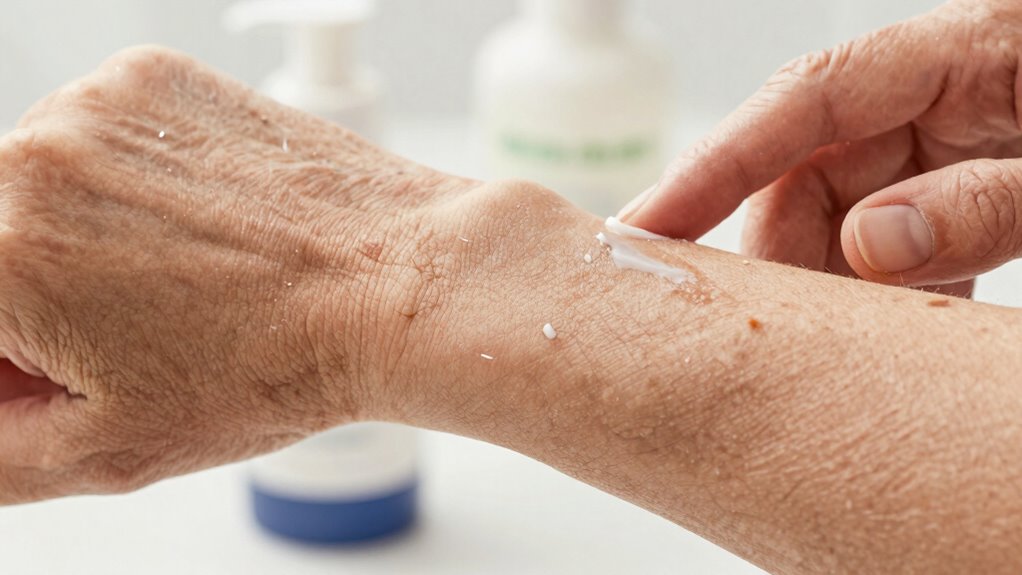
To relieve dry skin and itching in seniors, focus on moisturizing regularly with gentle, fragrance-free products that contain hyaluronic acid, glycerin, or ceramides. Keep skin protected from cold, wind, and indoor heat by using a humidifier and wearing appropriate clothing. Avoid hot showers and limit bathing time to prevent oil loss. Staying well-hydrated and maintaining a consistent skincare routine can make a big difference. Discover more strategies to soothe and protect your skin as you explore further.

Turn quiet afternoons into listening time
- Thousands of audiobooks, podcasts and originals
- Listen on your phone, tablet or Echo — also offline
- Cancel anytime
Key Takeaways
- Use gentle, fragrance-free moisturizers containing hyaluronic acid, glycerin, or ceramides immediately after bathing.
- Avoid hot showers; opt for lukewarm water and limit bathing time to prevent oil loss.
- Protect skin from harsh weather with clothing and use a humidifier indoors.
- Stay well-hydrated by drinking plenty of water daily to support skin moisture.
- Maintain a consistent skincare routine with regular moisturizing and environmental protection.
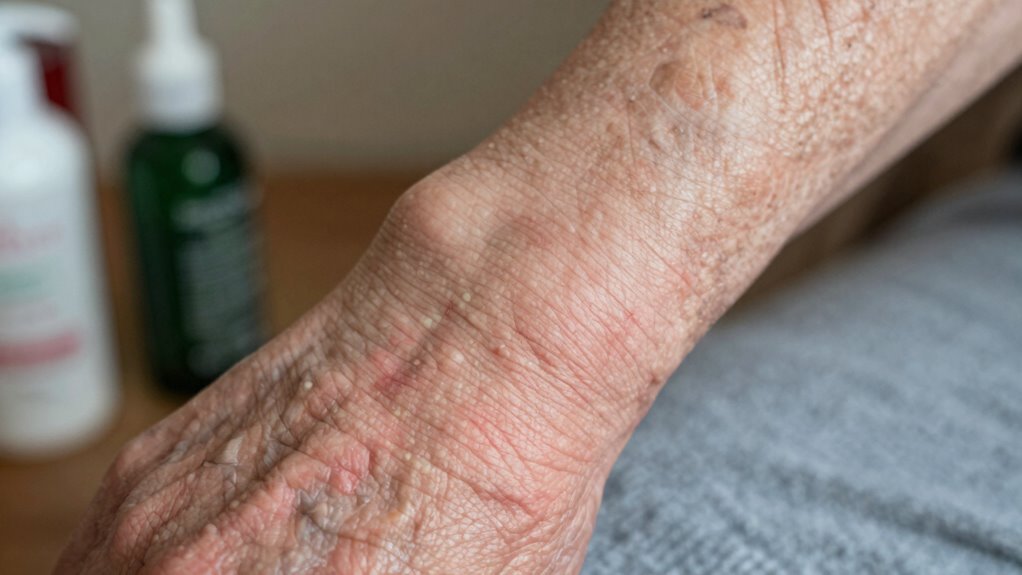
Have you ever wondered why seniors often experience dry skin and itching? As you age, your skin naturally becomes thinner and produces less oil, making it more vulnerable to dryness. This isn’t just a minor inconvenience; it can lead to discomfort and even skin infections if not addressed properly. When tackling dry skin and itching, understanding what actually helps is key. One of the most essential factors is moisturizer effectiveness. A good moisturizer acts as a barrier, locking in moisture and preventing the skin from losing hydration. Look for creams that contain ingredients like hyaluronic acid, glycerin, or ceramides, which are known to boost skin’s moisture content. Applying moisturizer immediately after bathing can also maximize its benefits because your skin absorbs it better when slightly damp. Consistency is vital; using moisturizer twice a day can greatly improve dryness and reduce itching over time. Additionally, choosing appropriate skincare products that are gentle and free of irritants further supports healthy skin. Environmental factors play a vital role in exacerbating dry skin. Cold weather, low humidity, and indoor heating strip moisture from your skin, leaving it dry and itchy. Wind can also damage the outer layer of your skin, making it more prone to irritation. If you notice increased dryness during winter months, it’s wise to use a humidifier in your home to add moisture to the air. Wearing protective clothing and covering exposed skin outdoors can also shield you from harsh environmental elements. Additionally, hot showers and baths, while comforting, can strip your skin of natural oils. Opt for lukewarm water instead and limit bathing time to avoid further dehydration. Using gentle, fragrance-free cleansers helps prevent irritation and preserves the skin’s natural barrier. Hydration from the inside matters too; drinking plenty of water supports your skin’s ability to stay moist and resilient. Incorporating proper skincare routines that include regular moisturizing and environmental protection can make a significant difference in managing dry skin. Maintaining a consistent skincare routine helps your skin adapt over time and prevents further dryness or irritation. Proper external factors such as cold weather and low humidity can accelerate skin dehydration if not properly managed. Managing dry skin and itching requires a combination of proper skincare routines and environmental awareness. By choosing effective moisturizers tailored to your needs and protecting your skin from environmental stressors, you can greatly improve your comfort. Remember, consistency in your skincare habits is essential. Making small adjustments, like using a humidifier or switching to gentle cleansers, can make a noticeable difference in reducing dryness and itchiness. Ultimately, caring for your skin as you age means understanding how external factors influence it and taking proactive steps to keep it well-moisturized. With the right approach, you can minimize discomfort and maintain healthier, more comfortable skin for years to come.
fragrance-free moisturizer for seniors
As an affiliate, we earn on qualifying purchases.
As an affiliate, we earn on qualifying purchases.
Frequently Asked Questions
Can Diet Improvements Reduce Dry Skin in Seniors?
Yes, improving your diet can help reduce dry skin in seniors. Consuming foods rich in essential fatty acids, vitamins A, C, and E supports skin barrier repair and prevents further dryness. Addressing nutritional deficiencies through balanced meals promotes healthy skin, making it less prone to itching and cracking. By nourishing your body properly, you assist your skin’s natural ability to stay hydrated and resilient, alleviating discomfort caused by dry skin.
Are Over-The-Counter Remedies Effective for Senior Dry Skin?
Over-the-counter remedies can be quite effective for senior dry skin, especially when paired with a consistent skincare routine. While natural remedies like oatmeal baths or coconut oil provide soothing relief, their effectiveness varies. You might find that combining these with gentle, fragrance-free moisturizers helps restore moisture and reduce itching. Remember, staying consistent with skincare routines and choosing products suited for sensitive skin can make a noticeable difference in managing dryness.
How Does Hydration Impact Itching Severity?
Hydration effects your itching severity by boosting skin moisture, which helps reduce dryness and irritation. When you stay well-hydrated, your skin retains more moisture, making it less prone to cracking and itching. Drinking enough water throughout the day supports your skin’s natural barrier, easing discomfort. Keep in mind, consistent hydration combined with moisturizing routines provides the best relief, especially for seniors dealing with dry, itchy skin.
When Should Seniors See a Dermatologist for Skin Issues?
Imagine your elderly parent develops persistent, intense itching despite using moisturizers. In this case, you should see a dermatologist promptly. Seniors’ skin is more fragile and prone to issues, so professional care becomes vital. A dermatologist can identify underlying conditions and recommend treatments. Remember, protecting elderly skin with sunscreen is essential to prevent further damage. If skin problems worsen or don’t improve, seeking specialist advice is the best step.
Do Specific Fabrics Worsen Dry Skin or Itching?
Certain fabric types, like wool and synthetic fibers, can worsen dry skin or itching due to textile irritation. These materials often trap heat and moisture, causing discomfort. To soothe your skin, opt for natural fabrics like cotton or silk, which are breathable and less likely to cause irritation. Avoid tight-fitting clothing made from harsh textiles, and choose loose, soft garments to help reduce itching and keep your skin comfortable.
Conclusion
Think of your skin as a delicate tapestry—once it loses moisture, it starts to fray and itch. But with gentle care, moisturizing routines, and avoiding irritants, you can restore its strength and comfort. Don’t let dry skin be a silent thief stealing your comfort; instead, arm yourself with the right habits. Embrace these simple steps, and watch your skin regain its resilience, turning discomfort into a thing of the past.
Cold & flu season Picks
humidifiers
As an affiliate, we earn on qualifying purchases.