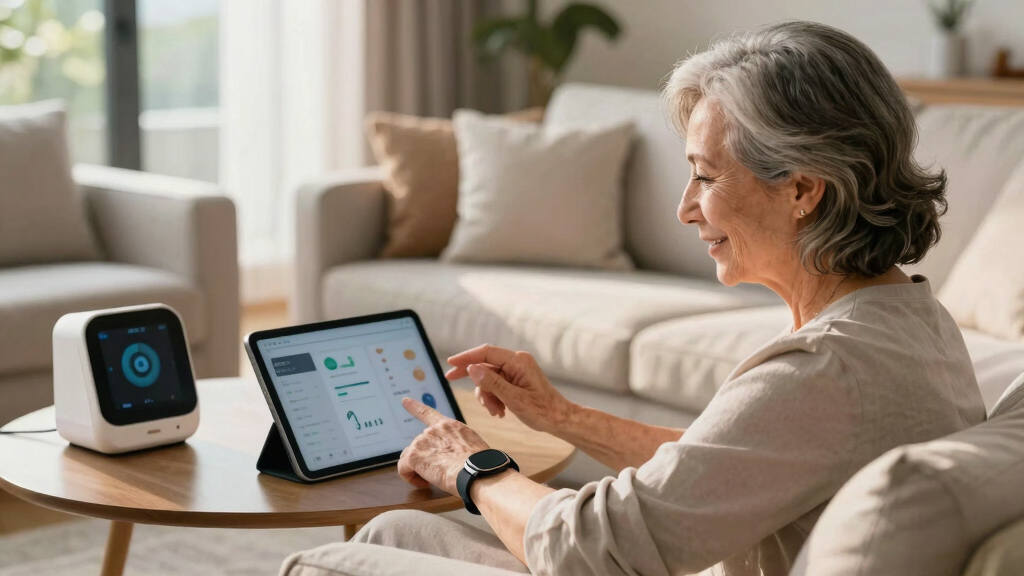

Choosing the right senior care monitoring system involves balancing features, ease of use, and costs. The best overall pick is the Elderly Monitor with Camera and Audio & Call Button, thanks to its comprehensive alerts and health reminders. The NOMO Smart Care Medical Alert System excels for fall detection, while the Life Alert System offers a no-monthly-fee option for simplicity. Each option prioritizes different needs—whether security, affordability, or ease of setup—so understanding your specific situation is key. Continue reading for a detailed breakdown of these top systems and what makes each stand out.
Key Takeaways
- High-quality video and audio features significantly improve the ability to monitor and communicate with seniors remotely.
- Options without Wi-Fi often rely on cellular or direct connections, which can affect usability and reliability.
- Fall detection and emergency response features are essential for seniors with mobility or health risks, but often come at a higher cost.
- Ease of setup and user interface complexity vary widely; choosing a system aligned with the caregiver’s tech skills is crucial.
- Price range varies greatly; investing in a more comprehensive system can reduce the need for multiple devices later.


More Details on Our Top Picks
Elderly Monitors with Camera and Audio, Two-Way Talk, Night Vision, and Alerts
This monitor shines with its comprehensive alert system, wide camera coverage, and long battery life, making it ideal for families seeking a reliable indoor monitoring solution. Compared with the NOMO Smart Care system, it offers more extensive alerts and a larger screen, but it requires a wired power source, which limits placement flexibility. Its secure, private connection without Wi-Fi appeals to those concerned about internet vulnerabilities, although it cannot be accessed remotely. The device’s 355° camera view and 72-hour battery life stand out for round-the-clock care, but the need for constant power may be a hassle in some settings.
Pros:- Comprehensive alerts for fall, SOS, toilet, and medication reminders
- Wide camera view with night vision supports 24/7 monitoring
- Secure, private connection without Wi-Fi
Cons:- Requires wired power source, limiting placement options
- No Wi-Fi connectivity may restrict remote access
Best for: Families needing a high-coverage, secure indoor monitoring system with alert customization.
Not ideal for: Homeowners seeking portable or Wi-Fi-based remote access due to its wired setup and limited mobility.
- Screen Size:5 inches
- Resolution:1280×720
- Camera Range:355° horizontal, 90° vertical
- Night Vision:Yes
- Battery Capacity:3500mAh
- Battery Life:72 hours
Our verdict“This pick suits those prioritizing detailed indoor monitoring and security over remote access flexibility.”
Elderly Monitor with Camera and Audio, Two-Way Talk, No WiFi
This device’s key strength lies in its Wi-Fi-free operation, providing a secure, local connection that safeguards privacy, especially compared to Wi-Fi dependent systems like NOMO Smart Care. Its PTZ camera with 4X zoom, 355° pan, and 90° tilt offers flexible viewing angles, but setup can be complex for less tech-savvy users. The 27-hour battery life and physical mounting options make it suitable for caregivers who prefer offline solutions, yet the lack of remote access limits real-time monitoring outside the home. This model makes the most sense for users who want a secure, private environment without sacrificing essential care features.
Pros:- No Wi-Fi required, ensuring privacy and security
- Long battery life and flexible placement options
- Comprehensive features including medication and temperature alerts
Cons:- Requires manual setup and configuration
- Limited to local connectivity, no remote access via Wi-Fi
Best for: Privacy-focused families or facilities seeking offline, local monitoring with detailed camera control.
Not ideal for: Those needing remote access or easy smartphone control, as it lacks Wi-Fi connectivity and app-based features.
- Battery Capacity:3500mAh
- Camera Pan:355°
- Camera Tilt:90°
- Zoom:4X
- Screen Size:5 inches
- Range:1,000 feet
Our verdict“Ideal for users who prioritize security and local operation over remote monitoring convenience.”
Elderly Monitor with Camera and Audio & Call Button, 2-Way Talk, Temp & Med Reminder, Night Vision, No WiFi
This monitor’s standout feature is its 1,000-foot range, allowing caregivers to keep a close eye from afar, making it especially suitable for larger homes or outdoor environments. Its secure 2.4GHz connection and pan-tilt-zoom capabilities rival the NOMO Smart Care system but with the advantage of no Wi-Fi dependency, ensuring privacy. The call button and medication reminders support effective communication and care management. However, setup can be intricate, and the lack of Wi-Fi limits remote oversight, which may be a drawback for busy caregivers or those wanting remote alerts. Its broad coverage and private connection make it perfect for rural or expansive properties.
Pros:- Secure, private connection over 2.4GHz FHSS
- Long-range monitoring up to 1,000 feet outdoors
- Includes call button, medication, and temperature alerts
Cons:- Requires physical setup and power source
- No Wi-Fi limits remote monitoring capabilities
Best for: Caregivers managing elderly loved ones in large homes or outdoor spaces where remote monitoring is needed.
Not ideal for: Urban dwellers or tech users preferring app-based, remote access, or Wi-Fi-enabled solutions.
- Screen Size:5 inches
- Camera Pan-Tilt-Zoom:355°/90°, 4X zoom
- Connectivity:2.4GHz FHSS
- Battery:3500mAh
- Range:1,000 feet
Our verdict“Best suited for users needing extensive range and secure, local monitoring in large or outdoor spaces.”
Elderly Monitor with Camera and Audio, No Wi-Fi, Portable Video Monitor for Seniors and Dementia Patients
This lightweight, portable monitor’s main advantage is its mobility, equipped with a 720P HD camera and pan-tilt functionality, making it ideal for active seniors or dementia patients who move around the home or outdoors. Its small 2.8-inch screen and 4x digital zoom provide a compact yet capable oversight tool, but the small display may be less practical for users with visual impairments. Operating without Wi-Fi ensures privacy, but also limits remote access, making it more suitable for local, on-the-spot monitoring rather than remote caregiving. This device fits well for caregivers needing mobility but less so for those requiring remote alerts or app integration.
Pros:- Secure, privacy-focused operation without internet
- Wide pan and tilt camera with 720P resolution
- Includes SOS and medication reminders
Cons:- Small screen size may be hard for some users to view
- Limited to local monitoring, no remote access
Best for: Families seeking portable, private monitoring for active seniors or dementia patients in various environments.
Not ideal for: Users who prefer large screens or remote monitoring through apps, due to its small display and offline operation.
- Screen Size:2.8 inches
- Resolution:720P HD
- Rotation:355° horizontal, 90° vertical
- Range:500–1000 feet
- Battery Capacity:2000mAh
Our verdict“Ideal for caregivers needing a mobile, privacy-conscious device to monitor active seniors locally.”
NOMO Smart Care Medical Alert System with Fall Detection for Seniors
The NOMO Smart Care system offers a straightforward, camera-free approach focused on fall detection and emergency response, ideal for caregivers who prefer a simple in-home device. Its plug-and-play setup and two-way voice communication make it accessible, but it relies on Wi-Fi, which can be a limitation for those with unstable internet. The subscription fee after the free trial could add ongoing costs, and its in-home-only design means it isn’t suitable for portable or outdoor needs. Compared to camera-based systems, this option emphasizes privacy and ease of use, making it suitable for users wary of cameras or needing quick, reliable emergency alerts.
Pros:- Simple plug-and-play setup with no wiring needed
- Effective fall detection and instant emergency alerts
- Two-way voice communication
Cons:- Requires Wi-Fi connection, which may be unstable
- Monthly subscription fee after trial
Best for: Elderly individuals at risk of falls who want a straightforward, privacy-conscious safety system at home.
Not ideal for: Those requiring mobile or remote monitoring, or for outdoor use, due to its in-home, Wi-Fi-dependent setup.
- Power Source:AC with battery backup
- Connectivity Technology:Wireless
- Alert Type:Fall detection
- Control Method:App
- Dimensions:10.6 x 4.75 x 7.1 inches
- Unit Weight:1.24 kg
Our verdict“This system is perfect for users seeking a reliable, camera-free safety device primarily for in-home use.”
Life Alert Systems for Seniors No Monthly Fee App-Controlled with Waterproof Wrist Remote, Call Button, Receiver, and LED Display
This system stands out for offering a reliable, long-range connection with a waterproof remote, making it highly suitable for seniors who need safety alerts both inside and outdoors. Compared with the StackCare system, it provides more immediate, real-time notifications via app, but it lacks AI fall detection. Its no monthly fee model for caregiver alerts is a major plus, yet it depends on a stable Wi-Fi network and smartphone app, which could be a hurdle for less tech-savvy users. The waterproof remote adds versatility, especially for shower safety, but the system’s limited to 2.4GHz Wi-Fi may restrict connectivity in some homes.
Pros:- Waterproof remote control suitable for shower use
- Long-range connectivity up to 300 feet
- Supports shared device access via app
- No monthly fee for caregiver notifications
Cons:- Requires smartphone app for remote alerts
- Additional SMS notifications require subscription
- Limited to 2.4GHz Wi-Fi networks
Best for: Families seeking a straightforward, cost-effective safety alert solution with reliable range and waterproof controls.
Not ideal for: Caregivers looking for integrated AI fall detection or in-depth activity monitoring—this system focuses on alerts rather than behavior analysis.
- Compatible Devices:Smartphone
- Number of Batteries:2 A batteries included
- Control Method:App, Push Button
- Maximum Range:300 Feet
- Item Dimensions:3.5″L x 1.7″W x 3.5″H
- Warranty & Support:30-Day Return Guarantee
Our verdict“This pick suits tech-savvy families prioritizing reliable, long-distance safety alerts without ongoing costs.”
Smart Caregiver Video Monitor for Elderly Care and Caregivers, Portable, Rechargeable, Infrared Night Vision, Secure Connection, No WiFi
This monitor offers a standalone, interference-free connection ideal for caregivers who want mobility and simplicity. Unlike the StackCare system, which emphasizes passive, AI-driven activity analysis, this device provides real-time video and two-way audio for direct communication. Its rechargeable battery and portable design make it perfect for moving around the home or even outside, but it’s limited to 720p resolution, which may not satisfy those needing detailed visuals. The absence of WiFi means no remote access, so it’s best for in-home supervision rather than remote caregiving.
Pros:- Secure, interference-free connection
- Includes wireless call buttons for assistance
- Portable and rechargeable for flexible use
- Simple setup with two-way audio and night vision
Cons:- Limited to 720p video quality
- Battery life may be limited during extended use
- No remote access via internet
Best for: Families needing a flexible, easy-to-use device for in-home supervision without the complexity of WiFi setup.
Not ideal for: Those seeking advanced AI fall detection or remote access features—this monitor is primarily local and portable.
- Video Quality:720p
- Night Vision Range:15 Feet
- Control Method:Remote
- Mount Type:Surface Mount
- Color:White
- Connectivity:Wireless Bluetooth
Our verdict“This device is well-suited for caregivers who prioritize mobility and straightforward in-home supervision over remote monitoring features.”
StackCare Connected Caregiver Medical Alert System with Fall Detection
Compared with camera-based systems like the Elderly Monitor with Camera and Audio, this setup emphasizes privacy with discreet sensors that track activity patterns without video. Its AI-powered fall detection and behavior analysis provide proactive alerts, making it ideal for families concerned about accidents but wary of constant camera surveillance. While setup is quick and simple, the subscription fee after the first month and reliance on WiFi for activity monitoring might deter those seeking a low-cost, always-on solution. It’s best suited for in-home use where privacy is a priority but consistent WiFi is available.
Pros:- Discreet, camera-free monitoring
- AI-driven fall detection and behavior alerts
- Easy installation with smartphone app
- Provides daily activity summaries
Cons:- Subscription fee after initial month
- Limited to in-home WiFi use
- Requires smartphone for monitoring
Best for: Families wanting discreet, AI-driven activity and fall monitoring without cameras or wearables.
Not ideal for: Caregivers seeking visual confirmation or remote video access—this system relies on sensors and AI analysis only.
- Monitoring Type:Passive motion and contact sensors
- Fall Detection:AI-powered room-level movement analysis
- Setup:No tools required
- App Compatibility:iPhone and Android
- Subscription Cost:$75/month
Our verdict“This system makes sense for privacy-conscious families seeking AI-based activity insights and fall alerts in the home environment.”
Elderly Monitor with Camera and Audio, 2-Way Talk, Night Vision, and Temp Monitoring
Compared to the non-visual options like the Life Alert system, this monitor offers comprehensive visual oversight with a pan-tilt-zoom camera, making it well-suited for families wanting detailed, real-time video of their loved ones. Its two-way talk and temperature monitoring add layers of communication and safety. However, the lack of WiFi limits remote access, so it’s primarily an in-home device. The smart VOX mode conserves battery, but without internet connectivity, caregivers can’t access live feeds remotely, which could be a significant drawback for those wanting remote updates or alerts.
Pros:- Clear two-way communication
- Includes night vision and temperature sensors
- Pan-tilt-zoom camera for flexible viewing
- Smart VOX mode conserves battery
Cons:- Requires no WiFi, limiting remote access
- Potentially limited features without internet connectivity
- Not suitable for remote caregivers
Best for: Families desiring a detailed, visual presence with environmental monitoring, mainly for in-home use.
Not ideal for: Those needing remote access or smartphone notifications—this device is designed for local supervision only.
- Two-Way Talk:Yes
- Night Vision:Yes
- Temperature Monitoring:Yes
- Call Button:Yes
- Med Reminder:Yes
- Pan-Tilt-Zoom:Yes
Our verdict“This monitor is best for families who prioritize detailed in-home visual oversight over remote management features.”
How We Picked
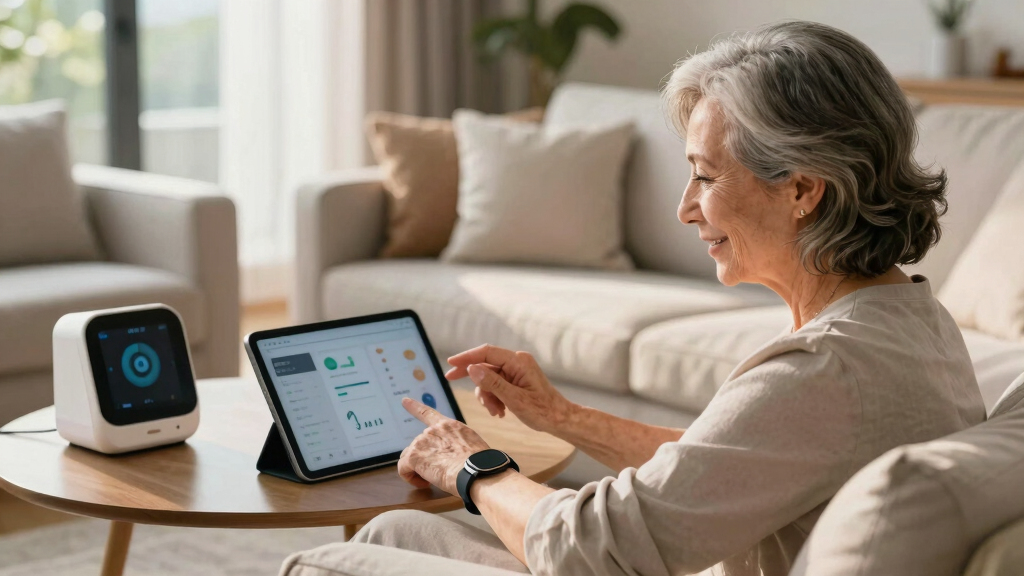
Our evaluation focused on performance, usability, build quality, and value. We prioritized products with reliable video and audio quality, straightforward setup, and strong security features. Additional criteria included the availability of emergency alerts, fall detection, and compatibility with other caregiver tools. We also considered customer reviews and manufacturer support to ensure these systems are dependable for everyday senior care. The ranking reflects a balance of features versus cost, emphasizing systems that serve real-world needs without unnecessary complexity.
Factors to Consider When Choosing Senior Care Monitoring Systems
Choosing a senior care monitoring system requires understanding your specific needs and the environment in which it will be used. Factors like connectivity options, ease of installation, and emergency features should align with the senior’s health status and caregiver capabilities. It’s also important to consider long-term costs, user-friendliness, and whether the system integrates with other safety tools. Recognizing these broader considerations can help prevent common mistakes—such as overpaying for features that won’t be used or selecting systems too complex for daily use.Connectivity and Compatibility
Deciding between Wi-Fi-based and cellular-connected systems impacts reliability and setup. Wi-Fi systems are often easier to set up but depend on stable home internet, which might not be reliable in all environments. Cellular systems can work anywhere with coverage but may require ongoing service plans. Consider what’s more practical for your situation and whether the system integrates with other devices or apps used for elder care, such as emergency contacts or health trackers.
Emergency and Safety Features
Features like fall detection, emergency call buttons, and remote alerts are vital for seniors with mobility challenges or health concerns. While these features add to the cost, they can provide peace of mind and rapid assistance in emergencies. Be mindful that some systems require manual activation, so assess whether automatic detection or quick-access buttons better suit your senior’s needs. Balance the importance of these features against ease of use to avoid frustration or missed alerts.
Ease of Use and Setup
Systems with complex interfaces or complicated installation processes can become burdensome for both seniors and caregivers. Look for options that offer straightforward setup, clear instructions, and simple controls. Portable or wireless models tend to be more flexible, especially if the senior moves between locations. Remember that a user-friendly device can significantly improve adherence and effectiveness over time, even if it means paying a little more upfront.
Cost and Long-term Value
Initial prices vary widely, but it’s important to consider ongoing costs such as subscription fees or cellular plans for certain systems. Sometimes paying more upfront for a system with comprehensive features reduces the need for additional devices later. Conversely, budget options might lack critical features like fall detection or remote alerting, potentially increasing risks. Weigh the total cost of ownership versus the benefits each system provides for your specific needs.
Privacy and Security
Monitoring systems collect sensitive health and activity data, so privacy protections are essential. Look for devices with secure data encryption, clear privacy policies, and control over who can access the information. Be cautious of systems that transmit data over unsecured channels, which could pose security risks. Ensuring privacy is especially important if the senior values independence but still needs oversight.
Frequently Asked Questions
Can I use a senior care monitoring system if I don’t live nearby?
Yes, many monitoring systems are designed for remote oversight, enabling caregivers to check in via video or receive alerts regardless of location. Devices with app controls or cloud connectivity facilitate real-time updates and communication. However, it’s essential to confirm that the system’s internet or cellular requirements are met and that the senior can operate or be supported by someone remotely in case of technical issues.
Are these systems suitable for seniors with dementia?
Many senior care monitoring systems include features like motion detection, emergency buttons, and simple communication tools that can be helpful for seniors with dementia. Portable or easy-to-use models reduce confusion and frustration, but it’s important to choose systems with minimal setup complexity. Regular monitoring and caregiver alerts can help ensure safety, but supervision and training are key to effective use.
What is the typical cost of a senior care monitoring system?
Prices vary depending on features, with basic models starting around $50 to $150, while more comprehensive systems with fall detection and 24/7 alerts can range from $200 to over $500. Additional costs, such as monthly service fees or cellular plans, should also be factored in. Evaluating the long-term value helps determine whether an investment in a higher-priced system offers enough benefits for your specific situation.
How difficult is it to set up and maintain these systems?
Setup difficulty varies; some systems require only plugging in and connecting to Wi-Fi, while others need more configuration. Many models now feature plug-and-play designs with detailed instructions, making installation manageable for most caregivers. Maintenance typically involves occasional updates and battery replacements. Choosing a system with clear instructions and reliable customer support can reduce setup stress and ongoing management issues.
Do these systems work without internet access?
Some senior care systems operate without internet by using cellular connections or direct radio signals, making them suitable for homes with unreliable Wi-Fi. Devices without Wi-Fi often rely on cellular plans, which can add to ongoing costs. If internet access is limited or unstable, selecting a system with cellular connectivity or standalone features can ensure continuous monitoring and emergency response.
Conclusion
For caregivers seeking a comprehensive, all-in-one solution, the Elderly Monitor with Camera and Audio & Call Button offers a balanced mix of features and ease of use, making it the best overall choice. Those prioritizing affordability and straightforward setup may find the Life Alert System ideal, especially if monthly fees are a concern. For families with seniors at high fall risk, the NOMO Smart Care Medical Alert System provides critical fall detection and emergency response. Beginners or less tech-savvy users should focus on systems with simple interfaces, while those managing complex medical needs might opt for premium, multi-feature setups. Tailoring your choice to these profiles ensures the best fit for your senior’s safety and your peace of mind.