
TL;DR

Turn quiet afternoons into listening time
- Thousands of audiobooks, podcasts and originals
- Listen on your phone, tablet or Echo — also offline
- Cancel anytime
A Fit&Well report presents four exercises—sit-to-stand with knee lifts, a dumbbell-supported leg raise, farmer carries and shoulder presses—as a routine for strength and balance. The instructor links the movements to daily tasks such as standing from a seat, walking with groceries and reaching overhead; the report is guidance, not evidence from a clinical trial.
Fit&Well has published a four-exercise routine intended to build strength and balance for everyday tasks as people age, with moves including chair sit-to-stands, a one-sided leg raise, farmer carries and shoulder presses. The instructor behind the routine says the exercises reflect activities older clients want to manage independently, such as getting out of a car, carrying groceries and reaching a high shelf.
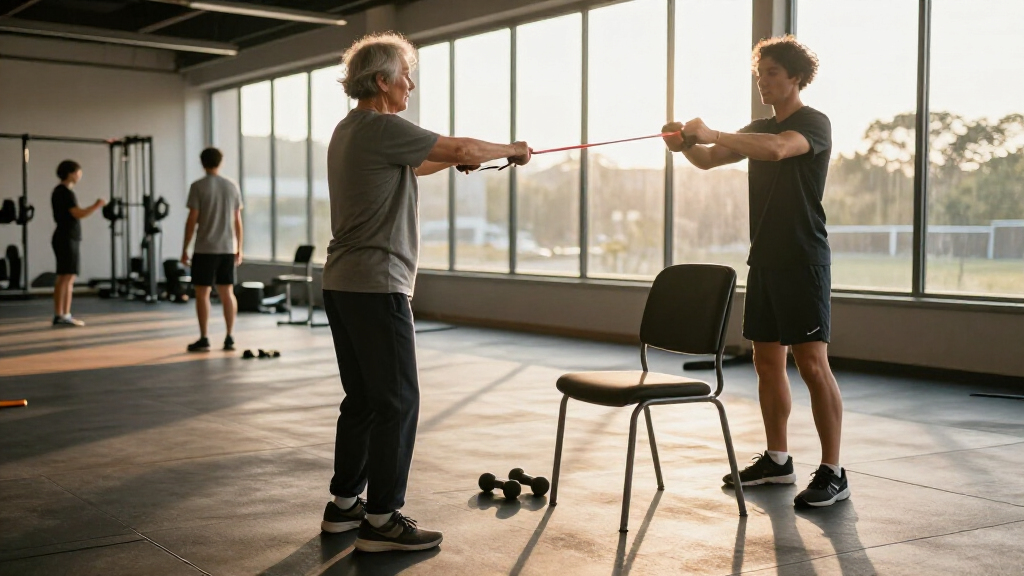
The routine calls for a sturdy chair and a pair of dumbbells, with weights light enough to control throughout each movement. The report recommends two rounds: eight repetitions of each exercise, or eight per side where relevant, and 30 seconds for each farmer carry, with 30 seconds of rest between carries.
The first move combines seated knee lifts with a sit-to-stand. From a chair, the participant lifts each knee in turn, then stands and lowers back down with control. The instructor says the knee lifts work the hip flexors used to move the legs, while standing engages the thighs and glutes. The second move is a standing side leg raise while holding one dumbbell in the opposite hand; the report says working one side at a time challenges balance.
For the farmer carry, participants walk with a dumbbell in each hand, keeping the torso upright, then set the weights down carefully. The final move is a shoulder press from either a seated or standing position, pressing dumbbells from shoulder height overhead without arching the lower back. The report links the carry to grocery bags and the press to lifting objects onto a shelf.
Training for Everyday Independence
The routine is framed around practical strength, rather than athletic performance: standing from a low seat, moving the legs, carrying weight and reaching overhead. Those activities can affect how easily a person manages daily life, which is why the instructor presents them as useful targets for exercise in middle age and later life.
The Fit&Well report also offers personal examples from the instructor’s classes. One client’s upper-body strength was remarked on by a nurse after hip replacement surgery, the instructor says; other clients described easier transfers into a car and being able to walk farther. These are anecdotes, not measured research findings, and the report does not establish that this exact routine produces those outcomes.
As an affiliate, we earn on qualifying purchases.
A Routine Built Around Daily Tasks
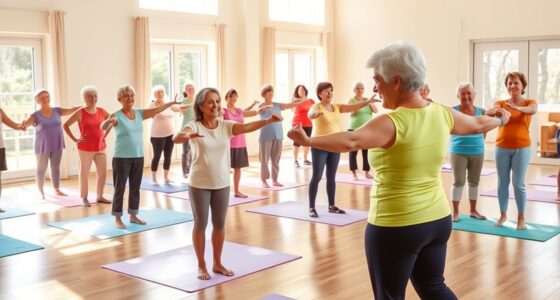
The report is written by an instructor who teaches chair-based workout classes to adults from their late 60s into their 90s. The instructor says many participants attend because they want to stay independent and manage routine activities, including shopping, walking and getting in and out of a car.
That experience informs the choice of movements. The chair exercise pairs leg movement with standing from a seat; the side raise adds a balance challenge; the carry practices walking while holding weight; and the press works the shoulders and arms. The article also argues that people can begin building strength in their 40s and 50s to prepare for later-life activities. It does not provide a study, comparison group or evidence that the four moves are superior to other strength and balance exercises.
Limits of the Report’s Evidence
The source presents the exercises as an instructor’s recommendations, not as a clinical study or formal ranking of the four best movements. It does not specify how long participants should follow the routine, how to increase resistance over time, or whether the exercises were tested for their effects on falls, mobility or independence.
The report also gives no individual adaptations for people with pain, limited mobility, balance difficulties or medical conditions. It does not establish that the routine is suitable for everyone. Anyone unsure whether these movements are appropriate for them should seek guidance from a qualified health or exercise professional.
Applying the Moves Safely
The report provides the sequence and suggested repetitions, but leaves readers to decide whether to use the routine and how to adapt it to their abilities. Its immediate guidance is to use a sturdy chair, begin with manageable dumbbells and keep each movement controlled. For the carry, it advises walking without leaning from side to side; for the press, it cautions against arching the lower back.
No additional study, follow-up or publication update is identified in the source material. Whether the routine improves strength or balance for a particular person remains dependent on factors the report does not assess, including starting ability and consistency of practice.
Key Questions
What are the four exercises in the routine?
The routine combines seated knee lifts and sit-to-stands, a dumbbell hold with a side leg raise, farmer carries and shoulder presses.
How many repetitions does the report recommend?
It suggests two rounds, with eight repetitions per exercise or per side where relevant. Farmer carries are prescribed for 30 seconds, with 30 seconds of rest.
What equipment is needed?
The report calls for a sturdy chair and a pair of dumbbells. It advises choosing weights that can be controlled throughout each movement.
Does the report prove these are the best exercises for older adults?
No. It describes an instructor’s recommendations and experience with clients; it does not report a study comparing these exercises with other routines or proving specific health outcomes.
Source: rss
Fall Picks
fall essentials
As an affiliate, we earn on qualifying purchases.