To install grab bars that really work, start by choosing a sturdy, moisture-resistant bar suited to your space and needs. Use a stud finder to locate secure wall studs, then mark your drill spots carefully. Drill straight and deep into the studs, attach the grab bar tightly but avoid over-tightening, and test its stability by applying pressure. Regularly check and maintain the hardware to guarantee ongoing safety. Keep going, and you’ll discover tips to make your installation even more secure.
Key Takeaways
- Assess your support needs and choose a durable, ergonomic grab bar designed for wet conditions.
- Find secure wall locations by locating studs and confirming wall strength before installation.
- Mark precise drill points aligned with studs or anchors, then drill deep and straight for stability.
- Tighten mounting hardware firmly without over-tightening, ensuring the grab bar is secure and level.
- Regularly inspect and maintain the grab bar for looseness, corrosion, and damage to ensure safety and longevity.
Assess Your Needs and Choose the Right Grab Bar
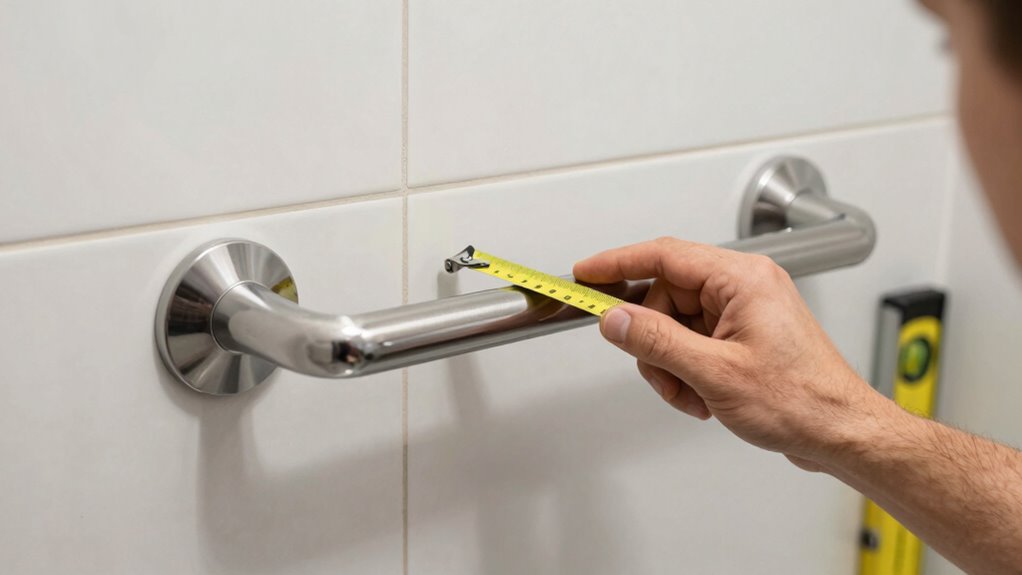
Before selecting a grab bar, you need to assess your specific needs and the space where you’ll install it. Think about whether you require support for standing, sitting, or balance assistance. Measure the available area to guarantee the grab bar fits comfortably without obstructing movement. When choosing materials, consider durability, grip, and resistance to moisture—stainless steel and certain plastics are popular options. An ergonomic design is essential; look for grab bars that contour naturally to your hand, offering a secure grip even when wet. Ensure the bar’s shape and size match your strength and comfort level. Additionally, understanding the proper installation practices and load capacity standards is crucial for safety and effectiveness. Using natural materials that blend with your environment can also enhance both safety and aesthetics. Research indicates that electric dirt bikes can produce significant horsepower, which emphasizes the importance of secure and reliable grab bars in environments where such activities occur. Paying attention to installation techniques and ensuring proper anchoring are vital for optimal support and safety. By carefully evaluating your needs and prioritizing ergonomic design and suitable materials, you set a solid foundation for effective, safe installation.
Gather Tools and Materials for Installation
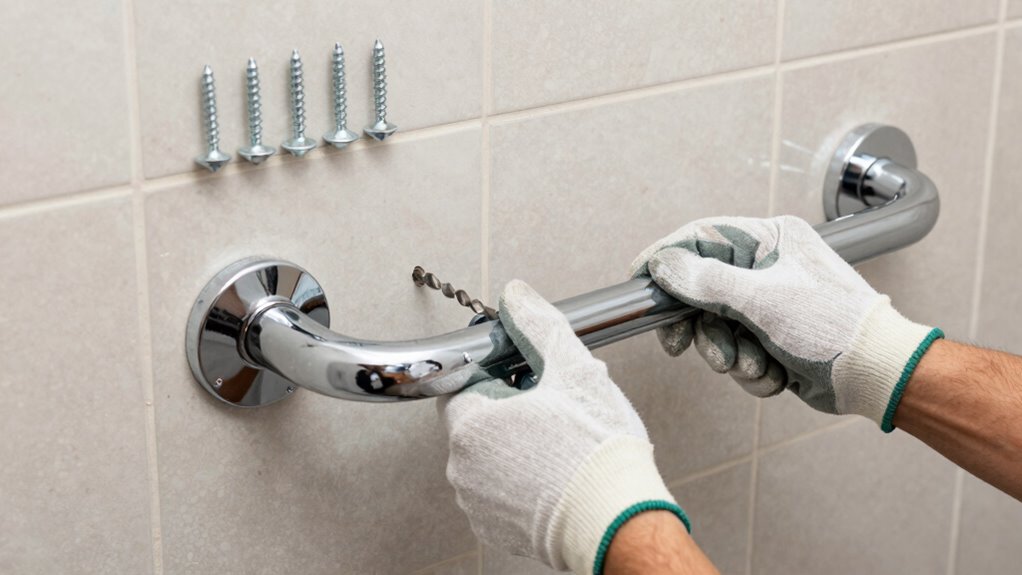
To guarantee a smooth installation process, gather all the necessary tools and materials beforehand. Start with a clear tool checklist that includes a drill, level, measuring tape, screwdriver, studs finder, and possibly a wrench. For material selection, choose high-quality grab bars made from durable materials like stainless steel or coated metal, and verify you have the appropriate mounting hardware. Double-check that your grab bar matches your space’s needs and weight capacity. Having everything ready prevents multiple trips to the store and keeps the project on track. Make sure your tools are in good condition, and gather safety equipment like gloves and goggles. Proper preparation ensures a straightforward installation and a secure, reliable grab bar that will serve you well. Also, understanding load capacity is essential to ensure your grab bar can support the intended weight safely. Additionally, familiarizing yourself with essential oils for safety and health can help you create a safer environment during your project. Being aware of proper installation techniques can further enhance the stability and safety of your grab bars, especially when considering weight distribution to prevent accidents. Remember that installation guidelines provided by manufacturers can offer valuable insights to achieve optimal results.
Find the Best Spot and Securely Locate the Studs
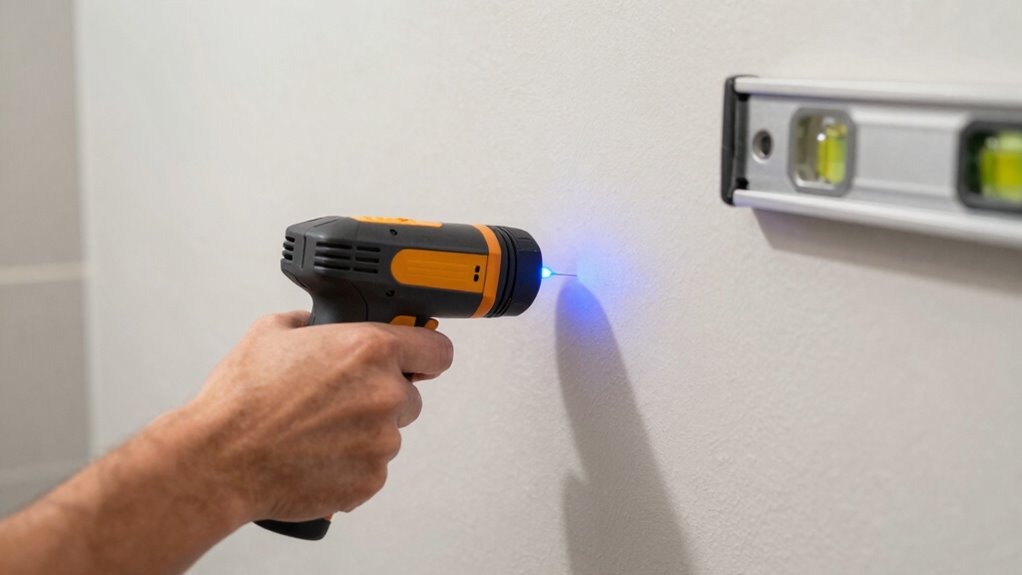
Finding the best spot for your grab bar starts with identifying a sturdy, reliable location that offers the most support. To do this effectively: 1. Use a stud finder to locate wall studs, ensuring your grab bar is anchored securely. 2. Mark the spots where the stud finder indicates a stud for precise placement. 3. If you can’t find a stud in the desired location, consider using wall anchors designed to hold weight safely. Additionally, selecting a wall with proper structure and support is essential for ensuring the grab bar can withstand significant weight and usage. Proper wall reinforcement may be necessary in areas lacking sufficient framing to guarantee safety, especially when dealing with load-bearing capacity considerations. Ensuring the wall’s integrity is crucial for safety and durability of the installation. Being aware of material strength can help prevent potential failures over time.
Install Your Grab Bar Safely in Easy Steps
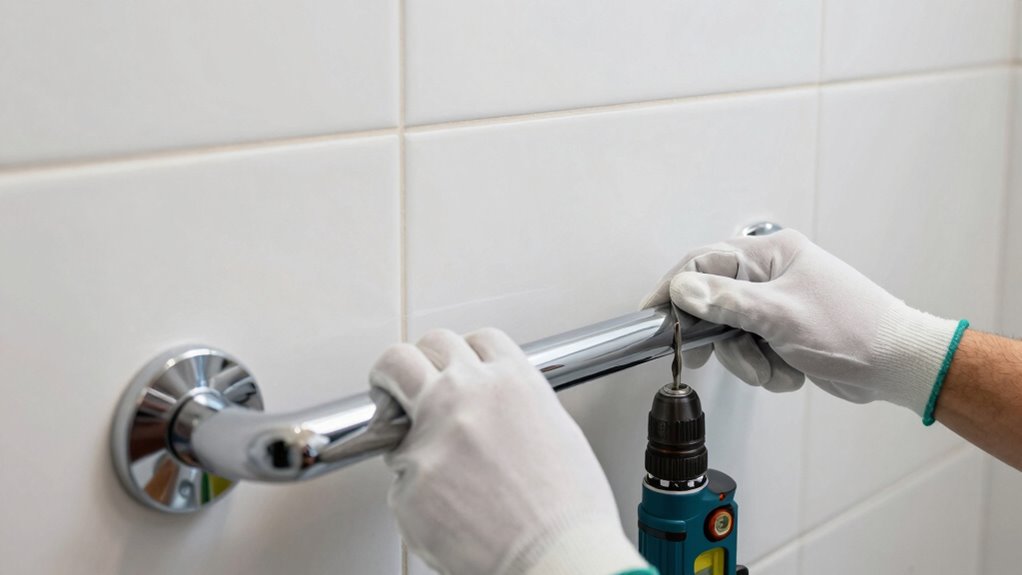
Once you’ve identified the best spot and secured the studs or wall anchors, it’s time to install your grab bar safely by following a few straightforward steps. First, review design considerations to guarantee the grab bar is positioned for maximum support and accessibility. Check legal requirements in your area, such as height and placement standards, to confirm compliance. Mark the drill holes carefully, making sure they align with your wall anchors or studs. Drill holes straight and deep enough for the mounting hardware. Attach the grab bar securely using the appropriate screws, tightening them firmly without over-tightening, which could damage the wall or bar. Proper installation assures safety, stability, and adherence to legal standards, giving you peace of mind every time you use the grab bar. Proper installation is essential for ensuring the grab bar’s effectiveness and safety. Additionally, using power tools like drills can help you achieve precise and secure mounting. Ensuring you select the right wall anchors or studs is crucial for holding the weight and providing reliable support, especially considering wall strength and material for optimal safety.
Test Your Grab Bar’s Support and Fix Common Issues
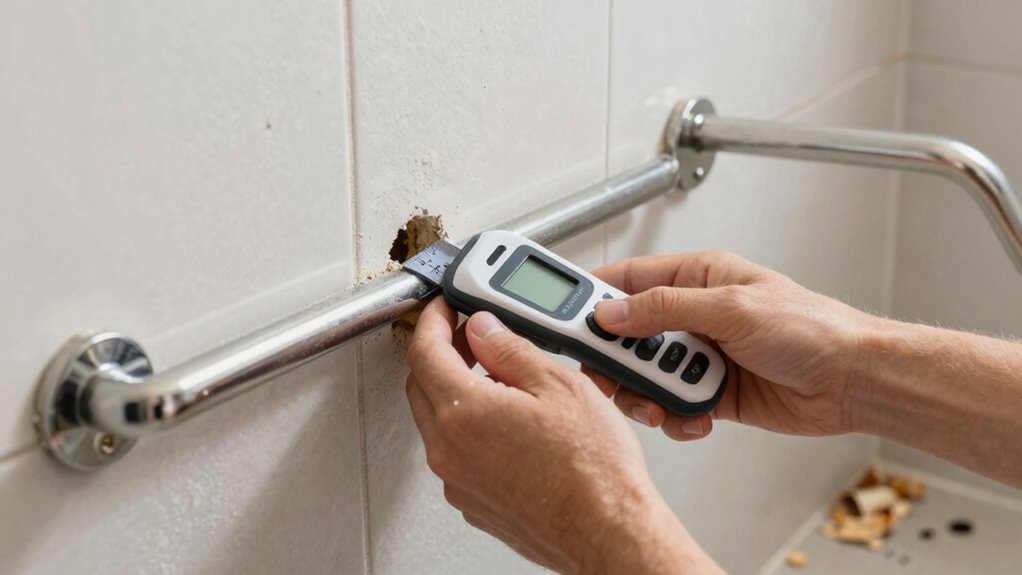
After installing your grab bar, you need to test its support to guarantee safety. Check for secure mounting and tighten any loose fittings promptly. Addressing these issues now prevents accidents and keeps your grab bar reliable. Being aware of affiliate disclosure policies ensures transparency in your purchases related to safety equipment. Additionally, regularly inspecting the installation hardware will help maintain the grab bar’s effectiveness over time. Ensuring proper installation techniques can further prevent loosening or failure of the grab bar. Incorporating appropriate ventilation considerations can also help prevent corrosion and deterioration of the hardware. Understanding regional safety standards can guide you in choosing and installing the most reliable grab bars for your needs.
Secure Mounting Techniques
To make certain your grab bar provides reliable support, it’s vital to test its mounting strength once installed. Secure mounting techniques ensure safety and durability. First, check the hardware to confirm all screws and anchors are tight and properly aligned. Second, consider alternative mounting methods, like using heavy-duty toggle bolts or adhesive mounts, for drywall or tile surfaces where standard anchors may not suffice. Third, explore decorative grab bar options that incorporate secure mounting hardware, blending safety with style. These techniques prevent loosening over time and maintain stability. Always verify the installation’s stability by applying gentle pressure. Properly mounted grab bars, whether through traditional or alternative methods, provide peace of mind and reliable support when you need it most. Additionally, understanding modern kitchen technology can inspire innovative solutions for home safety, including smart support systems that monitor stability and alert you to potential issues. Incorporating innovative mounting hardware can further enhance the security and longevity of your grab bars. Regular inspections and maintenance practices are also essential to ensure continued safety and performance.
Identify and Fix Looseness
Testing your grab bar’s support is a key step in ensuring safety. First, gently apply pressure at different points to check for looseness. If the grab bar shifts or moves, it indicates a problem with the mounting surface or hardware. Always verify that your grab bar’s mounting surface is solid and free of damage or debris. Tighten any loose screws or bolts, making sure they’re securely fastened to meet the specified weight capacity. If the support still feels unstable, consider removing the grab bar and inspecting the wall or surface behind it for cracks or weak spots. Address any issues before re-installing. Remember, a secure, well-fixed grab bar should support your weight comfortably without any wobbling or give.
Maintain Your Grab Bar for Long-Lasting Safety

Regularly inspecting your grab bar is essential to guarantee it remains secure and effective. To keep it in top condition, follow these steps:
- Clean it regularly with gentle cleaning tips to remove dirt and prevent grime buildup. Use non-abrasive cleaners to protect the finish.
- Check for any signs of wear or corrosion, and tighten any loose screws immediately.
- Explore aesthetic options like decorative covers or matching hardware to keep your grab bar looking attractive while maintaining safety.
Maintaining your grab bar not only ensures safety but also keeps it looking good. Proper cleaning tips and aesthetic updates can extend its lifespan and enhance your space’s overall look. Stay proactive for long-lasting safety.
Frequently Asked Questions
Can Grab Bars Be Installed on Tile or Drywall Surfaces?
Yes, you can install grab bars on tile or drywall surfaces. For tile, you should use a drill with a carbide-tipped bit for tile installation, then anchor the grab bar securely using appropriate screws and anchors. When mounting on drywall, locate studs for a sturdy hold or use heavy-duty drywall anchors designed for weight. make certain the grab bar is firmly secured to provide reliable support and safety.
What Is the Maximum Weight Capacity for a Standard Grab Bar?
You’ll find that most standard grab bars have weight limits between 250 and 500 pounds, depending on material strength and design. Always check the manufacturer’s specifications to guarantee it meets your needs. Opt for bars made from durable materials like stainless steel, which offer higher strength and reliability. Proper installation on solid surfaces also helps maximize weight capacity, ensuring the grab bar provides safe support when you need it most.
Are There Specific Codes or Regulations for Grab Bar Installation?
When it comes to grab bar installation, you must follow building codes and safety standards to stay on solid ground. Local regulations often specify the height, placement, and type of grab bars, especially in bathrooms. It’s crucial to check your area’s specific rules, as they can vary. Adhering to these codes ensures your grab bars are secure, safe, and compliant, so you’re not caught with your pants down when it counts most.
How Often Should I Inspect My Grab Bars for Safety?
You should inspect your grab bars at least once a month as part of your maintenance schedule. Look for signs of wear and tear, such as looseness, rust, or damage to the mounting hardware. If you notice any issues, tighten or replace the grab bar immediately. Regular inspections guarantee your grab bars stay secure and safe, reducing the risk of accidents and maintaining their effectiveness for daily use.
Can I Install Grab Bars Myself or Should I Hire a Professional?
Sure, you can try DIY installation, but unless you’re a plumbing or construction wizard, it’s best to call in professional expertise. Installing grab bars isn’t just about screwing into drywall; it’s about safety and proper support. Doing it yourself might seem tempting, but a professional ensures they’re securely anchored in studs or blocking, reducing the risk of injury if you need to grab onto them in an emergency. Play it safe!
Conclusion
Remember, safety is no accident. By choosing the right grab bar, installing it properly, and maintaining it well, you’re protecting yourself or loved ones for years to come. Take your time and double-check your work—good things come to those who prepare. When it comes to safety, it’s better to be safe than sorry. With a little effort, you’ll create a secure space that offers peace of mind every day.