Using visual guides can help you support a person with dementia to use equipment safely and confidently. Clear, simple cues like familiar symbols, step-by-step instructions, and visual reminders reduce confusion and promote independence. Make the guides accessible and consistent, and train caregivers or family members to help reinforce their use. By understanding how to select and implement effective visual aids, you’ll find ways to improve safety and comfort—more helpful strategies await as you explore further.

Turn quiet afternoons into listening time
- Thousands of audiobooks, podcasts and originals
- Listen on your phone, tablet or Echo — also offline
- Cancel anytime
Key Takeaways
- Use simple, recognizable visuals and symbols to reinforce understanding and aid memory during equipment use.
- Place visual guides in visible, frequently used areas to promote independence and safety.
- Incorporate consistent visuals and cues to create routines and reduce confusion.
- Test and adapt visual aids based on individual responses to ensure clarity and effectiveness.
- Combine visual guides with verbal prompts and caregiver support for enhanced comprehension.
As an affiliate, we earn on qualifying purchases.
Why Visual Guides Help People With Dementia Use Equipment Safely

Visual guides are essential because they provide clear, simple cues that help people with dementia understand how to use equipment safely. These visual tools support memory retention by reinforcing familiar steps and making instructions more memorable. When information is presented visually, it enhances visual comprehension, allowing users to recognize and follow cues easily. This is especially important for those experiencing memory challenges, as images and symbols can be more effective than words alone. By reducing confusion and uncertainty, visual guides promote confidence and independence. They serve as constant reminders, helping individuals remember the correct sequence of actions and operate equipment safely. Incorporating practical design principles into visual guides ensures they are accessible and effective for users with cognitive impairments. Additionally, using contrast and clear visuals can significantly improve the user’s ability to distinguish key components and steps. Applying universal design principles further ensures that visual cues are usable by a diverse range of individuals with varying abilities. Furthermore, integrating evidence-based practices into visual guides enhances their effectiveness and safety. Including user-centered design approaches can also help tailor visual aids to meet individual needs more effectively. Ultimately, visual guides make equipment use more accessible and secure for people with dementia.
Understanding Challenges in Using Equipment With Dementia

Understanding the challenges your loved one faces when using equipment is essential. Cognitive barriers, physical limitations, and emotional responses can all affect their ability to use devices safely and effectively. Recognizing these issues helps you tailor support strategies that make equipment more accessible. Additionally, considering factors like electric bike horsepower can inform adjustments to equipment use, ensuring safety and comfort. Regularly consulting filtration and pump protection guidelines can also prevent equipment malfunctions that may exacerbate these challenges. Incorporating adaptive technology solutions can further enhance usability and independence for individuals with dementia. Being aware of assistive devices options can also provide additional support to improve daily functioning. Exploring specialized equipment designed for cognitive impairments can offer additional tailored support to meet their unique needs.
Cognitive Barriers to Use
Cognitive impairments associated with dementia often make it difficult for individuals to learn, remember, or follow instructions when using equipment. Memory challenges can cause them to forget how to operate devices, while attention difficulties make it hard to focus on steps. These barriers can lead to frustration and confusion, even with familiar routines. You might notice that despite your efforts, the person struggles to complete tasks or loses track of what they’re doing. Additionally, the unmissable acts at events like Burning Sands Festival showcase the importance of audience engagement and tailored experiences, which can serve as inspiration for designing supportive environments. Incorporating visual cues and simple instructions can significantly reduce these cognitive barriers, helping individuals feel more confident and secure during equipment use. Utilizing familiar and accessible technologies can further support their independence and ease of learning new routines. Being aware of potential overwhelm and anxiety during use can help you provide better support and reassurance. Recognizing that cognitive impairments impact task learning and execution underscores the importance of adapting your approach. Feeling overwhelmed or anxious during use
- Forgetting steps quickly
- Losing focus mid-task
- Becoming frustrated or agitated
- Giving up out of confusion
Understanding these cognitive barriers helps you develop patience and tailored support. Visual cues and simple instructions can reduce these challenges, fostering a sense of independence and safety.
Physical Limitations Impacting Use
While cognitive challenges can hinder a person with dementia from remembering how to operate equipment, physical limitations may further complicate their ability to use devices effectively. Sensory impairments, like vision or hearing loss, can make it difficult to follow visual cues or hear instructions, reducing their understanding of how to use the equipment. Motor challenges, such as tremors, weakness, or poor coordination, can impair their ability to grasp, press, or manipulate devices properly. These physical limitations often lead to frustration or misuse of equipment, increasing safety risks. To support them, consider adaptive tools like larger buttons, textured surfaces, or amplified audio. Simplifying device operation and providing clear, visual step-by-step guides can also improve their ability to interact independently. Recognizing physical limitations, such as tremors or weakness, is essential for selecting appropriate assistive devices and modifications to enhance safety and usability. Incorporating assistive technology designed for physical impairments can further promote independence and safety. Additionally, utilizing adaptive tools tailored to specific physical challenges can make device use more accessible and reduce frustration. Providing training and ongoing support can also help individuals build confidence and competence in using their equipment safely. Understanding the impact of muscle weakness on device handling can help caregivers choose the right tools and techniques for assistance.
Emotional Responses to Equipment
Emotional responses play a significant role in how individuals with dementia interact with equipment. Their feelings can influence whether they accept or reject the tools designed to help them. Recognizing these emotions helps you better support equipment acceptance and reduce frustration. You might notice feelings such as:
- Anxiety or fear when faced with new devices
- Frustration from difficulty understanding instructions
- Confusion about unfamiliar equipment
- Resentment toward changes in routine
- Relief when equipment feels familiar and safe
- Understanding the importance of emotional responses can improve the way caregivers introduce and support new equipment, fostering greater comfort and confidence. Additionally, implementing client satisfaction strategies can enhance overall acceptance of assistive tools. Being aware of the quality and freshness of the equipment can also influence a person’s willingness to engage positively. Incorporating creative storytelling techniques can help contextualize the equipment, making it easier for individuals with dementia to relate to and accept new tools. Recognizing modern farmhouse decor trends can inspire creative ways to make equipment environments more comforting and familiar.
Choosing the Right Visual Aids for Dementia Support
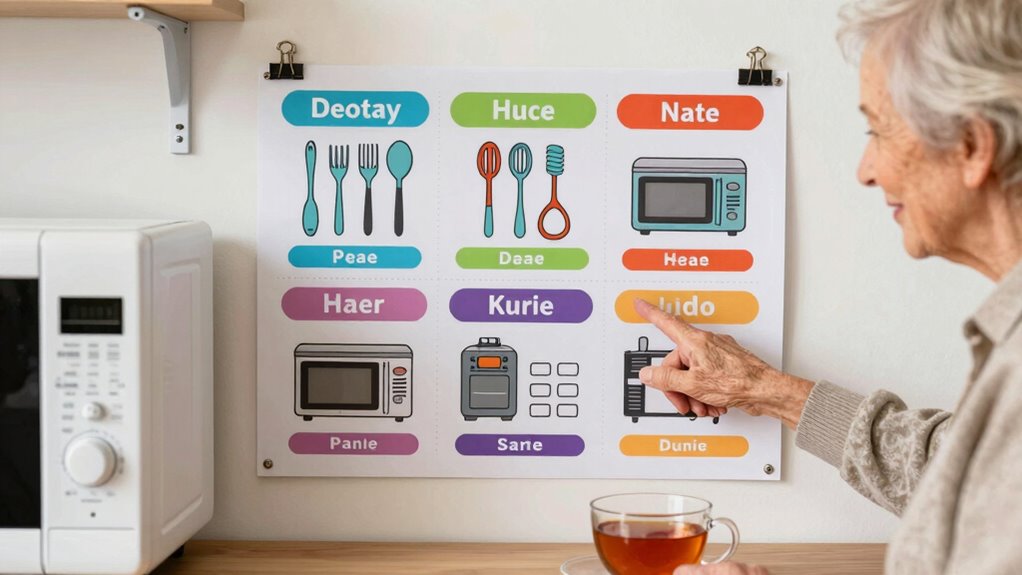
Choosing the right visual aids is essential for effectively supporting someone with dementia, as the right tools can make daily tasks more manageable and reduce confusion. Focus on visual cues that enhance memory, such as clear labels or simple symbols, to help them recognize objects and actions easily. Consistency is key; use the same visuals across different areas to create familiarity and improve understanding. Avoid cluttered or overly complex images, which can overwhelm or distract. Instead, opt for straightforward, recognizable visuals that align with the person’s experiences. By selecting aids that reinforce memory cues and maintain visual consistency, you help foster independence and confidence in daily routines, making support more effective and less stressful for both of you. Incorporating AI tools can further assist in customizing visual aids to suit individual needs and preferences.
Design Clear and Simple Step-by-Step Instructions

To create effective step-by-step instructions, use clear language that’s easy to comprehend. Incorporate visual icons to reinforce each step and help prevent confusion. Always test your instructions with the user to ensure they can follow along successfully.
Use Clear Language
Clear language is essential when designing step-by-step instructions for equipment use, especially for individuals with dementia. Using simple, familiar words helps support memory recall and provides emotional reassurance. When instructions are clear, your loved one feels more confident and less anxious. To achieve this, focus on straightforward language and short sentences.
- Reduce confusion with familiar terms
- Avoid technical jargon or complex phrases
- Use positive, encouraging words
- Repeat key steps for reinforcement
- Keep instructions consistent and easy to follow
Incorporate Visual Icons
Adding visual icons to your instructions can make step-by-step guidance much easier for someone with dementia to follow. Using clear visual iconography helps reinforce key actions and reduces confusion. Focus on simple, recognizable symbols that support symbol recognition, ensuring each icon clearly represents a specific step or object. Avoid complex images or abstract designs; instead, choose straightforward visuals that are easy to interpret. Place icons next to brief, easy-to-understand text to create a cohesive guide. Consistency is key—use the same icon for repeated actions. This approach allows the person to quickly grasp what’s needed, minimizing frustration and promoting independence. Well-designed visual icons simplify instructions and make equipment use more accessible for individuals with dementia.
Test for Understanding
How can you guarantee that someone with dementia truly understands how to use equipment correctly? The key is to test their understanding with clear, simple step-by-step instructions. Make instructions easy to follow, considering their memory retention and sensory processing. Observe their reactions and ask them to repeat the steps to confirm comprehension. Use visual cues alongside instructions to reinforce learning. Be patient and adjust based on their responses. Remember, every person processes sensory information differently.
- Feel their confidence grow as they follow each step successfully
- Witness their independence and regain a sense of control
- Reduce frustration caused by confusion or mistakes
- Foster trust through clear, compassionate guidance
- Celebrate small victories that boost their self-esteem
Use Familiar Symbols and Images That Make Sense

Using familiar symbols and images helps people with dementia understand and navigate equipment more easily. These visual cues act as memory triggers, supporting recognition and reducing confusion. When you choose symbols that are familiar—like a faucet for water or a bed for sleep—they become intuitive, guiding the person without extra explanation. Consistent use of these familiar symbols creates a visual language, making routines smoother and less stressful. Remember, clear and simple images that make sense to the individual help reinforce understanding. Avoid complex or abstract pictures, which can be confusing. By using recognizable symbols as memory cues, you make equipment more accessible, promoting independence and safety. This approach fosters confidence and reduces frustration for both you and the person with dementia.
Make Visual Guides Easy to Access and Use
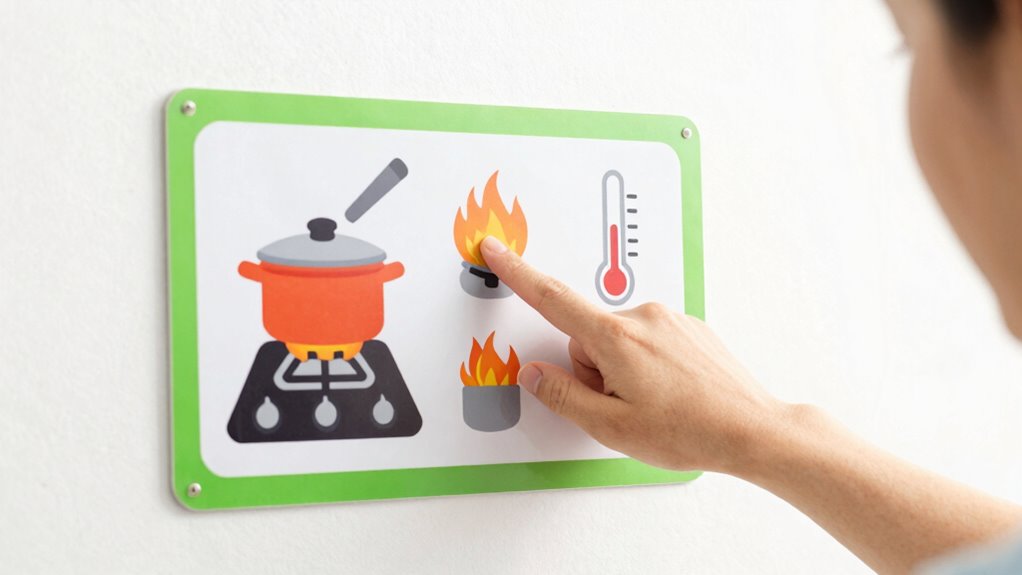
Once familiar symbols are chosen to support equipment use, making these visual guides easy to access and use becomes the next step. To do this, consider implementing clear color coding so guides stand out and are quick to identify. Use tactile markers on equipment or nearby surfaces, helping those with visual impairments or cognitive challenges locate items confidently. Keep guides in visible, frequently used areas—on walls, cabinet doors, or beside the equipment itself. Ensure guides are simple and uncluttered, reducing confusion. Think about how these small adjustments can evoke feelings of independence, safety, and reassurance. When visual guides are accessible and intuitive, you empower individuals to manage daily tasks with confidence and dignity.
Train Caregivers and Family Members to Use Visual Guides Effectively

Training caregivers and family members to use visual guides effectively is essential to guarantee consistent support for individuals with dementia. Proper caregiver training ensures they understand how to interpret and implement these guides in daily routines. Incorporating technology integration into training sessions makes learning more engaging and accessible, especially through interactive tools or digital formats. When caregivers are confident in using visual guides, they can better assist with equipment use, reducing confusion and frustration for the person with dementia. Focus on practical demonstrations, clear instructions, and ongoing support to reinforce skills. By equipping caregivers with the right knowledge and tools, you foster a supportive environment that promotes independence and safety for those living with dementia.
Implement Visual Guides in Daily Routines and Activities

Integrating visual guides into daily routines and activities can substantially enhance independence and safety for individuals with dementia. You can incorporate simple visual cues into everyday tasks, making progressions smoother. Use visual memory games to stimulate cognition and reinforce familiar routines. Sensory activities, supported by clear images, help engage their senses and promote calmness. To make routines more effective, consider these approaches:
Using visual cues daily boosts independence and calmness for those with dementia.
- Place step-by-step visual instructions for dressing or cooking
- Use pictures to signal mealtimes or specific activities
- Display visual timers to manage time and reduce confusion
- Include sensory activity prompts to foster engagement
- Incorporate familiar visual cues during leisure like puzzles or memory games
These strategies foster confidence, reduce anxiety, and create a structured environment that encourages independence.
Troubleshoot Common Problems With Visual Aids
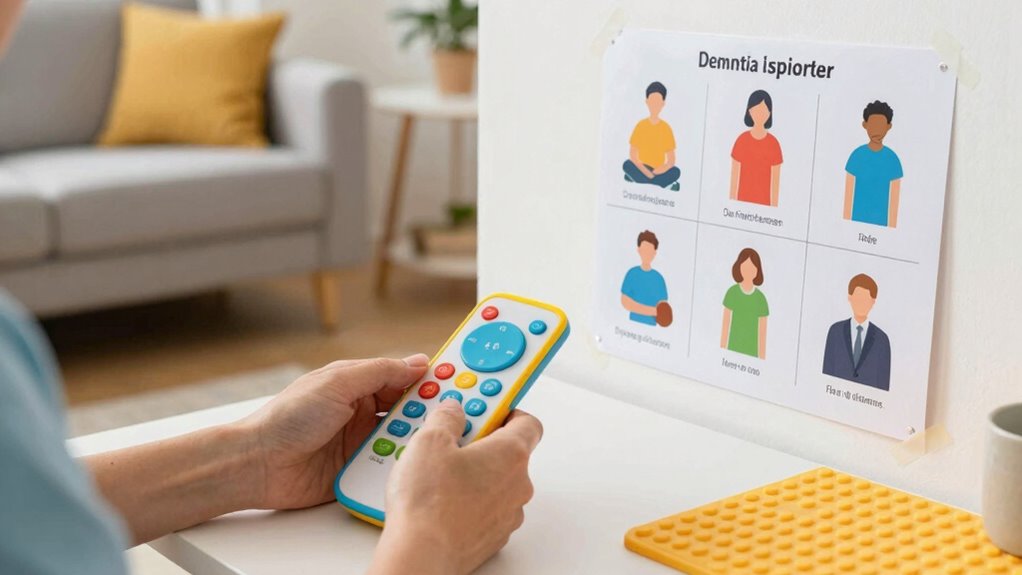
While visual aids can greatly support individuals with dementia, you may encounter issues where they are misunderstood or ignored. Sometimes, the person may not recognize the visual cues due to sensory or cognitive challenges, making technology integration tricky. To troubleshoot, simplify the visuals further or use high-contrast images for better visibility. If the aids aren’t effective, consider pairing them with verbal cues to reinforce understanding. Additionally, ensure the visual aids provide emotional support by being familiar and comforting, which can reduce frustration. Observe how the person interacts with the aids and adjust accordingly. Patience is key—repeated exposure and positive reinforcement help build familiarity, making visual guides more effective over time and fostering a sense of security.
Frequently Asked Questions
How Can I Personalize Visual Guides for Individual Dementia Needs?
You can personalize visual guides by incorporating familiar images, words, or symbols that resonate with the individual’s daily routines and preferences. Involve caregivers in this process to gather insights and guarantee the guides reflect the person’s unique needs. Use clear, simple visuals, and adjust them over time based on the person’s responses. This collaborative approach helps make the guides more effective and supportive of their independence.
What Materials Are Best for Durable, Long-Lasting Visual Aids?
You should choose materials with high durability, like laminated paper, plastic, or acrylic, to guarantee your visual aids last long. These materials resist wear and tear, making them ideal for frequent use. For visual customization, opt for clear, vibrant images and easy-to-read text that can be easily attached or replaced on durable surfaces. This way, your visual guides remain effective and tailored to your loved one’s needs over time.
How Often Should Visual Guides Be Updated or Reviewed?
Like a gardener tending to their plants, you should review your visual guides regularly. It’s best to follow a maintenance schedule—at least every six months—to guarantee they stay relevant and effective. You should also consider customization frequency; update guides whenever the equipment or user needs change. This ongoing care keeps the guides clear, supportive, and tailored, helping your loved ones navigate their environment confidently and safely.
Can Visual Guides Help With Memory Retention Over Time?
Yes, visual guides can help with memory retention over time by enhancing memory recall and providing cognitive reinforcement. When you use clear, consistent visual cues, it becomes easier for someone with dementia to remember how to operate equipment and complete daily tasks. Regularly updating and reinforcing these guides guarantees they remain effective, supporting ongoing independence and reducing confusion. Visual aids serve as valuable tools for strengthening cognitive pathways and maintaining functional skills.
Are There Digital Options for Creating Visual Support Tools?
Yes, digital options for creating visual support tools are widely available. You can use interactive templates to customize guides easily, making them more engaging and tailored to individual needs. Many platforms include accessibility features like adjustable font sizes, high contrast modes, and text-to-speech options, ensuring everyone can use them effectively. These tools help reinforce understanding and support independence for people with dementia.
Conclusion
By using clear, familiar visual guides, you can make equipment use safer and more manageable for someone with dementia. Imagine turning a confusing task into a simple, step-by-step process they can follow confidently. Are you ready to create supportive tools that promote independence and safety? With the right visual aids and training, you can make everyday routines easier, empowering your loved ones to navigate their world with greater ease and dignity.
Halloween Picks
halloween
As an affiliate, we earn on qualifying purchases.