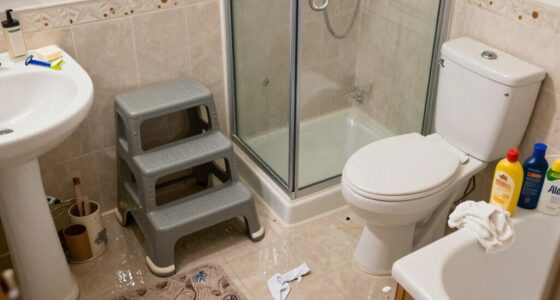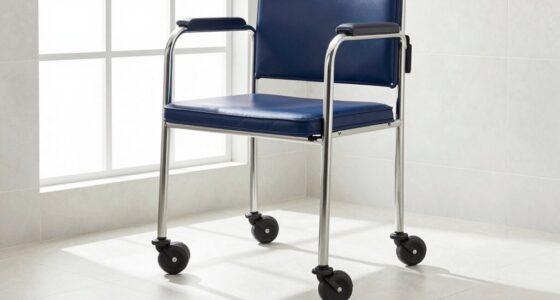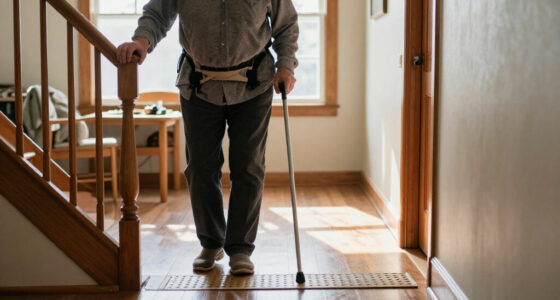

Use this guide to identify fall hazards in an older adult’s home, choose practical prevention tools, and check that each one is set up for safe use. It is for family caregivers and older adults who can do a basic home review; no special equipment knowledge is needed. Allow 1–3 hours for the first review and setup. A clinician or occupational therapist can help tailor choices when the person has mobility, vision, balance, or memory concerns.

Give the gift of listening to someone you love
- Choose a 1-, 3-, 6- or 12-month membership
- They pick the audiobooks they love
- Easy to send by email

Elderly Anti-Fall Wearable Airbag Vest – 0.08 s Rapid Protection for Head and Hips
- ✔ Brand: S-AIRBAG
- ✔ Model: S33
- ✔ Listed size: Small

Upgraded Bed Sensor Alarm and Fall Prevention for Elderly/Dementia – Caregiver Pager with Motion Sensor, 5 Volume Levels, Wireless
- ✔ Brand: Nesthao
- ✔ Model: KS-SF20R
- ✔ Package: One caregiver pager and one motion sensor

Vive Gait Belt Transfer Belt with Handles, 350 lbs Capacity
- ✔ Brand: Vive
- ✔ Weight capacity: 350 lb
- ✔ Waist adjustment: Up to 51 inches
Difficulty: Beginner | Time: 1–3 hours for an initial home check and setup; professional installation may take longer
What You’ll Need
Tools & Materials:
- A flashlight
- A tape measure
- A phone or camera for recording hazards
- Non-slip bath mat or strips, if needed
- Night-lights or plug-in motion-sensor lights, if needed
Knowledge:
- Basic familiarity with the older adult’s usual walking route and daily routines
- Ability to recognize loose rugs, clutter, poor lighting, and unstable supports
Ask the older adult which areas feel difficult or unsafe. Include them in decisions and respect their preferences. Do not install grab bars, handrails, or other weight-bearing supports unless they are securely fixed to suitable structure; ask a qualified installer if you are unsure. A clinician can review medication side effects, dizziness, footwear, and mobility aids.
Elderly Anti-Fall Wearable Airbag Vest – 0.08 s Rapid Protection for Head and Hips
Among these three options, the S-AIRBAG vest is the only one intended to cushion a person who falls without a caregiver physically holding them at that moment. Its description says a sensor cluster detects falls and inflates air cushions around the head, hips, back, waist, and buttocks. That makes it a more direct impact-protection choice than the Vive belt, which depends on a caregiver assisting movement, or the Nesthao alarm, which signals that someone has moved but does not cushion a fall.The advertised 0.08-second inflation and 1000 Hz monitoring are central to the product’s promise, but we should treat those as manufacturer claims rather than verified outcomes. Practical fit is a bigger known constraint: the listed size is small, so many users may not be able to wear it appropriately. It also uses replaceable helium cylinders, adding a maintenance step after deployment. This pick makes most sense when the size fits and the wearer can tolerate a vest as part of daily clothing; it is less suitable for anyone needing a simple, low-maintenance solution.
Pros:
- Designed to cushion multiple areas, including the head, back, waist, hips, and buttocks.
- Wearable design can accompany the person during movement, unlike a bed sensor fixed to a location.
- Description includes app-based GPS, step information, and caregiver alerts.
- Reusable vest construction with replaceable inflators.
Cons:
- Only small size is listed, restricting suitability for many users.
- Inflators need replacement after deployment, creating ongoing upkeep.
- Rapid inflation and impact reduction figures are product claims, not independently verified here.
Best for: A person who fits the listed small size and may benefit from wearable cushioning during independent movement, with a caregiver able to manage setup and replacement inflators.
Not ideal for: People outside the small fit, those who cannot comfortably wear a vest, or buyers seeking a maintenance-free tool with independently verified protection claims.
Bottom line: Choose the S-AIRBAG when a small-fit wearable and its upkeep are practical; it offers more direct impact cushioning than the belt or alarm, but its fit limitation is decisive.
“Choose the S-AIRBAG when a small-fit wearable and its upkeep are practical; it offers more direct impact cushioning than the belt or alarm, but its fit limitation is decisive.”
Upgraded Bed Sensor Alarm and Fall Prevention for Elderly/Dementia – Caregiver Pager with Motion Sensor, 5 Volume Levels, Wireless
For nighttime routines, the Nesthao system addresses a different risk from the vest: it aims to tell a caregiver when a person gets out of bed or passes a monitored area. A floor-placed motion sensor sends sound and light alerts to a pager, with a stated open-area transmission range of up to 182 meters. Compared with the Vive belt, it does not require a caregiver to be at the person’s side before movement begins. Compared with the S-AIRBAG, though, it offers awareness rather than physical protection; the alert cannot help if no one is available to respond.The five volume levels and visual alert offer some flexibility for a household’s monitoring setup, while battery or micro-USB power gives placement options. The specified range is for an open area, so walls and obstacles can reduce reliability; the product description recommends self-testing and sensor direction calibration. Batteries also require periodic replacement. This is a useful choice for a defined bed-exit concern when someone can monitor the pager, but less fitting for daytime mobility risks or a home where alerts may go unanswered.
Pros:
- Wireless sensor and caregiver pager support monitoring from another location.
- Sound and LED alerts provide two ways to notice movement.
- Five volume levels allow adjustment to the room and caregiver’s needs.
- Battery and micro-USB power options support flexible setup.
Cons:
- Walls and obstacles may reduce the stated open-area transmission range.
- Batteries need periodic replacement.
- Sensor placement and direction require setup and self-testing.
Best for: Caregivers who need an alert when a person gets out of bed or crosses a monitored area and can keep the pager within reach.
Not ideal for: People at risk throughout the home when no caregiver can respond, or buyers expecting the sensor itself to prevent or cushion falls.
Bottom line: Pick Nesthao for caregiver awareness around bed exits; unlike the vest it does not cushion impact, and unlike the belt it does not steady someone during a transfer.
“Pick Nesthao for caregiver awareness around bed exits; unlike the vest it does not cushion impact, and unlike the belt it does not steady someone during a transfer.”
Vive Gait Belt Transfer Belt with Handles, 350 lbs Capacity
The Vive gait belt is the most hands-on tool in this group. Its purpose is to give a caregiver padded grip points while helping someone stand, pivot, or move between surfaces. Seven handles provide options for positioning a hold, and the belt adjusts to waists up to 51 inches. That makes it more adaptable across assisted transfers than the small-only S-AIRBAG vest, but it depends on a caregiver being present and using it correctly. It will not alert someone to an unsupervised bed exit as the Nesthao system is intended to do.The wide four-inch webbing is described as distributing pressure, and reinforced stitching plus a metal quick-release buckle support the transfer-focused design. The tradeoff is bulk: a wide belt can be cumbersome to put on or manage, and the buckle may take two hands to engage or release. The stated 350-pound capacity should be considered alongside fit and safe handling, not as a guarantee that every transfer is appropriate. This is the most relevant pick when the fall risk arises during planned, caregiver-assisted movement; skip it as a standalone solution for someone who moves without assistance.
Pros:
- Seven padded handles give caregivers several grip positions.
- Adjusts to waists up to 51 inches.
- Four-inch webbing and reinforced stitching are designed for transfer support.
- Quick-release metal buckle allows removal after a transfer.
Cons:
- The four-inch width may feel bulky during use.
- The buckle may require two hands to fasten and release.
- Provides no alarm or impact cushioning when a person falls without a caregiver.
Best for: Caregivers assisting with standing, pivoting, or transfers for a person whose waist fits the adjustment range.
Not ideal for: People who are alone during movement, households needing remote alerts, or users who cannot comfortably wear a wide belt.
Bottom line: Choose the Vive belt for supervised transfers and grip flexibility; it is more practical than the vest for caregiver-led movement but cannot cover unsupervised risks like the Nesthao alarm can alert to.
“Choose the Vive belt for supervised transfers and grip flexibility; it is more practical than the vest for caregiver-led movement but cannot cover unsupervised risks like the Nesthao alarm can alert to.”
As an Amazon Associate we earn from qualifying purchases.
Before You Start
Choose a time when the older adult is comfortable and not rushed. Walk the home together using their usual footwear and mobility aid. Do not ask them to demonstrate a risky transfer or walk unaided. If they have recently fallen, feel faint, or have a sudden change in balance, contact a healthcare professional before relying on home equipment alone.
Step-by-Step Instructions
Step 1: Walk the usual routes
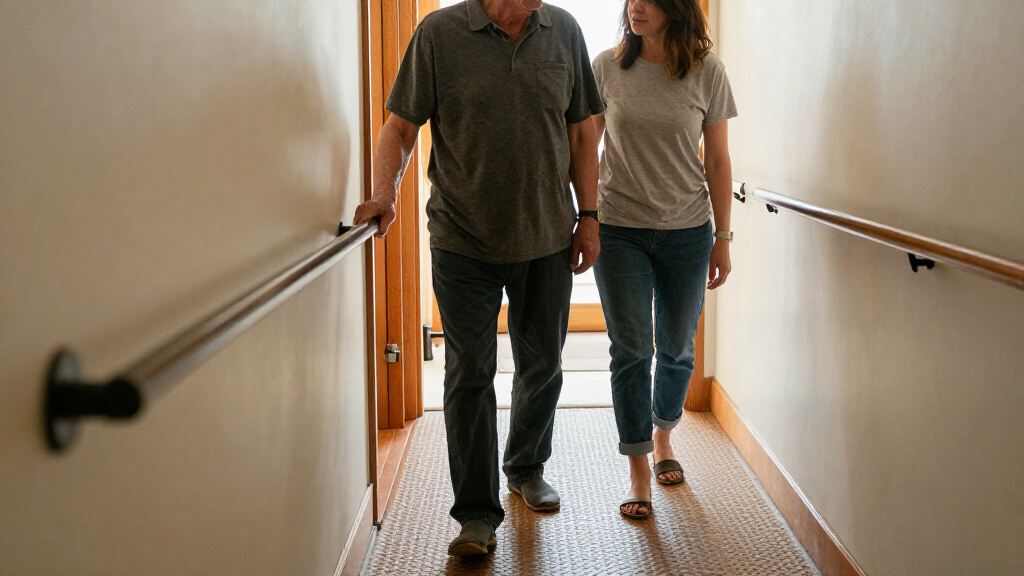
Walk with the older adult from the bed to the bathroom, through the kitchen, and to the main seating area. Look for obstacles, dim spots, slippery surfaces, narrow passages, and places where they reach for furniture. Note each concern and when it occurs, such as at night or while carrying items.
Tip:Check the route from the person’s point of view and at their usual pace. Avoid moving furniture without discussing it first; familiar arrangements can help with orientation.
Check: You have a short list of specific hazards tied to daily activities and locations.
Step 2: Clear walking paths
Move cords, shoes, baskets, and small furniture out of the routes you identified. Secure or remove loose rugs. Keep frequently used items between waist and shoulder height so the older adult does not need to climb, bend deeply, or stretch.
Tip:Do not use a rug edge or piece of furniture as a substitute for a support rail. Keep mobility aids within reach of the bed and favorite chair.
Check: The main routes are open, with no loose objects or rug edges that catch a foot or mobility aid.
Step 3: Improve lighting
Place night-lights or motion-sensor lights along the bedroom-to-bathroom route and in other dim areas. Make sure switches are reachable from the bed, entrances, and stair landings. Replace failed bulbs and use lighting that illuminates steps and floor edges without glare.
Tip:Test lights at the time they are needed. A bright lamp that requires crossing a dark room to switch on does not solve the problem.
Check: The older adult can see the walking route and locate a switch without first crossing an unlit area.
Step 4: Add bathroom traction and supports
Use a non-slip mat or strips on the shower or tub floor, and place a stable bath mat outside the wet area. Consider a properly installed grab bar near the shower entrance and toilet if the person needs support. Ask a qualified installer to attach bars to suitable structure; do not rely on suction-cup bars for body weight.
Tip:A towel bar is not designed to support a person. A raised toilet seat or shower seat may help, but choose one that fits the bathroom and the person’s transfer needs.
Check: The floor is less slippery, and any grab bar or seat feels stable under the installer’s specified use.
Step 5: Check stairs and entrances
Inspect stair treads, handrails, and thresholds. Arrange repair for loose steps, damaged flooring, or a handrail that moves. Add high-contrast edge markings if step edges are hard to see, and keep stairways clear. If steps are difficult to manage, ask an occupational therapist about alternatives such as a ramp or stair lift.
Tip:Do not attach a rail to weak trim or make structural changes without suitable installation advice.
Check: Each stair is visible and unobstructed, and the handrail is secure along the route.
Step 6: Review footwear and mobility aids
Check that everyday shoes fit securely, have a low heel, and provide a non-slip sole. Ask a clinician or physical therapist to check cane or walker height and condition. Keep the aid where the person can reach it before standing, and avoid carrying objects that prevent them from using it.
Tip:Do not adjust a prescribed mobility aid based on guesswork. Worn rubber tips, loose wheels, or damaged brakes need repair or replacement.
Check: The person can reach their aid before getting up, and the aid’s parts are intact and fitted to their instructions.
Step 7: Set up a way to call for help
Place a charged phone or personal emergency response device within reach of the bed, bathroom, and main seating area. Show the older adult how to call for help and how to wear or activate the device. Agree on whom to contact and keep essential numbers accessible.
Tip:Test the device according to its instructions and check its battery or charging routine. A device only helps if it is worn or reachable when needed.
Check: The older adult can make a call from the places where they spend time, and any alert device passes its prescribed test.
Step 8: Review and practice the setup
Walk the routes again with the older adult and ask what still feels awkward. Have them use the new lights, supports, and call device in ordinary, low-risk situations. Arrange a clinician or occupational therapist visit if transfers, balance, or equipment choices remain uncertain.
Tip:Do not test grab bars by pulling hard or ask someone to practice a transfer they cannot perform safely.
Check: The older adult can describe how each tool helps and can reach and use it as intended.
Common Mistakes to Avoid
- Buying equipment before checking the person’s needs and room dimensions. — Measure the space and ask the older adult and their clinician what support is needed before purchasing seats, raised toilet equipment, or rails.
- Treating suction-cup bars or towel rails as weight-bearing supports. — Use professionally installed grab bars attached to suitable structure; have a qualified installer assess the location.
- Placing a mobility aid out of reach to keep the room tidy. — Store the aid beside the bed or chair where the person can take hold of it before standing.
- Adding lights or alarms without testing how they work at night. — Test in the conditions and locations where the older adult will use them, then set a regular battery or charging check.
Troubleshooting
Problem: The older adult says the new arrangement feels confusing.
Solution: Restore familiar furniture positions where possible, explain one change at a time, and walk the route together. Ask an occupational therapist for a home layout review if the confusion continues.
Problem: A grab bar, handrail, or shower seat shifts or feels unstable.
Solution: Stop using it immediately. Keep the person away from the unsupported transfer and arrange inspection or installation by a qualified professional.
Problem: The motion light does not turn on reliably.
Solution: Check its power, batteries, sensor direction, and range using the manufacturer’s instructions. Add a reachable manual switch or another suitable light source if it still misses the route.
Problem: The older adult cannot use the call device consistently.
Solution: Try a simpler device or a wearable option that fits comfortably, practice the steps, and confirm charging and connectivity. Ask the provider about setup help if alerts do not reach the intended contact.
What Success Looks Like
The main walking routes are clear and adequately lit; slippery areas have suitable traction; installed supports are secure; stairs and entrances are visible and unobstructed; footwear and mobility aids are suitable; and the older adult can reach a phone or alert device. The older adult should be able to explain how to use the tools and report that the routes feel manageable. Home tools reduce hazards but cannot prevent every fall.
Next Steps
Recheck the home after furniture changes, illness, a fall, or a change in mobility or vision. Inspect lights, mats, aid tips, brakes, rails, and alert-device batteries on a regular schedule. Ask a healthcare professional to review medications, dizziness, balance, and strength; seek urgent medical care after a serious injury or sudden symptoms.
Frequently Asked Questions
Which fall prevention tool should I buy first?
Start with the hazard you observed, not a general product list. Clear clutter and improve lighting first when those are the main issues. Ask a clinician or occupational therapist about supports or equipment for transfers and walking.
Are suction-cup grab bars safe?
They may lose suction and are not reliable for supporting body weight. Use a properly installed grab bar attached to suitable structure, with placement selected for the person’s needs.
Does a fall alert pendant prevent falls?
No. It can help the person call for assistance after a fall or when they feel unsafe. Pair it with hazard reduction, suitable mobility support, and a working plan for responding to alerts.
When should I ask a professional to assess the home?
Ask an occupational therapist or clinician when the person has fallen, struggles with bathing or transfers, has changing balance or strength, or is unsure how to use a mobility aid. Use a qualified installer for weight-bearing rails and structural supports.