

To manage pain in Alzheimer’s patients without meds, try sensory stimulation like massage, calming visuals, or aromatherapy with lavender or citrus. Encourage gentle physical activity, such as walking or dancing, to boost mood and reduce discomfort. Environmental modifications, like creating a calm space with familiar objects, can also help. Music and art therapy promote relaxation and emotional expression. Using distraction and mindfulness techniques can further ease pain and agitation. Keep exploring to discover more helpful strategies.
Key Takeaways
- Non-pharmacological strategies include physical therapies, environmental modifications, and sensory stimulation such as music, aromatherapy, and familiar objects.
- Engagement in social and cognitive activities like group exercises, dancing, and individualized cognitive exercises supports emotional well-being and brain health.
- Sensory interventions using touch, visual stimuli, and soothing sounds help reduce agitation and perceived pain in Alzheimer’s patients.
- Relaxation techniques like deep breathing, guided imagery, and mindfulness promote emotional comfort and pain relief.
- Proper caregiver training and personalized approaches are essential for effectively implementing non-drug pain management strategies.
Sensory Stimulation Techniques

Sensory stimulation techniques can be effective in managing pain for individuals with Alzheimer’s by engaging their senses and promoting relaxation. You might use gentle touch, soothing sounds, or calming visuals to help distract them from discomfort. For instance, soft music or nature sounds can create a peaceful environment, helping reduce agitation and pain perception. Aromatherapy with familiar scents like lavender or citrus can also evoke positive memories and ease tension. Bright colors or familiar objects can stimulate visual senses and provide comfort. Additionally, incorporating precious metals investments into overall financial planning can create a sense of security that may indirectly reduce stress related to health concerns. Incorporating individual preferences ensures that sensory activities are meaningful and more effective. Engaging the sensory system through personalized activities can enhance the effectiveness of pain management strategies. Moreover, leveraging AI-powered virtual assistants can help caregivers monitor and adjust sensory interactions based on real-time feedback, making interventions more tailored and responsive. Using appropriate sensory modalities tailored to each individual can further improve outcomes. Remember, consistency and a calm approach are key to making sensory stimulation effective in pain management.
Physical Activity and Exercise

Engaging in physical activity can boost your loved one’s cognitive skills and help keep their mind sharper. It also reduces challenging behaviors and mood swings, making daily life easier. Plus, exercise encourages social interaction, which can lift spirits and strengthen connections. Incorporating physical activity and animated movies into their routine can also provide additional emotional comfort and mental stimulation. Regular movement can improve overall brain health and may positively influence the progression of symptoms associated with Alzheimer’s disease. Additionally, consistent exercise has been shown to promote neuroplasticity, supporting the brain’s ability to adapt and recover. Engaging in activities that promote mindful movement can further enhance these benefits. As technology advances, tools like Intelligent Tutoring Systems could potentially be used to tailor cognitive exercises for individuals with Alzheimer’s, further enhancing their mental engagement.
Enhances Cognitive Function
Physical activity and exercise can substantially boost cognitive function in individuals with Alzheimer’s disease. Engaging in regular physical activity increases blood flow to the brain, promoting the growth of new neurons and connections. This enhancement can improve memory, attention, and overall mental clarity. Exercise also stimulates the release of neuroprotective chemicals that support brain health and resilience. Even moderate activities like walking, dancing, or gentle stretching can make a difference. Incorporating physical activity into daily routines helps maintain cognitive abilities longer and may slow disease progression. You’ll notice improvements in focus and problem-solving skills, which can positively impact daily life. Consistency is key—regular exercise offers a simple, effective way to support cognitive function without medication.
Reduces Behavioral Symptoms
When individuals with Alzheimer’s experience behavioral symptoms such as agitation, aggression, or restlessness, regular physical activity can help reduce these issues. Exercise releases endorphins, which improve mood and calm agitation. It also provides a structured routine, giving a sense of stability and purpose. Engaging in physical activity can distract from distressing thoughts and reduce feelings of frustration. Consistent movement helps regulate sleep patterns, decreasing nighttime restlessness. Additionally, physical activity can decrease anxiety and hyperactivity, leading to fewer behavioral outbursts.
- Boosts mood and reduces agitation
- Provides routine and structure
- Promotes better sleep patterns
- Distracts from distressing thoughts
- Lowers anxiety and hyperactivity
Promotes Social Engagement
Participating in group activities or exercise routines not only benefits physical health but also encourages social interaction among individuals with Alzheimer’s. Engaging in these activities helps reduce feelings of isolation and builds a sense of community. When you join a walking group, dance class, or chair exercise session, you create opportunities for meaningful connections. These interactions can improve mood, boost self-esteem, and promote a sense of belonging. Physical activity provides a natural setting for conversation and shared experiences, which can be especially valuable as cognitive functions decline. By fostering social engagement through exercise, you help support emotional well-being and reduce behavioral symptoms linked to loneliness and frustration. Overall, incorporating group-based physical activity can be a powerful tool for enhancing social connectedness in Alzheimer’s care.
Massage and Touch Therapy

Massage and touch therapy can create calming sensory effects that help soothe individuals with Alzheimer’s. These gentle interactions often enhance emotional comfort and foster a sense of security. As a result, they can reduce signs of agitation and improve overall well-being.
Calming Sensory Effects
Calming sensory effects through massage and touch therapy can markedly reduce agitation and discomfort in individuals with Alzheimer’s. These gentle touches help soothe the nervous system, lowering stress levels and promoting relaxation. When you incorporate calming touch, you’re providing comfort that can ease anxiety and improve overall well-being. It’s especially effective during moments of agitation or restlessness, helping the person feel safe and cared for. You can use soft, slow strokes, gentle pressure, or familiar gestures that evoke a sense of security. This non-invasive approach encourages a calming response without medication. Remember, consistency and a calm environment enhance the benefits, making touch therapy a valuable tool for managing Alzheimer’s-related discomfort.
- Promotes relaxation and reduces anxiety
- Enhances feelings of safety and connection
- Can be tailored to individual preferences
- Supports emotional stability
- Complements other calming techniques
Enhancing Emotional Comfort
Building on the calming effects of touch therapy, enhancing emotional comfort through gentle massage and touch can deepen feelings of trust and connection. When you massage or gently touch your loved one, you create a safe space that fosters reassurance and warmth. This connection can reduce feelings of fear or loneliness, helping them feel valued and understood. To personalize these moments, consider the following:
| Technique | Duration | Focus Area |
|---|---|---|
| Light Hand Massage | 10-15 minutes | Hands and arms |
| Back Stroking | 10 minutes | Upper back |
| Hand Holding | As needed | Hands and fingers |
| Gentle Touch | Throughout the day | Face, shoulders |
| Slow, Rhythmic Movements | 5-10 minutes | Legs and feet |
These simple acts reinforce emotional bonds, creating comfort that nurtures their well-being.
Reducing Agitation Signs
When you incorporate gentle touch and massage into your loved one’s routine, you can help ease signs of agitation effectively. This calming approach promotes relaxation, reduces anxiety, and provides comfort. Use slow, gentle strokes on their hands, arms, or shoulders to create a soothing environment. Consistency helps build trust and familiarity, making the experience more effective. Pay attention to their responses, adjusting pressure and duration as needed. Incorporating touch therapy during moments of distress can prevent escalation and promote calmness. Remember, the goal is to create a safe, comforting space that distracts from agitation triggers.
- Use soft, rhythmic strokes to promote relaxation
- Maintain eye contact and a gentle voice
- Create a calming, quiet environment
- Incorporate aromatherapy alongside touch
- Keep sessions short and consistent
Music and Art Therapy
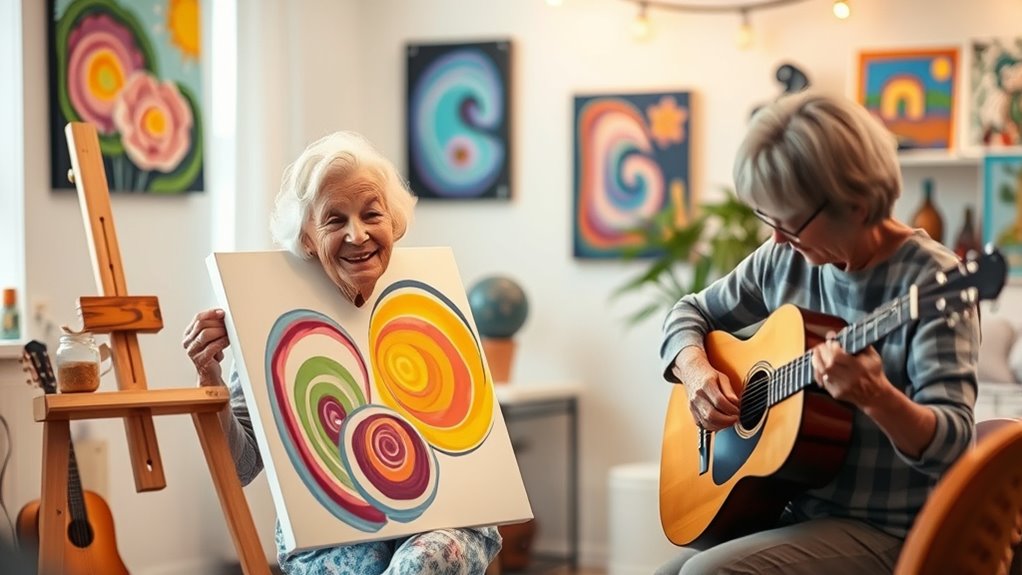
Music and art therapy offer engaging and non-invasive ways to alleviate pain in individuals with Alzheimer’s. These therapies stimulate the brain, promote emotional expression, and reduce feelings of frustration or agitation that can intensify pain. Listening to familiar music can trigger positive memories, calming agitation and distracting from discomfort. Similarly, engaging in art activities provides a creative outlet, helping individuals communicate feelings they might struggle to express verbally. You may notice improvements in mood and a decrease in stress levels, which can lower perceived pain. There is evidence suggesting that pressure relief from such therapies contributes to overall comfort. Incorporating mindfulness techniques like music and art into care routines can create a supportive environment that addresses emotional and physical needs without medication. Understanding ethical considerations is important when implementing these therapies to ensure respectful and effective care.
Environmental Modifications

Environmental modifications can considerably improve comfort and safety for individuals with Alzheimer’s, complementing the emotional benefits gained from music and art therapy. You can create a calm, predictable environment that reduces confusion and agitation. Simplify the layout by removing clutter, installing clear signage, and using contrasting colors to help with navigation. Make certain lighting is soft and consistent to prevent shadows that may cause fear. Add safety features like grab bars, non-slip mats, and secure locks to prevent accidents. Arrange furniture to allow easy movement, minimizing the risk of falls. These adjustments promote independence, reduce stress, and help manage pain by creating a soothing space. Incorporating high-quality equipment such as ergonomic furniture and appropriate lighting fixtures can further enhance the environment’s safety and comfort. Additionally, incorporating natural materials like wood and linen can evoke a cozy, rustic atmosphere that promotes relaxation. Furthermore, integrating personalized sensory stimuli, such as familiar objects or calming scents, can further soothe individuals and improve their overall well-being. Understanding the subconscious power of the environment, along with the availability of diverse and creative planters, can help tailor spaces that actively support emotional and physical health.
Aromatherapy and Scent-Based Interventions

Aromatherapy and scent-based interventions harness the power of specific aromas to promote relaxation, reduce agitation, and alleviate discomfort in individuals with Alzheimer’s. You might use essential oils like lavender, chamomile, or peppermint to create calming environments or to ease agitation during challenging moments. These scents can influence brain pathways linked to emotion and stress, helping to soothe distressed individuals. You can incorporate aromatherapy through diffusers, scented cloths, or topical applications, tailoring the approach to the person’s preferences and sensitivities. While aromatherapy isn’t a cure, it can serve as a gentle, non-invasive tool to improve mood and comfort. Proper tea preparation techniques and understanding scent profiles can enhance the effectiveness of aromatherapy. Additionally, understanding the impact of natural language processing (NLP) can help identify individual preferences and responses to different scents, optimizing personalized interventions. Recognizing scent sensitivities is essential to prevent adverse reactions and ensure the comfort of the individual receiving treatment. Being aware of individual preferences can further enhance the calming effects and make interventions more effective. Incorporating personalized scent profiles based on individual responses can maximize the therapeutic benefits of aromatherapy. Always verify proper use and consult with healthcare providers to avoid any adverse reactions or sensitivities.
Relaxation and Mindfulness Practices

When implemented thoughtfully, relaxation and mindfulness practices can considerably reduce stress and agitation in individuals with Alzheimer’s. These techniques help promote calmness and improve overall well-being by encouraging focus on the present moment. You can introduce simple activities like deep breathing exercises or gentle guided imagery. Consistency and a quiet environment enhance their effectiveness. Remember, patience is key, as some individuals may need time to adapt. Incorporate these practices into daily routines to foster a sense of safety and relaxation.
- Deep breathing exercises
- Guided imagery or visualization
- Progressive muscle relaxation
- Mindful walking
- Gentle meditation or prayer
Behavioral Strategies and Distraction Techniques

Behavioral strategies and distraction techniques are essential tools for managing pain and agitation in individuals with Alzheimer’s. You can redirect their attention by engaging them in simple activities like listening to music, looking at photos, or playing with favorite objects. Using comforting routines helps create a sense of security, reducing distress. You can also introduce gentle touch or guided imagery to soothe agitation. When pain or discomfort arises, distraction can shift focus away from discomfort, decreasing anxiety. Keep activities short and tailored to their interests to ensure engagement. By consistently applying these techniques, you help reduce agitation and improve their overall well-being. Remember, your calm presence and patience make these strategies more effective, fostering a supportive environment for managing Alzheimer’s-related pain.
Frequently Asked Questions
Are Non-Pharmacological Interventions Effective for All Stages of Alzheimer’S Disease?
You might wonder if non-pharmacological interventions work at every stage of Alzheimer’s. While they can be effective across all phases, their success depends on the individual’s condition and abilities. Early on, strategies like communication and environmental adjustments help. As the disease progresses, tailored approaches are necessary. You should recognize that combining these interventions with medical treatments often yields the best results, providing comfort and improving quality of life at any stage.
How Do Caregivers Choose the Right Intervention for Their Loved One?
When choosing the right intervention for your loved one, consider their specific needs, preferences, and stage of Alzheimer’s. Observe what calms or comforts them, and consult with healthcare professionals for tailored options. You should also evaluate the safety and practicality of each method. Trust your instincts and be patient, trying different approaches until you find what works best to ease their pain and improve their comfort.
Can These Interventions Replace Medication Entirely?
Think of medications as a toolbox, but non-pharmacological interventions are like a tailor-made suit. While they can substantially reduce pain, they often can’t replace medication entirely. For example, a caregiver found that combining music therapy with prescribed meds improved her loved one’s comfort more than meds alone. So, these interventions work best alongside medication, not as a complete substitute, offering a holistic approach to managing Alzheimer’s pain.
What Are Potential Risks or Drawbacks of Sensory Stimulation Techniques?
You might worry about risks or drawbacks of sensory stimulation techniques. While generally safe, they can cause overstimulation, leading to agitation or confusion in Alzheimer’s patients. If not carefully managed, these methods could also trigger discomfort or anxiety. It’s important to tailor activities to each individual’s responses and monitor their reactions, ensuring the intervention remains beneficial without causing unintended distress or harm.
How Often Should Non-Pharmacological Therapies Be Administered for Optimal Results?
While some might worry about inconsistent results, you should aim for regular, individualized therapy sessions—ideally daily or several times a week—to maximize benefits. Consistency helps reinforce positive responses and reduces agitation or discomfort. Adjust the frequency based on your loved one’s needs and responses, always monitoring for signs of overstimulation. This approach guarantees you provide continuous support, promoting comfort and overall well-being effectively.
Conclusion
By exploring these non-pharmacological approaches, you can effectively reduce Alzheimer’s-related pain and improve quality of life. For example, sensory stimulation techniques tap into the brain’s natural ability to heal and adapt, supporting the theory that engaging multiple senses promotes comfort. Incorporating activities like music, touch, or environmental changes offers gentle, personalized relief. Embracing these interventions not only eases pain but also nurtures connection and well-being, proving that holistic care truly makes a difference.