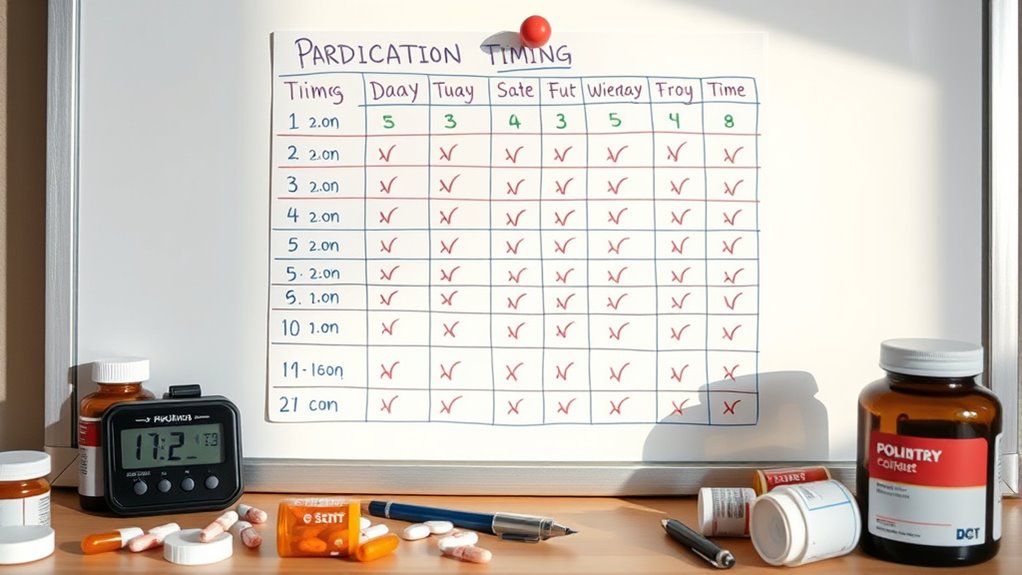

To create a Parkinson’s medication timing chart at home, gather supplies like a sturdy notebook, pens, and markers with color-coding options. Design a layout that fits your daily routine, aligning medication times with meals or bedtime, and keep it simple for easy reference. Use symbols and colors to clarify doses and instructions, and add notes for flexibility. Regularly updating your chart guarantees accuracy; keep exploring for more tips to stay organized and on track.
Key Takeaways
- Use a sturdy notebook or printable template to record medication doses and timing clearly.
- Structure the chart with sections aligned to daily routines like meals and bedtime for easy reference.
- Apply color coding and symbols to differentiate medications and improve visual clarity at a glance.
- Include notes for reminders such as taking with food, hydration, or side effects to adapt to changing needs.
- Regularly review and update the chart to ensure accuracy, safety, and effective communication with healthcare providers.
Gathering Supplies and Planning Your Chart

Before you begin charting your Parkinson’s medication schedule, gathering all the necessary supplies is essential. You’ll need a sturdy notebook or printable template to record your doses, along with pens or markers for clear writing. Consider using different colors to distinguish medications or times of day. It’s helpful to have a clock or timer nearby to track exact times accurately. If you prefer digital tracking, make sure your device is charged and ready. Planning your chart involves thinking about your daily routine—when you wake up, eat, and sleep—and how your medication fits into this schedule. Organizing your supplies in one accessible spot to avoid interruptions. Proper preparation makes creating an effective, easy-to-follow chart straightforward and stress-free. Additionally, understanding the importance of contrast ratio in projectors can help you choose the right display for your home cinema setup. Recognizing the benefits of curiosity can also motivate you to explore new ways to personalize your medication management approach. Incorporating medication timing strategies can further improve your adherence and overall health outcomes. Being aware of ethical hacking principles can inspire you to safeguard your health data and personal information. For example, being aware of family photoshoot fails can remind you to prepare for unexpected disruptions during your routine.
Designing a Layout That Fits Your Routine
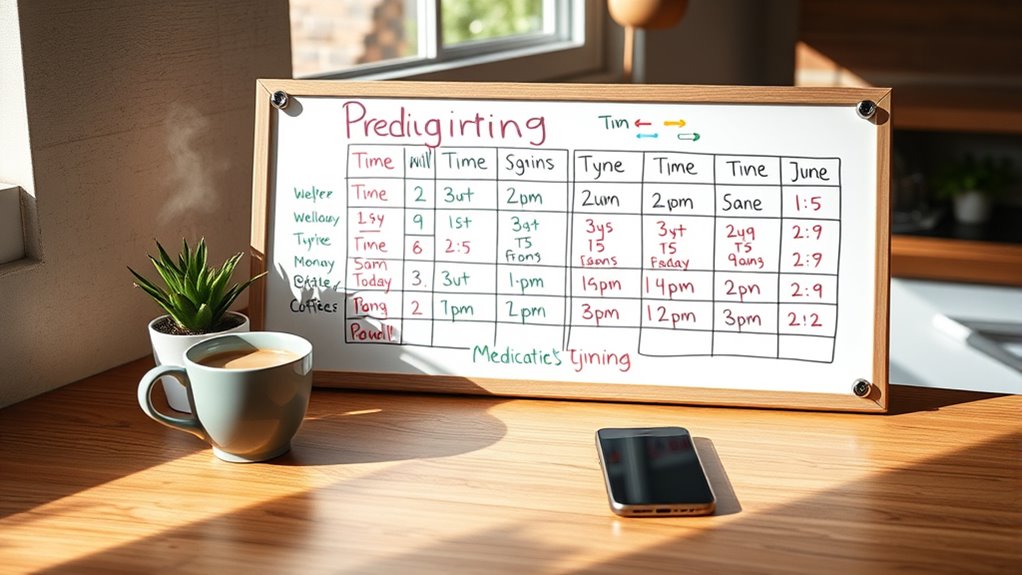
Once you’ve gathered your supplies and planned your chart, the next step is to design a layout that works seamlessly with your daily routine. Think about how your day is structured—morning, afternoon, evening—and create sections or rows that match those times. Place medication times where they naturally fit into your schedule, such as breakfast, lunch, dinner, or bedtime. Keep your layout simple and easy to read at a glance. Use clear headings or time blocks to organize your entries. Consider how much space you’ll need for notes or adjustments. Remember, the goal is a layout that makes tracking medication straightforward and stress-free, fitting effortlessly into your daily life so you stay consistent and on schedule. Incorporating wall organization ideas can also help you keep your medication chart and supplies in an accessible, tidy spot.
Using Color Coding and Symbols for Clarity

Using color coding and symbols can considerably enhance the clarity of your medication chart, making it easier to identify doses and times at a glance. Assign a specific color to each medication or dose to quickly differentiate them throughout the day. For example, use blue for morning doses and red for evening doses. Symbols can represent particular instructions, like a star for medications taken with food or a checkmark for doses already taken. Keep your color scheme simple and consistent to avoid confusion. Use clear, easy-to-understand symbols that you recognize easily. This visual system helps prevent missed doses and reduces errors, especially during busy or stressful moments. Additionally, incorporating FAQs for medication management benefits into your routine can improve your overall eye health and appearance, making your daily management more effective. By customizing your chart with colors and symbols, you create an intuitive tool that supports your medication management.
Incorporating Reminders and Notes for Flexibility
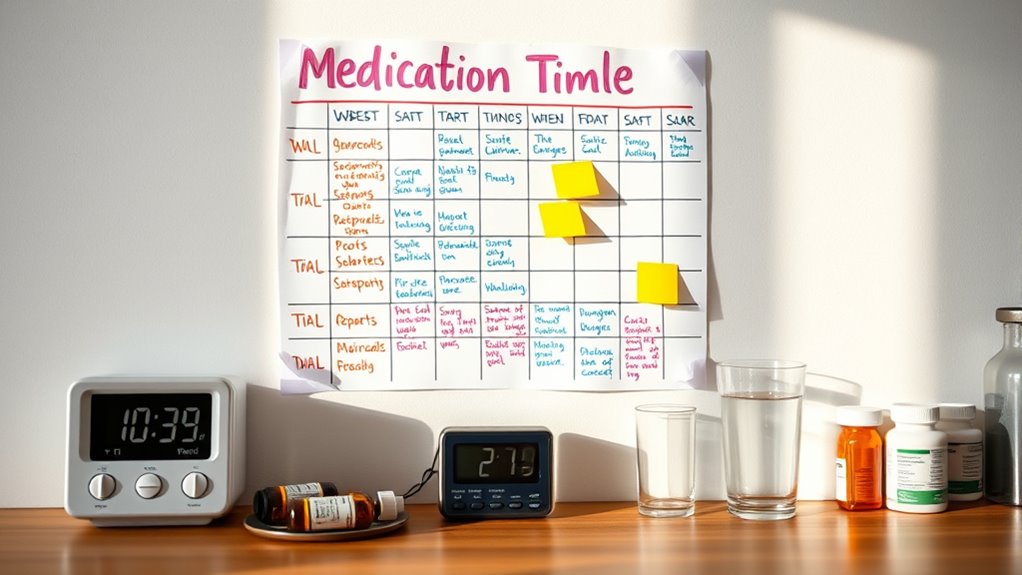
Adding reminders and notes to your medication chart can make it more adaptable to your daily routine. Use these to mark specific times when you might need a gentle nudge, like a reminder to take your medication with food or to check your hydration. Notes can also include side effects you want to monitor or questions to discuss with your doctor. Keep your reminders simple and clear, such as “Take medication after breakfast” or “Check blood pressure.” These additions help you stay aware of important details without cluttering your chart. By customizing your notes, you create a flexible tool that adjusts to your changing needs and routines, making medication management less stressful and more personalized. Regular checks on your medication and health data can also help you catch issues early and stay on top of your personal finance stability. Incorporating emotional support strategies, like tracking mood or stress levels, can further enhance your overall well-being while managing medications. Additionally, integrating mental resilience techniques can help you cope better with the daily challenges of medication adherence and health management. Maintaining awareness of your family background may also influence your approach to health routines and support systems. Moreover, aligning medication timing with latest AI entertainment advancements can offer innovative ways to stay engaged and motivated.
Tips for Maintaining and Updating Your Chart Regularly

To keep your medication chart effective, it’s important to review and update it regularly. Set a weekly reminder to check for any changes in your medication schedule or side effects. Keep your chart accessible so you can note adjustments promptly. This helps ensure accuracy and safety. Use a simple table like this to track updates:
| Date | Change Made | Notes |
|---|---|---|
| 2024-05-01 | Added nighttime dose reminder | New medication started |
| 2024-06-15 | Adjusted morning timing | Doctor’s recommendation |
| 2024-07-10 | Removed outdated note | Medication discontinued |
| 2024-08-05 | Updated reminder for supplements | To avoid interactions |
Regular updates help you stay on top of your medication routine and communicate effectively with your healthcare provider. Incorporating healthy hydration options such as no-sugar-added beverages can support overall wellbeing. Additionally, maintaining a detailed medication schedule ensures adherence and safety. Effective communication with your healthcare team is also crucial for managing your condition successfully, and staying informed about industry trends can help you make better decisions.
Frequently Asked Questions
Can I Include Non-Medication Activities on My Chart?
Yes, you can include non-medication activities on your chart. Tracking things like exercise, meals, sleep, and relaxation helps you see patterns and identify what boosts your well-being or triggers symptoms. By recording these activities alongside medication times, you gain a clearer picture of your daily routine. This extensive approach can improve your management strategy and help your healthcare team tailor your treatment plan effectively.
How Often Should I Review and Adjust My Medication Timing?
You should review and adjust your medication timing regularly, ideally with your healthcare provider’s guidance. Keep track of how your symptoms respond and note any side effects. If you notice changes, schedule a check-up sooner. Regular reviews help optimize your treatment, ensuring your medication works effectively. Be proactive, communicate openly with your doctor, and don’t hesitate to make adjustments when needed to maintain your best quality of life.
What Are Signs My Medication Schedule Needs Changing?
If your medication schedule is causing chaos in your day, it’s time to reconsider. You might notice your symptoms suddenly worsening, unpredictable “off” periods, or side effects that feel unbearable. Perhaps you’re experiencing more tremors, stiffness, or confusion than usual. When these signs seem to take over your life, it’s a clear call to review and adjust your timing. Don’t wait—your comfort and control depend on it.
Are There Digital Tools to Help Track Medication Timing?
You’re wondering if digital tools can help track your medication timing. Yes, many apps are available that remind you when to take your meds and log each dose. These tools often send alerts, helping you stay consistent. Some popular options include Medisafe, MyTherapy, and CareClinic. Using these apps, you can easily monitor your schedule, ensuring you don’t miss doses and maintain ideal medication effectiveness.
How Can Family Members Assist With Medication Adherence?
Imagine you’re the lighthouse guiding a ship safely through foggy waters. Your role is crucial in helping your loved one stay on course with medication. Remind them gently, set routines, and keep medications visible like a beacon. Offer encouragement and patience, acting as their steady light. Your support keeps their journey smooth, ensuring they follow their schedule and stay healthy, just like a lighthouse keeps ships safe at sea.
Conclusion
Now that you’ve mastered the art of homemade Parkinson’s medication charts, you’re practically a medical professional—minus the fancy degree, of course. Remember, no chart is perfect, so embrace the chaos and keep updating it like a true artist. Who needs a doctor when you have colorful symbols and witty reminders at your fingertips? Just don’t forget to pat yourself on the back for your newfound organizational superpowers—your brain (and doctor) will thank you.