
Creating an emergency contact tree is essential to respond quickly and efficiently during crises. Start by listing primary contacts like family, friends, and neighbors, then add healthcare providers and emergency services. Make certain everyone knows their roles and has up-to-date info. Regularly review and practice your plan to guarantee readiness. Want to learn more ways to build an effective contact tree that keeps your loved ones safe? Keep exploring to find out!

Turn quiet afternoons into listening time
- Thousands of audiobooks, podcasts and originals
- Listen on your phone, tablet or Echo — also offline
- Cancel anytime
Key Takeaways
- Identify and regularly update essential contacts, including family, healthcare providers, and emergency services.
- Develop and clearly document specific medical emergency protocols for quick reference.
- Assign roles and establish a communication chain to ensure efficient information flow during crises.
- Share the contact tree and protocols with all involved parties for awareness and preparedness.
- Use technology and keep physical backups to ensure accessibility and redundancy during emergencies.
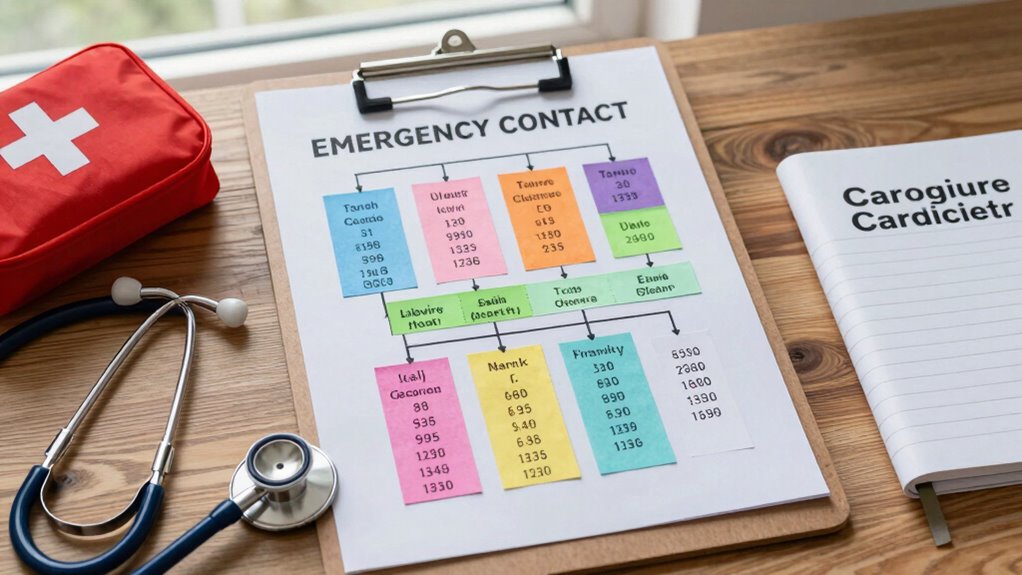
Having an emergency contact tree is essential for caregivers to guarantee quick and efficient responses during urgent situations. When a crisis arises, every second counts, and having a well-organized contact list ensures you can act swiftly. Establishing this tree involves more than just listing names and numbers; it requires thoughtful planning around medical emergency protocols and communication plan strategies. These protocols help you determine the best course of action, while the communication plan ensures everyone involved understands their role and knows how to reach each other immediately.
Start by identifying your primary contacts, including family members, close friends, neighbors, and any trusted individuals who can assist in emergencies. Make sure these contacts are aware of their roles and have current contact information. Next, include healthcare providers such as your loved one’s primary doctor, specialists, and local clinics. Having direct contact with medical personnel can be invaluable when urgent medical advice or records are needed quickly, especially if you’re unfamiliar with medical emergency protocols. Incorporate emergency services like paramedics, fire departments, and poison control centers into your contact tree, ensuring you have quick access to these critical numbers. Additionally, understanding the importance of community resilience can motivate ongoing updates and improvements to your plan, ensuring it remains effective over time. Regularly reviewing and practicing your emergency plan can further enhance your readiness and confidence.
Once your contact list is compiled, focus on developing clear medical emergency protocols. These should outline steps to take in specific situations, such as a fall, allergic reaction, or sudden illness. Define who is responsible for calling emergency services, administering first aid, or relocating the individual if necessary. Having these protocols written down and accessible ensures everyone knows what to do without hesitation, minimizing confusion during stressful moments. Coupling this with effective communication plan strategies guarantees that information flows smoothly among contacts. For example, designate a primary communicator—someone responsible for updating others and relaying information from emergency services. Also, consider establishing a chain of command in case the primary contact isn’t reachable.
Your communication plan should clarify how to contact each person quickly, whether via phone calls, texts, or messaging apps. It’s wise to test your contact tree periodically, ensuring all numbers are current and that contacts are aware of their roles. During an emergency, quick dissemination of information can be lifesaving, so establish protocols for sharing updates and coordinating responses. Keep copies of your contact list in multiple accessible locations—digital and physical. This way, you’re prepared even if technology fails or if you’re unable to access certain resources. Additionally, creating redundancy in your contact system, such as maintaining paper backups, can further enhance your preparedness.
Building a detailed emergency contact tree with well-thought-out medical emergency protocols and effective communication plan strategies creates a safety net for everyone involved. It empowers you to respond confidently, knowing you have a clear, organized plan that facilitates rapid action, minimizes risks, and ultimately, helps protect your loved ones in times of crisis. Recognizing the impact of community resilience can also motivate ongoing updates and improvements to your plan, ensuring it remains effective over time. Incorporating technology tools like emergency alert apps or shared online documents can also streamline communication and keep everyone informed in real time.
emergency contact list organizer
As an affiliate, we earn on qualifying purchases.
As an affiliate, we earn on qualifying purchases.
Frequently Asked Questions
How Often Should I Update My Emergency Contact Tree?
You should update your emergency contact tree regularly, ideally every six months or whenever there’s a change in contact information. Use emergency contact templates and digital contact lists to keep everything organized and accessible. Regular updates guarantee that all contacts are current, and you won’t face delays during emergencies. Set reminders to review and update your digital contact lists, especially after holidays or significant life changes, for peace of mind.
What if My Emergency Contacts Are Unavailable During an Emergency?
When emergency contacts are unavailable, think of your contact list as a safety net that might have a few tears. To prevent falling through, prioritize emergency communication by including alternate contacts and verifying each one regularly. Contact verification guarantees your contacts are reachable, providing peace of mind. Keep backup numbers and local emergency services handy, so you’re never left stranded, even if your first line of communication falls apart.
Should I Include Medical Professionals in My Contact Tree?
Yes, you should include medical professionals in your contact tree. In a medical emergency, having quick access to your healthcare providers, specialists, or local clinics can be lifesaving. Professional contacts guarantee you get prompt advice, treatment, or guidance when needed. Keep their phone numbers organized and easily accessible. This way, you’re prepared to act swiftly, minimizing risks and ensuring your loved ones receive the best care possible during emergencies.
How Can I Ensure My Contact List Is Secure?
Your contact list is your lifeline, so protect it fiercely. Use data encryption to scramble your information, making it nearly impossible for hackers to access. Implement strict access control—only trusted individuals should have permission to view or modify your list. Regularly update passwords and review who has access. These steps guarantee your emergency contact tree stays secure, giving you peace of mind amid life’s chaos.
What’s the Best Way to Notify Contacts About Their Roles?
You should clearly communicate each contact’s role using established communication protocols, ensuring everyone understands their responsibilities. Verify contact details beforehand to prevent mistakes, and send a personalized message or call to confirm they’re ready. Keep records of these notifications for accountability. Regularly update and review the contact list, and remind contacts of their roles periodically to maintain clarity and preparedness.
Conclusion
Think of your emergency contact tree as a sturdy, growing oak—its roots grounded in trust, its branches reaching out with strength. When storms threaten, this tree provides shelter, resilience, and connection. Each name is a leaf, essential and vibrant, adding to the overall harmony. Build it with intention, nurture it with care, and watch it stand tall through life’s unpredictable weather. Your preparedness becomes the shelter that keeps your loved ones safe, no matter what storms may come.
Fall Picks
fall essentials
As an affiliate, we earn on qualifying purchases.