
To prepare for a home funeral, start by understanding your state and local laws, including any permits or documentation needed. Notify authorities like the vital records office and arrange transportation with licensed providers. Prepare the body by gently washing it, ensuring safety, and choosing a suitable space within your home. Keep all legal paperwork organized and consider working with funeral professionals if necessary. If you want to learn more about these steps, keep exploring the crucial details.
Key Takeaways
- Research local laws and obtain necessary permits or documentation for handling and burying the body at home.
- Coordinate with licensed professionals for transportation, body preparation, and legal compliance.
- Plan and organize the funeral details, including viewing, rituals, and burial arrangements.
- Ensure environmental conditions are suitable for natural preservation, maintaining a cool, shaded, and ventilated space.
- Keep all legal documents, such as death certificates and permits, safely accessible throughout the process.
Understanding State and Local Regulations
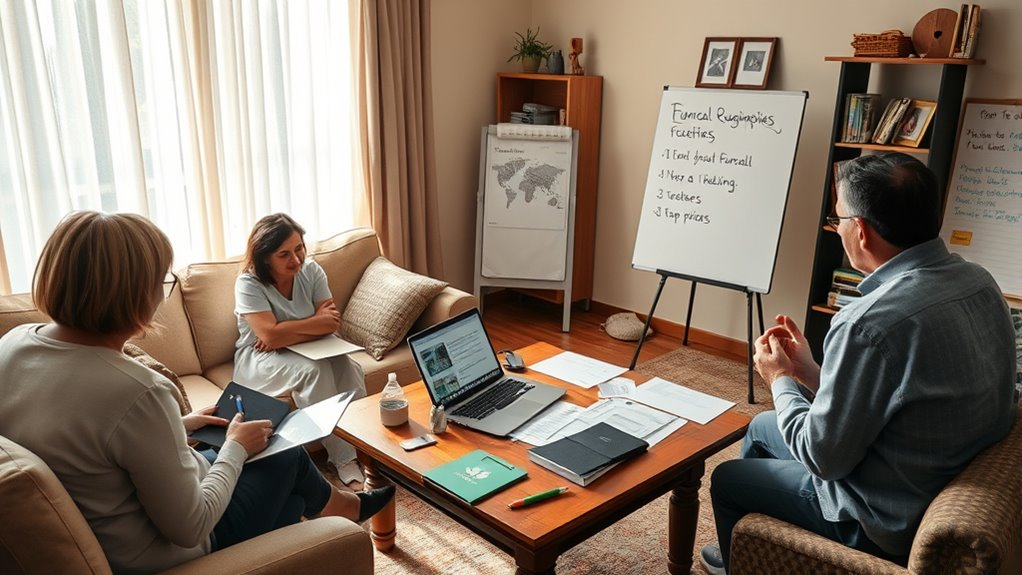
Before planning a home funeral, it’s essential to comprehend the specific regulations in your state and local area. Laws about handling, transporting, and storing a deceased person vary widely, so check your state’s health department or local government website. Some areas require certified funeral directors for certain tasks, while others allow more family involvement. You might need permits or documentation to hold a funeral at home, especially if you plan to transport the body or hold a public gathering. Additionally, rules about body storage, sanitation, and disposal can differ. Taking the time to research these regulations helps guarantee your plans comply with legal requirements, avoiding potential issues during a difficult time. Knowing the rules upfront makes the process smoother and less stressful.
Notifying Authorities and Obtaining Necessary Permits

Once you’ve reviewed your local regulations, the next step is to notify the appropriate authorities and secure any permits required for a home funeral. Contact your local health department or vital records office to inform them of your plans. You may need to submit documentation, such as a death certificate or statement of intent, depending on your jurisdiction. Some areas require permits for handling and resting the body at home, while others may not. It’s essential to clarify these requirements early to avoid delays. Keep copies of all correspondence and permits for your records. If you’re unsure about the process, don’t hesitate to seek guidance from local officials or a legal expert. Proper notification and permits ensure your home funeral proceeds smoothly and legally. Additionally, understanding local regulations related to body handling can help you stay compliant throughout the process. Being aware of home funeral guidelines can also help you prepare adequately and adhere to safety standards. Consulting appropriate authorities early can further facilitate a seamless process and prevent potential legal issues. Staying informed about body handling requirements ensures you meet all legal obligations and safety standards. Moreover, familiarizing yourself with emergency procedures can be crucial in case unexpected situations arise during the process.
Arranging Transportation of the Deceased

Arranging transportation of the deceased is a crucial step to guarantee the body reaches your designated location safely and respectfully. You’ll need to coordinate with a funeral home, crematory, or other authorized service. Confirm they’re licensed in your area and understand your plans for a home funeral. Decide whether a traditional hearse or a special vehicle is appropriate. Keep in mind transportation laws and any permits required in your jurisdiction. Here’s a quick overview: emotional manipulation can sometimes be involved in interactions with service providers, so staying vigilant is important.
| Step | What to Do | Important Tip |
|---|---|---|
| 1 | Contact a licensed transporter | Verify credentials beforehand |
| 2 | Schedule pickup time | Coordinate with your family’s needs |
| 3 | Confirm transportation details | Clarify destination and route |
| 4 | Prepare necessary paperwork | Ensure all permits are in hand |
| 5 | Stay available during transit | Be ready to provide instructions |
Preparing the Body for a Home Funeral

To prepare the body for a home funeral, you’ll want to handle it with care and respect. First, gently wash the body with warm water and mild soap, using soft cloths to clean the face, hands, and body. Avoid removing any medical devices or tubes unless instructed by a funeral director or legal authority. If desired, you can position the body comfortably, placing the arms alongside the body or across the chest. It’s helpful to close the eyes and mouth gently, using a small amount of secure tape if needed. Keep the body in a cool, shaded area to slow decomposition. Remember, handling the body respectfully and calmly is essential to honoring your loved one during this process.
Selecting a Suitable Location Within the Home
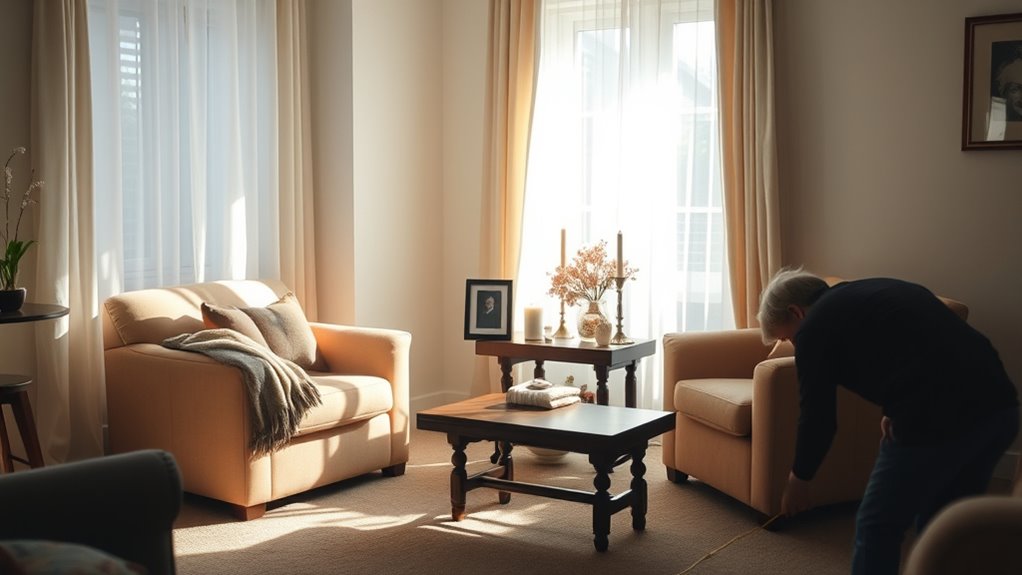
You need to choose a location in your home that offers privacy and is easy to access for everyone involved. Consider the space requirements to comfortably accommodate the body and any necessary equipment. Also, guarantee the area’s temperature and humidity levels are suitable to keep the body in good condition during the funeral process. Incorporating home-based environment or eco-friendly containers can help create a respectful and personalized environment for the occasion. Additionally, selecting a space that naturally aligns with the calming and serene atmosphere typical of a farmhouse bedroom can enhance the dignity of the setting. Ensuring proper ventilation is essential for maintaining a comfortable environment and managing odors effectively during this sensitive time. Keeping in mind grocery savings strategies such as maintaining a clean space helps minimize clutter and creates a more respectful environment for the funeral process. Recognizing the importance of data privacy challenges in modern technology can remind us to maintain confidentiality and respect during such personal moments.
Room Privacy Considerations
Choosing the right room within your home is essential for maintaining privacy and creating a respectful environment for a home funeral. You need a space that offers seclusion and minimizes disruptions. Consider a quiet, private area away from daily activity. A suitable room might have a door that can be closed, ample space for family and friends, and some natural light. To visualize, think of these options:
| Quiet Corner | Large, Private Room |
|---|---|
| Away from noise | Enough space for seating and the casket |
| Close the door | Privacy for family and visitors |
| Natural light | Calm, respectful atmosphere |
Selecting a room with these features helps preserve dignity and comfort during this sensitive time.
Accessibility and Space Needs
Since selecting a suitable location within your home requires careful consideration of both accessibility and space, it’s important to evaluate areas that are easily reachable for family and visitors while providing enough room for comfort and necessary equipment. Look for a spot close to main pathways, avoiding tight corners or narrow hallways. You’ll need enough space to accommodate a casket or coffin, as well as any other supplies or furniture you plan to use. Guarantee the area can comfortably hold everyone involved without feeling crowded. Think about how people will move around during the funeral, and select a space that allows for easy access and smooth flow. Prioritize function and comfort to create a respectful, supportive environment for everyone involved.
Environmental Conditions Compatibility
Ensuring the space you select has suitable environmental conditions is essential for a respectful and comfortable home funeral. Choose a location with good ventilation to prevent odors from building up. Keep the area cool, ideally between 65-70°F (18-21°C), to help preserve the body naturally. Avoid spaces prone to drafts, direct sunlight, or high humidity, which can cause discomfort or compromise the setup. Ensure the area is easily accessible for family members and caregivers, with enough room for necessary equipment and movement. Consider proximity to water and electricity if needed for cleaning or special equipment. Maintaining a quiet, private space helps create a peaceful environment for mourning and reflection. Proper environmental conditions support dignity, comfort, and a smooth home funeral process.
Managing Personal and Cultural Rituals

You can honor your loved one’s traditions by incorporating their cultural rituals into the home funeral. Personalizing these practices helps create a meaningful farewell that respects their background. Consider what rituals are important to you and your family to make the experience genuinely reflective of your shared values. Exploring universal themes in your rituals can also help bring comfort and connection during this difficult time. Additionally, understanding self watering plant pots can inspire ways to include living memorials or symbols of growth in your ceremony. Engaging in internal company hackathons can foster a sense of community and collaboration, which may be beneficial when planning collective rituals or memorials. Recognizing the influence of WWE Raw’s financial impact can guide you in creating a tribute that celebrates your loved one’s passions and achievements. Incorporating mindfulness practices into the ceremony may also help participants find peace and presence during their farewell.
Respecting Cultural Traditions
Respecting cultural traditions is essential when planning a home funeral, as it helps honor the deceased’s heritage and provides comfort to grieving family members. Understanding specific customs guarantees you approach the funeral with sensitivity and respect. Some traditions may include specific clothing, prayer rituals, or mourning practices. It’s helpful to communicate with family members or community elders to clarify expectations and avoid misunderstandings. Incorporating these rituals shows reverence for cultural values and creates a meaningful farewell. Here’s a quick guide to common cultural practices:
| Tradition | Description |
|---|---|
| Burial Clothing | Traditional attire or family heirlooms |
| Prayer Rituals | Specific prayers or recitations |
| Offerings | Food, candles, or symbolic items |
| Mourning Attire | Black clothing or specific colors |
| Ritual Objects | Religious or cultural symbols |
Personalizing Funeral Rituals
Personalizing funeral rituals allows you to create a meaningful farewell that reflects the unique life and preferences of the deceased. You can incorporate their passions, hobbies, or favorite traditions to honor their memory authentically. This approach makes the funeral more intimate and special for everyone involved. To personalize the ceremony, consider different elements such as music, readings, or symbols that held significance. You can also involve family and friends in planning to ensure the rituals resonate with shared memories. Remember, it’s about celebrating the individual’s life in a way that feels genuine. Here are some ideas to help you customize the funeral:
- Include favorite songs or hymns
- Share personal stories or anecdotes
- Use meaningful objects or mementos
- Incorporate cultural or spiritual practices
Ensuring Proper Documentation and Legal Paperwork

Ensuring proper documentation and legal paperwork is a crucial step in planning a home funeral, as it helps guarantee everything is handled smoothly and in accordance with the law. First, you’ll need to obtain the death certificate from the appropriate authorities, which officially records the death. Check your state or local regulations for specific requirements, such as notarized affidavits or permits. You’ll also need to notify the vital records office and arrange for transportation of the body, if necessary. Keep copies of all documents, including the death certificate, permits, and any affidavits, in a safe place. Staying organized and informed about legal requirements assures your home funeral proceeds without unnecessary delays or complications. This preparation provides peace of mind during a difficult time.
Coordinating With Funeral Service Providers if Needed
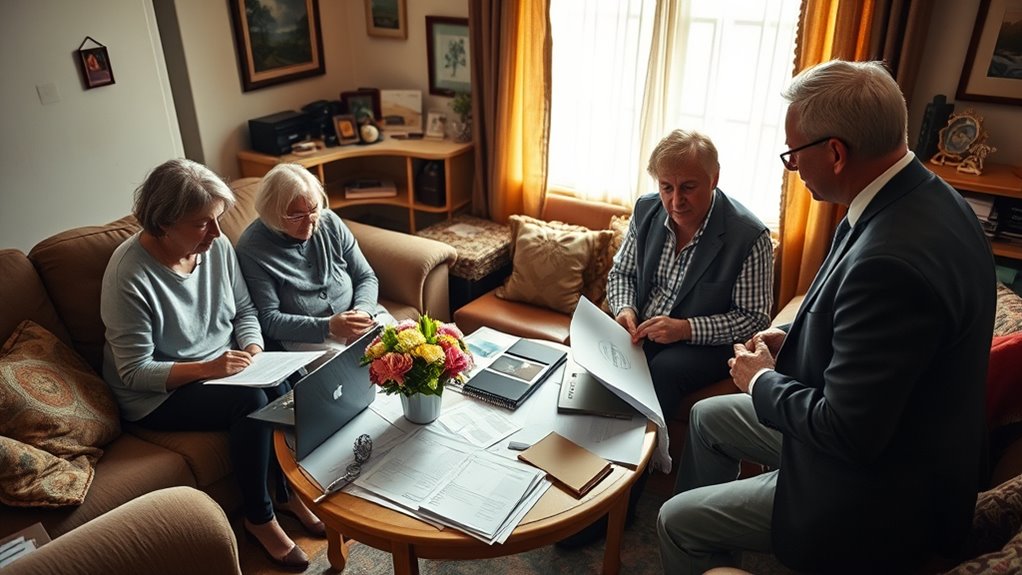
If you find that you need additional support or specialized services, reaching out to funeral service providers can guarantee your home funeral goes smoothly. These professionals can help with logistics, legal paperwork, or specific rituals, ensuring everything aligns with your wishes. When coordinating, be clear about what services you want and any limitations you prefer. It’s helpful to ask about costs upfront and confirm what they can provide, such as transportation, documentation, or guidance on respectful handling. Working with providers can also ease your stress during an emotional time. Additionally, understanding merchant services can facilitate smoother financial transactions if any payments or deposits are involved. Being aware of state-specific regulations can further ensure compliance with local laws and avoid potential issues. Recognizing the hours of operation of local providers can help you plan and coordinate more effectively. Knowing about soulmate angel numbers may also bring emotional support and reassurance during this challenging period. Moreover, understanding cultural narratives can help you incorporate meaningful rituals and traditions into the home funeral to honor your loved one.
Handling Embalming, Viewing, and Burial Arrangements
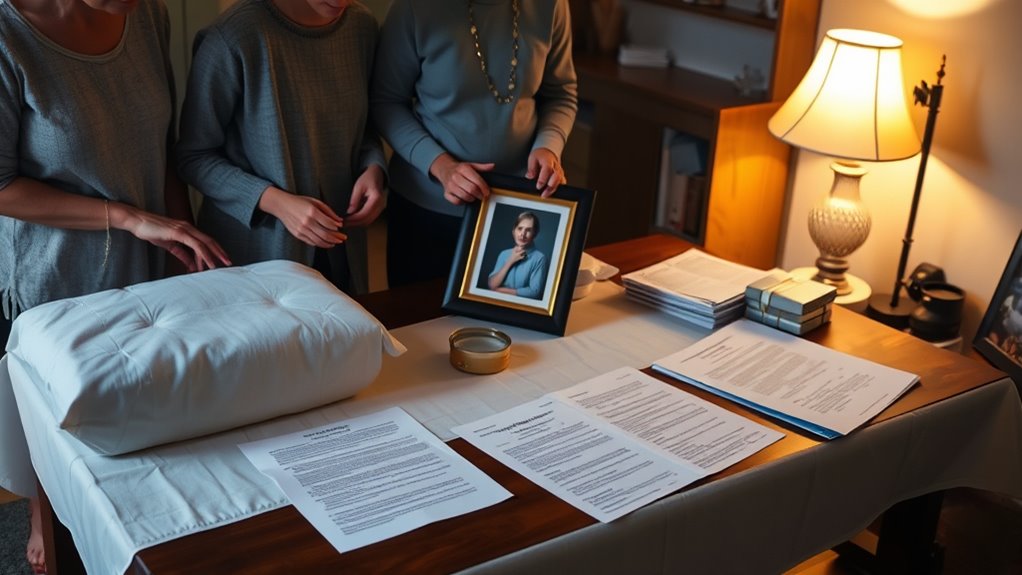
You’ll need to understand the requirements for embalming and decide if it’s essential for your loved one. Organizing viewing arrangements involves coordinating times and setting up a respectful environment. Planning burial logistics requires careful attention to timing, location, and transportation to ensure everything goes smoothly. Additionally, familiarizing yourself with legal and ethical considerations related to home funerals can help you navigate the process responsibly. Being aware of Halloween traditions can also provide comfort and a sense of community during this time.
Embalming Requirements Overview
Handling embalming, viewing, and burial arrangements involves understanding specific requirements that vary depending on your choices and local regulations. Embalming is often not required for a home funeral unless mandated by law or if you plan to hold a viewing. Some jurisdictions require embalming for certain types of transfers or if the body remains unburied for an extended period. It’s essential to check your local laws before proceeding.
- Embalming may be optional for immediate or same-day burials
- Laws differ between states and countries
- Embalming can be bypassed if you prefer natural or eco-friendly options
- Proper documentation and permissions are necessary for handling remains
Knowing these points helps you navigate legal and practical aspects confidently.
Organizing Viewing Arrangements
Organizing viewing arrangements involves coordinating the timing, setting, and procedures to create a meaningful and respectful experience. Decide on a date and time that suits family and friends, ensuring everyone can gather comfortably. Choose a suitable space in your home, making it welcoming and private. Prepare the body by cleaning or dressing as desired, and consider whether embalming or preservation is necessary.
Here’s a simple guide to your options:
| Embalming | Viewing Setting | Burial Arrangements |
|---|---|---|
| Optional, based on preference | Home, chapel, or outdoor | Coordinate with cemetery or family plans |
| Requires professional help | Personal touches encouraged | Decide on casket or alternative options |
| Timing affects emotional impact | Create a calming atmosphere | Confirm logistics in advance |
Planning Burial Logistics
After arranging the viewing, it’s time to focus on the practical steps for burial logistics. First, decide whether to embalm or not, considering local laws and personal preferences. If you choose embalming, coordinate with a licensed professional and understand the costs involved. Next, plan the burial site—whether it’s a cemetery, family land, or another location—and confirm any permits required. You’ll also need to arrange transportation for the body, ensuring it’s handled respectfully and legally. Finally, communicate with relevant parties about the burial schedule and responsibilities.
- Confirm burial site permissions and regulations
- Coordinate transportation and handling of the body
- Decide if embalming is necessary or desired
- Schedule and communicate the burial timeline
Protecting Health and Safety During the Process
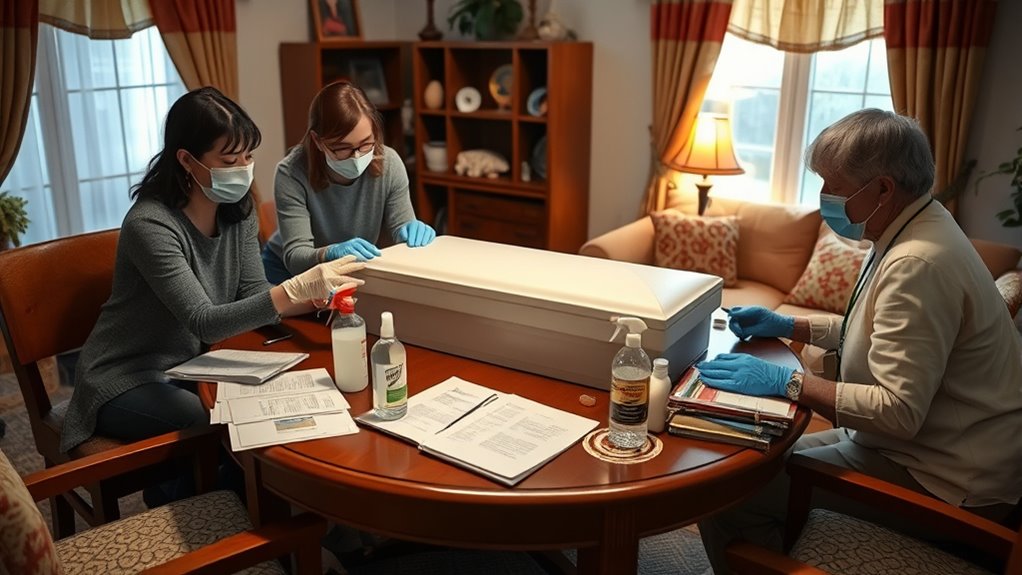
Ensuring health and safety during a home funeral is essential to protect yourself and your loved ones. Begin by wearing gloves and a mask when handling the body to prevent the spread of infection. Keep the body in a cool, well-ventilated space to slow decomposition and reduce health risks. Avoid using sharp or hazardous tools unless necessary, and make sure they’re properly sanitized afterward. Maintain good hygiene by washing your hands thoroughly and disinfecting surfaces regularly. Be aware of local regulations about body handling and disposal methods. If you’re unsure about procedures, consult healthcare or funeral professionals for guidance. Prioritizing safety helps create a respectful and secure environment for everyone involved.
Frequently Asked Questions
Can I Hold a Home Funeral if I Live in an Apartment?
You can hold a home funeral in an apartment, but you’ll need to evaluate local laws and building policies first. Check if your area allows such arrangements and talk to your building management about any restrictions. You’ll also need appropriate space, privacy, and access to water and utilities. Planning ahead ensures you respect legal guidelines and your neighbors’ comfort, making the process meaningful and compliant.
What Insurance Considerations Are Involved in a Home Funeral?
You should consider your insurance policy, your homeowner’s or renter’s insurance, and any other applicable coverage. Review your policy to see if it includes provisions for handling a death at home, and contact your provider to clarify. You might need additional coverage for the funeral arrangements, transportation, or property damage. Ensuring your insurance supports your plans helps protect you financially and legally during this sensitive time.
How Do I Handle Pets or Children During the Funeral Process?
During a home funeral, you need to guarantee pets and children feel safe and comfortable. Keep pets away from the body and funeral space to prevent distress. For children, explain what’s happening in simple, calming terms, and consider having a trusted adult nearby. Create a quiet, secure area for them to retreat to if needed. Your priority is maintaining a peaceful environment that minimizes their anxiety during this sensitive time.
Are There Specific Temperature or Environmental Requirements for the Body?
Imagine a delicate flower, needing just the right conditions to stay fresh. Similarly, you should keep the body in a cool, dry environment—ideally between 36-40°F (2-4°C)—to prevent decomposition. Avoid direct sunlight, heat sources, or excessive humidity. Proper temperature control helps preserve dignity and comfort, ensuring the body remains respectful during your home funeral. Keep the body covered with a clean, breathable cloth for added protection.
What Resources Are Available for Emotional Support During a Home Funeral?
You might feel overwhelmed during a home funeral, but there are resources to help. Reach out to local grief support groups, which offer comfort and advice. Many organizations, like the Compassionate Friends or grief counseling services, provide emotional support and guidance. Online forums and communities also connect you with others who’ve experienced similar losses. Don’t hesitate to seek help; caring professionals and support networks are there for you.
Conclusion
Planning a home funeral might seem overwhelming at first, but with the right knowledge, you can manage it confidently. Remember, you don’t have to do everything alone—many communities offer support, and professionals are available if needed. By understanding regulations and taking practical steps, you create a meaningful farewell that honors your loved one. Embrace this personal journey—you’ll find it rewarding, even if it feels unfamiliar at first.