

As you age, natural changes in muscles, bones, and sensory systems can shift your posture, causing issues like rounded shoulders, forward head, or stooped back. Loss of strength, decreased bone density, and reduced joint flexibility can lead to discomfort, imbalance, and a higher risk of falls. Adjusting your environment and maintaining movement help. To learn how to keep your posture and comfort in check as you age, explore the details ahead.

Get comfort and care essentials delivered free — and shop member deals
- Fast, free delivery on millions of items
- Access to Prime Big Deal Days deals on October 6–7
- Prime Video, Amazon Music and more included
Key Takeaways
- Aging causes muscle weakness, bone density loss, and joint stiffness, leading to postural shifts and increased discomfort.
- Sensory decline affects balance and body awareness, making posture correction more challenging with age.
- Reduced flexibility and ligament elasticity can result in stiffness, compensatory postures, and decreased mobility.
- Ergonomic adjustments and regular movement help maintain proper posture and reduce strain as aging progresses.
- Early detection and professional support are essential for managing postural changes and enhancing comfort in older adults.
ergonomic posture support pillow for seniors
As an affiliate, we earn on qualifying purchases.
As an affiliate, we earn on qualifying purchases.
How Aging Changes Your Posture: What You Need to Know

As you age, your posture naturally shifts due to changes in muscles, bones, and balance. To manage these changes effectively, developing posture awareness becomes essential. Understanding aging biomechanics helps you recognize how your body adapts over time, highlighting areas prone to strain or misalignment. These shifts can lead to a more hunched or stooped appearance, affecting your comfort and mobility. By staying mindful of your posture, you can identify early signs of imbalance and take steps to correct them. Simple exercises, proper ergonomics, and regular movement support maintaining better alignment. Being aware of postural biomechanics can help you better understand the causes of postural changes and ways to counteract them. Incorporating posture-focused strategies into your daily routine allows you to take proactive steps toward maintaining optimal alignment and reducing discomfort. Additionally, understanding how muscle strength and flexibility influence posture can help you tailor your activities to support better alignment. Developing body awareness can further enhance your ability to detect and correct postural issues early, preventing long-term problems. Engaging in preventive care practices can also play a crucial role in mitigating age-related postural decline. Embracing posture awareness as part of your routine empowers you to counteract natural aging effects, promoting better comfort and reducing the risk of pain or injury.
Common Postural Shifts in Older Adults and Their Causes

With aging, your posture often shifts in predictable ways due to changes in muscle strength, bone density, and sensory feedback. You may notice a forward head posture, rounded shoulders, or a stooped back. These postural changes are often linked to balance issues that develop as your sensory decline affects your ability to detect position and movement. As your sensory feedback weakens, you might lean more heavily on visual cues or rely less on your proprioception, leading to uneven weight distribution. This decline can cause you to unconsciously adjust your stance or posture, often resulting in a more hunched or uneven appearance. Recognizing these common postural shifts helps you understand their causes and highlights the importance of addressing balance issues early. Additionally, understanding the role of sensory feedback in maintaining proper posture can help guide targeted interventions to improve stability and comfort as you age. A proactive approach to postural awareness can also assist in preventing further decline and enhancing overall well-being. Incorporating strengthening exercises and postural correction techniques can be effective in mitigating these changes and supporting better posture. Engaging in regular balance training can further help maintain stability and reduce falls, promoting safer movement as you grow older.
How Muscle Loss and Bone Density Loss Affect Your Stability and Comfort

Muscle loss and decreased bone density directly impact your stability and comfort, making everyday movements more challenging. As muscle atrophy occurs, your muscles weaken, reducing your strength and balance. This decline can be measured by muscle mass and strength assessments, which help identify early issues. Regular monitoring of muscle health indicators can aid in early detection and intervention. This increases your risk of falls and makes tasks like standing up or climbing stairs more difficult. Loss of bone density further compromises your skeletal support, leading to fragility and a higher chance of fractures. When bones become less dense, they can’t absorb shocks as well, which affects your overall comfort and confidence in daily activities. Proper posture is also affected, further diminishing your sense of steadiness and increasing discomfort. Maintaining bone density through proper nutrition and weight-bearing exercises can help mitigate these effects. Additionally, engaging in targeted strengthening exercises can slow down muscle deterioration. Together, muscle atrophy and low bone density diminish your ability to maintain proper posture, making you feel less steady and more prone to discomfort. Addressing these changes early can help preserve your mobility and quality of life as you age.
Why Joint Flexibility Matters for Posture as You Age
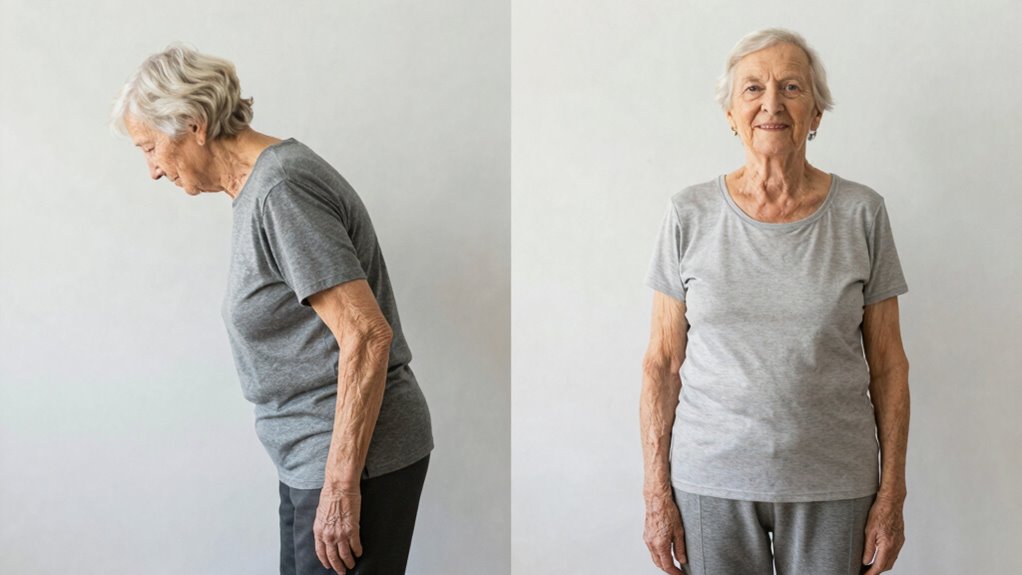
As you age, your joint flexibility naturally declines, making it harder to maintain good posture. This loss can lead to discomfort and reduced mobility over time. To stay balanced and comfortable, it’s important to adopt strategies that enhance your joint flexibility and support better posture. Incorporating simple organization strategies can also help create a more supportive environment that encourages better posture habits. Additionally, engaging in regular gentle stretching can help preserve joint mobility and flexibility, further contributing to improved posture as you age. Using ergonomic furniture and adjusting your workspace can help reduce strain and promote proper alignment during daily activities.
Joint Flexibility Declines
Since joint flexibility naturally decreases with age, maintaining good posture becomes more challenging. As you age, joint stiffness increases, making movement less smooth and more effortful. This stiffness is partly due to reduced ligament elasticity, which helps joints move freely. When ligaments lose their elasticity, joints become less adaptable, limiting your range of motion. This reduction in flexibility can cause you to adopt less optimal postures to compensate, potentially leading to discomfort or imbalance. You might notice that bending, reaching, or twisting feels more restricted than before. Staying aware of these changes helps you adjust your movements consciously and incorporate stretching or flexibility exercises into your routine. Doing so can slow the decline in joint flexibility, supporting better posture and reducing strain as you age. Additionally, engaging in regular **flexibility exercises** can help preserve joint elasticity and improve overall comfort. Incorporating mindful movement practices can also enhance awareness of posture and movement patterns, further aiding in maintaining comfort and stability. Recognizing the importance of **ligament elasticity** can motivate you to prioritize activities that support joint health and mobility, including seeking guidance on precious metals IRA options to secure your financial future.
Impact on Posture
When joint flexibility declines with age, maintaining proper posture becomes more difficult. Reduced flexibility can limit your range of motion, making it harder to align your spine and joints correctly. This decrease can also affect your mobility and balance, increasing the risk of falls and injury. This often leads to poor postural awareness, where you might not notice when your posture starts to slip. Without proper awareness, you’re more prone to slouching or leaning, which can cause discomfort and strain over time. Using ergonomic principles helps counteract these effects by encouraging supportive positions that reduce stress on stiff joints. Implementing ergonomic adjustments, such as supportive chairs or proper desk height, becomes essential as flexibility decreases. Staying mindful of your posture while incorporating ergonomic ergonomics can markedly improve comfort and help maintain better alignment as you age. Additionally, engaging in movement activities can support physical health and help preserve joint flexibility over time. Regular stretching and targeted exercises can also enhance joint mobility, further aiding in maintaining proper posture.
Enhancing Mobility Strategies
Maintaining joint flexibility is essential for preserving good posture as you age because it directly affects your range of motion and ability to align your body properly. Incorporate balance training into your routine to boost stability and coordination, which helps prevent falls and supports better posture. Improving visual awareness is also vital, as it enhances your ability to judge distances and maintain proper alignment during movement. Regularly stretching and engaging in mobility exercises keep your joints limber, making everyday activities easier and safer. Using appropriate fitness equipment can further enhance your flexibility and strength, supporting overall posture health. By focusing on these strategies, you’ll support your body’s natural ability to adapt and maintain proper posture, reducing discomfort and promoting healthier aging. Prioritizing joint flexibility through targeted exercises empowers you to stay active and confident in your movement.
Signs Your Posture Might Be Off and What to Do About It

Noticing changes in how you sit or feel can be a sign that your posture is off. You might experience persistent neck or back pain, stiffness, or fatigue after sitting for a while. If your shoulders slump forward or your head leans too much, these are clear indicators. To address this, try incorporating simple posture exercises into your routine, which can strengthen your back and core. Additionally, ergonomic accessories like supportive chairs, lumbar pillows, or adjustable desks can help realign your body and reduce strain. Pay attention to these signs early on to prevent discomfort from worsening. Making small adjustments and staying mindful of your posture can considerably improve your comfort and overall well-being as you age.
Easy Tips to Maintain Good Posture in Old Age

As you age, keeping good posture becomes even more important for comfort and health. To do this, incorporate simple habits into your daily routine. Start with regular balance exercises to strengthen your core and improve stability. Use ergonomic furniture that supports your back, neck, and hips, reducing strain. Be mindful of your sitting and standing positions, avoiding slouching or leaning forward. Take short breaks to stretch and reset your posture. Consider using supportive cushions or lumbar rolls for added comfort. Consistency is key—making these tips part of your routine helps prevent postural issues and promotes better alignment. Small adjustments can lead to significant improvements in how you feel each day, making aging more comfortable and pain-free.
Ergonomic Adjustments to Boost Comfort and Support

To improve your comfort and support, consider making ergonomic adjustments like choosing adjustable seating options that fit your needs. Supportive cushions can help reduce pressure and improve posture, while ensuring your desk is at the proper height keeps you aligned. These small changes can make a big difference in how you feel throughout the day.
Adjustable Seating Options
Since aging can lead to changes in posture and comfort needs, selecting adjustable seating options becomes essential for maintaining proper support. Ergonomic seating allows you to customize your chair’s height, tilt, and lumbar support, aiding in posture correction and reducing strain. By adjusting your seat to fit your body, you can prevent discomfort and promote better alignment. Look for chairs with features like:
- Height adjustment to keep feet flat on the floor
- Lumbar support that can be moved or increased
- Tilt tension for personalized recline comfort
- Adjustable armrests to support shoulders
- Seat depth control for proper thigh support
These options help you stay comfortable and supported, encouraging good posture even as your needs evolve. Proper ergonomic seating is a simple yet effective way to address aging-related posture changes.
Supportive Cushion Choices
Supportive cushions play a vital role in enhancing comfort and maintaining proper posture, especially as your body’s needs change with age. Choosing the right cushion can help provide better support, reduce pressure points, and promote proper spinal alignment. Memory foam cushions are popular because they contour to your shape, offering personalized support that can improve memory enhancement by reducing discomfort during daily activities. Additionally, a well-chosen cushion can help improve sleep quality by alleviating pressure on sensitive areas, making rest more restful. When selecting a cushion, consider firmness, material, and ergonomic design to match your specific needs. Proper support not only boosts comfort but also helps prevent aches and pains, allowing you to stay more comfortable and supported throughout the day and night.
Proper Desk Heights
Proper desk height is essential for maintaining good posture and reducing strain during work or daily activities. When your desk is at the right height, you can comfortably use an ergonomic keyboard and keep your lumbar support properly aligned. You should aim for your elbows to be at a 90-degree angle, with wrists straight. Your feet should rest flat on the floor, and your monitor should be eye level to prevent neck strain. Adjusting your chair height can help achieve these positions. Remember, a proper desk setup minimizes shoulder tension and promotes better spinal alignment. Regularly check your posture throughout the day to avoid discomfort and long-term issues. Making these simple adjustments can drastically boost comfort and support as you age.
When to Seek Professional Help for Posture and Discomfort Issues

If you notice persistent pain, numbness, or a significant change in your posture that doesn’t improve with self-care, it’s time to seek professional help. Early intervention can prevent further complications. Regular preventive screenings with a healthcare provider can identify underlying issues before they worsen. Don’t ignore ongoing discomfort or unusual postural shifts, as they may signal underlying musculoskeletal problems. A professional can recommend targeted treatments, physical therapy, or specific lifestyle modifications to address your needs. Timely consultation ensures you’re not only managing symptoms but also preventing future discomfort. Trust your body’s signals and seek expert guidance when self-care isn’t enough, especially as aging can accelerate the progression of posture-related issues.
Frequently Asked Questions
How Does Aging Affect Balance and Fall Risk?
As you age, your balance naturally declines, increasing your fall risk. This happens because muscles weaken and your inner ear’s function diminishes. To reduce this risk, you should focus on fall prevention strategies like regular balance training exercises. These activities help strengthen stabilizing muscles, improve coordination, and boost confidence, making it easier to maintain stability and avoid falls. Stay proactive to stay safe and independent.
Can Posture Exercises Reverse Age-Related Changes?
Posture correction through regular exercise routines can markedly improve age-related changes, but it might not completely reverse them. By consistently engaging in targeted posture exercises, you strengthen muscles, enhance alignment, and reduce discomfort. While these exercises won’t erase all aging effects, they can help you maintain better posture, improve balance, and boost overall comfort. Keep up with your routines for the best results and to support healthy aging.
What Role Does Nutrition Play in Maintaining Posture?
Nutrition plays a crucial role in maintaining your posture by supporting bone health and preventing nutritional deficiencies that weaken bones and muscles. You should consume adequate calcium, vitamin D, and protein-rich foods to strengthen your skeletal structure. Proper nutrition guarantees your bones stay dense and resilient, helping you sustain good posture. By prioritizing balanced meals, you reduce the risk of posture-related issues caused by weakened bones and muscle imbalances.
How Do Medications Impact Postural Health?
Medications can dramatically impact your postural health, sometimes causing side effects like dizziness, muscle weakness, or balance issues that feel like a storm inside your body. These effects can lead to poor posture or falls. Drug interactions may worsen these problems, making it essential to discuss all medications with your healthcare provider. Staying informed helps you manage side effects and maintain good posture as you age.
Are There Age-Specific Ergonomic Products Available?
Yes, there are age-specific ergonomic products like ergonomic chairs and adjustable desks designed to support your changing posture and comfort needs. These products feature enhanced lumbar support, easy-to-adjust heights, and better cushioning, helping reduce strain and discomfort. By choosing ergonomic chairs with proper back support and adjustable desks to maintain ideal working angles, you can improve your posture and stay comfortable as you age, promoting overall well-being.
Conclusion
Did you know that poor posture can increase fall risk by up to 50% in older adults? As you age, staying aware of these changes and making simple adjustments can substantially improve your comfort and stability. By understanding how aging affects your posture, you can take proactive steps to maintain balance and prevent discomfort. Remember, small habits and ergonomic tweaks today can make a big difference in your quality of life tomorrow.
Halloween Picks
halloween
As an affiliate, we earn on qualifying purchases.