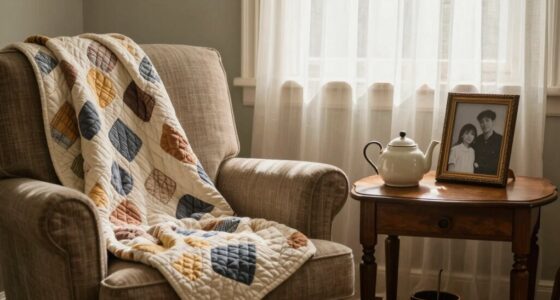
Designing a safe room for seniors with memory loss involves evaluating their specific risks and personal needs, then incorporating features like high-contrast colors, bright lighting, and non-slip flooring to prevent falls. Use clear visual cues, simple layouts, and clutter-free spaces to promote easy navigation and reduce confusion. Install safety devices like locks, alarms, and smart technology to support independence. Creating a calming environment with familiar objects helps comfort and secure your loved one—if you continue exploring, you’ll discover more helpful tips.
Key Takeaways
- Use high-contrast colors and clear visual cues to enhance navigation and object recognition.
- Install secure, easy-to-operate locks and safety devices like wearable alarms or smart home systems.
- Design clutter-free, well-lit pathways with non-slip flooring and minimal obstacles to prevent falls.
- Incorporate familiar objects, calming colors, and sensory elements to promote emotional comfort and reduce anxiety.
- Ensure easy access to essential items and maintain a consistent environment to support independence and routine.
How to Assess Memory Loss Risks for a Safe Room
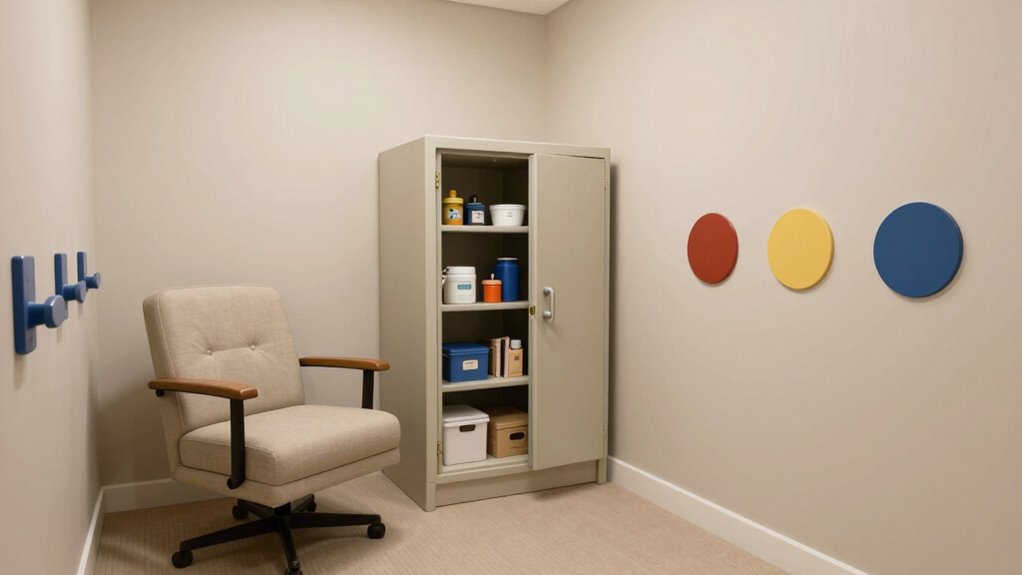
To create a safe room for seniors with memory loss, you first need to evaluate their specific risks and behaviors. Conducting cognitive assessments helps you understand their level of memory impairment and decision-making abilities. These assessments reveal potential hazards, such as confusion about room layout or tendencies to wander. Based on this information, you can develop effective risk management strategies, like identifying areas where falls are likely or where safety features are needed. Observing how they navigate their environment and noting specific challenges allow you to tailor safety measures. Remember, understanding individual behaviors is essential for creating a space that minimizes dangers and supports their independence while ensuring their safety. Incorporating color contrast and contrast ratio considerations can help improve visibility and reduce confusion in their environment. Additionally, employing architectural solutions such as clear signage and safe pathways can further enhance safety and ease of movement for seniors. Recognizing the importance of personalized safety plans is crucial to address unique needs and prevent accidents effectively. Including environmental modifications, like removing hazards and optimizing layout, can significantly reduce risks and promote peace of mind. Furthermore, integrating appropriate lighting can decrease shadows and improve overall safety.
Key Design Features to Make a Room Safe and Accessible

Designing a safe and accessible room involves incorporating key features that accommodate the unique needs of seniors with memory loss. One essential feature is using color contrast; for example, contrasting wall colors with furniture or flooring helps seniors distinguish objects and navigate safely. Bright, even lighting is vital, so consider lighting improvements that reduce shadows and glare. Install adjustable fixtures to adapt to changing needs and ensure ample illumination in key areas like pathways and near exits. Clear visual cues, such as contrasting door frames and floor edges, guide movement and prevent accidents. Minimizing clutter and removing tripping hazards further enhances safety. Additionally, incorporating visual cues that are easily recognizable can significantly aid orientation and movement within the space. Using standardized signage can also help reinforce familiar patterns and reduce confusion. Incorporating consistent design elements supports familiarity and reduces anxiety for seniors. Furthermore, implementing familiar patterns throughout the room can promote a sense of security and ease of use. A well-designed environment also considers non-slip flooring to prevent falls. These design elements work together to create a space that’s easier to understand and navigate, promoting independence and peace of mind.
Planning a Layout That’s Easy to Navigate and Prevents Confusion
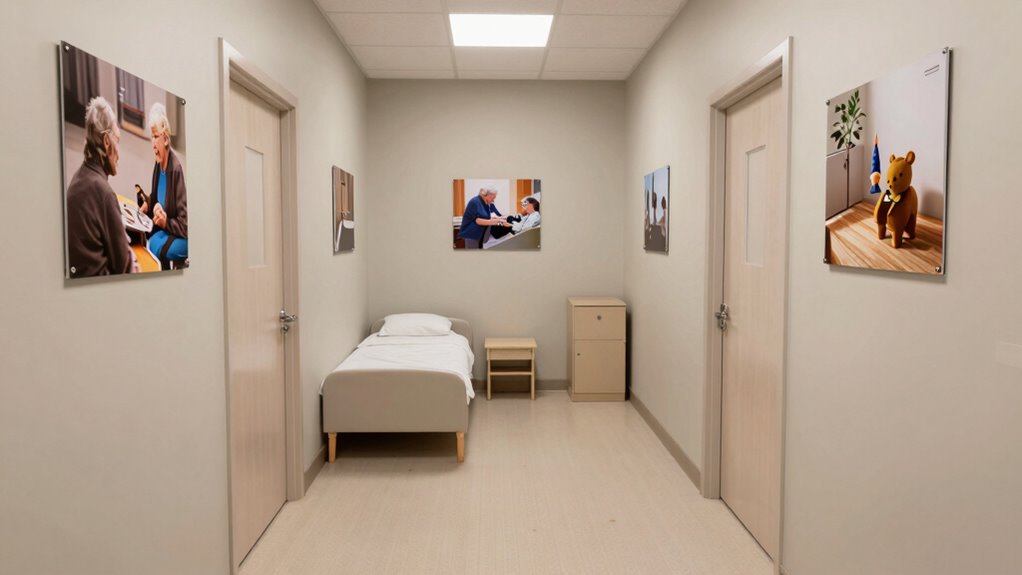
Creating a layout that’s easy to navigate and reduces confusion begins with clear, logical pathways. To achieve this, consider these steps:
Design clear, logical pathways using consistent colors, good lighting, and clutter-free, open spaces for easy navigation.
- Use consistent color selection for different rooms or areas to create visual cues that guide movement.
- Incorporate lighting strategies such as bright, even lighting to eliminate shadows and highlight pathways.
- Keep hallways simple and free of clutter, using color contrasts to define edges.
- Design open spaces with minimal obstacles, ensuring furniture placement supports flow.
- Incorporate visual cues like symbols or patterns to further enhance wayfinding and orientation.
- Integrating universal design principles can also help create a safer, more intuitive environment that accommodates changing needs.
- Regularly maintain and check air quality to ensure a healthy indoor environment, which can also support cognitive well-being.
- Additionally, considering sensory stimulation can promote comfort and orientation for individuals with memory loss.
- Implementing smart technology can provide additional support by offering cues and alerts to assist with navigation.
Choosing and Using Safety Devices and Technology Effectively

Choosing and using safety devices and technology effectively is crucial for creating a secure environment for seniors with memory loss. Wearable alarms, such as pendants or wristbands, provide immediate alerts if your loved one needs help or wanders. These devices are easy to activate and can be worn constantly, offering peace of mind. These alarms have been shown to significantly reduce response times in emergency situations and increase safety. Smart home systems also play an essential role; they can be programmed to monitor movement, control lighting, and lock doors remotely. When selecting these tools, prioritize simplicity and reliability. Make sure your loved one understands how to use them and regularly test the devices to ensure they work properly. Incorporating sleep better tips can also help improve overall well-being and reduce confusion. Developing familiarity with modern safety technology can help you make informed choices. Using reliable alarm systems ensures consistent safety coverage throughout the day and night. Understanding the field‑of‑view and imaging‑scale examples from other fields can offer insights into optimizing sensor placement and coverage. Combining wearable alarms with smart home technology helps you respond quickly and creates a safer, more supportive environment.
Creating a Calm, Supportive Environment to Promote Independence

A calm, supportive environment is essential for helping seniors with memory loss maintain their independence. You can achieve this by focusing on emotional comfort and sensory stimulation. First, create a clutter-free space with familiar objects to reduce confusion. Second, use soft lighting and calming colors to promote relaxation. Third, incorporate sensory elements like gentle music or textured materials to engage their senses. Fourth, establish routines and clear signage to foster familiarity and independence. Additionally, integrating adaptive lighting can help support circadian rhythms and improve sleep patterns. This type of environment also aligns with the importance of emotional comfort in reducing anxiety and promoting well-being. Optimizing environmental design can further enhance safety and ease of navigation, especially when considering home safety features that reduce fall risks. Incorporating wayfinding cues can make it easier for seniors to find their way around the space and feel more confident. These steps help minimize anxiety and encourage confidence. By prioritizing emotional comfort and sensory stimulation, you enable your loved ones to feel safe and supported, empowering them to navigate their environment with greater independence and peace of mind.
Frequently Asked Questions
How Can Family Members Best Support a Loved One’s Independence?
You can best support your loved one’s independence by incorporating assistive technology like medication reminders or GPS trackers to help them stay safe and autonomous. Offer emotional support through encouragement and patience, showing you’re there for them. Involve them in decision-making, and adapt their environment to boost confidence. This balanced approach fosters independence while ensuring their safety and emotional well-being.
What Are Common Hazards in a Senior’s Home to Watch Out For?
You should watch out for fall hazards like loose rugs, uneven flooring, and clutter risks that can cause trips and falls. Keep walkways clear, secure loose carpets, and install grab bars in key areas like bathrooms. Regularly check for obstacles or clutter that could block escape routes. By addressing these hazards, you help reduce the risk of injury and promote a safer environment for your loved one.
How Often Should Safety Updates Be Reviewed and Adjusted?
Think of your home as a living, breathing entity that evolves—so, you should review safety updates every six months. Regularly update home technology and emergency preparedness plans to stay ahead of hazards and guarantee safety. Changes in health, new technologies, or environmental factors may require adjustments, so stay vigilant. By doing so, you keep your loved ones protected, turning safety from a static goal into an ongoing, dynamic process.
Are There Specific Colors or Lighting Recommendations for Memory Care?
You should use high-contrast colors, like dark text on a light background, to improve visibility, and avoid overwhelming patterns. Opt for soft, warm lighting that’s evenly distributed to reduce shadows and glare, helping seniors with memory loss navigate safely. Lighting should be adjustable to accommodate different needs and times of day. Proper color contrast and lighting optimization are key for creating a safe, comfortable environment that supports independence.
How Can Staff or Caregivers Be Trained to Ensure Safety?
Like a well-oiled machine, you can guarantee safety by providing thorough staff training that emphasizes safety protocols. You should regularly update caregivers on best practices and conduct simulations to reinforce procedures. Encourage ongoing education about memory loss challenges and personalized care. This proactive approach helps staff respond swiftly, reducing risks and creating a secure environment. Remember, continuous training is key to maintaining safety and peace of mind for both caregivers and seniors.
Conclusion
Designing a safe room for seniors with memory loss is like crafting a gentle sanctuary amid a bustling world. With thoughtful features and calming touches, you create a haven where confusion melts away and independence blooms. Every detail, from clear pathways to soothing colors, helps your loved one feel secure and supported. In this peaceful retreat, you’re not just building a space—you’re nurturing confidence and comfort, turning everyday challenges into moments of calm and connection.