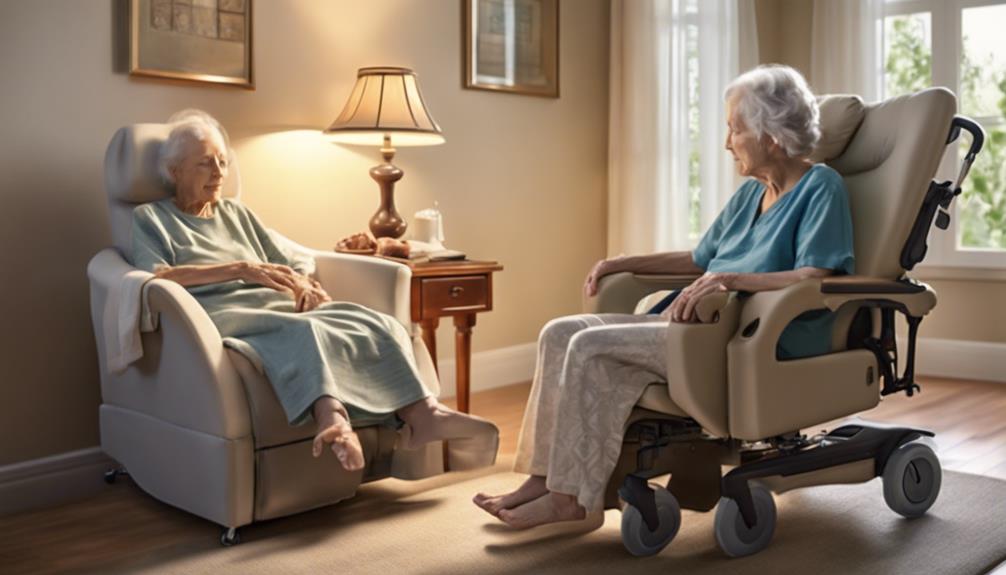

To provide comfort bathing in dementia care, create a calm environment by dimming lights and reducing noise. Use gentle, reassuring speech and adjust your approach based on the resident’s responses. Incorporate sensory stimulation, such as calming scents and textured cloths, to promote relaxation. Be patient, maintain a slow pace, and focus on meaningful connection during each step. With these techniques, you can turn routine bathing into a soothing, dignity-preserving experience. Keep exploring to learn more about making this gentle process even more effective.

Turn quiet afternoons into listening time
- Thousands of audiobooks, podcasts and originals
- Listen on your phone, tablet or Echo — also offline
- Cancel anytime
Key Takeaways
- Create a calm environment with soft lighting, soothing sounds, and minimal noise to promote relaxation during bathing.
- Use gentle, reassuring communication and observe resident cues to ensure comfort and reduce agitation.
- Incorporate sensory stimuli such as calming scents, textured washcloths, and soft music to enhance the experience.
- Maintain a slow, gentle pace, allowing ample time for each step and providing reassurance throughout.
- Focus on dignity and connection by turning bathing into a positive, sensory-rich, person-centered activity.

Comfort bathing is a vital aspect of dementia care that can markedly improve quality of life for both residents and caregivers. It’s more than just cleaning; it’s an opportunity to provide sensory stimulation that can soothe and comfort residents, reducing anxiety and agitation. When you approach bathing routines with patience and mindfulness, you create a moment of connection that fosters trust and dignity.
Start by preparing the environment to make it inviting and calming. Dim the lights if possible, and eliminate loud noises or sudden movements that could startle your resident. Gather all necessary supplies beforehand—soft towels, gentle soap, and warm water—so you won’t need to rush during the process. This preparation helps keep the experience smooth and relaxed, allowing you to focus on gentle, comforting touches that promote sensory stimulation. Creating an environment that minimizes stress can further enhance the overall experience.
Create a calm, inviting space with soft lighting and prepared supplies for a gentle, soothing bathing experience.
As you begin the bathing routine, speak softly and reassuringly. Your tone and words can greatly influence how your resident perceives the experience. Use soothing gestures and maintain eye contact when appropriate to foster a sense of safety. Let your resident’s preferences guide you—some may enjoy gentle massage with scented oils or soft cloths, while others might prefer a cooler or warmer water temperature. Adjust your approach based on their responses, paying close attention to cues that indicate comfort or discomfort. Incorporating sensory stimulation into each step can greatly enhance the experience. Understanding person-centered care principles can help tailor your approach to meet individual needs. Being mindful of individual preferences can help create a more positive and respectful bathing experience.
Incorporate sensory stimulation into each step. For instance, use fragrant soaps or lotions that provide a calming scent, or incorporate textured washcloths to stimulate touch. Play soft, calming music in the background if it seems to relax your resident. These small details turn a routine task into a sensory experience that can uplift the spirit and soothe the mind. Remember, consistency in your bathing routines helps your resident anticipate and feel more comfortable with the process, reducing resistance or fear. Being attentive to their cues can help prevent distress and foster trust.
Throughout the bathing process, maintain a gentle pace, and give your resident plenty of time. If they become agitated or restless, pause and offer reassurance. Use distraction techniques, like talking about familiar memories or showing pictures, to shift focus and ease tension. When you finish, gently dry and dress them, continuing the comforting touch and kind words. This approach reinforces a sense of security and respect. Being attentive to their cues can help prevent distress and foster trust.
In essence, comfort bathing in dementia care isn’t just about cleanliness; it’s about creating a positive, sensory-rich experience that respects your resident’s dignity. Your calm presence, gentle techniques, and attention to sensory stimulation turn a routine task into a meaningful moment of care and connection. Embracing a person-centered approach can make a significant difference in how residents experience bathing and care routines.
gentle bath products for dementia
As an affiliate, we earn on qualifying purchases.
As an affiliate, we earn on qualifying purchases.
Frequently Asked Questions
How Often Should Comfort Bathing Be Performed for Dementia Patients?
You should perform comfort bathing for dementia patients as needed, typically every 2 to 3 days or when personal hygiene becomes necessary. Regular baths help maintain cleanliness and boost emotional well-being, reducing discomfort and skin issues. Keep in mind that some patients prefer less frequent bathing to avoid distress, so observe their cues and tailor the schedule to support their comfort and dignity, ensuring a gentle, respectful approach.
Are There Specific Clothing or Accessories Recommended for Comfort Bathing?
Have you ever wondered how the right clothing can make a bath more comfortable? For dementia patients, choose loose, soft clothing that’s easy to put on and take off. Consider gentle fabrics like cotton or bamboo, and opt for accessories like non-slip slippers and easy-to-use velcro fasteners. These clothing selections and accessory options help reduce stress, making the bathing process calmer and more comforting for your loved one.
How Can Caregivers Manage Resistance During Bathing?
To manage resistance during bathing, you should use gentle persuasion and calming techniques. Speak softly, maintain eye contact, and reassure your loved one throughout the process. Offer breaks if needed, and involve them in choices like water temperature or clothing. Staying patient and calm helps reduce anxiety, making the experience more comfortable. Remember, your soothing presence can considerably ease their resistance and foster trust during bathing.
What Signs Indicate a Bath Is Too Cold or Too Hot?
You’ll notice signs like shivering, goosebumps, or redness indicating the water is too cold. If your loved one shows flushed skin, sweating, or agitation, the water might be too hot. Pay attention to their skin sensitivity and temperature regulation cues. Always test the water first with your wrist or elbow, ensuring it’s comfortably warm without causing discomfort. Adjust the temperature as needed to keep bathing safe and soothing.
How Does Comfort Bathing Impact Overall Dementia Care?
Comfort bathing markedly enhances overall dementia care by promoting emotional well-being and providing gentle sensory stimulation. When you create a soothing, respectful experience, it helps reduce anxiety and agitation, fostering trust and comfort. The calming sensory input during a gentle bath can also trigger positive memories and feelings, making daily routines more manageable. This compassionate approach supports both emotional health and a sense of security for individuals with dementia.
Conclusion
By approaching comfort bathing with patience and gentle reassurance, you create a soothing experience that eases your loved one’s anxiety. Imagine them feeling safe and cared for, not overwhelmed. If they resist, remember it’s okay to pause and try again later. Your calm presence and gentle touch can make all the difference, transforming a potentially stressful task into a moment of connection. With practice, comfort bathing becomes a nurturing routine that benefits both of you.
Halloween Picks
halloween
As an affiliate, we earn on qualifying purchases.