
To make travel days easier, focus on planning with mobility in mind. Choose comfortable travel gadgets like ergonomic pillows, portable chargers, and reliable Wi-Fi options. Pack healthy snacks and organize essentials for quick access. Regular breaks for stretching and rest keep everyone comfortable and happy. By preparing these key elements in advance, you reduce stress and enjoy a smoother journey. Keep going to discover more tips for a relaxing family trip.

Turn quiet afternoons into listening time
- Thousands of audiobooks, podcasts and originals
- Listen on your phone, tablet or Echo — also offline
- Cancel anytime
Key Takeaways
- Prioritize comfortable vehicle setup with ergonomic accessories and regular breaks to reduce fatigue.
- Select portable, versatile gadgets like power banks and Wi-Fi hotspots to stay connected and entertained.
- Pack healthy, portable snacks and hydrate to maintain energy and prevent hunger-related stress.
- Organize essentials for quick access, ensuring convenience and minimizing distractions during the trip.
- Share detailed plans and schedules with all travelers to promote cooperation and reduce misunderstandings.
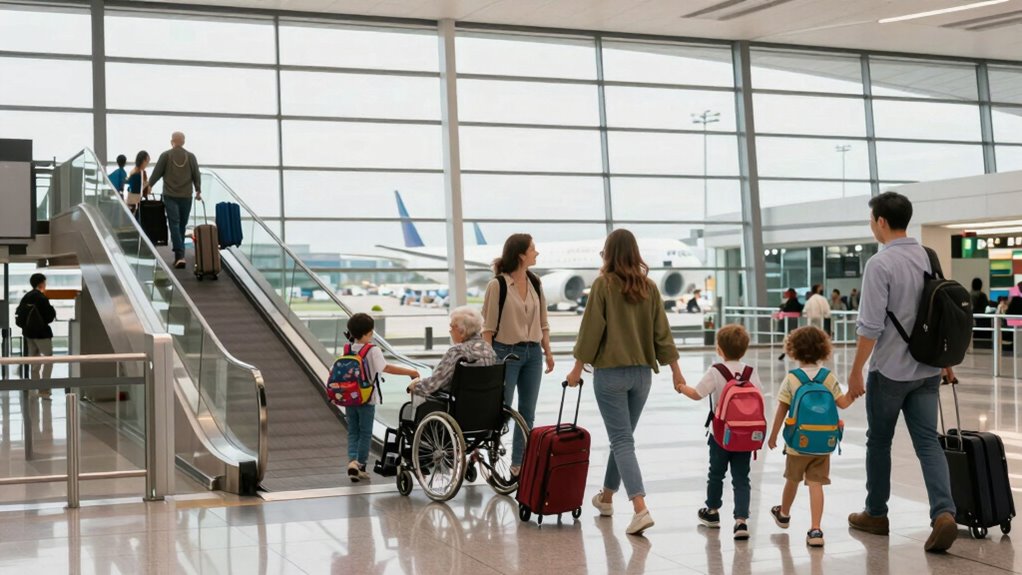
Travel days can be stressful, but planning with mobility in mind makes a big difference. When you focus on making your journey smooth and comfortable, everything from packing to charting stops becomes easier. One way to do this is by selecting the right travel gadgets. Compact chargers, portable Wi-Fi hotspots, and ergonomic travel pillows can keep everyone connected and comfortable. These gadgets help reduce frustration, especially when dealing with long stretches on the road. Think about bringing a power bank so devices stay charged, and consider a versatile tablet or e-reader for entertainment. With the right tech, you avoid the hassle of dead batteries or lost Wi-Fi, making your trip more enjoyable from start to finish.
Proper planning and essential gadgets make travel smoother and more enjoyable from start to finish.
Another key to easing travel stress is planning your road trip snacks. Stocking up on a variety of healthy, portable options keeps everyone energized and satisfied, preventing crankiness from hunger. Think about including trail mix, granola bars, fresh fruit, and cut veggies. These snacks are easy to pack and don’t require refrigeration, making them perfect for on-the-go consumption. Having a well-stocked cooler with water and juice boxes also helps keep everyone hydrated and happy. When you plan snacks ahead of time, you avoid unnecessary stops and last-minute pit stops for fast food, which can slow down your trip and lead to more stress. Additionally, considering vehicle comfort and ensuring your car setup meets everyone’s needs can significantly improve the overall experience. Paying attention to travel safety tips, such as securing loose items and checking vehicle maintenance, can also prevent unexpected issues during the trip.
Being aware of travel comfort options, like seat cushions or adjustable headrests, can make a notable difference during long drives. Planning your vehicle setup and comfort measures is another way to keep everyone content and relaxed. Make sure your car is comfortable, with enough legroom and quick access to essentials like snacks and gadgets. Keep a dedicated bin or organizer for all your travel gear—chargers, headphones, wipes, and any necessary medications—so nothing gets lost or forgotten. Incorporating frequent but short breaks into your schedule; this gives everyone a chance to stretch, use the restroom, and reset. Having a flexible plan reduces frustration and helps keep mood levels high, especially with kids in the car.
Finally, communicating your plan with everyone involved guarantees smooth sailing. When you tell your family about the gadgets you’re bringing, the snack plan, and the break schedule, everyone knows what to expect. This shared understanding makes the journey more cooperative and less stressful. By prioritizing mobility, utilizing the right travel gadgets, and planning your road trip snacks carefully, you set the stage for a more relaxed, enjoyable travel day. With a little preparation, you might even start looking forward to the road ahead instead of dreading it.
As an affiliate, we earn on qualifying purchases.
Frequently Asked Questions
How Early Should Families Start Planning Their Travel Days?
You should start planning your travel days at least two to three weeks in advance. Begin with a travel checklist to guarantee you don’t forget essentials, and develop packing strategies to maximize space and convenience. This early planning helps you organize documents, accommodations, and activities, reducing stress on travel day. By preparing ahead, you can handle unexpected issues smoothly, making the journey more enjoyable for everyone involved.
What Are the Best Tools for Coordinating Family Travel Plans?
You should use travel apps, packing lists, and shared calendars to coordinate your family travel plans effectively. Travel apps help with real-time updates, route planning, and booking management, while packing lists guarantee everyone packs what they need. Shared calendars keep all family members on the same page with schedules, activities, and deadlines. Together, these tools streamline planning, reduce stress, and make travel days smoother for everyone involved.
How Can Families Manage Unexpected Travel Disruptions Effectively?
When disruptions happen, you can manage them effectively by staying calm and quickly checking your travel insurance coverage to understand your options. Keep emergency contacts handy and communicate promptly with your travel companions and service providers. Flexibility is key—consider alternative routes or dates. Having a plan in place helps you navigate unexpected changes smoothly, minimizing stress and keeping your family’s trip on track.
What Are Some Tips for Keeping Children Engaged During Long Travel Days?
You can keep children engaged during long travel days by mixing fun travel games with tasty snack ideas. Start with simple car bingo or storytelling games to spark their imagination. Pack a variety of healthy snacks like fruit slices, nuts, and granola bars to keep them fueled and happy. Balancing interactive activities with delicious treats helps make the journey enjoyable, turning long hours into memorable family adventures.
How Does Planning for Mobility Impact Overall Family Travel Costs?
Planning for mobility can substantially reduce your overall family travel costs by enabling you to choose the most affordable transportation options and avoid last-minute expenses. It also boosts travel flexibility, allowing you to adjust plans as needed, avoiding costly delays. By prioritizing mobility, you can better manage your budget, cut unnecessary spending, and enjoy a smoother, more cost-effective trip for everyone involved.
Conclusion
By prioritizing mobility first, you can make travel days smoother and less stressful for your family. Planning ahead guarantees everyone stays comfortable and engaged, turning travel time into quality time. Did you know that families who plan their mobility strategies report a 30% reduction in travel-related stress? So, next time you hit the road, focus on mobility first—your family’s journey will be more enjoyable and way less hectic.
Columbus Day / Indigenous Peoples' Day Picks
long weekend sales
As an affiliate, we earn on qualifying purchases.