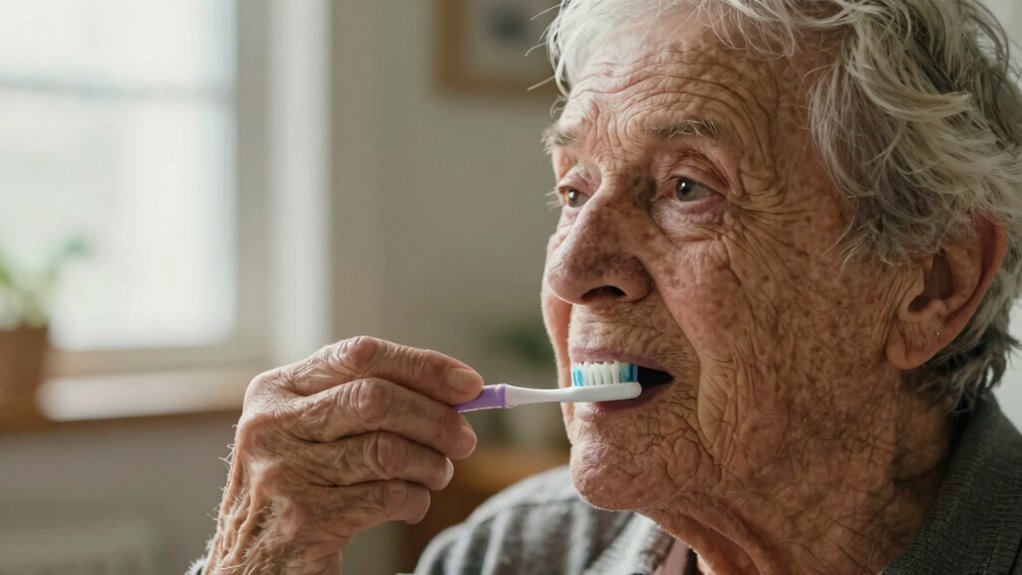

Caring for your loved one’s mouth in late dementia is often overlooked but essential for their comfort and dignity. Routine, gentle cleaning with soft tools can prevent infections, pain, and discomfort that they can’t always express. Recognizing signs of oral issues early and maintaining a consistent, patient approach make a big difference. If you want to guarantee their well-being and learn more about effective care strategies, keep exploring these helpful tips.

Turn quiet afternoons into listening time
- Thousands of audiobooks, podcasts and originals
- Listen on your phone, tablet or Echo — also offline
- Cancel anytime
Key Takeaways
- Gentle, consistent mouth care prevents discomfort and infections, enhancing late dementia patients’ comfort and dignity.
- Using soft tools like sponge swabs minimizes resistance and pain during oral hygiene routines.
- Recognizing and addressing signs of oral pain or sores early prevents unnecessary suffering.
- Caregiver training on proper techniques ensures effective, compassionate mouth care tailored to late-stage dementia.
- Routine, patient, mouth care supports overall well-being and maintains dignity in late dementia stages.
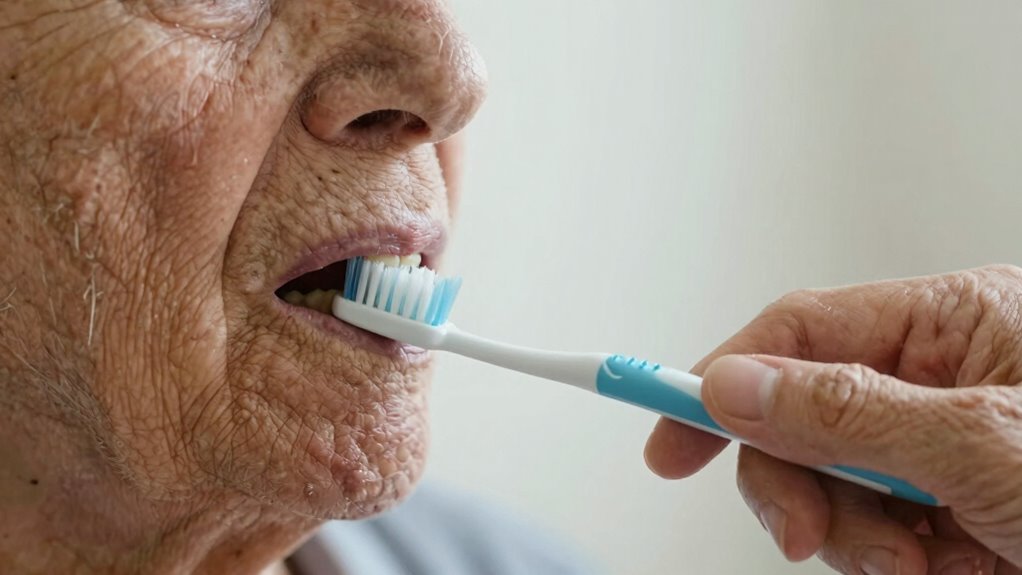
As dementia progresses into its late stages, maintaining proper mouth care becomes increasingly important yet challenging. Your loved one may no longer be able to communicate discomfort or explain when their mouth feels dirty or sore. This makes diligent oral hygiene even more vital to prevent infections, pain, and other health complications. However, managing mouth care for someone with late dementia requires more than just routine brushing; it demands patience, gentle techniques, and an understanding of their unique needs. You might find that their natural gag reflex or sensitivity to certain sensations complicate your efforts. That’s why caregiver training is indispensable—not just for maintaining their oral health but also for guaranteeing the process is as comfortable as possible for them. Proper training helps you learn how to position your loved one, use the right tools, and recognize signs of oral pain or distress. Additionally, understanding the importance of dental health can motivate caregivers to maintain consistent and thorough care routines.
In late dementia, your loved one might not tolerate traditional toothbrushes or toothpaste, so adapting your approach becomes necessary. You could consider using soft-bristled toothbrushes or sponge swabs, which are gentle on sensitive gums and mouths. Caregiver training often emphasizes these techniques, guiding you on how to gently clean the teeth and mouth without causing discomfort or injury. It’s critical to establish a routine, even if it’s brief, so your loved one knows what to expect. Consistency can reduce anxiety and resistance, making mouth care less stressful for both of you. When brushing becomes challenging, using oral rinses or gel applications recommended by healthcare providers can help maintain oral hygiene if brushing is not tolerated. Recognizing common oral issues in late dementia can help you address problems early and prevent escalation. Additionally, understanding oral bacteria and its impact on overall health underscores the importance of a comprehensive routine.
Another key aspect is recognizing that oral health isn’t just about cleaning; it’s about preventing issues like dry mouth, infections, or decay. You should monitor for signs of mouth sores, bad breath, or swelling, which might indicate infections or other problems needing prompt attention. Regular professional dental checkups are indispensable in late dementia, and caregiver training can teach you how to prepare your loved one for these visits, including managing their anxiety or discomfort during dental appointments. It’s also beneficial to understand how biodiversity in oral bacteria impacts overall health, emphasizing the importance of comprehensive oral care routines. Remember, patience is paramount. Your gentle persistence combined with proper training ensures that your loved one’s mouth remains as healthy and comfortable as possible, even as their abilities decline. Proper mouth care in late dementia isn’t just about hygiene—it’s about preserving dignity, preventing pain, and supporting overall well-being during this challenging stage.
soft-bristled toothbrush for seniors
As an affiliate, we earn on qualifying purchases.
As an affiliate, we earn on qualifying purchases.
Frequently Asked Questions
How Can I Tell if My Loved One’s Mouth Pain Is Serious?
You can tell if your loved one’s mouth pain is serious by watching for signs like increased dental anxiety or reluctance to open their mouth, which indicate discomfort. Poor oral hygiene and visible issues such as swelling, bleeding, or sores are also warning signs. If they show these symptoms, it’s crucial to seek professional dental care promptly to prevent further complications and guarantee their comfort and health.
Are There Specific Mouth Care Products Recommended for Late Dementia?
You should choose gentle, ADA-approved toothpaste options designed for sensitive mouths, which help prevent discomfort and irritation. For mouthwash choices, opt for alcohol-free, soothing varieties that reduce dryness and bacteria without causing pain. Always look for products labeled safe for use with dementia patients, and consult their healthcare provider for personalized recommendations. Using the right products can make mouth care more comfortable and effective for your loved one.
How Often Should Mouth Care Be Performed in Late-Stage Dementia?
You should perform mouth care at least twice daily in late-stage dementia to maintain dental hygiene and reduce oral discomfort. Regular, gentle cleaning helps prevent infections, soothe soreness, and keep the mouth moist. Pay attention to signs of discomfort, and adjust your routine as needed. Consistent care not only preserves oral health but also comforts your loved one, making each interaction a moment of relief and connection.
What Are Signs of Oral Infections or Complications to Watch For?
You should watch for signs of oral infections or complications like increased drooling, redness, swelling, sores, or foul odor. Changes in your loved one’s oral hygiene, such as bleeding gums or difficulty swallowing, also indicate potential issues. Keep an eye on infection symptoms like fever or discomfort. Regular oral hygiene helps prevent these problems, but prompt attention to these signs guarantees early treatment and comfort for your loved one.
How Can I Make Mouth Care Less Distressing for My Loved One?
Think of mouth care as a gentle dance, not a battle. To ease your loved one’s dental anxiety, use soft tools, calm voices, and familiar routines. Dispel oral hygiene myths that make them fearful, like thinking mouth care hurts or isn’t necessary. Keep sessions short, positive, and consistent, focusing on comfort. Your patience transforms this chore into a caring act, making each visit a moment of trust rather than distress.
Conclusion
Remember, caring for mouth health in late dementia is like tending a delicate garden—you must nurture it gently and consistently. I once watched a family struggle to keep their loved one’s mouth comfortable, only to realize that simple, daily attention transformed their experience. Just 20% of caregivers prioritize oral care, yet neglecting it can lead to pain and discomfort. Your small efforts can be the gentle rain that preserves dignity and comfort in every smile you nurture.
Cold & flu season Picks
humidifiers
As an affiliate, we earn on qualifying purchases.