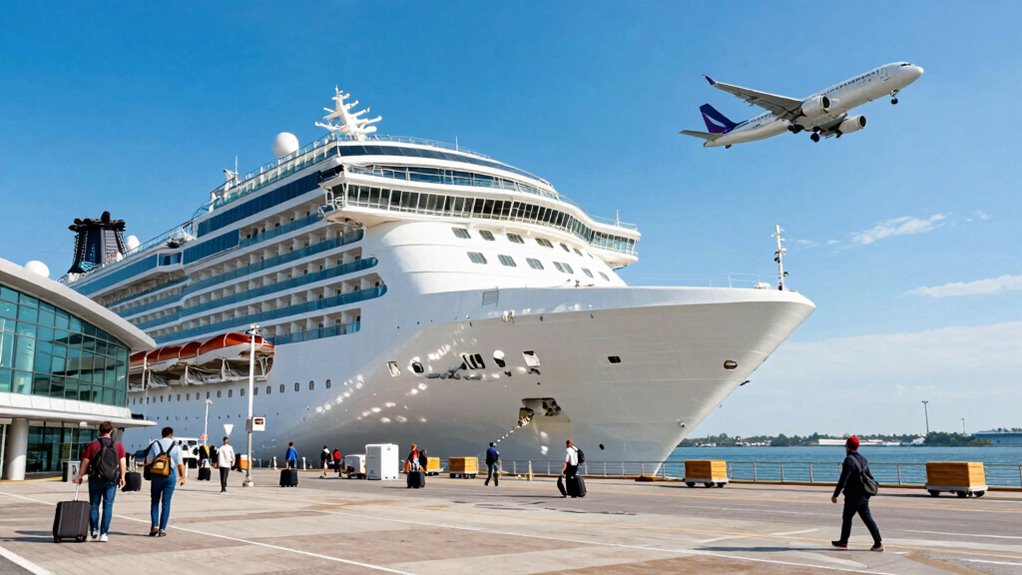

You need different mobility planning for cruises and air travel because each environment presents unique challenges. Cruises offer flexible seating options, accessible cabins, and onboard amenities designed for comfort, but you must communicate your needs ahead of time. Air travel involves strict seat assignments, security procedures, and limited space, requiring early requests for accommodations. Understanding these differences helps you stay comfortable and stress-free. Keep exploring to discover how to navigate each mode smoothly.

Turn quiet afternoons into listening time
- Thousands of audiobooks, podcasts and originals
- Listen on your phone, tablet or Echo — also offline
- Cancel anytime
Key Takeaways
- Cruise ships have adaptable layouts and onboard amenities, requiring different accessibility planning than the fixed seating of aircraft.
- Air travel demands early requests for mobility accommodations due to strict seat assignments and security procedures.
- Luggage policies differ significantly, affecting how mobility aids and equipment are packed and transported.
- On cruises, understanding ship infrastructure and accessible facilities enhances mobility and comfort onboard.
- Both modes require tailored communication and planning to address unique infrastructure and service protocols.
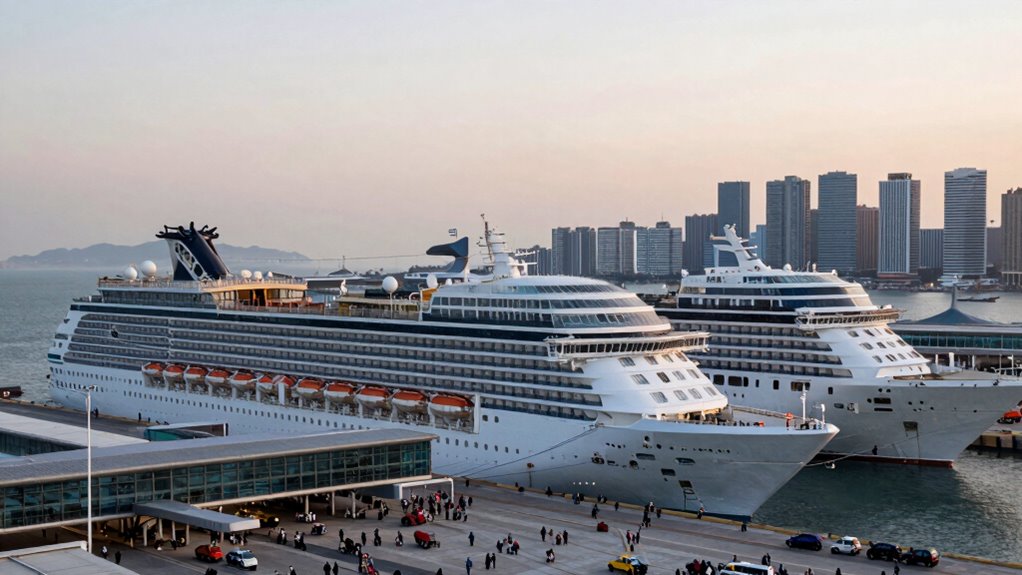
Planning your cruises and air travel can seem overwhelming, but with a strategic approach, you can guarantee a smooth and enjoyable trip. One of the key aspects to consider is mobility planning, which differs significantly between the two modes of travel. Your approach to seating arrangements and luggage policies highlights these differences and helps you prepare effectively.
Effective mobility planning ensures smooth, enjoyable travel whether cruising or flying.
When traveling by cruise, seating arrangements are less rigid than on airplanes. You often have the flexibility to choose dining times, seating preferences, and even entertainment venues. However, it’s important to understand that your mobility needs can influence how you book your cabin and plan your onboard activities. Many cruise lines offer accessible cabins and facilities, but it’s wise to communicate your needs upfront. This way, you can ensure your comfort and convenience throughout the voyage. Luggage policies on cruises tend to be more generous than on flights, often allowing you to bring multiple bags without extra fees. Still, it’s essential to check the specific cruise line’s regulations, as weight limits and size restrictions vary. Properly packing your luggage with mobility aids or essentials can make navigating the ship easier, especially if you have limited mobility or special needs. Being aware of biodiversity and conservation efforts onboard can also enrich your experience and promote sustainable travel practices. Moreover, understanding the vintage aesthetic of the ship’s decor can enhance your overall experience and help you feel more connected to the ship’s unique character. Additionally, being aware of the ship’s accessible infrastructure, such as ramps and elevators, can further improve your onboard experience, ensuring you can move around comfortably. Incorporating sustainable travel practices into your planning can also help minimize your environmental impact and support responsible tourism. Recognizing the importance of biodiversity and conservation initiatives can foster a more meaningful connection to your travel experience.
In contrast, air travel requires more precise planning around seating arrangements. Airlines assign seats based on availability, and if you have specific mobility requirements, you should request these when booking or well in advance. Window or aisle seats can make a significant difference if you need easy access or extra space. Airlines also have strict luggage policies, often limiting checked bags and carry-ons by weight and size, with fees for additional or oversized items. If you rely on mobility devices like wheelchairs or scooters, it’s crucial to inform the airline early and confirm how these will be stored and handled. You’ll need to consider how your luggage policies impact your packing, especially if you need to carry specialized equipment or medications.
Both travel modes demand different strategies for managing mobility. On cruises, focus on understanding the ship’s layout and onboard amenities, ensuring your luggage supports your mobility needs. For air travel, prioritize seat selection, early communication with airlines, and strict adherence to luggage policies. By recognizing these differences and planning accordingly, you can avoid surprises, reduce stress, and enjoy a seamless journey from start to finish. Whether cruising or flying, tailored mobility planning ensures your trip is comfortable, safe, and enjoyable.
As an affiliate, we earn on qualifying purchases.
Frequently Asked Questions
How Do Luggage Restrictions Differ Between Cruise and Air Travel?
In air travel, luggage weight limits are strict, often around 50 pounds per bag, with carry-on policies restricting size and weight to guarantee safety and efficiency. Cruises usually allow more flexibility, with higher luggage weight limits and less strict carry-on policies. You can pack more comfortably for a cruise, but it’s still wise to check specific airline and cruise line regulations to avoid extra fees or inconveniences.
What Safety Protocols Are Unique to Cruise Ships Versus Airplanes?
You’ll notice cruise ships have unique safety protocols, like regular emergency drills for all passengers and crew, ensuring everyone knows evacuation procedures. Food safety is also paramount, with strict standards for handling and preparing meals to prevent illnesses. In contrast, airplanes focus more on security screenings and oxygen masks. On cruise ships, these safety measures create a secure environment, addressing the specific risks of life at sea.
How Do Transportation Options Vary Upon Reaching Ports or Airports?
Think of arriving at ports or airports as stepping into a bustling marketplace. Your transportation options vary based on port accessibility and terminal amenities. At cruise ports, you might find shuttles, taxis, or rental cars easily available, while airports often offer extensive public transit, ride-shares, or car rentals. The infrastructure influences your choices, making it simpler or more complex to reach your final destination efficiently.
Are There Different Insurance Considerations for Cruises and Flights?
Yes, there are different insurance considerations for cruises and flights. When you purchase travel insurance, make sure it covers both travel disruptions and medical coverage tailored to each mode. Cruises often require specialized policies that include medical coverage for onboard emergencies, while flights may need coverage for cancellations or delays. Always check that your policy provides adequate medical coverage and understand the specific protections for each type of trip.
How Do Visa Requirements Differ for Cruise Passengers Compared to Air Travelers?
Visa requirements differ for cruise passengers and air travelers due to varying visa policies and entry restrictions. You often need a valid visa for the country you’re visiting on a cruise, especially if it involves multiple stops, while air travelers might only require a visa for their final destination. Cruises sometimes have relaxed entry restrictions for certain nationalities, but it’s essential to check specific visa policies for each port to avoid delays or denied entry.
Conclusion
Remember, every journey is unique—what works for a quick flight might not suit a leisurely cruise. By tailoring your mobility plans to each mode of travel, you guarantee smooth sailing or seamless skies. As the saying goes, “Failing to plan is planning to fail,” so take the time to prepare properly. When you prioritize your needs and adapt your approach, your travel experiences become more enjoyable and stress-free. Safe travels, wherever your adventure takes you!
Cold & flu season Picks
humidifiers
As an affiliate, we earn on qualifying purchases.