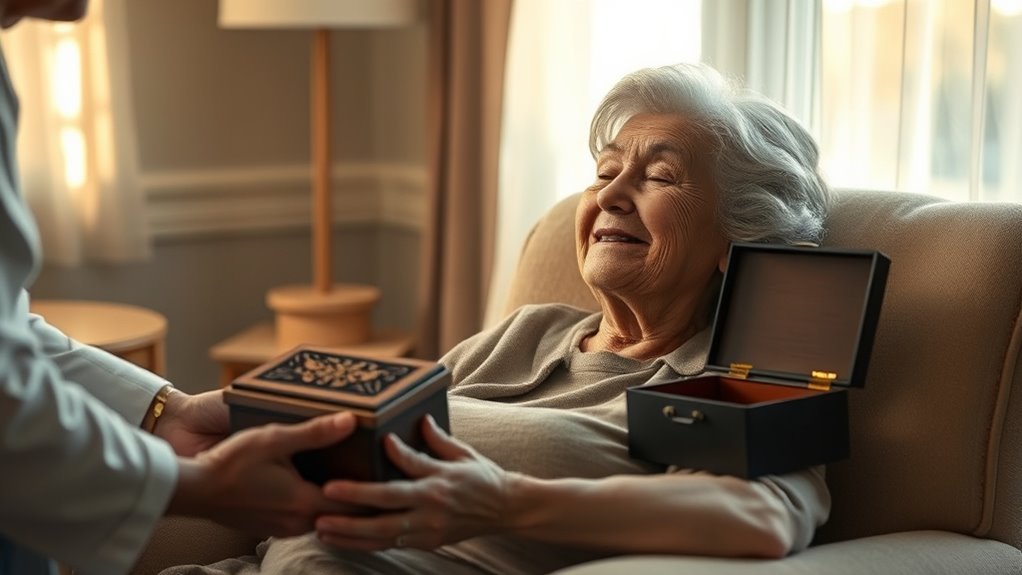

Personalized music therapy in dementia palliative care involves selecting songs that reflect the individual’s past experiences, preferences, and cultural background. Your active involvement as a caregiver helps evoke positive memories, emotions, and familiarity, fostering comfort and connection. By choosing meaningful music and observing reactions, you can tailor sessions to boost emotional well-being and cognitive engagement. To discover practical strategies for making music therapy truly personalized, explore the detailed approaches that enhance overall comfort and quality of life.
Key Takeaways
- Personalized music therapy leverages individual preferences and memories to enhance emotional well-being in dementia palliative care.
- Caregiver involvement is essential for selecting meaningful music and observing responses to tailor therapy effectively.
- Familiar and nostalgic songs stimulate recognition, evoke positive emotions, and improve quality of life for dementia patients.
- Collaborative approaches foster trust, strengthen emotional connections, and support routine establishment in palliative settings.
- Adjusting music choices based on patient reactions optimizes engagement, comfort, and overall therapeutic benefits.
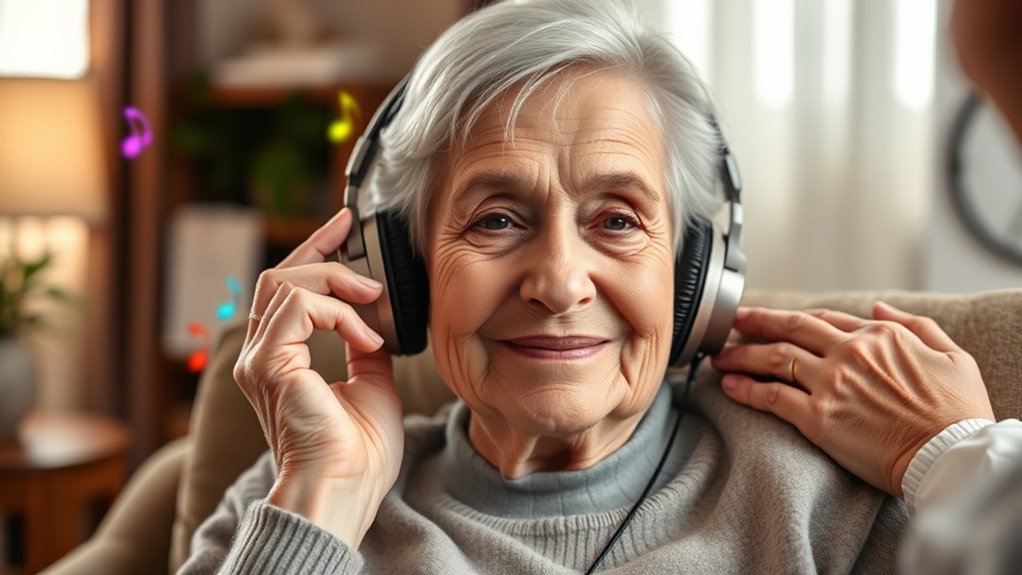
Music therapy has emerged as a powerful tool in improving quality of life for individuals with dementia, especially in palliative care settings. When it comes to personalized music therapy, your role in the process becomes essential. You can help select music that resonates deeply with the person’s past experiences, preferences, and cultural background. The key is to choose music that sparks positive memories and emotions, fostering a sense of familiarity and comfort. This careful music selection isn’t just about picking popular tunes; it’s about understanding the individual’s history and what truly moves them. By involving caregivers in this process, you create a collaborative approach that guarantees the chosen music aligns with the person’s unique identity. Caregivers often know the person’s favorite songs, genres, or artists, making their involvement invaluable. Their insights can guide you to select pieces that evoke meaningful responses, whether it’s nostalgia, joy, or calmness.
Involving caregivers also helps establish a routine, which can be especially comforting for individuals with dementia. When caregivers participate in music selection, they become active partners rather than passive observers, helping to foster a sense of connection and trust. This collaboration can extend beyond the initial choice of music; caregivers can also help tailor sessions based on the person’s mood and daily condition. For example, if the individual appears distressed, you might select calming tunes that promote relaxation. If they seem alert and receptive, more upbeat or familiar songs could enhance engagement. Additionally, choosing music with familiar top-chart hits can stimulate recognition and emotional responses, making the therapy even more effective.
Furthermore, caregiver involvement in music selection ensures that the therapy remains personalized and meaningful. It’s not just about entertainment; it’s about creating an experience that supports emotional well-being and cognitive function. Your role in guiding caregivers on how to pick appropriate music can make a significant difference in the effectiveness of the therapy. You can suggest ways to observe the person’s reactions and adjust the playlist accordingly, emphasizing the importance of attentive listening.
Frequently Asked Questions
How Is Music Therapy Tailored to Individual Dementia Patients?
You tailor music therapy to individual dementia patients by considering their cultural preferences and emotional triggers. You select songs that resonate with their background and personal experiences, ensuring a meaningful connection. By observing their reactions, you adjust the music to evoke positive emotions and reduce distress. This personalized approach helps engage patients more effectively, fostering comfort and emotional well-being through music that truly speaks to their unique lives.
What Training Do Music Therapists Need for Palliative Dementia Care?
Did you know that over 80% of music therapists pursue specialized training? You need a music therapy certification and palliative care training to work effectively with dementia patients in palliative settings. This specialized education equips you with skills to address complex emotional and physical needs, ensuring compassionate care. By combining these qualifications, you can tailor music interventions that improve quality of life and comfort for patients facing advanced illness.
How Do Family Members Participate in Personalized Music Therapy?
You can participate in personalized music therapy by sharing your loved one’s favorite songs and stories, helping tailor sessions to their preferences. Your involvement provides emotional support and strengthens the connection during therapy. You might also assist with singing, dancing, or simply being present, which encourages engagement and comfort. Family involvement is essential, as it creates a warm, familiar environment that enhances the overall effectiveness of the therapy.
Are There Specific Types of Music Most Effective in This Setting?
Like finding the perfect melody in a symphony, you should select music that aligns with the person’s genre preferences and matches their tempo suitability. Familiar tunes, especially gentle genres like classical, folk, or soft jazz, often resonate best. Tailoring the music to individual tastes enhances engagement and comfort, making therapy more effective. So, focus on what your loved one enjoys and choose pieces that feel natural and soothing to them.
What Are the Measurable Outcomes of Personalized Music Therapy?
You can measure the outcomes of personalized music therapy through quantitative metrics like changes in agitation levels, mood scores, or physiological indicators such as heart rate. Additionally, you’ll notice the emotional impact, including increased moments of joy, reduced anxiety, and improved overall well-being. These measurable outcomes help you assess how effectively the therapy enhances quality of life, making it a valuable tool in dementia palliative care.
Conclusion
As you consider personalized music therapy, remember that studies show it can reduce agitation in up to 80% of dementia patients. This approach not only enhances comfort but also fosters meaningful connections in palliative care. By tailoring music to individual preferences, you create a powerful, soothing experience that truly respects each person’s unique journey. Embrace the potential of personalized music therapy to bring comfort, joy, and dignity to those in their final stages of life.