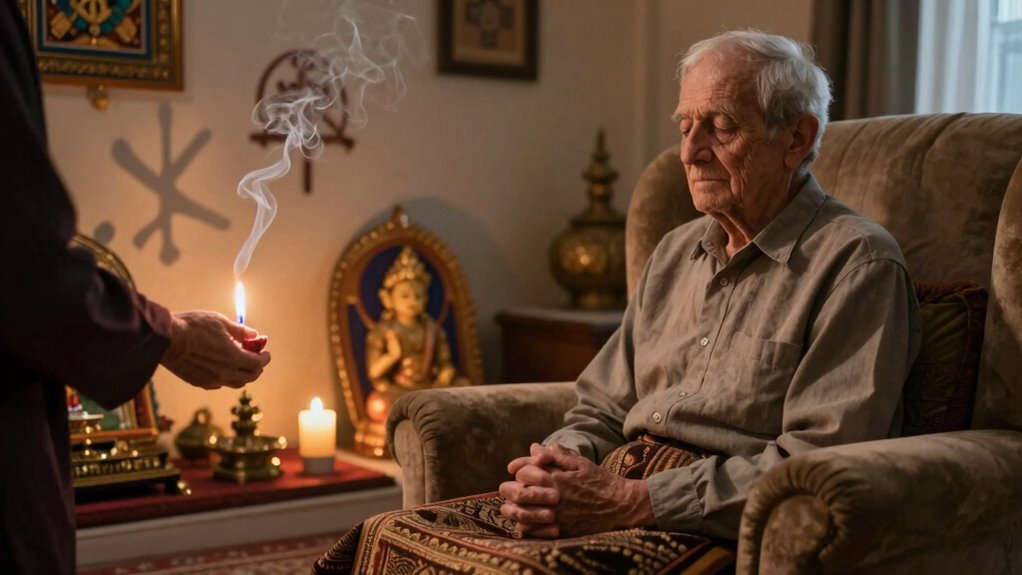

Spiritual rituals can provide comfort and stability for loved ones with late-stage dementia by offering familiar routines that evoke peace and security. You can incorporate sensory elements like gentle hymns, holy oils, or nature scents to foster emotional connections. Mindfulness practices, prayer, or simple ceremonies help create a sense of continuity and spiritual identity. These rituals support dignity and calm unsettled feelings, helping your loved one feel loved and safe—discover more ways to bring comfort through these meaningful acts.

Turn quiet afternoons into listening time
- Thousands of audiobooks, podcasts and originals
- Listen on your phone, tablet or Echo — also offline
- Cancel anytime
Key Takeaways
- Incorporate familiar faith-based ceremonies to evoke emotional memories and reinforce spiritual identity.
- Use sensory elements like hymns, holy oils, or prayer beads to enhance comfort and spiritual connection.
- Establish consistent routines for prayer, meditation, or mindfulness to provide stability and reassurance.
- Engage natural elements and sensory stimuli to foster calming, multisensory spiritual experiences.
- Create meaningful rituals that offer familiarity, evoke peace, and strengthen emotional bonds with caregivers.
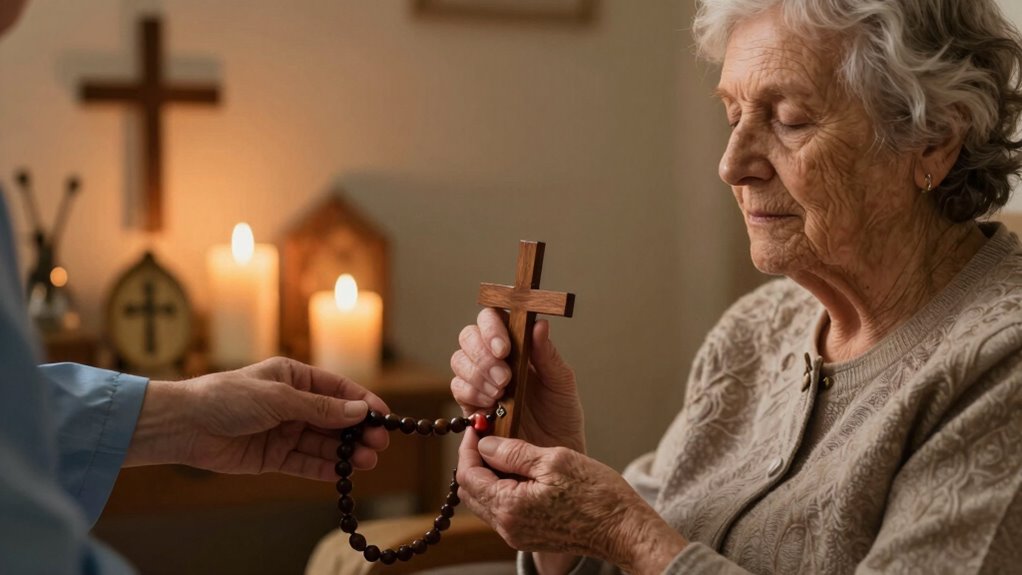
Have you ever wondered how spiritual rituals can make a difference in dementia care? These practices often resonate deeply, providing comfort and a sense of stability for those experiencing late-stage dementia. When traditional communication becomes challenging, spiritual rituals can serve as a bridge, connecting individuals to familiar feelings of peace and security. Mindfulness practices, in particular, are powerful tools in this context. They encourage living in the present moment, helping your loved one feel grounded amid confusion or agitation. Simple breathing exercises, gentle meditation, or guided imagery can calm an unsettled mind and evoke a sense of serenity. These mindful moments, when repeated regularly, can become anchors of consistency, giving the individual a sense of familiarity that’s often lost in the progression of dementia. Incorporating biodiversity, such as natural elements or familiar outdoor scents, can also enhance the calming effects of these rituals by connecting individuals to the natural world. Recognizing the importance of sensory elements can deepen the connection and reinforce feelings of comfort. Engaging multiple senses can further strengthen the positive impact of these rituals, creating a multisensory experience that is more likely to evoke emotional responses. Including sensory stimulation techniques can make these rituals even more effective at fostering emotional well-being.
Faith-based ceremonies also hold significant importance in late-stage dementia care. They tap into long-standing spiritual or religious identities, offering comfort rooted in personal belief systems. Whether it’s a prayer, a hymn, lighting a candle, or a ritual like a blessing, these ceremonies can evoke feelings of belonging and spiritual connection. Even if the person can no longer communicate their beliefs clearly, the sensory experience—the sight of a cross, the sound of familiar hymns, or the scent of holy oils—can trigger positive responses. These rituals often evoke emotional memories and can reduce feelings of fear or agitation, providing a calming effect. In some cases, family members and caregivers find that participating in faith-based ceremonies together fosters a shared sense of peace, reinforcing bonds and offering mutual reassurance. By respecting and incorporating these spiritual elements, caregivers can support a person’s dignity and spiritual well-being more holistically. Recognizing that spiritual connection can be a source of reassurance is vital in maintaining emotional stability during late dementia. Additionally, creating a predictable routine around these rituals can help establish a comforting sense of familiarity and safety.
Incorporating these rituals doesn’t require elaborate preparation. It’s more about consistency and intention. When you introduce mindfulness practices or faith-based ceremonies regularly, your loved one begins to associate them with comfort and safety. Over time, these rituals can become a cherished part of the daily routine, helping to anchor their sense of self and spiritual identity. As you observe their responses—whether a gentle smile, a peaceful look, or a relaxed posture—you realize how meaningful these moments are. They serve as gentle reminders that, even in late dementia, spiritual connection remains a crucial source of comfort. Recognizing and respecting spiritual needs can greatly enhance their overall well-being. By integrating mindfulness and faith-based rituals into care, you help your loved one find peace amid the challenges, emphasizing their dignity and spiritual well-being at every stage.
As an affiliate, we earn on qualifying purchases.
Frequently Asked Questions
How Do I Choose Appropriate Spiritual Rituals for My Loved One?
To choose appropriate spiritual rituals for your loved one, consider their personal preferences and cultural background. Observe what brings them comfort or joy, like favorite hymns, prayers, or meditation practices. Talk softly with them about their spiritual beliefs, and respect their choices. Incorporate familiar rituals that align with their cultural traditions, ensuring these activities feel meaningful and soothing. This thoughtful approach helps provide comfort and a sense of connection during late dementia care.
Are Spiritual Rituals Suitable for All Stages of Dementia?
Spiritual rituals can be suitable at all stages of dementia, but you should consider cultural considerations and personal preferences. Early on, routines might be meaningful, while later stages may focus on sensory or familiar rituals. Some might worry about their loved one’s comprehension, but the goal is comfort and connection, not understanding. Adapt rituals to their current abilities, and always respect their individual spiritual needs, regardless of the stage.
Can Spiritual Rituals Be Integrated Into Daily Care Routines?
Yes, you can integrate spiritual rituals into daily care routines. Incorporate mindfulness practices like gentle breathing exercises to promote calmness, and play sacred music to evoke comfort and familiarity. These rituals can be seamlessly added to daily activities, helping your loved one feel connected and soothed. Consistency is key, so make these practices a regular part of their day, fostering a sense of peace and spiritual connection.
What Are Some Common Challenges When Implementing Spiritual Rituals?
You might face challenges like maneuvering cultural differences and respecting personal preferences when implementing rituals. Imagine a delicate tapestry, where each thread represents individual beliefs; pulling on one can distort the whole. You need patience and flexibility to honor diverse backgrounds, ensuring routines resonate personally. By understanding these differences, you create a nurturing space, fostering comfort and dignity during late dementia care.
How Do I Assess if a Spiritual Ritual Is Effective or Comforting?
You can assess if a spiritual ritual is effective by observing the emotional connection it fosters and the resident’s reactions. Look for signs of comfort, calmness, or engagement. Pay attention to their facial expressions, body language, and verbal responses. Make sure you’re practicing cultural sensitivity, respecting their beliefs and preferences. Regularly check in with family members and caregivers to confirm the ritual continues to bring comfort and aligns with the resident’s needs.
Conclusion
By embracing spiritual rituals in late dementia care, you open a treasure chest of comfort and connection. These rituals aren’t just routines—they’re bridges that span memory loss, offering solace and familiarity. Imagine the gentle glow of peace settling over your loved one, like dawn dispelling night’s shadows. In the quiet moments of ritual, you find not only respite for them but renewed hope for your journey together—proof that even in darkness, light can shine through.
Halloween Picks
halloween
As an affiliate, we earn on qualifying purchases.