

To reduce transfer stress during long travel days, stay organized with a sturdy backpack and packing accessories that boost comfort. Dress in layers, stay hydrated, and take regular breaks to stretch. Use transit apps to monitor delays and understand station layouts to navigate smoothly. Be flexible with your plans to adapt to unexpected changes. By focusing on preparation and staying relaxed, you’ll make transfers more manageable—keep going for more tips to enhance your journey.

Turn quiet afternoons into listening time
- Thousands of audiobooks, podcasts and originals
- Listen on your phone, tablet or Echo — also offline
- Cancel anytime
Key Takeaways
- Prepare and familiarize yourself with station layouts and transfer procedures in advance.
- Use real-time tracking apps to stay updated on delays and platform changes.
- Pack comfortable clothing, noise-canceling headphones, and hydration supplies for physical and mental comfort.
- Plan transfers during off-peak hours and allow extra time to reduce rushing and stress.
- Practice mindfulness and stay flexible to adapt calmly to unexpected delays or changes.
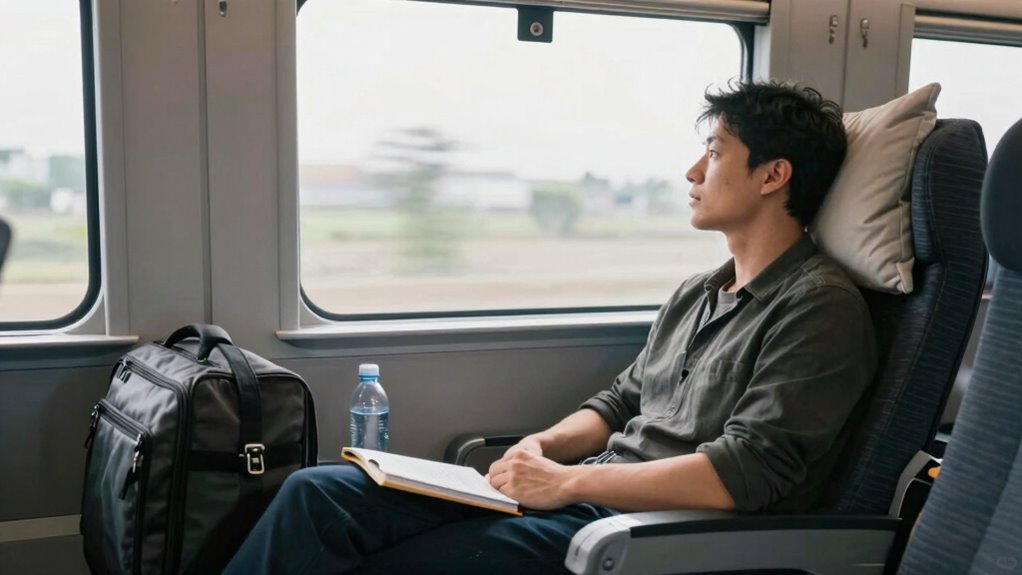
Long travel days can be exhausting, especially when multiple transfers are involved. The constant packing and unpacking, maneuvering unfamiliar stations, and waiting around can drain your energy and test your patience. To make these days more manageable, it’s essential to prepare with the right travel accessories and comfort techniques. The goal is to minimize stress and keep yourself comfortable, so you arrive at your destination feeling less worn out.
Start by packing smart with travel accessories designed for convenience and comfort. A quality neck pillow can make all the difference during long waits or train rides, preventing stiffness and helping you rest. Noise-canceling headphones or earplugs are invaluable, blocking out the chaos of busy terminals and noisy carriages, allowing you to relax or get some sleep. A durable, lightweight backpack or tote with multiple compartments keeps your essentials organized and accessible, so you’re not fumbling through your belongings during transfers. Consider packing a small, portable charger for your devices, so your phone or tablet stays powered, especially when waiting in line or on the move.
Pack smart with essentials like neck pillows, noise-canceling headphones, and organized bags for a smoother, more comfortable journey.
Once you’ve got your accessories sorted, focus on comfort techniques to ease the physical and mental strain of transfer days. Dress in layers to adapt quickly to changing temperatures in stations and transit vehicles. Loose, breathable clothing and comfortable shoes help prevent fatigue and discomfort. Stay hydrated by carrying a refillable water bottle, and avoid caffeine or alcohol, which can dehydrate you. Take brief breaks to stretch your legs whenever possible—simple stretches can improve circulation and reduce soreness. Incorporating travel comfort tips can further enhance your experience by promoting relaxation and reducing physical stress. Additionally, understanding station layouts can help you navigate transfers more efficiently and with less anxiety. Being aware of transfer times can also help you plan your movements better and avoid rushing. Planning ahead to familiarize yourself with local transit options can save you time and help you choose the most efficient routes. Learning about transfer procedures can also help you feel more confident during your journey.
Planning your transfers carefully also contributes to a smoother journey. Know your schedules ahead of time, and allow extra buffers for delays or unexpected changes. Use apps to track real-time updates on delays or platform changes, reducing last-minute stress. When you’re at busy stations, stay calm by finding a quiet corner or seating area to rest briefly before your next leg. If possible, book your transfers during off-peak hours to avoid crowds and long lines, making your experience more comfortable.
Ultimately, managing transfer stress comes down to preparation and mindfulness. Equip yourself with the right travel accessories, employ comfort techniques, and stay flexible with your plans. By doing so, you’ll find it easier to stay relaxed and energized throughout your long travel days, turning what could be stressful into a more manageable, even enjoyable, experience.
As an affiliate, we earn on qualifying purchases.
Frequently Asked Questions
What Are the Best Snacks to Bring for Long Travel Days?
For long travel days, pack healthy munchies like mixed nuts, dried fruit, and whole-grain crackers for sustained energy. Portable treats such as granola bars, string cheese, or fresh fruit are easy to carry and keep you full. Avoid sugary snacks that cause crashes. These options help you stay satisfied and energized, reducing stress during transfers, so you can enjoy your journey more comfortably and stay focused on reaching your destination.
How Can I Stay Comfortable During Long Transfers?
Staying comfortable during long transfers is like settling into your favorite chair—easy and soothing. Use travel accessories like neck pillows and eye masks to boost comfort, and take advantage of in-flight entertainment to keep your mind engaged. Stretch your legs regularly and stay hydrated to feel refreshed. These simple tips help you relax, making lengthy journeys feel much shorter and more enjoyable.
What Should I Do to Prevent Travel Fatigue?
To prevent travel fatigue, you should prioritize good sleep strategies and use travel gadgets to stay refreshed. Bring a neck pillow, eye mask, and noise-canceling headphones to improve rest during long journeys. Stay hydrated, avoid heavy meals, and take short walks to boost circulation. Using travel gadgets like portable chargers and entertainment devices keeps you comfortable and engaged, making it easier to recover quickly and arrive feeling more energized.
How Can I Stay Connected With Loved Ones During Travel?
You can stay connected with loved ones during travel by using virtual communication tools like video calls or messaging apps whenever you have Wi-Fi. Sharing your travel experiences through travel journaling keeps loved ones updated and engaged, even from afar. These methods help you maintain strong connections, reduce feelings of loneliness, and make your journey more meaningful by sharing your adventures in real-time or through thoughtful updates.
What Are Quick Tips for Managing Travel Anxiety?
Imagine your mind as a calm lake—peaceful and still. To manage travel anxiety quickly, breathe deeply through your nose, filling your lungs like a balloon, then slowly exhale. Practice mindfulness techniques, focusing on your senses or a calming mantra, to anchor yourself amid chaos. These small acts act like anchors, steadying your mind and easing nervous energy, so your journey feels more manageable and less overwhelming.
Conclusion
By planning ahead and staying calm, you can turn long travel days into smooth sailing rather than a storm at sea. Remember, each transfer is just a bridge you cross, not a wall you hit. Keep your essentials close, stay flexible, and breathe through the chaos. With a little preparation, you’ll navigate your journey like a seasoned sailor, arriving relaxed and ready to enjoy your destination. Safe travels!
Cold & flu season Picks
humidifiers
As an affiliate, we earn on qualifying purchases.