

Choosing adult incontinence products is less about finding a universally best garment and more about matching the product to how someone moves, changes, and manages leakage. Tab-style briefs and pull-ups both absorb urine, and some versions are designed for heavier leakage, but their construction creates a real difference in daily use: briefs open at the sides, while pull-ups are pulled on and off like underwear.

Turn quiet afternoons into listening time
- Thousands of audiobooks, podcasts and originals
- Listen on your phone, tablet or Echo — also offline
- Cancel anytime
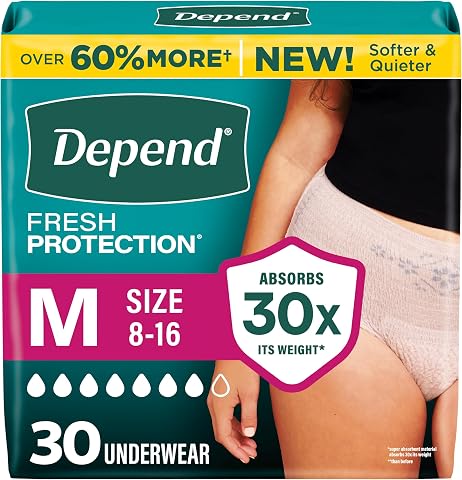
Depend Fresh Protection Adult Diapers for Women, Medium, 30 Count
- ✔ Product type: Disposable adult incontinence underwear
- ✔ Intended fit: For women
- ✔ Size: Medium

Depend Fresh Protection Adult Diapers for Men, Large, 28 Count
- ✔ Product type: Disposable adult incontinence underwear
- ✔ Intended fit: For men
- ✔ Size: Large

Because Overnight Booster Pads Fit All Adult Diapers, 45 Count
- ✔ Product type: Adult incontinence booster pad
- ✔ Pack quantity: 45 count
- ✔ Compatibility: Designed to fit adult diapers
That difference matters when changing in bed, getting help from a caregiver, or using a restroom independently. Tab-style briefs usually offer more adjustability and can be simpler to replace without fully undressing. Pull-ups tend to feel more like regular underwear and work well for people who can stand, lower clothing, and pull the garment back up. The best choice also depends on the product’s stated absorbency, fit, skin needs, and how often it must be changed; product type alone does not guarantee leak protection.
This comparison focuses on seven shared criteria: changing, mobility, fit, absorbency options, discretion, caregiver use, and value. Choose briefs when access and adjustability are the priority. Choose pull-ups when independence and an underwear-like routine matter more.
At a Glance
| Criteria | Adult tab-style briefs | Adult pull-ups | Winner |
|---|---|---|---|
| Changing access | Side tabs open the garment flat for changing while seated or lying down. | Pulled down and up like underwear; changing may require lowering clothing. | A |
| Mobility and independence | Often easier for people with limited standing, balance, or dexterity. | Best suited to someone able to stand, balance, and manage clothing. | Depends |
| Fit adjustment | Tabs allow some adjustment around the waist and hips. | Relies on choosing the right size and elastic fit rather than adjustable tabs. | A |
| Absorbency choices | Available in different absorbency levels; check the package rather than relying on style. | Available in different absorbency levels; compare product specifications. | Tie |
| Discretion under clothing | Can feel bulkier, depending on cut, size, and absorbency. | Often feels closer to underwear, though bulk depends on absorbency and fit. | B |
| Caregiver practicality | Generally easier to remove and refasten without pulling clothing fully down. | Can be less convenient for changes in bed or when the wearer cannot assist. | A |
| Value | Can reduce changing difficulty, but cost per garment and leakage-related waste vary by brand. | May be good value for independent wearers; compare unit cost and actual performance. | Depends |
Depend Fresh Protection Adult Diapers for Women, Medium, 30 Count
For women who fall within the stated waist range, this is the most direct all-purpose choice in the lineup. Depend Fresh Protection is designed as disposable, underwear-like protection, rather than an insert that requires another product underneath. The medium is listed for a 31–37-inch waist, giving us a concrete starting point for checking fit before choosing it.The product description emphasizes high absorbency and odor control, making it better suited to buyers looking for an everyday garment with more coverage than a light liner. Its claimed absorbency capacity is a useful point of distinction, but the supplied details do not specify a standardized capacity in milliliters or a wear duration. We should therefore avoid treating “30x weight capacity” as a guarantee that it will suit every leakage pattern or last a set number of hours.Compared with the men’s large version, the main difference is the intended fit and size range, not a stated advantage in absorbency: both list high absorbency and odor-neutralizing features. Compared with the Because booster pads, this option provides complete garment protection, but it cannot be topped up with its own absorbent insert unless a buyer separately chooses a compatible product. The tradeoff is disposability and the need to replace the underwear as needed.We rank it first as the clearest fit for women seeking a wearable, single-piece option with defined sizing. Buyers outside the stated waist range should look for another size rather than rely on the gender label alone, and anyone seeking reusable protection should skip it.
Pros:
- Underwear-like fit is designed to feel more familiar than a bulky protective garment.
- High absorbency is claimed for everyday incontinence protection.
- Odor-control features may help users feel more comfortable in shared settings.
- The stated 31–37-inch waist range makes initial size screening straightforward.
Cons:
- Disposable construction means ongoing replacement and waste.
- The medium size is limited to its stated waist range, so fit may not suit all users.
- The supplied details do not give a standardized liquid-capacity figure or expected wear time.
Best for: Women with a 31–37-inch waist who want disposable adult underwear with stated absorbency and odor-control features.
Not ideal for: People outside the listed medium waist range, buyers seeking reusable products, or anyone who needs a precise clinical absorbency rating before choosing.
Bottom line: Choose this as our leading wearable option when the medium waist range fits and you want disposable protection rather than a booster insert.
“Choose this as our leading wearable option when the medium waist range fits and you want disposable protection rather than a booster insert.”
Depend Fresh Protection Adult Diapers for Men, Large, 28 Count
This version is the clearest match for men whose waist falls within 35–43 inches and who want a complete disposable garment. Like the women’s Depend option, it is described as soft, underwear-like protection with odor neutralization and high absorbency. Its listing specifically calls out maximum absorbency, which makes it the stronger fit for buyers who want that stated level rather than a supplemental pad added to another garment.Size is the decisive difference between the two Depend picks. The women’s medium covers a 31–37-inch waist, while this men’s large is designed for 35–43 inches. Those ranges overlap, so we should choose by actual fit and product design rather than assuming the labels alone determine suitability. The available details do not explain construction differences beyond intended fit, so buyers should not infer that one is categorically more protective than the other.Against the Because booster pad, this is a standalone wearable product: it does not depend on another diaper for its basic function. That simplicity comes with a replacement tradeoff. The underwear is disposable and may need changing, while a booster pad can be added to an existing garment to increase absorbency. The insert, however, is not an alternative when a wearer needs complete protection without an underlying product.We place this second, just behind the women’s medium as the best specifically sized option for its intended buyer. It is a strong choice when the waist range and men’s fit make sense, but the 28-count pack and disposable format may not suit someone trying to reduce replacement frequency or avoid single-use products.
Pros:
- Specifies maximum absorbency, giving buyers a clear stated protection category.
- Underwear-like, ultra-soft construction is intended to support a familiar fit.
- Odor neutralization is included among the product claims.
- The 35–43-inch waist range helps buyers check sizing before purchase.
Cons:
- The large size is intended for a particular waist range and may not provide a secure fit outside it.
- Disposable construction can require repeated replacement.
- The supplied information does not state a standardized capacity or guaranteed wear duration.
Best for: Men with a 35–43-inch waist seeking disposable underwear-style protection with a stated maximum-absorbency design.
Not ideal for: People outside the listed large waist range, anyone seeking reusable protection, or buyers who want an insert to extend an existing garment rather than replace it.
Bottom line: This is the most fitting Depend choice for men in the stated large waist range who want a complete garment with maximum absorbency called out.
“This is the most fitting Depend choice for men in the stated large waist range who want a complete garment with maximum absorbency called out.”
Because Overnight Booster Pads Fit All Adult Diapers, 45 Count
Because Overnight Booster Pads fill a different role from the Depend products: they are an absorbency add-on, not disposable underwear. The flow-through design is intended to let liquid pass into the adult diaper beneath, and the product is described as fitting adult diapers. For someone already using a suitable garment and needing extra capacity, that format may be more useful than switching to a different complete product.The practical appeal is the possibility of extending the interval between changes, particularly during travel or longer periods away from home. That is a stated use case, not a guarantee of a particular number of hours. We should treat it as an extra layer to evaluate within an existing routine, because fit and performance depend on the underlying garment and the wearer’s needs. Its 45-count pack also offers more individual pieces than either Depend pack, but count alone does not establish how often a person will need to change.The central limitation is important: there is no waterproof backing, and the product is not intended to work alone. A buyer seeking complete protection should choose a wearable garment such as either Depend option, not this insert by itself. Compared with Depend, the pad can add absorbency without replacing the entire garment, but it adds a step to placing and changing products and may not suit people who prefer the simplicity of one-piece underwear.We rank it third because its value depends on already owning a compatible diaper and needing supplemental capacity. It is the most targeted option here, not the broadest. Buyers should also note that packaging may display a printed manufacturing date; this is a packaging detail to consider if it concerns them, rather than evidence about the product’s performance.
Pros:
- Adds supplemental absorbency to an adult diaper already in use.
- Flow-through design is intended to work with the underlying garment.
- Easy-to-change format may be convenient when travelling.
- A 45-count pack supplies more individual pads than either listed Depend pack.
Cons:
- No waterproof backing, so it should not be relied on alone for heavy leaks.
- Requires suitable incontinence underwear beneath it.
- A printed manufacturing date on the packaging may concern some buyers.
Best for: Adults already wearing compatible incontinence underwear who want a supplemental absorbency layer for travel or extended wear.
Not ideal for: Anyone needing standalone protection, heavy-leak coverage from a single product, or a simple one-piece solution.
Bottom line: Choose this only when you already use adult diapers and want an insert to supplement—not replace—the garment’s absorbency.
“Choose this only when you already use adult diapers and want an insert to supplement—not replace—the garment’s absorbency.”
As an Amazon Associate we earn from qualifying purchases.
Key Differences
The most consequential difference is how each garment goes on and comes off. A brief’s side tabs make it possible to open the garment rather than pull it over the hips. That can simplify changes for someone who is seated, lying down, unsteady, or receiving help. Pull-ups preserve a familiar underwear routine, but changing them usually means lowering trousers and pulling the product down and back up. For an independently mobile person, that may be easy; for someone with limited mobility, it can turn an ordinary change into a more complicated task.
Fit and discretion involve tradeoffs rather than a guaranteed winner. Tabs allow some adjustment, which can help caregivers get a secure fit around the waist. Pull-ups avoid fasteners and often feel more like everyday underwear, but their fit depends on choosing the correct size. Either type can leak if it is poorly fitted, left on too long, or not suited to the wearer’s leakage volume. Absorbency labels and product design vary, so compare the specific products instead of assuming every brief is more absorbent than every pull-up.
For value, start with the wearer’s routine and the cost per usable garment, not just the package price. If a tab-style brief makes assisted changes quicker or reduces clothing changes, its added cost may be worthwhile. If the wearer manages toileting independently and a pull-up fits well, paying extra for a brief may offer little benefit. Repeated leaks, discomfort, or skin irritation are signs to revisit fit, product type, change frequency, or clinical advice rather than simply buying a larger package.
Detailed Comparison
Changing access (Adult tab-style briefs wins — major)
Tab-style briefs win by a major margin when a change needs to happen while the wearer is seated or lying down. The sides open, so the garment can be positioned without pulling it over the hips. Pull-ups are straightforward for someone who can lower clothing and step or pull the garment down, but they can be awkward during bed changes or when the wearer cannot stand safely. In practice, frequent assisted changes favor briefs; independent restroom use favors pull-ups.
Mobility and independence (major difference)
This depends on the wearer’s abilities. Pull-ups suit people who can stand, balance, manage waistbands, and use the toilet with limited help; their underwear-like routine can support independence. Briefs are often easier when mobility, balance, or hand function is reduced, particularly if a caregiver assists. The gap is major for people who cannot safely pull clothing down and back up, but minor for someone who moves confidently and changes without help.
Fit adjustment (Adult tab-style briefs wins — moderate)
Tab-style briefs have a moderate advantage because side fasteners allow some adjustment after positioning. That can help accommodate different body shapes or make caregiver-assisted fitting easier. Pull-ups depend more heavily on selecting the right size: too loose can compromise containment, while too tight can feel uncomfortable or leave marks. Tabs do not guarantee a leakproof fit, and sizing guidance still matters, but they provide more room to fine-tune placement.
Absorbency choices (moderate difference)
Neither style wins across the category. Both briefs and pull-ups are sold in different absorbency levels, and performance depends on the particular product, fit, and leakage pattern. Do not assume a tab-style brief is always more absorbent because it looks larger, or that a pull-up is only for light leaks. Compare stated capacity and intended use, and consider when leakage occurs. A product that fits poorly may leak regardless of its advertised level.
Discretion under clothing (Adult pull-ups wins — minor)
Pull-ups have a modest advantage for people who want an underwear-like feel and a less visibly garment-like routine. Some briefs can feel bulkier, particularly at higher absorbency levels, though cut and materials differ widely. The difference is not absolute: a well-fitting brief under suitable clothing may be discreet, while a poorly sized pull-up can bunch or show. If appearance matters, try a small pack with the clothing the wearer usually uses.
Caregiver practicality (Adult tab-style briefs wins — major)
Tab-style briefs usually win by a moderate to major margin when another person handles changes. They can be opened at the sides and replaced without asking the wearer to step into the garment or stand. Pull-ups may be convenient when the wearer can cooperate fully, but can demand more repositioning and clothing adjustment. For caregivers, especially during bed changes, that difference can affect both time and the physical effort of changing.
Value (moderate difference)
There is no automatic price winner. Compare cost per garment with how well it contains leakage, how comfortable it is, and whether changes require extra supplies or clothing changes. A pull-up can be better value for an independent wearer who changes easily. A brief can justify a higher unit cost when it makes assisted care easier or reduces messy changes. Start with a small quantity before committing to a bulk purchase.
Adult tab-style briefs: Pros and Cons
Pros:
- Side tabs allow changes without pulling the garment over the hips.
- Often easier to position and adjust for caregiver-assisted use.
- Can suit people with reduced mobility or difficulty managing waistbands.
Cons:
- May feel bulkier or less like ordinary underwear, depending on design.
- Can be less convenient for an active wearer who prefers to dress independently.
- Tabs and sizing still need correct placement to limit gaps and leaks.
Adult pull-ups: Pros and Cons
Pros:
- Underwear-style design can support an independent toileting routine.
- Often feels more familiar and discreet under clothing.
- Simple to pull down and up for people with adequate balance and dexterity.
Cons:
- Can be difficult to change while lying down or with limited mobility.
- Fit cannot be fine-adjusted with side tabs; choosing the right size matters.
- Caregivers may need more clothing adjustment during a change.
Who Should Choose What
Choose Adult tab-style briefs if:
- The wearer has difficulty standing, balancing, or pulling clothing down and up.
- A caregiver regularly changes the product, particularly while the wearer is seated or in bed.
- You want side fasteners that allow some adjustment around the waist.
Choose Adult pull-ups if:
- The wearer can manage toileting and clothing independently or with little help.
- An underwear-like feel and discreet routine matter more than quick assisted changes.
- The wearer can safely stand and pull the garment down and back up.
Skip both if: If leakage continues despite a suitable size and absorbency level, or the product causes persistent discomfort or skin problems, speak with a healthcare professional about other product designs and care needs.
Value for Money
The higher-priced option is worth paying for only when its practical advantage solves a real problem. A tab-style brief may justify a higher cost for someone who needs assisted changes, because opening the sides can make changing easier and reduce the need to reposition the wearer. Pull-ups are often the better value for an independent wearer who finds them comfortable, gets a reliable fit, and can change without help. Prices and performance vary by brand, so compare the cost per garment and test a small pack before buying in bulk. A low unit price is poor value if the product leaks, irritates skin, or leads to frequent clothing changes.
Final Verdict
For most people who can stand, manage clothing, and use the restroom independently, adult pull-ups are the better starting choice: they support an underwear-like routine and are usually simpler to handle alone. Choose tab-style briefs instead when mobility is limited, changes happen in bed or while seated, or a caregiver needs easier access and a more adjustable fit. The biggest deciding factor is not a general claim about absorbency; it is whether the wearer can safely pull a garment up and down. Check the specific product’s absorbency and size, then judge value by fit and real use. If both styles fail to control leakage or cause ongoing skin discomfort, seek professional guidance rather than accepting poor performance.
Frequently Asked Questions
Are tab-style briefs more absorbent than pull-ups?
Not necessarily. Both styles come in varying absorbency levels. Compare the specific product’s stated use and capacity, and account for fit and the wearer’s leakage pattern instead of judging by garment style alone.
Which type is easier for a caregiver to change?
Tab-style briefs are usually easier when the wearer is lying down or cannot assist, because the sides open and the garment does not need to be pulled over the hips. Pull-ups can be just as manageable when the wearer can stand and cooperate.
Can pull-ups be used by someone with limited mobility?
Sometimes, but the wearer must be able to manage the garment safely or have help lowering clothing and changing it. If standing or stepping into a pull-up is difficult, tab-style briefs may be a more practical option.
How should I choose between the two for nighttime use?
Consider the wearer’s absorbency needs, fit, comfort, and whether a nighttime change may be needed. Either style may work if the specific product is suited to the leakage level. For assisted changes in bed, side-tab briefs are often easier to replace.
Should I buy a large pack before deciding?
No. Start with a small pack when possible. A trial helps check sizing, comfort, discretion, and leak control during the wearer’s usual activities before you commit to a larger purchase.
Cold & flu season Picks
humidifiers
As an affiliate, we earn on qualifying purchases.