
TL;DR

Turn quiet afternoons into listening time
- Thousands of audiobooks, podcasts and originals
- Listen on your phone, tablet or Echo — also offline
- Cancel anytime
Preliminary research presented at the American Heart Association’s 2026 Hypertension Scientific Sessions linked masked high blood pressure in adults older than 78 with a 70% higher rate of falls than sustained high blood pressure. The study involved 758 people and does not establish that masked hypertension caused falls.
Adults older than 78 whose blood pressure was high at home but not in a medical office had a 70% higher rate of falls than peers whose readings were high in both settings, according to preliminary research presented at the American Heart Association’s Hypertension Scientific Sessions 2026. The finding points to home measurements as a possible way to identify blood pressure patterns that an office reading alone may miss, but the study does not show that masked high blood pressure caused the falls.
The analysis included 758 adults older than 78, grouped by blood pressure readings taken in medical and home settings. Researchers classified 15.4% of participants as having masked high blood pressure: readings were high at home but not in the office. Another 34.5% had sustained high blood pressure, meaning readings were high in both settings; 17.0% had white coat high blood pressure, with higher office readings; and 33.2% had normal readings in both settings.
During a median follow-up of 350 days, 23.4% of participants reported having fallen at least once during the previous 12 months. The report says the comparison between masked and sustained high blood pressure showed a higher fall rate for the masked group. It also reports that, when office and home readings were analyzed as continuous measures, lower office blood pressure relative to home blood pressure was associated with a higher incidence of falls.
The study was presented as preliminary research at the meeting in Arlington, Virginia, held October 7–11, 2026. The supplied report does not provide details about how falls were verified, how blood pressure was measured at home, or whether the analysis adjusted for other factors that could affect fall risk.
Why Home Readings May Matter
The findings draw attention to a possible blind spot in care for older adults: an office reading may not reflect blood pressure at home. If the association is supported by further research, measuring blood pressure in both settings could help clinicians identify patients who may need a closer review of their health and fall risk.
Falls are a major concern for older adults. The U.S. Centers for Disease Control and Prevention identifies falls as the leading cause of disability and functional decline among adults 65 and older. A fall can threaten mobility and independence, so any potential way to recognize associated risks is relevant to patients, families and care teams.
The results do not establish that lowering blood pressure, changing medication or taking any particular action will prevent falls. Researchers and clinicians would need more evidence to determine why the association appeared and how it should affect care. For now, the report supports discussing home readings with a health care professional rather than drawing conclusions from a single measurement.
As an affiliate, we earn on qualifying purchases.
How Masked Readings Differ
Masked high blood pressure describes a pattern in which blood pressure is not high during an office visit but is high outside that setting, such as at home. The contrasting pattern called white coat high blood pressure involves higher readings in the office than at home. Sustained high blood pressure refers to high readings in both settings.
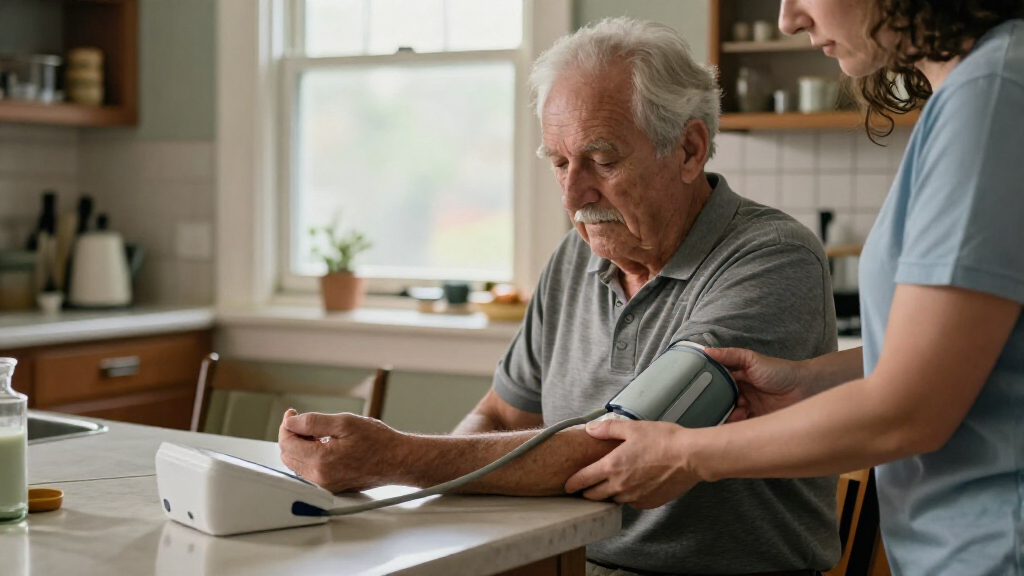
The American Heart Association’s 2025 joint guideline recommends annual blood pressure monitoring for adults. It also recommends home monitoring to help confirm an office diagnosis, track blood pressure over time and inform care as part of an integrated plan. The guideline recommendation provides context for the study; it does not mean the new research establishes home monitoring as a fall-prevention intervention.
Study presenting author Frances Wang, a researcher at Beth Israel Deaconess Medical Center in Boston, said home readings can provide additional information for clinicians. The report notes that the fall findings align with the guideline’s emphasis on monitoring, while the study itself remains a preliminary conference presentation.
““In addition to office blood pressure measurement, home blood pressure readings can be an important way to identify hidden high blood pressure at home and risk of falls in older adults.””
— Frances Wang, Ph.D., M.S., study presenting author and Beth Israel Deaconess Medical Center researcher
What the Study Cannot Establish
The research reports an association, not a cause. It does not show that masked high blood pressure led to falls, or explain why participants in that group had a higher fall rate. Watson said the result may relate to blood pressure variability or the body’s ability to regulate blood pressure during the day, but presented those as possibilities rather than established explanations.
The supplied account does not describe the participants’ other health conditions, medication use, mobility, or other factors that might affect falling. It also does not give the absolute fall rate for each blood pressure group, confidence intervals or a detailed account of the statistical methods. The finding is preliminary and was presented at a scientific meeting, so its strength and applicability cannot be fully assessed from the report alone.
Although participants reported falls during the previous 12 months and the median follow-up was 350 days, the report does not clarify the timing of each reported fall in relation to blood pressure measurement. It is also unclear whether results would apply to younger adults or people in other settings.
Further Evidence and Clinical Review
The immediate next step is for the study findings to be examined alongside the complete research methods and results, and for other studies to test whether the association appears in additional groups of older adults. Research could also clarify whether differences between home and office readings are linked to changes in blood pressure during the day or to other factors that influence falls.
Wang encouraged older adults and their caregivers to measure blood pressure at home regularly and share the readings with their health care team. The American Heart Association’s guidance similarly treats home monitoring as part of an integrated care plan. People should discuss how and when to measure readings with a qualified health care professional; the report does not recommend changing medication or treatment on the basis of this study alone.
Key Questions
What does masked high blood pressure mean?
It means blood pressure readings are high at home but not in a medical office. The pattern can be missed if assessment relies only on an office measurement.
How much higher was the fall rate?
The study reported a 70% higher rate of falls among adults older than 78 with masked high blood pressure than among those with high readings both at home and in the office. The supplied report does not give the absolute fall rate for each group.
Does the study prove masked high blood pressure causes falls?
No. The study found an association and does not establish that masked high blood pressure caused the falls or explain why the groups differed.
How many people took part?
The analysis included 758 adults older than 78. Researchers reported that 23.4% said they had fallen at least once during the previous 12 months.
What should older adults do with home readings?
The study’s presenting author recommended sharing regular home blood pressure readings with a health care team. People should ask a qualified professional how to measure and interpret readings; the study does not support changing treatment without clinical guidance.
Source: rss
Columbus Day / Indigenous Peoples' Day Picks
long weekend sales
As an affiliate, we earn on qualifying purchases.