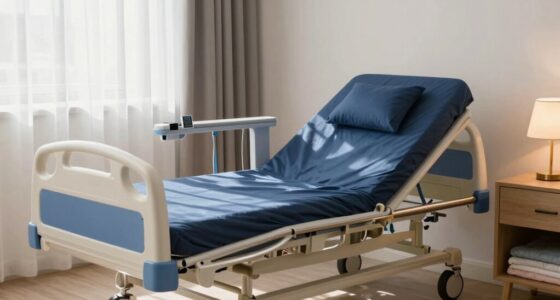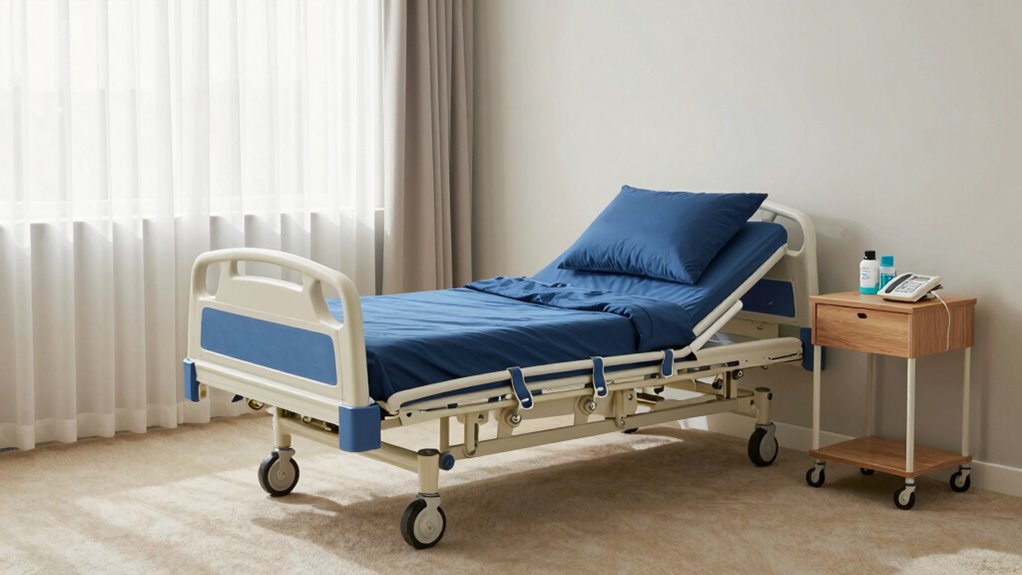

To prepare your bedroom for a bariatric hospital bed, first measure the space carefully, ensuring enough room for easy movement and access. Reinforce flooring and furniture support to hold the additional weight safely. Place the bed in an accessible spot free from obstructions, and organize the room to minimize clutter. Add proper lighting and safety features like non-slip rugs and grab bars. Keep everything well-maintained—continue exploring for detailed tips on creating a safe, comfortable environment.
Key Takeaways
- Measure room dimensions and clearances to ensure sufficient space for the bariatric hospital bed and easy movement.
- Reinforce flooring and furniture stability to support the heavy weight of the bed safely.
- Arrange furniture to create unobstructed pathways and position the bed near outlets and safety features.
- Install non-slip rugs, proper lighting, and safety devices to enhance visibility and prevent accidents.
- Manage clutter and incorporate safety technology for ongoing support, monitoring, and easy access to emergency features.
How to Measure Your Bedroom for a Bariatric Bed

Before purchasing a bariatric hospital bed, you need to measure your bedroom to guarantee it will fit comfortably. Start by evaluating the room dimensions, including length, width, and ceiling height. Measure the space where you plan to place the bed, ensuring there’s enough clearance for doors, windows, and other furniture. Consider the bed size you need; bariatric beds are larger than standard beds, so account for extra width and length. Keep in mind that you’ll want enough space around the bed for easy movement and access, especially for caregivers. Use a tape measure to take accurate measurements and write them down. This way, you’ll confirm that your chosen bed will fit seamlessly into your room without overcrowding or obstructing other essentials. Additionally, understanding projector size and placement can help optimize your room layout for comfort and functionality. Proper room measurements contribute to home safety and make sure that all furniture and equipment are arranged for optimal use. Taking into account adequate room clearance ensures safe and comfortable navigation around the bed and other furniture. Proper space planning can also help prevent potential hazards and improve overall room accessibility. Being aware of cybersecurity measures is important if your bedroom setup includes smart devices or connected health equipment to protect your privacy.
Reinforce Flooring and Furniture Support for Safety

Ensuring your flooring and furniture can support a bariatric hospital bed is key to safe, stable use. Floor reinforcement may be necessary if your current flooring isn’t strong enough to handle the weight. Consider installing additional support beneath the floor or adding a reinforced platform to distribute the bed’s weight evenly. Equally important is checking furniture stability; your existing furniture must withstand the increased load without wobbling or shifting. Reinforcing furniture legs or replacing weak furniture with sturdier pieces will help prevent accidents. Incorporating load-bearing capacity information into your assessment can guide you in selecting appropriate support solutions. Additionally, evaluating floor material strength can help determine if your current flooring needs reinforcement to support heavy loads safely. Incorporating smart home technology such as weight sensors or monitoring devices can further enhance safety by providing real-time alerts if any support structures are compromised. Understanding the structural integrity of your home’s foundation and flooring can also be critical in preventing potential issues. By prioritizing floor reinforcement and enhancing furniture support, you create a safer environment for the patient. This proactive approach minimizes risks and ensures the bed remains secure during daily use.
Choosing the Best Spot in Your Room for Safety and Accessibility

To guarantee safety and ease of access, you need to select a spot in your room that keeps pathways clear at all times. Proper lighting placement is also vital, so you can see clearly and move safely, especially at night. Consider both factors carefully to create a space that’s functional and secure. Ensuring your space aligns with Gold IRA Markets standards can help create a well-organized and safe environment. Additionally, maintaining clear pathways ensures that the space remains accessible and reduces the risk of falls or accidents. Incorporating well-placed safety features such as grab bars and non-slip mats further enhances safety and accessibility, reflecting the importance of environmental considerations in maintaining a secure environment.
Clear Pathways Always
Choosing the right spot for your bariatric hospital bed is essential to guarantee safety and easy access. You want to keep pathways clear, so you can move freely without tripping or feeling cramped. Position the bed where it doesn’t block doorways or windows, ensuring enough space for a wheelchair or walker. Keep decorative accents like small tables or rugs out of walkways to prevent hazards. Consider color coordination to create a calm, cohesive atmosphere that minimizes visual clutter, helping you or caregivers navigate the room easily. Maintaining clear pathways reduces fall risks and makes daily routines smoother. Regularly check that furniture and accessories are arranged to keep the room open and accessible, promoting safety and comfort at all times. Incorporating energy-efficient solutions can further enhance safety by reducing electrical hazards and ensuring reliable lighting and power sources throughout the room. Additionally, integrating water-resistant materials in your room setup can help prevent damage from spills or moisture, especially important in a healthcare setting. Using non-slip flooring can also improve safety by providing better traction and stability when moving around the room. To further enhance safety, consider proper lighting that illuminates all areas evenly, reducing shadows and improving visibility during nighttime or low-light conditions. Incorporating sound-absorbing panels can also contribute to a more comfortable environment by reducing noise distractions and creating a peaceful atmosphere.
Optimal Lighting Placement
Proper lighting is essential for safety and ease of movement in your bedroom, especially when using a bariatric hospital bed. To maximize visibility, place ambient lighting overhead or on the ceiling to create a well-lit environment. This provides general illumination, reducing shadows and making it easier to navigate the room. Additionally, incorporate task lighting near the bed, such as bedside lamps or wall-mounted lights, to illuminate specific areas for activities like reading or adjusting equipment. Ensure these lights are easy to reach and operate, minimizing the risk of accidents. Proper placement of both ambient and task lighting helps you see clearly, prevents falls, and enhances safety. Always test the lighting setup during different times of the day to confirm ideal placement. Proper lighting placement is also crucial for maintaining a comfortable and healthy workspace, supporting your overall well-being. Using appropriate illumination techniques can further improve visibility and safety in your room, especially considering room safety considerations to prevent hazards. Incorporating lighting controls, such as dimmers or smart switches, allows you to adjust brightness levels easily and adapt lighting to your needs. Additionally, understanding lighting standards can help ensure your setup meets safety guidelines and provides the optimal environment for your comfort.
Clearing Clutter and Rearranging Furniture for Easy Movement

Clearing clutter and rearranging furniture are essential steps in preparing a bedroom for a bariatric hospital bed. You want wide, unobstructed pathways to ensure safety and easy movement. Remove unnecessary furniture or bulky decorative accents that could block access or cause tripping hazards. Position the bed close to outlets and away from windows or doorways. Use the table below to understand the importance of balance between functionality and personal touches:
| Functionality | Personal Touches |
|---|---|
| Clear walkways | Decorative accents |
| Easy access to essentials | Cozy, welcoming environment |
| Minimize obstacles | Keep room inviting |
| Safe furniture placement | Maintain style with care |
| Sufficient space for mobility | Personal touches enhance comfort |
Additionally, incorporating smart appliances can help monitor safety and adjust room conditions for improved comfort. Ensuring that the room layout supports mobility is crucial for both safety and independence.
Adding Lighting and Safety Features to Your Room

Ensuring your room has adequate lighting helps you move safely at any hour, so consider installing bright, energy-efficient options. You also need to keep emergency exits clear and easily accessible in case of an urgent situation. Finally, adding non-slip rugs and grab bars can prevent falls and provide extra stability when needed.
Adequate Illumination Options
Have you considered how adequate lighting can improve safety and comfort in a room with a bariatric hospital bed? Proper illumination helps prevent falls and makes daily tasks easier. To achieve this, focus on two main types of lighting: ambient lighting and task lighting.
- Install dimmable ceiling fixtures for consistent ambient lighting.
- Use bedside lamps or wall-mounted fixtures for task lighting during reading or caregiving.
- Add night lights along pathways to prevent trips in the dark.
- Consider adjustable lighting options to customize brightness levels as needed.
These options ensure the room is well-lit, making it safer and more comfortable to navigate while providing the necessary visibility for daily activities. Proper lighting enhances safety and eases your experience in the space.
Emergency Exit Accessibility
Proper lighting and safety features around emergency exits are essential for quick and safe evacuation. Clear visibility guarantees you can follow emergency protocols swiftly, reducing chaos during an emergency. Install illuminated exit signs and ensure pathways are free of obstructions. Consider adding emergency lights that activate during power outages to guide you safely out. Use fire safety measures like accessible fire extinguishers near exits, and keep exits unobstructed at all times. Here’s a quick overview:
| Safety Feature | Purpose |
|---|---|
| Illuminated Exit Signs | Guide you during low visibility |
| Emergency Lighting | Illuminate pathways during outages |
| Clear Pathways | Enable quick evacuation and fire safety |
These features help ensure your room meets safety standards, supporting effective emergency protocols.
Non-Slip Safety Measures
Adding lighting and safety features to your room is essential for preventing slips and falls, especially around the floor and steps. Good lighting highlights potential hazards and improves visibility, reducing the risk of accidents. To enhance slip prevention and rug safety, consider the following:
- Install bright, adjustable lights near the bed and walkways.
- Use non-slip rugs with secure backing to prevent sliding.
- Add tactile or contrasting strips on steps for better visibility.
- Keep floors clear of clutter and spills that could cause slips.
These measures create a safer environment, minimizing hazards and ensuring stability for anyone using the bariatric hospital bed. Proper lighting and rug safety are crucial components of a slip-resistant room, helping prevent accidents and promoting confidence and independence.
Final Tips for Setting Up and Maintaining a Safe Bedroom Environment

To guarantee safety and comfort, it’s essential to regularly evaluate and modify your bedroom environment. Start by updating your bedroom décor to ensure clear pathways free of clutter, which helps prevent falls. Consider adding grab bars or railings where necessary, and keep essential items within easy reach. Pay attention to ambient sounds; a calming background noise can promote relaxation and aid sleep. Maintain proper lighting to eliminate shadows and reduce the risk of accidents, especially at night. Regularly check that your bariatric hospital bed remains stable and functioning correctly. Keep the room clean and well-ventilated to prevent mold and odors. By staying proactive with these adjustments, you create a safer, more comfortable space tailored to your needs.
Frequently Asked Questions
What Are the Best Mattress Types for Bariatric Beds?
You should choose a mattress with durable material like high-density foam or latex, as they provide strong support for bariatric beds. Opt for a medium to firm firmness level to ensure proper weight distribution and comfort. Avoid soft or plush mattresses, which may not offer enough support. A sturdy, supportive mattress helps prevent sagging and prolongs the mattress’s lifespan, making it ideal for bariatric use.
How Do I Choose the Right Bedding for Safety?
You need to keep safety in mind when choosing bedding, so pick options that are compatible with the mattress to prevent slips or falls. Look for non-slip, moisture-wicking fabrics that are easy to uphold and clean. Think of it as fitting a puzzle piece—if it doesn’t match, things can go awry. Prioritize durability and easy bedding maintenance to ensure safety and comfort, avoiding any loose or bulky items that could pose a hazard.
Can I Install Additional Safety Rails on the Bed?
Yes, you can install additional safety rails on the bed, but make sure they meet safety standards. Check the manufacturer’s guidelines and follow installation tips carefully to guarantee secure attachment. Properly installed safety rails help prevent falls and provide support, especially for bariatric patients. Always verify that the rails are compatible with your bed model and routinely inspect them for stability to maintain a safe environment.
What Are the Best Ways to Prevent Falls in the Room?
A stitch in time saves nine, so start by placing the bed away from windows and walkways to prevent accidental bumps. Make certain good lighting adjustments, like night lights or adjustable lamps, to improve visibility at all hours. Keep the room clutter-free, with clear pathways, and secure any loose rugs. These steps help prevent falls, making the environment safer and more comfortable for anyone using the bed.
How Often Should Safety Checks Be Performed After Setup?
You should perform safety checks daily after setup to guarantee the bed remains secure. Regularly verify that bed height adjustments operate smoothly and stay at the correct height. Check the emergency release features to confirm they function properly and are accessible in case of emergencies. Additionally, inspect the bed for any loose parts or signs of wear. Consistent checks help prevent accidents and ensure safety for the user.
Conclusion
With your room now transformed into a safe oasis, imagine stepping into a space where every detail supports comfort and security. The sturdy floors, ample lighting, and clear pathways create a sanctuary that welcomes you with open arms. As you settle into your bariatric bed, feel confident knowing your environment is designed for ease and safety, turning your bedroom into a peaceful retreat where every moment feels supported and secure.