
To create a safer sleep environment for seniors with limited mobility, start by removing hazards like loose rugs and clutter, and guarantee pathways are clear. Choose a sturdy bed at the right height with a supportive mattress. Install grab bars and support rails at accessible heights, and ensure the room has good lighting, including nightlights and motion-activated lights. Use non-slip rugs and keep the space calm and organized. Continuing will help you learn more ways to enhance safety and comfort.

Turn quiet afternoons into listening time
- Thousands of audiobooks, podcasts and originals
- Listen on your phone, tablet or Echo — also offline
- Cancel anytime
Key Takeaways
- Install accessible support rails and grab bars at appropriate heights for easy bed and bathroom transfers.
- Ensure adequate lighting with motion-activated lights and nightlights to prevent falls during nighttime movements.
- Keep pathways clear of clutter, cords, and loose rugs to create safe, unobstructed routes.
- Choose low-profile, sturdy beds with supportive mattresses and easy-to-operate safety accessories.
- Maintain a comfortable, well-ventilated sleep environment with controlled lighting and temperature for relaxation and safety.
As an affiliate, we earn on qualifying purchases.
How to Create a Safe Sleep Environment for Seniors

How can you guarantee a senior’s sleep environment is safe and comfortable? Start by establishing calming bedtime routines that help signal sleep time. Consistent routines, like gentle stretching or reading, create predictability and ease anxiety. Pay attention to sleep environment lighting; keep it soft and dim to promote melatonin production and avoid disruptions. Use nightlights if necessary, but avoid harsh overhead lights that can disturb sleep. Ensure the room temperature is comfortable, neither too hot nor cold. Remove clutter and secure loose rugs or cords that could cause falls. Creating a peaceful, inviting atmosphere encourages restful sleep and minimizes hazards. Additionally, sleep hygiene practices such as limiting screen time before bed can significantly improve sleep quality. Maintaining a safe sleep environment by regularly inspecting for potential hazards and making necessary adjustments can further enhance safety. Incorporating regular safety checks helps identify and address new or overlooked hazards promptly. Paying attention to hazard prevention and making adjustments as needed can make a substantial difference. By focusing on soothing routines and proper lighting, you help your senior enjoy a safer, more comfortable sleep environment each night.
Identify Safety Hazards in Your Senior’s Bedroom
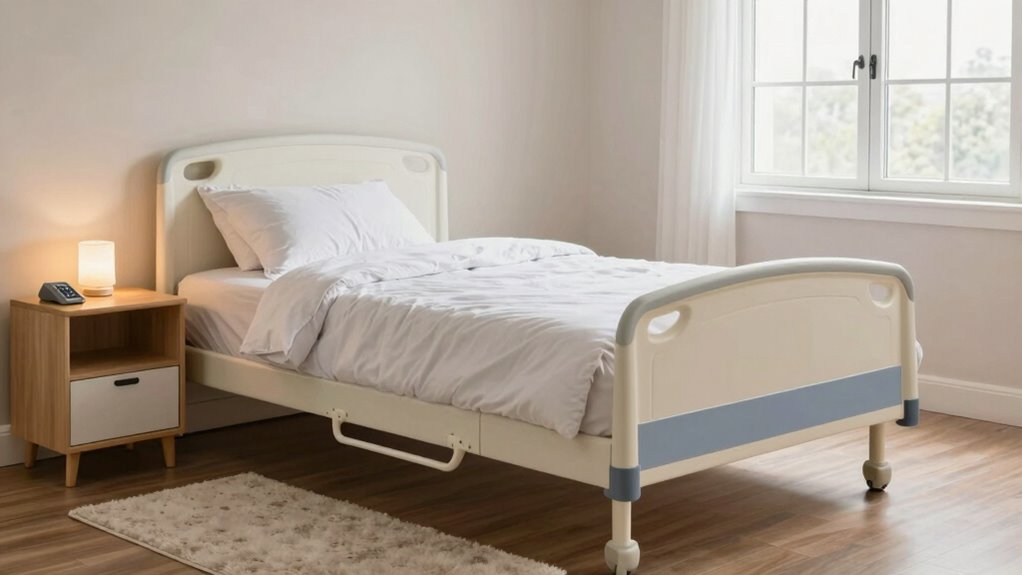
To guarantee your senior’s bedroom remains a safe space for sleep, it’s important to recognize and address potential hazards. Start by inspecting the bedroom lighting; ensure it’s sufficient for safe movement at night, yet not so bright it disrupts sleep hygiene. Remove or secure loose rugs, cords, and clutter that could cause tripping. Check furniture placement, making sure pathways are clear and beds are easily accessible. Evaluate the height and stability of furniture to prevent falls. Be mindful of sharp edges or unstable items that could cause injury. Regularly assess the room for hazards, especially as your senior’s needs change. Incorporating home safety assessments into your routine can help identify issues early and maintain a secure environment. Also, consider installing smart lighting that can be easily controlled at night to improve visibility without disturbing sleep. By staying vigilant and creating a safe, well-lit environment, you help promote better sleep and reduce the risk of accidents.
Choose the Right Bed and Mattress for Easy Mobility
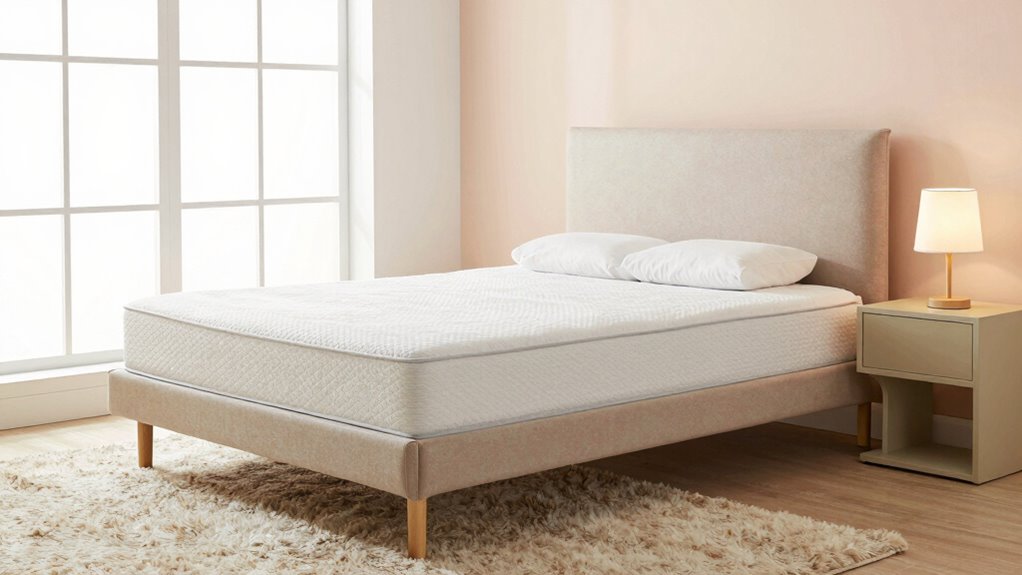
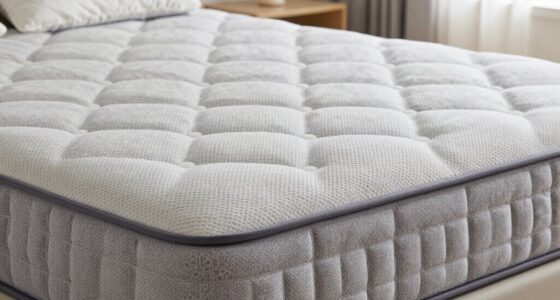
Choosing the right bed and mattress is essential for ensuring your senior can get in and out comfortably and safely. Opt for a bed with a sturdy frame and a height that minimizes effort. A mattress with medium firmness offers support without sacrificing comfort, reducing the risk of falls or strains. Consider adding mobility aids like bed rails or adjustable bases to enhance safety. The table below highlights key features:
| Feature | Benefits | Recommendations |
|---|---|---|
| Bed height | Easier transfers, reduces strain | 20-23 inches high |
| Mattress firmness | Proper support, reduces fall risk | Medium firmness |
| Mobility aids | Increased stability and safety | Bed rails, adjustable bases |
| Frame stability | Prevents wobbling, enhances safety | Solid, sturdy frames |
Selecting appropriate features guarantees safer, more accessible sleep for your senior. Additionally, proper ventilation in the sleeping area can help improve overall comfort and reduce health risks associated with poor air quality. Ensuring good air circulation can also prevent moisture buildup and mold, contributing to a healthier environment.
Install Grab Bars and Support Rails for Better Access

To guarantee grab bars and support rails provide maximum safety, you need to use secure mounting techniques that prevent movement. Position them at the proper height for easy access and support, tailored to your loved one’s needs. Regular safety inspections are essential to identify any looseness or damage and maintain a safe environment. Incorporating simple systems can help keep these safety features properly maintained and easily accessible. Utilizing seasonal checklists can also ensure that safety features are inspected and maintained regularly throughout the year, preventing deterioration over time. Additionally, choosing high-quality fixtures can enhance durability and safety over the long term. Applying proper installation techniques, informed by safety-first principles, ensures that grab bars and support rails remain reliable and effective for daily use. Incorporating clear signage can also assist users in quickly identifying the safest points of access and support, further enhancing safety measures.
Secure Mounting Techniques
Secure mounting of grab bars and support rails is essential for ensuring safety and stability for seniors with limited mobility. You need to use high-quality mounting hardware designed to handle weight and stress, preventing any risk of detachment. Proper installation involves anchoring fixtures securely into wall studs or using appropriate anchors if studs aren’t accessible. Verify that the fixtures are level and tightly fastened, with no wobbling or looseness. Avoid shortcuts like using inadequate hardware or mounting into drywall alone. By ensuring all fixtures are secure, you minimize the risk of falls and injuries. Regularly check the fixtures for stability and wear, tightening or replacing hardware as needed. Proper mounting techniques create a reliable support system, giving seniors confidence and independence. Using the right hardware and methods can also prevent damage to walls and fixtures over time. European cloud servers can provide reliable support for healthcare data systems that assist in monitoring and ensuring safety for seniors. Additionally, understanding proper mounting techniques helps in selecting the right hardware for long-term safety and durability, which is crucial for effective safety measures.
Proper Height Placement
Proper height placement of grab bars and support rails is essential for ensuring seniors can use them effectively and safely. To achieve this, consider the following:
- Install grab bars at a height that aligns with the senior’s natural reach — usually around 33-36 inches from the floor.
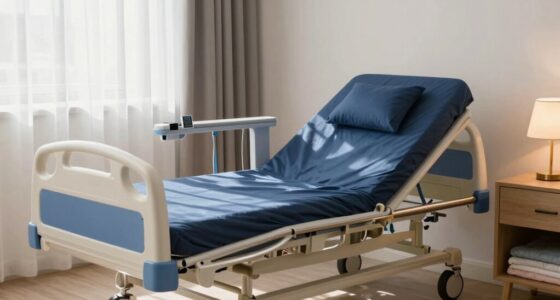
- When using adjustable bed heights, position support rails to match the bed’s raised or lowered position for seamless access.
- Choose bed frame options that allow for easy attachment of support rails at the correct height, providing stability and reducing the risk of falls.
- Ensure proper installation techniques are followed to prevent movement or failure of the support rails during use. Additionally, consulting industry standards can help ensure the safety and effectiveness of the installation.
- Regularly inspect support rails to confirm they remain securely fastened and in good condition, further enhancing safety for users. Incorporating proper height placement techniques can significantly reduce the risk of accidents and improve overall safety for seniors with limited mobility. Being aware of adaptable solutions can help tailor the safety features to individual needs, ensuring better support and security.
Regular Safety Inspections
Regular safety inspections are essential to guarantee grab bars and support rails remain secure and effective. Over time, wear and tear can compromise their stability, risking falls or injuries. During inspections, check for loose screws, corrosion, or damage, and ensure they’re properly anchored. Remember, maintaining a safe environment supports good sleep hygiene by reducing anxiety and discomfort. To emphasize this, consider the following:
| Inspection Point | Potential Issue | Action Needed |
|---|---|---|
| Grab bars in bedroom | Loose mounting | Tighten or replace |
| Support rails | Rust or corrosion | Clean or replace |
| Overall stability | Wobbly installation | Reinforce mounting |
Regular checks help preserve your bedroom decor’s aesthetic while ensuring safety for better sleep.
Design the Room Layout to Reduce Tripping Risks

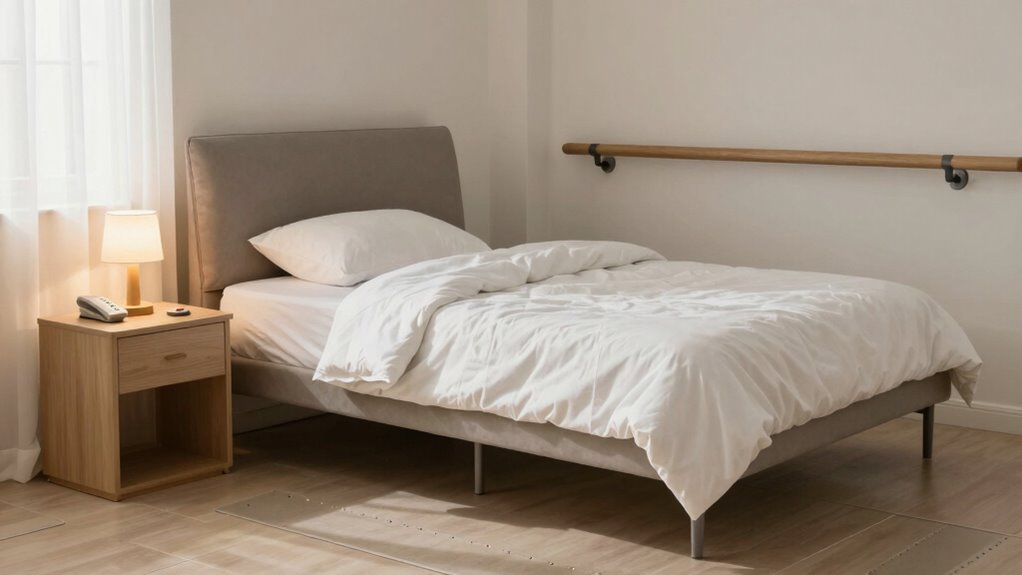
To reduce tripping hazards, start by keeping pathways clear and free of obstacles. Minimize clutter around the bed and throughout the room to create a safer environment. Carefully position furniture so it doesn’t block movement or create potential tripping points.
Clear Pathways, Minimize Clutter
Ensuring clear pathways and minimizing clutter is essential for creating a safe sleep environment for seniors with limited mobility. Visual clutter can cause confusion and increase the risk of pathway obstructions. To optimize safety, consider these steps:
- Remove unnecessary furniture and items that block walkways.
- Keep walking areas free of cords, rugs, and loose cords that could cause tripping.
- Use storage solutions to hide clutter and maintain a tidy, open space.
Strategic Furniture Placement
Careful furniture placement is key to reducing tripping hazards in a senior’s sleep environment. Proper furniture arrangement maximizes space utilization and keeps pathways clear, making movement safer. Place larger pieces like beds and dressers against walls to open up central areas. Keep nightstands close but not obstructing walkways. Use a layout that prevents sharp turns or tight spaces, minimizing the risk of falls. Here’s a simple guide:
| Furniture Item | Ideal Placement |
|---|---|
| Bed | Against the wall, away from doorways |
| Nightstand | Within easy reach, side of bed |
| Dresser | Against a wall, not blocking pathways |
| Chair | Near the bed, without blocking aisles |
| Walkways | Clear, wide enough for mobility aids |
This strategic setup promotes safe, easy movement and reduces tripping risks.
Set Up Proper Lighting for Nighttime Visibility
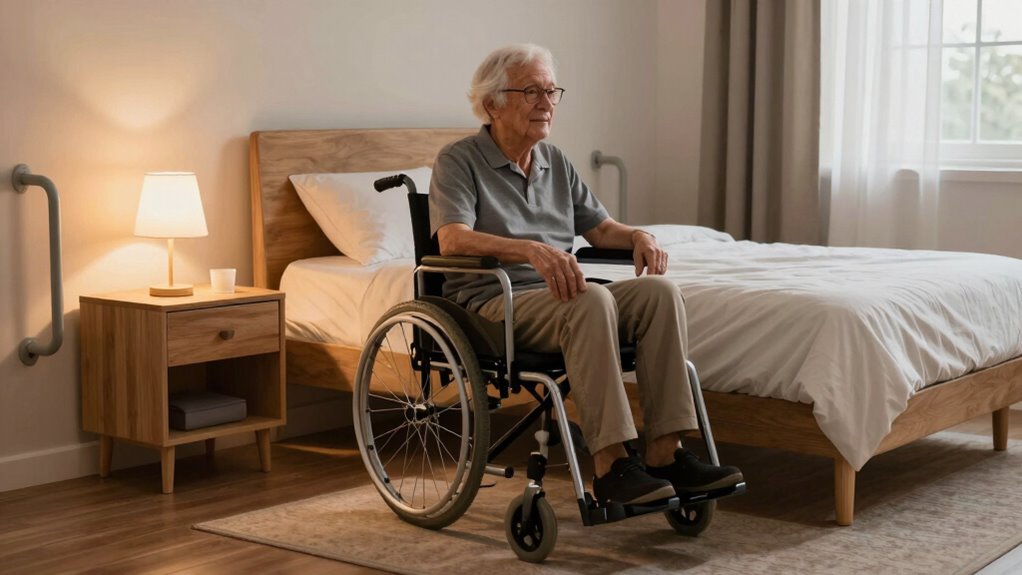
Proper lighting is essential for seniors with limited mobility to navigate safely during nighttime hours. Adequate lighting reduces falls and helps with tasks like nighttime reading or finding your way to the bathroom. To optimize visibility, consider these steps:
- Install motion-activated lights along pathways and near the bed for easy access without fumbling.
- Use soft ambient lighting, such as dimmable lamps or LED strips, to create a gentle glow that minimizes glare and shadows.
- Place nightlights in key areas like the bathroom, hallway, and closet to ensure safe movement throughout the night.
These measures help create a well-lit environment that supports independence and safety, making nighttime navigation easier and less stressful.
Pick Safe, Easy-to-Use Sleep Accessories
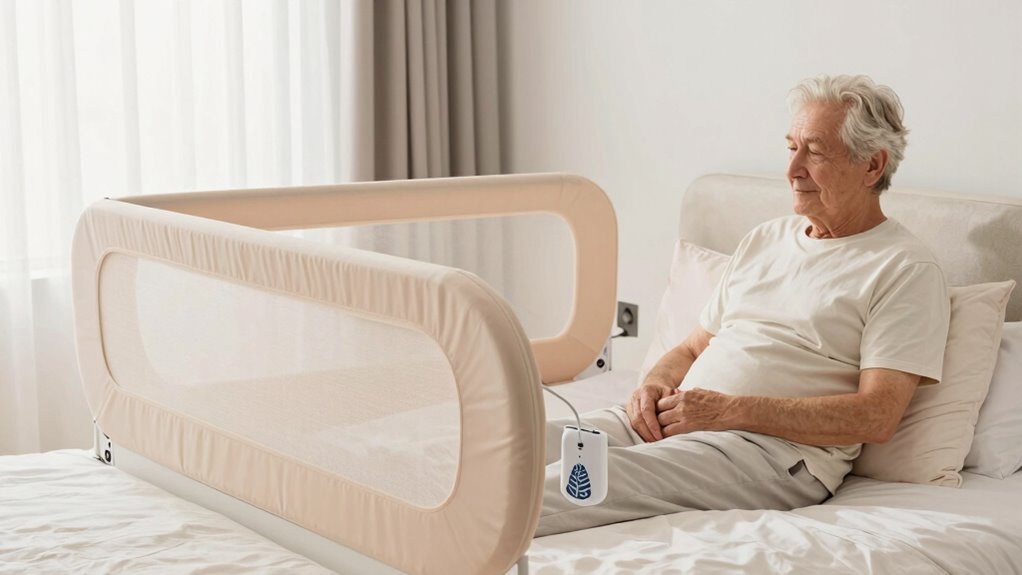
Choosing the right sleep accessories can make a significant difference in safety and comfort for seniors with limited mobility. Select sleep accessories that prioritize ease of use and stability, such as adjustable bed rails or supportive pillows. Mobility aids like bed handles or transfer bars can help seniors get in and out of bed safely, reducing the risk of falls. Look for accessories with simple mechanisms and clear instructions, so they’re easy to operate independently. Avoid complex or bulky items that could cause accidents or frustration. By choosing safe, user-friendly sleep accessories, you help create a secure environment that promotes restful sleep and independence. Always make certain that the accessories fit well with your loved one’s specific needs and physical capabilities.
Use Non-Slip Rugs and Flooring to Prevent Falls
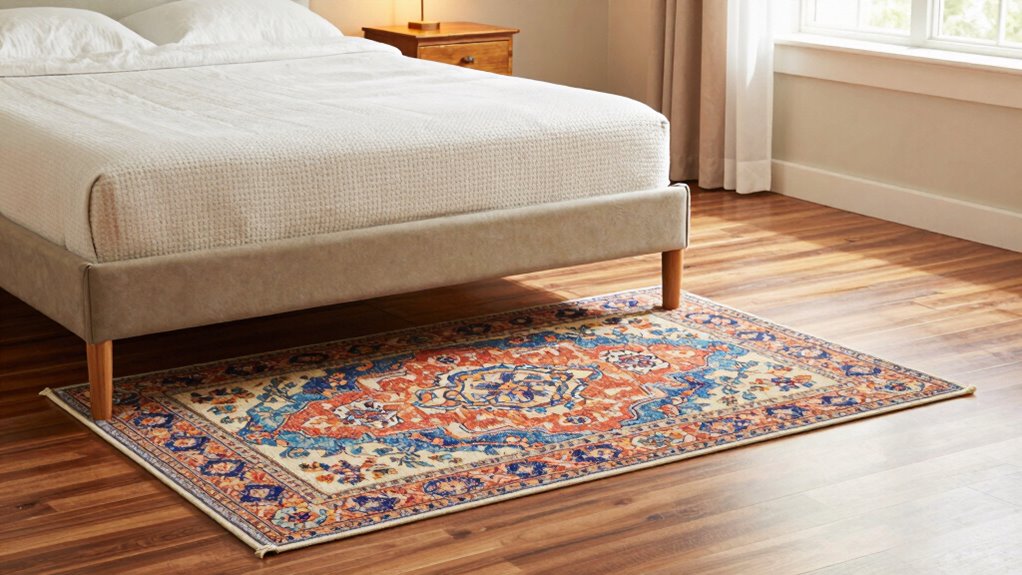
To help prevent falls, you should install non-slip rugs and guarantee your flooring has good traction throughout your loved one’s home. Use slip-resistant flooring in high-traffic areas like hallways and bathrooms to reduce slipping hazards. Also, choose area rugs with non-slip backings or add slip pads underneath to keep them secure. Here are some tips:
Prevent falls by installing non-slip rugs and ensuring good traction throughout your home.
- Select area rugs with rubber or latex backings to prevent sliding.
- Upgrade to slip resistant flooring in slippery zones such as kitchens and bathrooms.
- Make certain all rugs are securely anchored to avoid tripping hazards.
Declutter the Bedroom for a Calm, Sleep-Friendly Space
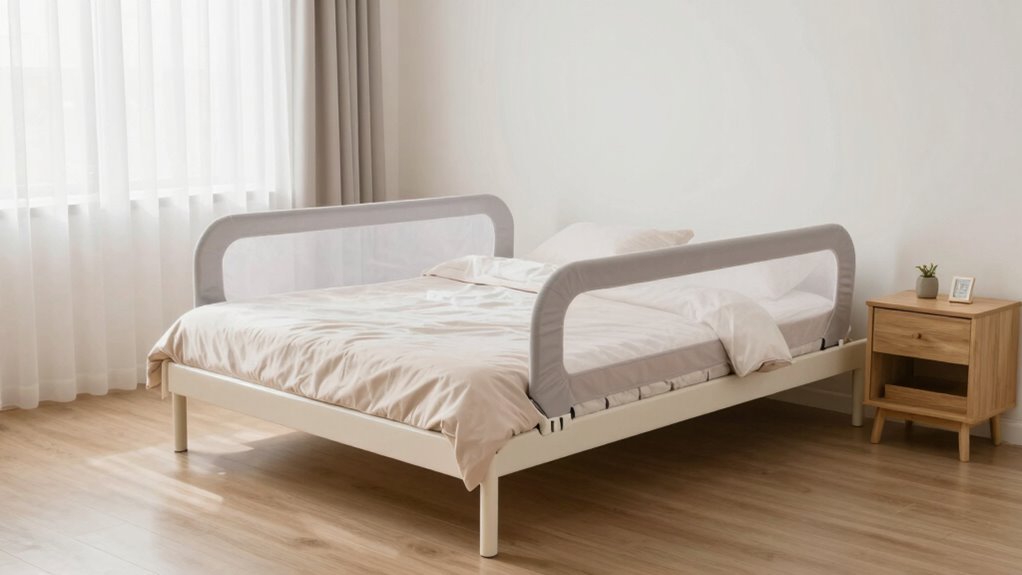
A cluttered bedroom can make it harder for seniors with limited mobility to find a safe and restful environment. Clutter reduction is essential for creating a calming decor that promotes relaxation and safety. Clear away unnecessary items, leaving only essentials within easy reach. Keep pathways free of obstacles to prevent trips and falls. Use storage solutions like bins or shelves to organize belongings neatly. A tidy space reduces stress and makes it easier to navigate the room safely. Incorporate soft, neutral colors and simple decor to foster a peaceful atmosphere. Every item should serve a purpose and contribute to a sense of calm. By decluttering regularly, you help ensure the bedroom remains a tranquil, secure space conducive to restful sleep.
Add Safety Devices Like Bed Alarms and Emergency Systems
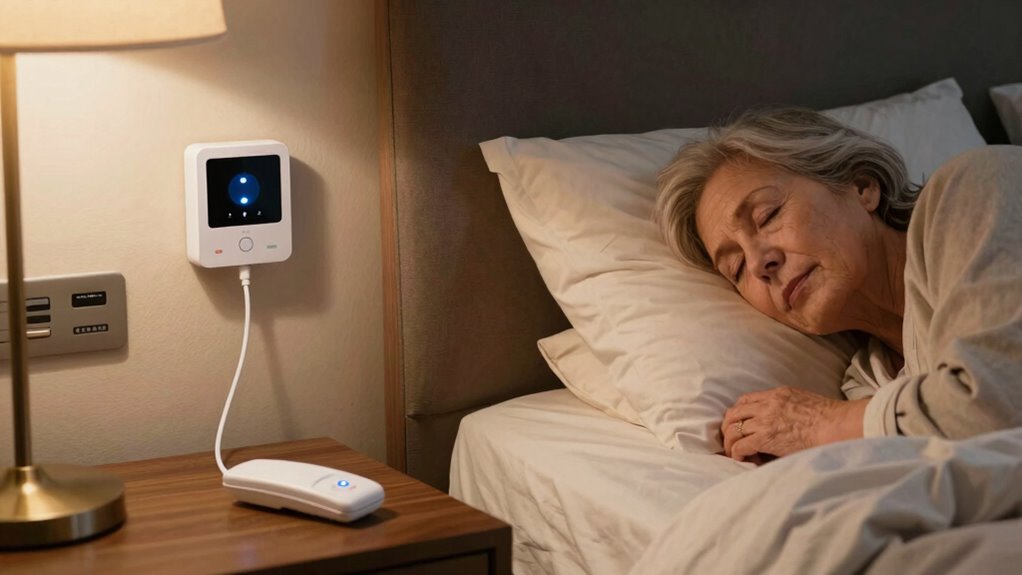
Adding safety devices like bed alarms and emergency systems is essential for protecting seniors with limited mobility while they sleep. These devices can alert you immediately if they try to get up or experience distress. Here are three key features to contemplate:
- Install smart sensors that detect movement or distress, triggering an alarm if necessary.
- Use bed alarms connected to an emergency call system, so help is just a button away.
- Make sure the emergency system is easy to activate and accessible, allowing your loved one to call for help quickly.
Frequently Asked Questions
What Are the Best Materials for Seniors’ Bedding to Prevent Falls?
You should choose weighted blankets and hypoallergenic bedding for seniors to prevent falls. Weighted blankets provide gentle pressure, helping reduce anxiety and improve sleep stability, while hypoallergenic bedding minimizes allergy risks and irritation. Opt for breathable, non-slip mattress covers and avoid slippery sheets. These materials create a safer, more secure sleep environment, reducing the chance of falls and ensuring comfort for seniors with limited mobility.
How Can I Improve Airflow and Ventilation for Safer Sleep?
Think of your loved one’s sleep space like a gentle breeze on a warm day—cool and invigorating. To improve airflow and ventilation, use airflow optimization techniques like ceiling fans or oscillating fans, and consider ventilation solutions such as air purifiers with HEPA filters. These steps help prevent overheating and reduce the risk of discomfort or falls, ensuring a safer, more restful night for seniors with limited mobility.
Are There Specific Colors That Promote Better Sleep and Safety?
You should choose calming shades like soft blues, gentle greens, or muted lavenders, as color psychology shows these hues promote relaxation and better sleep. Bright or highly saturated colors can be overstimulating and may interfere with rest, especially for seniors with limited mobility. Opting for these soothing colors helps create a peaceful environment that enhances safety, reduces anxiety, and supports restful sleep for your loved one.
How Often Should Safety Equipment Be Inspected or Replaced?
You should perform regular safety checks on all equipment, ideally every month, to guarantee safety and functionality. Replace or repair items promptly if you notice any damage, wear, or malfunction. Consistent equipment maintenance helps prevent accidents and keeps your loved one safe during sleep. Staying proactive with inspections minimizes risks and ensures the environment remains secure, giving you peace of mind knowing that safety measures are always up to date and effective.
What Are the Signs of Sleep Disturbances Caused by Unsafe Environments?
You’ll notice sleep disturbances if your loved one frequently wakes up, seems restless, or reports feeling unsafe. Poor bedroom lighting can cause disorientation, while malfunctioning alarm systems might fail to alert them during emergencies. Keep an eye on these signs and guarantee lighting is adequate and alarm systems are working properly. Addressing these issues promptly helps create a safer environment, promoting better sleep and peace of mind for both of you.
Conclusion
By thoughtfully arranging your senior’s bedroom, you create a gentle haven that whispers comfort and security. Small adjustments, like supportive rails and clutter-free spaces, help foster peaceful nights and restful mornings. When safety becomes a quiet priority, it’s easier to nurture independence and peace of mind. With care and attention, you turn their sleep environment into a nurturing retreat—where safety softly guides each restful night, and every morning begins with a gentle promise of well-being.
Halloween Picks
halloween
As an affiliate, we earn on qualifying purchases.