If you searched for a consumer reports hearing aid, the main decision is how to balance adjustable sound, ease of use, comfort, and support. My best overall pick is the Jabra Enhance Select M2 Swift, which stands out for self-fitting controls and a more guided setup. The Sennheiser All-Day Clear is a strong option for shoppers who want Bluetooth, while the Audien Atom One suits buyers seeking a simpler in-ear design. Rechargeable OTC aids vary widely in fit and adjustment tools, and low-cost amplifiers are not equivalent to professionally fitted hearing aids. Read on for the full comparison, buying advice, and answers to common questions.

Turn quiet afternoons into listening time
- Thousands of audiobooks, podcasts and originals
- Listen on your phone, tablet or Echo — also offline
- Cancel anytime
Complete the kit


Key Takeaways
- The Jabra Enhance Select M2 Swift stands apart for self-fitting support; buyers who want more guided adjustments should compare it with simpler, less adjustable devices.
- The Sennheiser All-Day Clear adds Bluetooth connectivity, making it a better fit for people who want audio streaming as well as hearing support.
- The lineup includes books and guides alongside hearing devices, so shoppers should distinguish educational resources from products that amplify sound.
- Rechargeable in-ear and behind-the-ear designs involve different fit and handling tradeoffs; a compact shell may be less convenient for someone who struggles with small controls.
- Basic amplifiers such as the Jeohu are not interchangeable with OTC hearing aids that offer fitting features, and buyers should match the device to the type of hearing difficulty they have.
| Hearing Aids Made Clinical: Evidence-Based Fitting, Verification, and Real-World Practice |  | Best for Clinically Informed Buyers | Format: Book | Subject: Evidence-based hearing-aid fitting | Coverage: Fitting, verification, and real-world clinical practice | VIEW ON AMAZON | See Our Full Breakdown |
| Jabra Enhance Select M2 Swift FDA-Cleared Self-Fitting Hearing Aids, Silver |  | Best for App-Based Self-Fitting | Fit and setup: Self-fitting through app | Weight: 2.12 g | Listening time: Over 24 hours per charge | VIEW ON AMAZON | See Our Full Breakdown |
| Manzelun Rechargeable Behind-the-Ear Hearing Aids with Noise Cancellation |  | Best for Physical Controls | Model: GM-105 | Fit type: Behind-the-ear | Weight: 5.5 g described; 48 g item weight | VIEW ON AMAZON | See Our Full Breakdown |
| Rechargeable OTC Hearing Aids with Noise Reduction and Portable Charging Case, Brown | 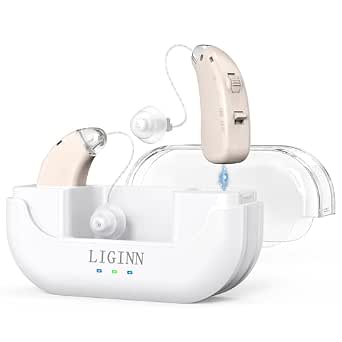 | Best for Simple, App-Free Operation | Fit type: Behind-the-ear | Intended use: Mild to moderate hearing loss | Weight: 4.1 g | VIEW ON AMAZON | See Our Full Breakdown |
| Audien Atom One OTC Hearing Aids |  | Best for In-Ear Analog Adjustments | Fit type: In-ear | Recommended use: Adults and seniors with mild to moderate hearing loss | Controls: Separate analog volume and frequency dials | VIEW ON AMAZON | See Our Full Breakdown |
| Buying Hearing Aids Smarter: A Consumer’s Guide |  | Best for Comparing Options | Product type: Consumer buying guide | Subject: Buying hearing aids | Format: Not specified | VIEW ON AMAZON | See Our Full Breakdown |
| Calmaur Rechargeable In-Ear Hearing Aids with Noise Cancellation |  | Best for Discreet In-Ear Fit | Brand and model: Calmaur GM001 | Fit: In-ear | Digital processing: 16-channel DSP | VIEW ON AMAZON | See Our Full Breakdown |
| Oction GM-321T Rechargeable Hearing Aids with Charging Case |  | Best for Long Wear Between Charges | Brand and model: Oction GM-321T | Fit: Behind-the-ear | Recommended hearing loss: Mild to moderate | VIEW ON AMAZON | See Our Full Breakdown |
| A Beginner-Friendly Hearing Aid Guide for Seniors | 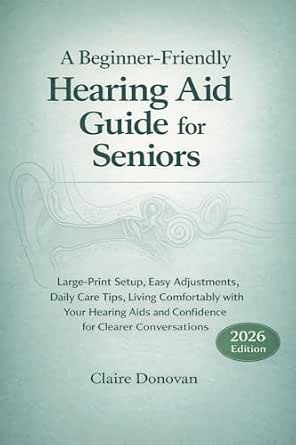 | Best for Senior Setup Support | Product type: Hearing-aid guide | Format: Large print | Intended audience: Seniors | VIEW ON AMAZON | See Our Full Breakdown |
| Oricle Standard 3.0 Rechargeable In-Ear Hearing Aids with Noise Reduction and Charging Case |  | Best for Compact, Simple Controls | Brand and model: Oricle Standard 3.0 | Model number: HA-JHA490-3.0 | Fit: In-ear, completely in canal | VIEW ON AMAZON | See Our Full Breakdown |
| Sennheiser All-Day Clear OTC Bluetooth Hearing Aids, Light Grey |  | Best for Connected, App-Based Personalization | Brand: Sennheiser | Model: All-Day Clear ADC1 | Type: Receiver-in-the-canal (RIC) OTC hearing aids | VIEW ON AMAZON | See Our Full Breakdown |
| Jeohu Behind-the-Ear Hearing Amplifier for Mild to Moderate Hearing Loss |  | Best for Simple Button Controls | Brand: Jeohu | Model: Basic-01 | Fit type: Behind-the-ear | VIEW ON AMAZON | See Our Full Breakdown |
| consumer reportshearing aid | Battery life |
|---|---|
| Hearing Aids Made Clinical: Ev | — |
| Jabra Enhance Select M2 Swift | — |
| Manzelun Rechargeable Behind-t | Up to 25 hours |
| Rechargeable OTC Hearing Aids | — |
| Audien Atom One OTC Hearing Ai | Up to 24 hours |
| Buying Hearing Aids Smarter: A | — |
| Calmaur Rechargeable In-Ear He | 6.5–7 hours per charge |
| Oction GM-321T Rechargeable He | Up to 40 hours per charge; up to 280 hours with case |
| A Beginner-Friendly Hearing Ai | — |
| Oricle Standard 3.0 Rechargeab | Up to 60 hours per charge |
| Sennheiser All-Day Clear OTC B | Up to 24 hours, depending on usage |
| Jeohu Behind-the-Ear Hearing A | — |
More Details on Our Top Picks
Hearing Aids Made Clinical: Evidence-Based Fitting, Verification, and Real-World Practice
I’d choose this book for understanding how hearing aids should be selected and fitted, rather than for buying a device. Its focus on evidence-based fitting, verification, and clinical practice gives it a different role from consumer devices such as the Jabra Enhance Select M2 Swift, which offers app-based self-fitting, or the Manzelun GM-105, which relies on physical controls. That distinction matters: the book may help readers ask more informed questions about fitting and follow-up, but it does not provide amplification or personalize sound for an individual. The product information gives no detail about its audience level, length, or included materials, so I can’t judge how accessible or extensive it is. It suits readers who want clinical context, not someone seeking an immediate hearing solution.
Pros:- Centers on evidence-based hearing-aid fitting
- Covers verification as well as fitting
- Addresses real-world clinical practice
- Can provide context for comparing device-based self-fitting with clinical care
Cons:- Does not provide hearing amplification or a device
- No details are supplied about reading level, length, or format beyond book format
Best for: Readers preparing for a hearing-care appointment who want a book focused on fitting, verification, and clinical practice.
Not ideal for: People seeking a hearing device, hands-on setup instructions for a specific model, or information about the book’s depth before buying.
- Format:Book
- Subject:Evidence-based hearing-aid fitting
- Coverage:Fitting, verification, and real-world clinical practice
- Device included:No device details provided
- Length:Not provided
- Audience level:Not provided
Our verdict“Choose this book for clinical fitting context and skip it if you need a hearing aid you can use.”
Jabra Enhance Select M2 Swift FDA-Cleared Self-Fitting Hearing Aids, Silver
Among these options, I’d put the Jabra Enhance Select M2 Swift first for buyers who want a customizable, connected self-fitting device. Its app-based adjustments, adaptive listening, and speech-clarity features offer more ways to tailor everyday sound than the simpler Manzelun GM-105 or the button-controlled rechargeable BTE model in this group. Bluetooth streaming also lets compatible Apple and Android users route calls and media through the aids, while the IP68 rating and long listening time suit active routines. The tradeoff is that setup and sound personalization depend on the app, and streaming depends on a compatible phone; that is a poor fit for someone who wants entirely manual operation. The included portable USB-C charger adds backup power, but app features make this a more involved choice than basic controls.
Pros:- App-based self-fitting with adjustments for volume, bass, treble, and listening presets
- Adaptive listening and speech-clarity features target changing sound environments
- Over 24 hours of listening per charge with a portable charger rated for up to 96 hours
- IP68 rating, Bluetooth connectivity, and compatibility with Apple and Android devices
Cons:- Setup and personalization require using the app
- Bluetooth features depend on a compatible Apple or Android device
Best for: Adults comfortable using an Apple or Android phone who want self-fitting, adjustable sound and direct streaming for calls and media.
Not ideal for: Buyers who avoid smartphone apps, have an incompatible device, or prefer simple physical controls over connected features.
- Fit and setup:Self-fitting through app
- Weight:2.12 g
- Listening time:Over 24 hours per charge
- Portable charger power:Up to 96 hours
- Water and dust resistance:IP68
- Connectivity:Bluetooth, Bluetooth LE Audio, and Auracast
- Compatibility:Apple and Android devices
- Warranty and protection:1-year warranty and 1-year loss and damage protection
Our verdict“Choose the Jabra for app-guided customization and streaming; pick a simpler control-based model if you want to avoid phone setup.”
Manzelun Rechargeable Behind-the-Ear Hearing Aids with Noise Cancellation
The Manzelun GM-105 is the straightforward choice for buyers who want a behind-the-ear design and controls on the device, not adjustments through a phone. A slide switch and continuous volume knob make basic operation more direct than the Jabra Enhance Select M2 Swift’s app-led fitting, while the rechargeable case can refill both aids up to four times. Its flexible ear hooks and multiple ear tips give wearers some fit options, and the stated up-to-25-hour battery life supports long stretches between charges. The tradeoffs are a possible operating noise and an adaptation period for new users; the product data also gives two different weight figures, so its portability is less clear than the Jabra’s stated 2.12 g. I’d favor it for manual simplicity, not advanced connectivity or a highly specified fit experience.
Pros:- Physical slide switch and continuous volume control
- Charging case can recharge both hearing aids up to four times
- Up to 25 hours of use per charge
- Flexible ear hooks and five pairs of ear tips are included
Cons:- May produce slight operating noise
- New users may need time to adapt to wearing the aids
- Product information lists both 5.5 g and 48 g weight figures
Best for: Buyers who want rechargeable behind-the-ear aids with direct power and volume controls and no app-dependent operation.
Not ideal for: People who want Bluetooth streaming, app-based sound personalization, or clear and consistent product weight information.
- Model:GM-105
- Fit type:Behind-the-ear
- Weight:5.5 g described; 48 g item weight
- Battery:Lithium-ion, 3.7 V
- Battery life:Up to 25 hours
- Charging:Cable or case; case recharges both aids up to four times
- Controls and noise control:Slide switch, continuous volume knob, and active noise cancellation
- Included fit accessories:Five pairs of ear tips and two cleaning brushes
Our verdict“Choose the Manzelun for direct controls and a multi-recharge case, but skip it if streaming or app-based tuning is a priority.”
Rechargeable OTC Hearing Aids with Noise Reduction and Portable Charging Case, Brown
This brown behind-the-ear option makes the most sense for someone who wants simple buttons and volume control rather than app setup or Bluetooth features. Digital processing is designed to improve speech clarity and reduce background noise, and the compact 4.1 g weight is lower than the Manzelun’s listed 5.5 g described weight. Its USB-C case offers up to 96 hours of power and can recharge the aids up to four times, matching the Jabra’s case capacity without requiring a smartphone for everyday adjustments. The main limit is fit and intended use: it is specified for mild to moderate hearing loss, and a loose earplug can cause feedback. Three earplug sizes help, but buyers who want more personalized app controls should look at the Jabra instead.
Pros:- Simple button and volume controls require no app or Bluetooth
- Digital processing is designed to improve speech clarity and reduce background noise
- Lightweight 4.1 g design with three earplug sizes
- USB-C case provides up to 96 hours of power and up to four recharges
Cons:- Intended for mild to moderate hearing loss
- An insecure earplug fit may cause feedback whistling
- New wearers may need time to adapt
Best for: Adults with mild to moderate hearing loss who prefer lightweight BTE aids, basic physical controls, and a multi-charge USB-C case.
Not ideal for: Buyers seeking app-based sound tuning or Bluetooth streaming, or anyone who cannot obtain a secure earplug fit.
- Fit type:Behind-the-ear
- Intended use:Mild to moderate hearing loss
- Weight:4.1 g
- Controls:Button and volume control
- Charging:USB-C; 2–3 hours
- Operating time:Up to 24 hours per charge
- Charging case:Up to 96 hours of power; charges aids up to four times
- Included earplug sizes:Three
Our verdict“Choose this model for lightweight, app-free BTE use and a multi-recharge case; choose the Jabra if you want phone-based personalization.”
Audien Atom One OTC Hearing Aids
The Audien Atom One is the in-ear pick for buyers who prefer turning physical dials over using an app. Its separate analog controls for volume and frequency give users direct adjustments, unlike the Jabra Enhance Select M2 Swift, which puts personalization in a phone app. The in-ear form also contrasts with the Manzelun and other behind-the-ear choices, which may suit buyers who do not want a device sitting behind the ear. Three dome sizes and universal left/right fit offer some flexibility, while expert-guided setup and included wax-care tools add practical help. The tradeoff is limited sound management: the product specifies no noise control, so it offers less support for background-heavy settings than the models with noise-reduction features. It is also intended for mild to moderate hearing loss, not every hearing need.
Pros:- Separate analog dials adjust volume and frequency
- Rechargeable battery offers up to 24 hours of use
- Three silicone ear dome sizes and universal left/right fit
- Includes expert-guided setup, cleaning tools, and a wax guard kit
Cons:- No noise-control feature is specified
- Designed for mild to moderate hearing loss
- In-ear fit may not suit buyers who prefer behind-the-ear devices
Best for: Adults and seniors with mild to moderate hearing loss who want an in-ear rechargeable device with direct volume and frequency dials.
Not ideal for: People who need noise control for busy environments, prefer behind-the-ear hardware, or want Bluetooth streaming.
- Fit type:In-ear
- Recommended use:Adults and seniors with mild to moderate hearing loss
- Controls:Separate analog volume and frequency dials
- Battery:Lithium-ion; two batteries included
- Battery life:Up to 24 hours
- Charging:USB-C dock; about 3 hours
- Ear dome sizes:Small, medium, and large
- Warranty:1 year
Our verdict“Choose the Atom One for direct in-ear dial adjustments and skip it if noise reduction or Bluetooth streaming matters to you.”
Buying Hearing Aids Smarter: A Consumer’s Guide
This guide earns a place for readers who want help weighing hearing-aid choices before selecting a device. Unlike the Calmaur Rechargeable In-Ear Hearing Aids with Noise Cancellation, it is not a hearing aid and provides no stated processing, fit, or battery details; its value is decision support rather than sound amplification. The title signals a consumer-oriented buying guide, but the supplied information does not identify its format, chapters, author credentials, or specific topics. That makes it harder to judge how practical or current its advice will be. I’d treat it as a possible starting point for building questions and comparing features, not as a substitute for a hearing evaluation or product-specific instructions. Buyers who want an immediately usable device should look to the Oction GM-321T instead.
Pros:- Focused specifically on buying hearing aids
- Consumer-oriented subject may help readers prepare for product comparisons
- Could serve as a non-device starting point before choosing between styles
Cons:- No information is provided about the guide’s format, length, or specific coverage
- No device features or hearing support are included
- The available details do not establish the advice’s expertise or currency
Best for: First-time hearing-aid shoppers who want a consumer guide before comparing device styles and features
Not ideal for: Readers seeking a hearing aid, detailed verified medical guidance, or a book with confirmed format and topic information
- Product type:Consumer buying guide
- Subject:Buying hearing aids
- Format:Not specified
- Topics:Not specified
- Author or credentials:Not specified
- Device features:Not applicable
Our verdict“Choose this only if you want a general consumer guide before shopping, not a hearing device or a verified source of detailed advice.”
Calmaur Rechargeable In-Ear Hearing Aids with Noise Cancellation
The Calmaur GM001 is the in-ear choice for shoppers who prioritize a compact fit and listening modes over the longer stated runtime of a behind-the-ear design. Its 16-channel digital processing, voice enhancement, and four environment modes are intended to help adapt listening across settings, while automatic power-on when the case opens reduces a step in daily setup. Compared with the Oction GM-321T, Calmaur trades Oction’s up-to-40-hour per-charge claim and button controls for a more discreet in-ear form. The case can provide up to eight recharges, but each charge is listed at only 6.5–7 hours, so regular charging remains part of the routine. The product is described for mild to moderate hearing loss; shoppers needing more involved fitting support or a clinically tailored solution should not assume these features will meet that need.
Pros:- Discreet in-ear design with a lightweight stated battery weight
- 16-channel digital processing and voice enhancement
- Four modes for different listening environments
- Case provides up to eight recharges and turns the aids on when opened
Cons:- Listed runtime of 6.5–7 hours per charge is shorter than the Oction GM-321T’s stated runtime
- Positioned for mild to moderate hearing loss rather than more complex needs
- Automatic power-on may offer less direct control than a dedicated button-based routine
Best for: Adults with mild to moderate hearing loss who prefer a discreet in-ear device and switch between several listening environments
Not ideal for: People who need long wear between charges, a behind-the-ear fit, or individually tailored clinical programming
- Brand and model:Calmaur GM001
- Fit:In-ear
- Digital processing:16-channel DSP
- Environment modes:4
- Noise control:Active noise cancellation
- Battery life:6.5–7 hours per charge
- Charging case capacity:Up to 8 recharges
- Recommended hearing loss:Mild to moderate
Our verdict“Pick Calmaur if a discreet in-ear fit and multiple environment modes matter more than getting a full day from one charge.”
Oction GM-321T Rechargeable Hearing Aids with Charging Case
For shoppers who want fewer charging interruptions, the Oction GM-321T has the strongest stated endurance in this group: up to 40 hours per charge and up to 280 hours with its case. That sets it apart from the Calmaur GM001, which offers a discreet in-ear fit but lists 6.5–7 hours per charge. Oction’s behind-the-ear design, button controls, voice alerts, and four dome sizes favor straightforward handling and fit adjustment over a nearly hidden profile. Its 32-channel DSP, stated maximum gain of 50 dB, and noise attenuation provide more performance detail than the general-purpose Buying Hearing Aids Smarter: A Consumer’s Guide, though those figures alone do not establish how it will suit an individual’s hearing needs. The tradeoff is a visible behind-the-ear device that requires charging and is specified for mild to moderate hearing loss.
Pros:- Up to 40 hours of stated use per charge, with additional case recharges
- Button controls and voice alerts without a stated app requirement
- Four dome sizes allow some fit adjustment
- 32-channel DSP and stated noise attenuation provide useful technical detail
Cons:- Behind-the-ear fit is more visible than the Calmaur and Oricle in-ear designs
- Requires regular charging despite its extended stated runtime
- Intended for mild to moderate hearing loss, not every hearing profile
Best for: People with mild to moderate hearing loss who wear hearing aids for long stretches and prefer physical controls and selectable dome sizes
Not ideal for: Shoppers who prioritize a discreet in-canal appearance or need a professionally customized hearing solution
- Brand and model:Oction GM-321T
- Fit:Behind-the-ear
- Recommended hearing loss:Mild to moderate
- DSP channels:32
- Maximum gain:50 dB
- Noise attenuation:24 dB
- Battery life:Up to 40 hours per charge; up to 280 hours with case
- Controls and fit:Button control, voice alerts, and 4 dome sizes
- Charging case:5–6 additional recharges; UV cleaning while charging
Our verdict“Choose the Oction if long stated runtime and simple physical controls matter more than a discreet in-ear profile.”
A Beginner-Friendly Hearing Aid Guide for Seniors
This large-print guide takes a practical, day-to-day angle: it covers setup, adjustments, care, comfort, and communication. That focus makes it a more specific companion for older beginners than Buying Hearing Aids Smarter: A Consumer’s Guide, whose supplied description gives no topic or format details. It is also distinct from the Oction GM-321T, which is a device with controls and fit options rather than a source of instruction. Large print may be easier to read, and the daily-care and comfort topics address routines that can shape whether a wearer sticks with hearing aids. The limitation is that no information is provided about the author, level of detail, or whether the advice addresses particular models. It can support basic orientation, but it cannot replace device instructions or individualized hearing care.
Pros:- Large-print format is aimed at easier reading
- Covers setup and adjustment basics
- Includes daily care and comfort topics
- Addresses communication as part of hearing-aid use
Cons:- No author credentials or level of detail are provided
- The description does not establish whether guidance is model-specific
- It offers instruction rather than hearing amplification
Best for: Older adults new to hearing aids who want large-print guidance on setup, adjustments, daily care, and communication
Not ideal for: Readers seeking a hearing device, model-specific instructions, or advice with stated author credentials and scope
- Product type:Hearing-aid guide
- Format:Large print
- Intended audience:Seniors
- Topics:Setup, adjustments, daily care, comfort, and communication
- Device included:No
- Author details:Not specified
Our verdict“Choose this guide if you are a senior beginner who wants readable help with everyday hearing-aid routines, not a device-specific manual.”
Oricle Standard 3.0 Rechargeable In-Ear Hearing Aids with Noise Reduction and Charging Case
The Oricle Standard 3.0 is the most compact-style pick here, using a completely-in-canal fit and soft silicone tips for shoppers who want less visible hardware than the behind-the-ear Oction GM-321T. Its five sound levels and noise reduction give users some adjustment without the multiple environment modes offered by the Calmaur GM001. Automatic on/off and memory settings may also simplify repeat use, while the included case is listed with up to 60 hours of use per charge. That runtime claim is notably different from the Oction’s 40 hours, though the product details do not explain testing conditions or whether the figure refers to the aids alone or case-supported use. Five levels may feel limiting to buyers who want finer control, and the listing describes hearing enhancement rather than a specific range of hearing loss. This makes Oricle a fit-first option, not the most adjustable choice.
Pros:- Completely-in-canal design is less visible than Oction’s behind-the-ear style
- Soft silicone tips are intended for comfortable wear
- Five sound levels, noise reduction, and memory settings provide straightforward adjustment
- Portable case and stated runtime of up to 60 hours
Cons:- Five sound levels may offer too little adjustment for users seeking finer control
- No specific hearing-loss range is provided in the supplied details
- The runtime description does not clarify how the case contributes to the stated figure
Best for: Adults seeking a compact in-canal design, basic volume adjustment, and automatic on/off for conversation and everyday listening
Not ideal for: People who want many fine-tuning controls, multiple environment presets, or a clearly specified hearing-loss range
- Brand and model:Oricle Standard 3.0
- Model number:HA-JHA490-3.0
- Fit:In-ear, completely in canal
- Sound levels:5
- Controls:Button control; automatic on/off with memory settings
- Noise feature:Noise reduction
- Battery life:Up to 60 hours per charge
- Battery composition:Lithium-ion
- Included components:Hearing aids, case, and charger
Our verdict“Choose Oricle if compact in-canal fit and simple controls are your priorities, but skip it if you need detailed sound customization.”
Sennheiser All-Day Clear OTC Bluetooth Hearing Aids, Light Grey
For adults with mild to moderate hearing loss who want both hearing support and phone audio, the Sennheiser All-Day Clear offers a more connected approach than the simple button-controlled Jeohu Basic-01. Its app-based setup and sound personalization let users tailor the fit without relying only on physical volume buttons, while automatic sound adjustment is meant to adapt as surroundings change. Bluetooth adds hands-free calls and audio streaming, a useful difference for people who regularly use a smartphone. The tradeoff is that setup and everyday control depend on a compatible iOS or Android phone, unlike the Jeohu’s straightforward onboard controls. Its rechargeable battery is rated for up to 24 hours, but actual runtime varies with use, and it is intended for mild to moderate hearing loss rather than more significant hearing needs.
Pros:- App-based setup and sound personalization
- Automatically adapts to surrounding sound
- Bluetooth supports hands-free calls and audio streaming
- Rechargeable battery provides up to 24 hours of use, depending on usage
Cons:- Designed for mild to moderate hearing loss
- App control may not suit buyers who prefer on-device adjustments
- Battery runtime varies with individual usage
Best for: Adults with mild to moderate hearing loss who use an iOS or Android smartphone and want app-based sound adjustments plus calls and audio streaming.
Not ideal for: People who prefer physical controls, do not use a compatible smartphone, need support beyond mild to moderate hearing loss, or want battery runtime that does not vary with usage.
- Brand:Sennheiser
- Model:All-Day Clear ADC1
- Type:Receiver-in-the-canal (RIC) OTC hearing aids
- Compatible devices:iOS and Android smartphones
- Control:App control
- Battery:Rechargeable lithium-ion
- Battery life:Up to 24 hours, depending on usage
- Color:Light grey
- Included components:Pair of hearing aids, charging case, USB charging cable, US wall plug, 8 ear tips (S/M/L), wax guards, cleaning brush, instruction manual
Our verdict“Choose the Sennheiser if smartphone connectivity and personalized app controls matter more than the Jeohu Basic-01’s simpler button-based operation.”
Jeohu Behind-the-Ear Hearing Amplifier for Mild to Moderate Hearing Loss
The Jeohu Basic-01 is the simpler, more direct option in this pair: its behind-the-ear hook and adjustable button-controlled volume avoid the smartphone setup required by the Sennheiser All-Day Clear. That can suit buyers who want basic amplification with controls on the device rather than app-based personalization, though the product is described as a hearing amplifier, not a self-fitting Bluetooth hearing aid. Its compact ABS body and included LR44 batteries make it ready for battery-powered use, but there is no rechargeable system or stated streaming feature. The listing also says users may need repeated use to get accustomed to it, so it may take patience to settle into daily wear. Compared with the Sennheiser, it favors straightforward controls over connectivity and sound customization.
Pros:- Physical button controls with adjustable volume
- Behind-the-ear hook provides a simple wearing style
- Compact, lightweight design
- Includes two LR44 alkaline batteries
Cons:- Uses replaceable alkaline batteries rather than rechargeable power
- May take repeated use to get accustomed to
- No Bluetooth streaming or app-based personalization is listed
Best for: Adults seeking a basic behind-the-ear amplifier with physical volume buttons who do not need smartphone streaming or app-based personalization.
Not ideal for: Smartphone users who want Bluetooth calls or audio, buyers who prefer rechargeable devices, or anyone who expects app-based fitting and sound adjustments.
- Brand:Jeohu
- Model:Basic-01
- Fit type:Behind-the-ear
- Power source:Battery powered
- Batteries:2 LR44 alkaline batteries, included
- Controls:Button control; adjustable volume
- Audio sensitivity:125 dB
- Noise control:Adaptive noise cancellation
- Material and color:ABS; beige
Our verdict“Choose the Jeohu for basic physical controls and battery-powered amplification, but pick the Sennheiser All-Day Clear for app adjustments and Bluetooth features.”

How We Picked
I compared the 12 listed items by their usefulness to someone choosing hearing support: whether each is a hearing device or an educational guide, the style and likely handling demands, available fitting or sound-adjustment features, charging approach, connectivity, and the kind of buyer each may suit. I gave greater weight to options with clear, buyer-facing controls and a defined role than to products whose names promise noise reduction without enough information to distinguish their adjustment process. I also treated in-ear, behind-the-ear, and Bluetooth-equipped models as different solutions rather than assuming one design works for everyone.
The order reflects practical decision value, not a claim that every item provides the same kind of care. The Jabra leads for its self-fitting emphasis; Sennheiser is a more compelling choice for shoppers who prioritize Bluetooth; and simpler OTC devices may suit buyers who prefer fewer controls. The books are useful for learning but cannot amplify sound, while a hearing amplifier should not be mistaken for an OTC hearing aid. Product names alone do not confirm clinical suitability, so buyers should check current fitting instructions, support, and return terms before choosing.
Factors to Consider When Choosing Consumer Reportshearing Aid
Choosing hearing support is about more than selecting a style or charging case. I would start by matching the device to your hearing needs and daily routines, then check whether its fitting process, handling, and support are realistic for you.
Match the Device to Your Hearing Needs
OTC hearing aids are intended for adults with perceived mild to moderate hearing loss, but they are not a universal answer to every hearing problem. Sudden changes, pain, drainage, dizziness, or hearing loss that is much worse in one ear call for medical advice rather than a quick device purchase. A hearing evaluation can help distinguish hearing loss from other causes of difficulty, even if you later choose an OTC option. Do not assume a product described as an amplifier offers the same fitting features or intended use as a hearing aid. My rule is to confirm the device category and intended hearing range before comparing colors, cases, or convenience features.
Choose a Fitting Process You Can Actually Use
Self-fitting features only help when you can complete the setup and make adjustments comfortably. Before buying, check whether setup requires a smartphone, whether the app supports your phone, and whether you can change settings without navigating menus you find difficult. A simpler device may be easier to operate, but it can leave less room to tailor sound to different listening situations. Avoid treating a single preset or a noise-reduction label as proof that speech will sound clear everywhere. If you are unsure, favor clear instructions and accessible support over a long list of features.
Compare In-Ear and Behind-the-Ear Handling
In-ear models keep the hardware close to or inside the ear, while behind-the-ear designs place part of the device outside it. The best choice depends on comfort, dexterity, glasses, ear shape, and whether you can insert and remove the device reliably. Smaller housings may appeal to people seeking a discreet look, yet small parts can be harder to handle and keep track of. Behind-the-ear styles are more visible but may be easier for some buyers to grasp and position. If possible, check the available dome or tip sizes and the fitting instructions before deciding on a style.
Treat Bluetooth as a Separate Buying Priority
Bluetooth can make a hearing aid more useful for calls or streamed audio, but it is not a substitute for suitable amplification and fitting. Confirm exactly what the connection supports: phone calls, media streaming, app controls, or some combination. Compatibility can vary by phone and operating system, so check the manufacturer’s current requirements rather than relying on the word Bluetooth alone. If you mainly need help following face-to-face conversation, a stable fit and understandable adjustment controls may matter more than streaming. If calls and audio are central to your routine, prioritize verified compatibility and learn how the device handles phone audio before purchase.
Plan for Charging, Cleaning, and Daily Care
Rechargeable models reduce the need to replace disposable batteries, but they still depend on a charging routine and a working case or power source. Consider whether you can see charging indicators, connect the device correctly, and remember to charge it before a full day of use. Earwax and moisture can affect performance, so check how the product is cleaned and whether filters or tips need replacement. A portable case can be useful away from home, but it does not remove the need for regular maintenance. Choose the care routine you can keep up with, not just the charging feature that looks convenient on a product page.
Look Beyond the Device for Support and Safeguards
Setup help, adjustment guidance, warranty coverage, and return rules can shape whether an OTC device remains useful after the first few days. Read the terms before purchase and find out how to get help if the fit feels uncomfortable or sound needs adjustment. Do not assume every product offers the same level of professional support just because it is sold as a hearing aid. Educational books in this roundup can help explain consumer choices, but they are not substitutes for an audiology appointment or a hearing device. Paying more makes sense only when the added fitting tools, connectivity, or service match a need you actually have.
Frequently Asked Questions
Is an OTC hearing aid the same as a hearing amplifier?
No. An OTC hearing aid is intended for adults with perceived mild to moderate hearing loss and may offer fitting or sound-adjustment features. A basic amplifier generally makes sounds louder without the same individualized fitting approach. Product labels can be confusing, so check the stated intended use, adjustment options, and instructions rather than relying on the word hearing in a listing. If you have significant hearing difficulty or are unsure what type of device you need, seek advice from a hearing professional.
Should I choose Bluetooth or a simpler hearing aid?
Choose Bluetooth when calls, streamed audio, or app-based control are regular parts of your day and the device supports your phone. If your priority is help with ordinary conversation, fitting, comfort, and straightforward controls may matter more. Bluetooth features can add setup steps and compatibility questions, so they are not automatically an advantage for every buyer. Check which functions are supported on your specific phone before purchasing. The Sennheiser All-Day Clear is the lineup’s Bluetooth-focused option, while simpler designs may suit people who want fewer connected features.
Can I buy a hearing aid without getting a hearing test?
Adults can buy OTC hearing aids for perceived mild to moderate hearing loss without a prescription, but that does not make an evaluation unnecessary for everyone. A hearing assessment can clarify the type and degree of loss and help identify issues that a consumer device may not address. Seek prompt medical guidance for sudden hearing changes, pain, drainage, dizziness, or a marked difference between ears. If you try an OTC model and cannot get a comfortable fit or useful sound, a hearing professional can help assess the next step. Buying without a test is a personal choice, not a substitute for care when symptoms raise concern.
What should I check before buying a rechargeable model?
Check the charging method, how the case indicates charge status, and whether the device can be used comfortably for your daily routine. Find out how long the manufacturer says a charge lasts and whether charging time fits your schedule; do not assume all rechargeable models perform alike. Review cleaning instructions and the availability of replacement tips or wax filters, since care affects ongoing use. Also confirm the return policy in case the fit or sound does not work for you. A portable case is useful only if it is easy to carry, charge, and operate.
When should I choose a hearing guide instead of a device?
A guide is a sensible first step if you are still learning how OTC hearing aids differ, what fitting involves, or what questions to ask a clinician. The books in this roundup can support research, but they do not improve hearing or replace an evaluation. If you already know you want a device, compare fitting options, comfort, controls, and support directly. Buyers with symptoms that may need medical attention should seek care rather than relying on a guide or amplifier. You can use educational material alongside professional advice when weighing a later purchase.
Conclusion
For most shoppers who want a more guided OTC setup, I would start with the Jabra Enhance Select M2 Swift as the best overall choice. The Jeohu is the lineup’s simpler amplifier option for buyers who specifically want basic sound amplification, but it is not a substitute for a fitted hearing aid. For a connected listening routine, the Sennheiser All-Day Clear is the best premium-style pick here because Bluetooth is its clearest differentiator; confirm phone compatibility first. Beginners who are still learning the category may get more from Buying Hearing Aids Smarter or A Beginner-Friendly Hearing Aid Guide for Seniors before choosing a device. For shoppers drawn to compact in-ear designs, compare the Audien Atom One, Calmaur, and Oricle Standard 3.0 by fit and handling rather than appearance alone. My final filter is simple: choose the product whose intended use, setup, and daily care match your needs, and seek professional guidance when symptoms or poor results call for it.