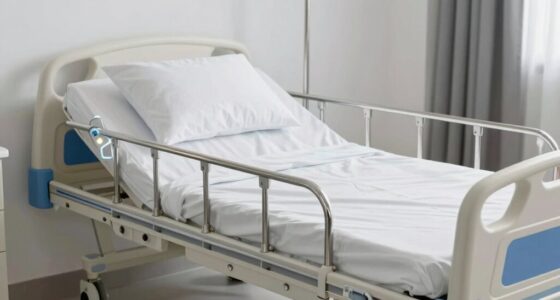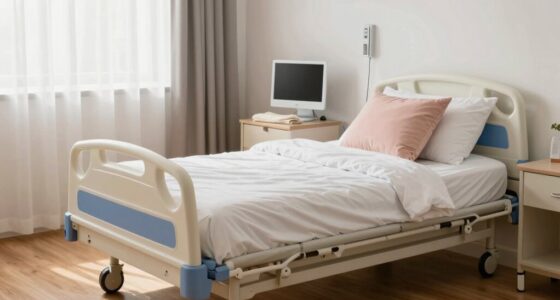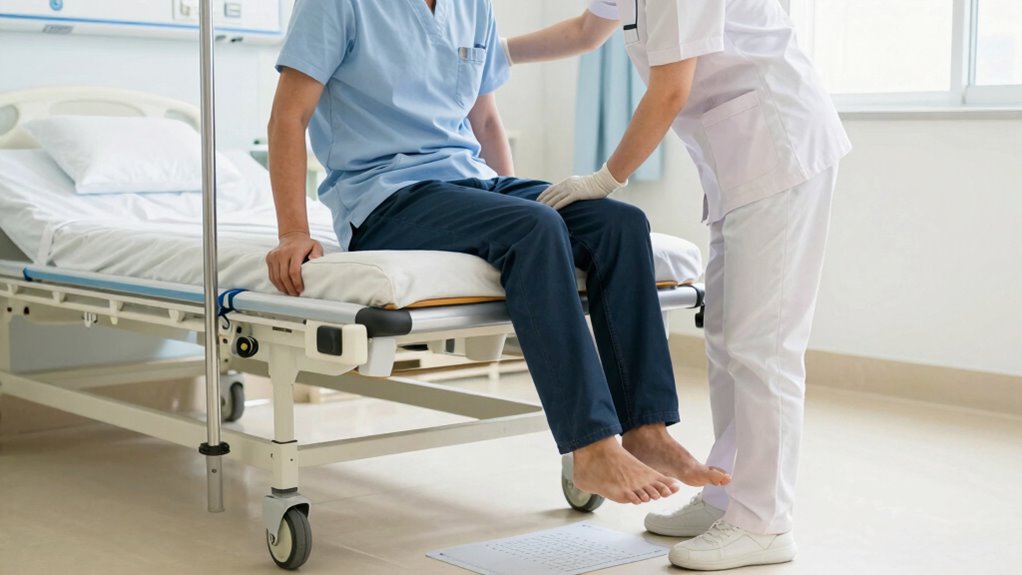

To make transfers easier around a hospital bed, you should assess your patient’s mobility and communication needs first. Use transfer equipment like slide sheets, transfer belts, or mechanical lifts to reduce effort and guarantee safety. Adjust the bed height and lock wheels to create a stable environment. Practice proper body mechanics, such as bending your knees and keeping your back straight, to avoid injury. Proper equipment maintenance and safety practices will help you transfer patients smoothly—continue for more tips.

Turn quiet afternoons into listening time
- Thousands of audiobooks, podcasts and originals
- Listen on your phone, tablet or Echo — also offline
- Cancel anytime
Key Takeaways
- Adjust the bed to a comfortable height and lock wheels to ensure stability during transfers.
- Use transfer aids like slide sheets or transfer belts to reduce friction and support safe movement.
- Communicate clearly with the patient, explaining each step to reduce anxiety and encourage cooperation.
- Maintain proper body mechanics, bending knees and using leg muscles to prevent strain.
- Check all transfer equipment for proper function before use to ensure safety and efficiency.
Have you ever wondered how healthcare providers safely move patients around a hospital bed? It’s an essential part of patient care that requires attention to detail and the right tools. Ensuring patient safety is the top priority, so using proper transfer equipment is necessary. When you understand the best techniques and equipment, you can help make transfers smoother, safer, and more comfortable for everyone involved.
Proper transfer techniques and equipment ensure safe, comfortable patient moves and enhance overall care quality.
The first step is to assess the patient’s condition and mobility level. Knowing whether they can assist with the transfer or need full support guides your approach. Always communicate clearly with the patient, explaining each step to help reduce anxiety and guarantee cooperation. Keeping the patient’s dignity intact is just as important as their safety during these transfers.
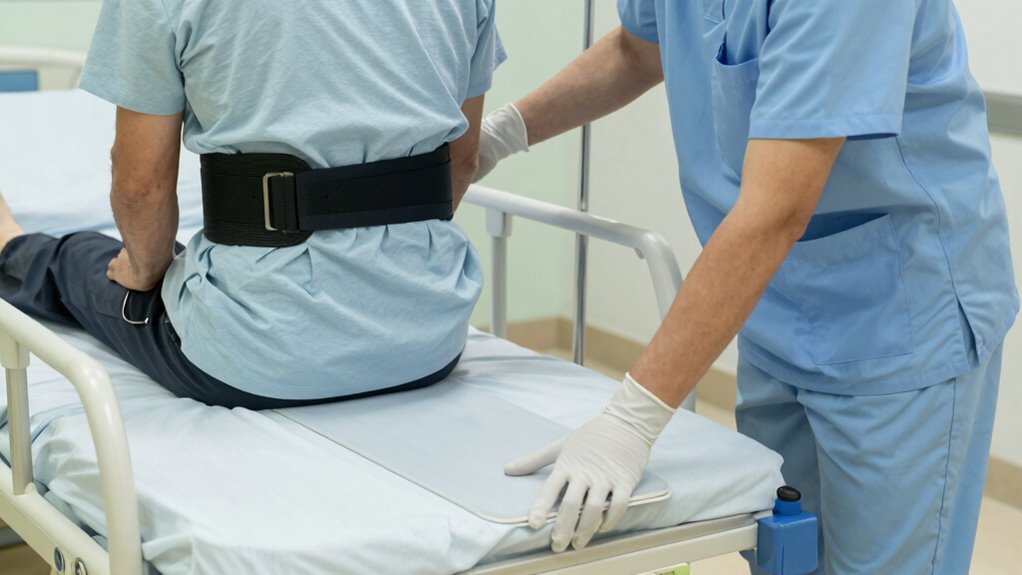
Using appropriate transfer equipment plays an important role in making the process safer and easier. For example, slide sheets help reduce friction and make it easier to reposition patients in bed. Transfer belts provide a secure grip and help patients with partial weight-bearing. Mechanical lifts, like Hoyer lifts or patient lifts, are invaluable for patients who cannot bear weight or are at risk of falls. These devices minimize physical strain on caregivers and decrease the chances of injury to both patient and staff. Always verify that the transfer equipment is in good condition and properly positioned before starting the transfer.
Positioning the patient correctly is also key. Before moving, make sure the bed is at a comfortable height for you—neither too high nor too low—to prevent strain. Lock the bed wheels so it doesn’t move unexpectedly. If you’re working with a patient who can partially assist, guide their movements gently, encouraging them to participate as much as they’re able. For patients who need full support, use transfer devices to lift or slide them safely, avoiding awkward postures that could cause injury. Additionally, understanding biodiversity principles can help healthcare providers recognize how a patient’s environment impacts their overall well-being and recovery. Incorporating safe patient handling practices in staff training further enhances safety during these transfers. Maintaining proper body mechanics and understanding transfer techniques are vital for safe patient handling.
Throughout the transfer, stay alert and maintain good body mechanics. Keep your back straight, bend your knees, and use your leg muscles to lift or pivot. Communicate with the patient during the process, giving instructions and reassurance. After completing the transfer, double-check that the patient is comfortable, properly positioned, and secure in their new setting. Properly stored and maintained transfer equipment, combined with careful technique, considerably enhances patient safety and makes the entire process more efficient. Recognizing the importance of proper equipment maintenance can prevent accidents and ensure devices function correctly when needed. When you prioritize these practices, you contribute to safer, smoother transfers around a hospital bed for everyone involved.
As an affiliate, we earn on qualifying purchases.
Frequently Asked Questions
What Safety Precautions Should I Take During Transfers?
During transfers, you should prioritize patient comfort and guarantee proper transfer planning. Always check the bed’s position and lock wheels beforehand. Communicate clearly with the patient, explaining each step to reduce anxiety. Use proper body mechanics to prevent injury, and have assistive devices ready. Keep the environment free of hazards, and never rush. These precautions help make transfers safer and more comfortable for both you and the patient.
How Do I Prevent Skin Injuries During Transfers?
To prevent skin injuries during transfers, you should prioritize skin integrity and pressure prevention. Use proper positioning techniques, like turning the patient frequently and ensuring they’re not sitting or lying on bony prominences for too long. Employ pressure-relieving devices such as cushions or pads, and move smoothly to reduce friction and shear. Regularly inspect the skin for signs of redness or breakdown, addressing issues promptly to maintain healthy skin.
What Equipment Can Assist With Transfers?
You can use transfer belts, slide sheets, and gait belts to assist with transfers. These tools help you improve transfer techniques and guarantee proper patient positioning, reducing the risk of injury. Transfer belts give you better control, while slide sheets help minimize friction during movement. Always assess the patient’s condition first, then select the equipment that best suits their needs to make transfers safer and more comfortable for both of you.
How Do I Transfer a Patient With Limited Mobility?
To transfer a patient with limited mobility, start by explaining the process to guarantee their comfort. Use proper transfer techniques, such as encouraging them to assist as much as possible and employing equipment like transfer belts or slide sheets. Maintain good body mechanics, keep the patient supported, and move slowly to prevent discomfort or injury. Always prioritize their safety and comfort throughout the transfer, making adjustments as needed.
When Should I Call for Professional Assistance?
When in doubt, it’s better to be safe than sorry. If you notice the patient’s motivation wanes or if they seem overwhelmed, call professional help. Family involvement can motivate the patient, but don’t rely on it alone for transfers with limited mobility. Seek assistance when you’re unsure about your own ability or if the transfer feels unsafe. Always prioritize safety over risking injury or discomfort.
Conclusion
Making transfers around a hospital bed can markedly improve safety and comfort for both you and your loved ones. Remember, using proper techniques and equipment reduces the risk of injury—studies show that proper transfer methods can decrease patient falls by up to 50%. By staying prepared and attentive, you guarantee smoother shifts and better care. Keep practicing these tips, and you’ll find that moving around the bed becomes easier and less stressful for everyone involved.
Fall Picks
fall essentials
As an affiliate, we earn on qualifying purchases.