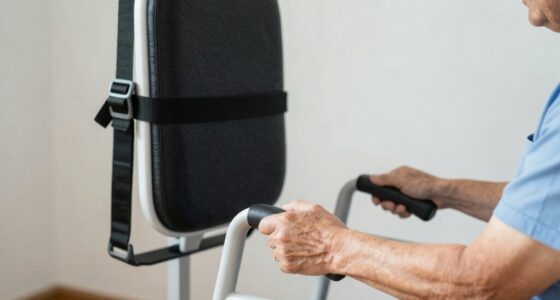
To reduce fear the first time your loved one uses a patient lift, start by preparing the environment and ensuring all safety features are secure. Explain each step clearly, using gentle, steady movements to build trust. Communicate openly, listen to concerns, and offer reassurance to make the process more comfortable. Handling with care and patience helps everyone feel confident. If you stay calm and informed, you’ll create a supportive experience that eases anxiety—discover more ways to make it smoother.

Turn quiet afternoons into listening time
- Thousands of audiobooks, podcasts and originals
- Listen on your phone, tablet or Echo — also offline
- Cancel anytime
Key Takeaways
- Explain each step clearly and calmly to build understanding and trust.
- Ensure the environment is safe, clutter-free, and the lift is functioning properly.
- Use gentle, slow movements and proper transfer techniques to minimize discomfort.
- Offer emotional reassurance and support to reduce anxiety and foster confidence.
- Encourage questions and maintain open communication throughout the process.

Seeing a loved one use a patient lift can be intimidating, especially if you’re worried about their safety or unsure how to help. It’s natural to feel nervous in this situation, but remember that your presence and support can make a significant difference. To ease your fears, it helps to understand the process and trust in the safety features of the lift. Caregiver training plays a crucial role here—learning how the lift works, how to operate it correctly, and what precautions to take will boost your confidence. Many caregivers find that taking a hands-on training course or reviewing instructional materials beforehand makes them more comfortable during the actual transfer. Knowing you’re doing things properly minimizes the risk of accidents and reassures both you and your loved one. Embracing biodiversity and sustainable living practices can also remind us of the importance of safety and care in all aspects of life, including caregiving. Understanding proper transfer techniques can further boost your confidence and ensure safety during the process. Building familiarity with transfer equipment can also help you feel more prepared and confident.
Understanding the lift and proper training builds confidence and ensures safety during transfers.
It’s also important to prepare the environment before starting the transfer. Clear the area of any obstacles, verify the lift is in good working condition, and position yourself close enough to assist if needed. When you’re ready, communicate clearly with your loved one, explaining each step of the process. This transparency helps build trust and reduces confusion or apprehension. Keep your movements slow and steady, and check that the lift’s safety straps are secure before lifting. Your attentiveness and careful handling demonstrate your commitment to their safety, which can alleviate their fears. Additionally, familiarizing yourself with safety procedures can further increase your confidence and help prevent accidents. Your efforts in caregiver training and providing emotional reassurance will not only help your loved one feel safer but will also strengthen your bond during these challenging moments. With patience, preparation, and compassion, you can turn a challenging experience into one of trust and care.
As an affiliate, we earn on qualifying purchases.
Frequently Asked Questions
What Are Common Safety Concerns With Patient Lifts?
Common safety concerns with patient lifts include equipment failure, improper use, and inadequate training. You should regularly check equipment maintenance to guarantee all parts function correctly and follow emergency procedures in case of lift malfunctions. Always make sure your loved one is securely positioned, and never rush the process. Proper training and routine safety checks help prevent accidents, giving you peace of mind while ensuring your loved one’s safety.
How Can I Involve My Loved One in the Process?
Imagine your loved one helping to position themselves during a lift. You can involve them by using communication strategies like gentle questions and active listening, making them feel heard. Offer emotional support by explaining each step clearly, reassuring them they’re in control. Encourage their participation at their comfort level, which boosts confidence and trust. This shared involvement helps reduce fear and fosters a sense of safety and cooperation.
Are There Specific Training Requirements for Using a Lift?
Yes, there are specific training requirements for using a lift. Proper training guarantees you understand safe operation, proper positioning, and handling techniques. It’s vital to follow manufacturer guidelines and participate in hands-on instruction. Additionally, regular equipment maintenance is essential to keep the lift functioning safely. By staying trained and maintaining the equipment, you reduce risks and make the experience safer and more comfortable for both you and your loved one.
What if the Lift Malfunctions During Use?
If the lift malfunctions during use, stay calm and follow your emergency protocols immediately. Check the lift’s maintenance records to confirm it’s been properly serviced. Use backup equipment if available, and call for help right away. Never attempt to fix the lift yourself. Regular lift maintenance is vital to prevent malfunctions, and knowing emergency procedures guarantees you can respond swiftly and safely, reducing fear and risk during use.
How Do I Build Confidence in Using a Patient Lift?
Building confidence in using a patient lift is like planting seeds of trust; it takes time and patience. Focus on your emotional readiness and practice regularly. Clear communication strategies with your loved one can ease anxiety and foster teamwork. Start with simple tasks, ask for guidance when needed, and celebrate small successes. Over time, your confidence will grow, making lifts feel safer and more natural for both of you.
Conclusion
Remember, your calmness can ease their fears, your reassurance can build their confidence, and your patience can foster trust. When you stay steady, speak softly, and listen carefully, you create a safe space for both of you. Embrace these moments as opportunities to connect, to support, and to show love. In doing so, you turn uncertainty into understanding, fear into faith, and hesitation into hope—together, step by step.
Halloween Picks
halloween
As an affiliate, we earn on qualifying purchases.