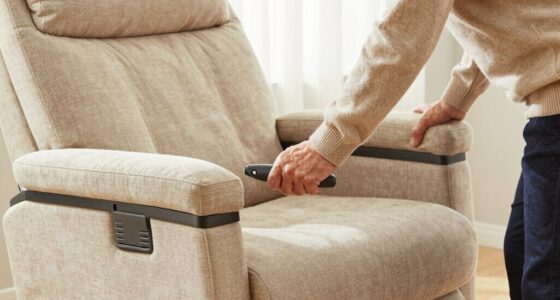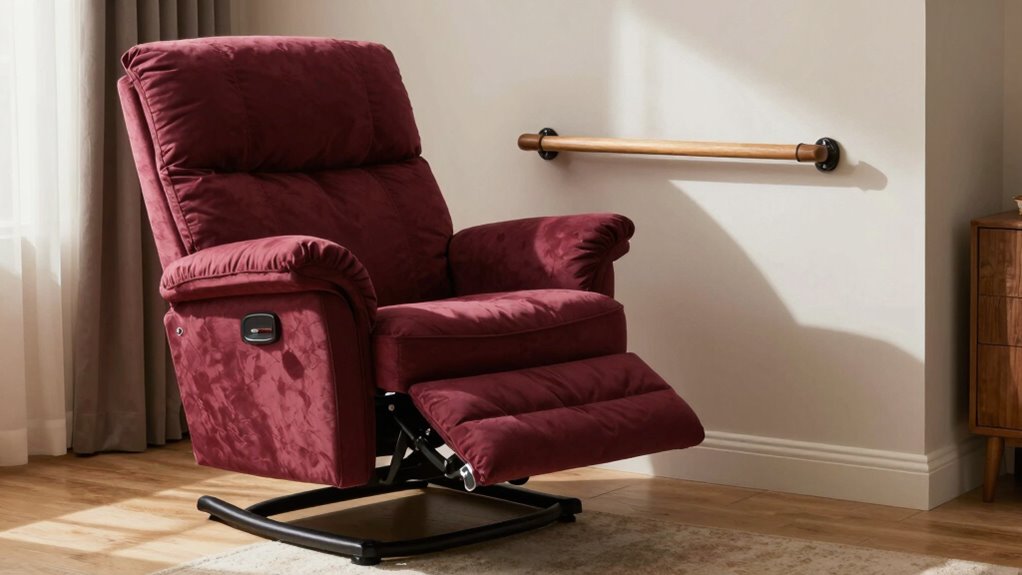

Lift chairs help you more than grab bars because they actively assist your loved one in standing or sitting smoothly, reducing physical effort and lowering your risk of injury. They provide controlled, steady lifts with safety features that prevent slips and falls. Unlike grab bars, lift chairs promote independence, confidence, and safety during transfers. If you want to discover how these features improve your caregiving, keep exploring what makes lift chairs a better support option.

Get comfort and care essentials delivered free — and shop member deals
- Fast, free delivery on millions of items
- Access to Prime Big Deal Days deals on October 6–7
- Prime Video, Amazon Music and more included
Key Takeaways
- Lift chairs actively assist with smooth, controlled transfers, reducing the physical effort required by caregivers.
- They provide safer, more stable support than grab bars, decreasing fall and injury risks during mobility.
- Lift chairs minimize caregiver strain by reducing manual lifting, preventing long-term musculoskeletal injuries.
- They promote user independence, allowing individuals to move with less assistance and boosting confidence.
- Proper training on lift chair operation ensures safety and maximizes their support benefits over static grab bars.
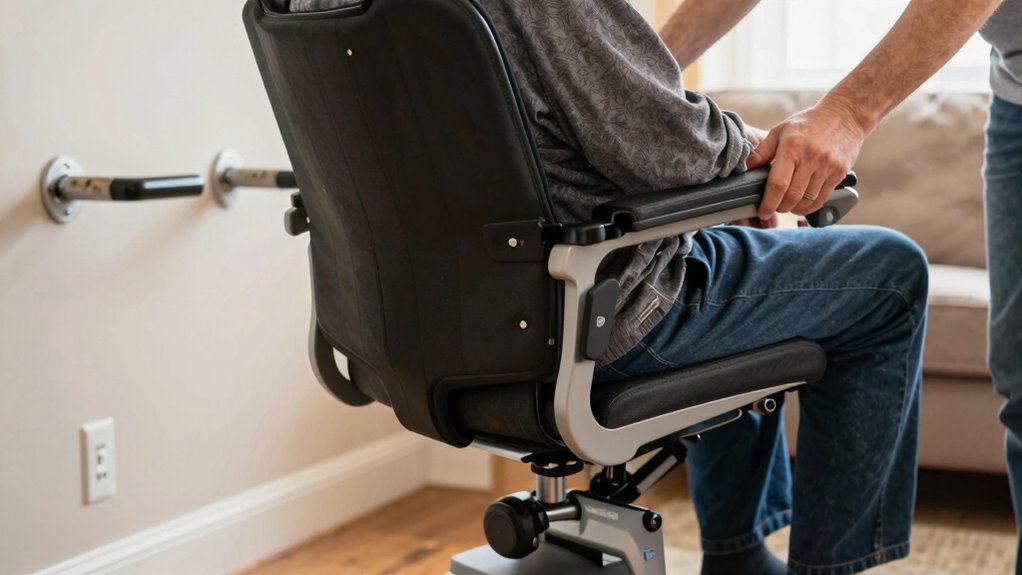
When caring for someone with mobility challenges, lift chairs often provide more practical assistance than grab bars. While grab bars are useful for providing stability, they don’t actively assist with movement. Lift chairs, on the other hand, are designed to help your loved one transition smoothly between sitting and standing. This functionality can significantly reduce your physical effort and protect you from muscle strain. Instead of pulling or supporting someone manually, you can rely on the lift mechanism to do the heavy lifting, which makes the process safer for both of you.
Lift chairs provide safer, easier mobility assistance, reducing caregiver strain compared to traditional grab bars.
Muscle strain is a common concern for caregivers who frequently assist with mobility. When you lift or support someone manually, you risk injuring your back, shoulders, or arms. Over time, repetitive strain can lead to chronic pain or even long-term injuries. Lift chairs eliminate much of this risk because they are engineered to lift the user gently and steadily. By pressing a button, you can elevate your loved one to a standing position without exerting yourself physically. This not only preserves your strength but also ensures that your loved one remains stable and secure during the transfer.
Safety enhancement is another critical factor that makes lift chairs particularly advantageous. Grab bars, although helpful, require your loved one to have enough upper body strength and balance to use them effectively. Many individuals with severe mobility challenges or weakness may find grab bars insufficient or even unsafe, as they can slip or be used improperly. Lift chairs provide a controlled and steady lift, giving both of you peace of mind. They reduce the risk of falls during transitions, which can be especially dangerous for elderly or frail individuals. Additionally, because lift chairs are designed with safety features such as secure locking mechanisms and smooth operation, they offer an extra layer of protection that grab bars can’t match. Incorporating mobility aids like lift chairs can also help promote confidence and encourage more independent movement for your loved one. Using assistive technology like lift chairs can also make caregiving less physically demanding and more efficient. Proper ergonomic design in lift chairs ensures that both the user and caregiver experience enhanced comfort and safety during transfers. Furthermore, lift chairs contribute to mobility independence, allowing your loved one to perform transfers with less assistance and fostering a sense of autonomy. In essence, lift chairs serve as an active aid that reduces the physical toll on you and enhances safety for your loved one. They assist with mobility more directly and reliably than grab bars, especially for those with limited strength or balance. By investing in a lift chair, you’re not just making everyday transfers easier—you’re actively preventing muscle strain and creating a safer environment. This helps you maintain your own health and wellbeing while providing the best possible care for someone who needs assistance. Additionally, proper training on how to use lift chairs can further maximize their safety and benefits for both caregivers and users.
As an affiliate, we earn on qualifying purchases.
Frequently Asked Questions
Are Lift Chairs Suitable for All Mobility Levels?
Lift chairs are suitable for many mobility levels, but not all. You should consider an alternative seating option if a mobility assessment shows limited strength or balance. They’re ideal for those who struggle with standing or sitting, yet not for individuals who require full support or have severe mobility impairments. Always consult a healthcare professional to determine if a lift chair fits your specific needs and mobility capabilities.
How Much Do Lift Chairs Typically Cost?
Ever wonder how much a lift chair costs? Generally, they range from $300 to over $1,000. Are you getting what you pay for? Price comparison helps you find budget options that fit your needs without overspending. Basic models are more affordable, but premium features add to the cost. Consider your loved one’s needs and your budget to choose the right lift chair, balancing affordability and comfort.
Can Lift Chairs Be Customized for Individual Needs?
Yes, lift chairs can be customized for your individual needs. You can enjoy personalized adjustments like customizable recline positions, adjustable footrests, and ergonomic customization to guarantee maximum comfort and support. Many models offer features tailored to specific health requirements, making them ideal for users with unique mobility challenges. This customization helps you feel more secure and comfortable, easing the caregiving process and enhancing your overall quality of life.
Do Lift Chairs Require Special Maintenance?
Lift chairs do require some special maintenance. You should regularly check the cleaning requirements to keep the upholstery in good condition and prevent dust buildup. Mechanical inspections are also essential to guarantee the lifting mechanism operates smoothly and safely. Keep an eye on the motor and moving parts, and follow the manufacturer’s maintenance guidelines. Proper upkeep helps extend your lift chair’s lifespan and guarantees safe, reliable use.
Are Lift Chairs Covered by Insurance or Medicare?
Lift chairs may be covered by insurance or Medicare if they’re deemed medically necessary. Medicare Part B can sometimes cover the cost if your doctor certifies the chair as essential for mobility or health reasons. Insurance coverage varies, so you should check with your provider. To qualify, you typically need to meet Medicare eligibility requirements and obtain a prescription or letter of medical necessity from your healthcare provider.
Conclusion
So, next time you’re juggling a loved one’s needs, consider a lift chair—it’s like having your own personal superhero without the cape. Forget about those stubborn grab bars that seem more decorative than helpful. Lift chairs actually do the heavy lifting (literally), making your life easier and your loved one safer. Who knew that one simple upgrade could turn you from a struggling caregiver into a semi-professional ninja? Now, that’s a power move.
Fall Picks
fall essentials
As an affiliate, we earn on qualifying purchases.