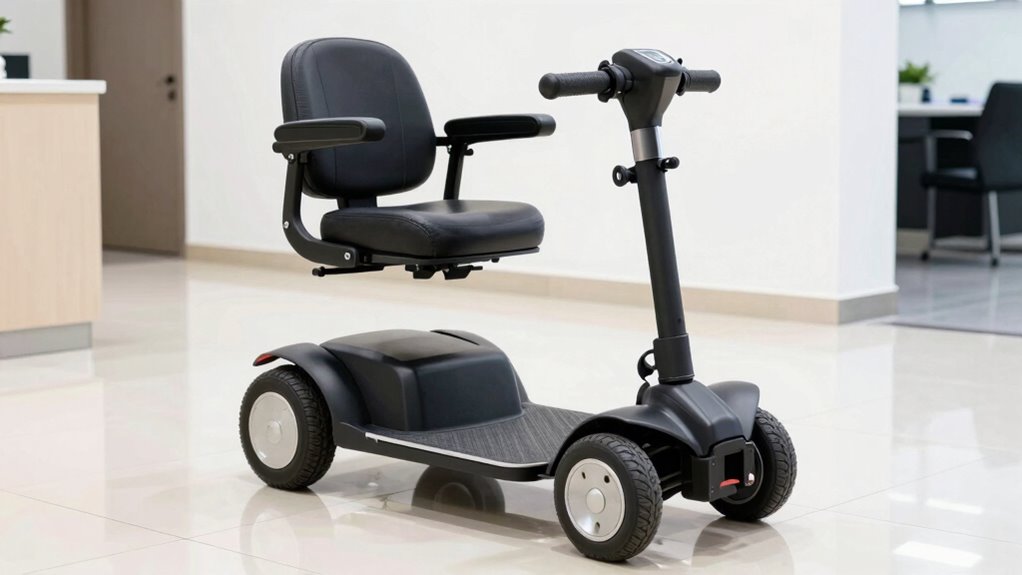

For indoor use, compact and lightweight mobility scooters are your best choice. Look for models with a small footprint, tight turning radius, and easy-to-use controls to navigate narrow hallways and doorways effortlessly. Features like adjustable height, smooth suspension, and responsive brakes boost safety and comfort. Choosing the right size and power for your indoor space guarantees easier maneuverability. To discover more about selecting the perfect indoor scooter, keep exploring the key features and tips tailored for your home environment.
Key Takeaways
- Compact, lightweight designs with narrow turning radii ensure easy navigation through tight indoor spaces and doorways.
- Folding or detachable models enhance portability and storage in limited indoor areas.
- Responsive steering and stable bases improve safety and maneuverability around furniture and obstacles.
- Features like adjustable seats and smooth suspension increase comfort during extended indoor use.
- Smaller power and size options are ideal for confined spaces, while maintaining sufficient control for indoor terrain.
What Makes a Good Indoor Mobility Scooter?
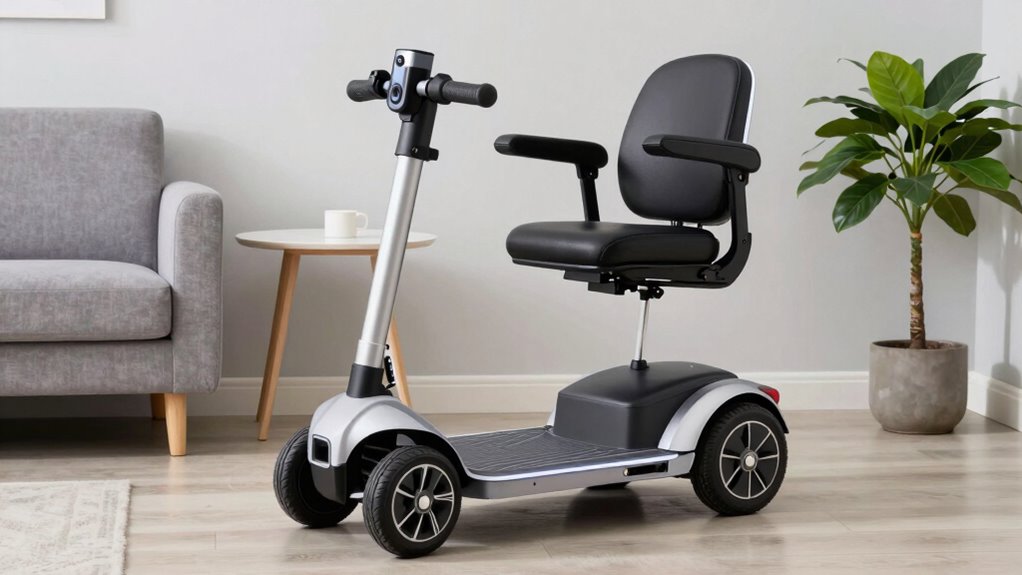
Indoor mobility scooters need to be lightweight and compact to navigate tight spaces easily. Prioritizing indoor safety is essential, so look for scooters with stable bases and responsive brakes to prevent accidents. User comfort is equally important; features like cushioned seats, adjustable armrests, and smooth-ride suspension help reduce fatigue and provide a pleasant experience. A good indoor scooter should have easy-to-use controls, allowing you to maneuver effortlessly around furniture and narrow hallways. Compact size ensures you don’t bump into obstacles or struggle in confined areas. Free Floating should also be considered when assessing the overall design, as it can influence stability and ease of movement. Incorporating ergonomic controls can further enhance user comfort and safety. Additionally, considering overall design helps ensure the scooter’s compatibility with various indoor environments. Understanding stability features is crucial for ensuring safety and confidence during indoor use. An awareness of indoor terrain can help you select a scooter suited to typical surfaces found inside the home. Overall, the best indoor mobility scooter offers a balance of safety, comfort, and maneuverability, making your daily activities safer and more comfortable while maintaining independence indoors.
What Types of Indoor Scooters Are Available?
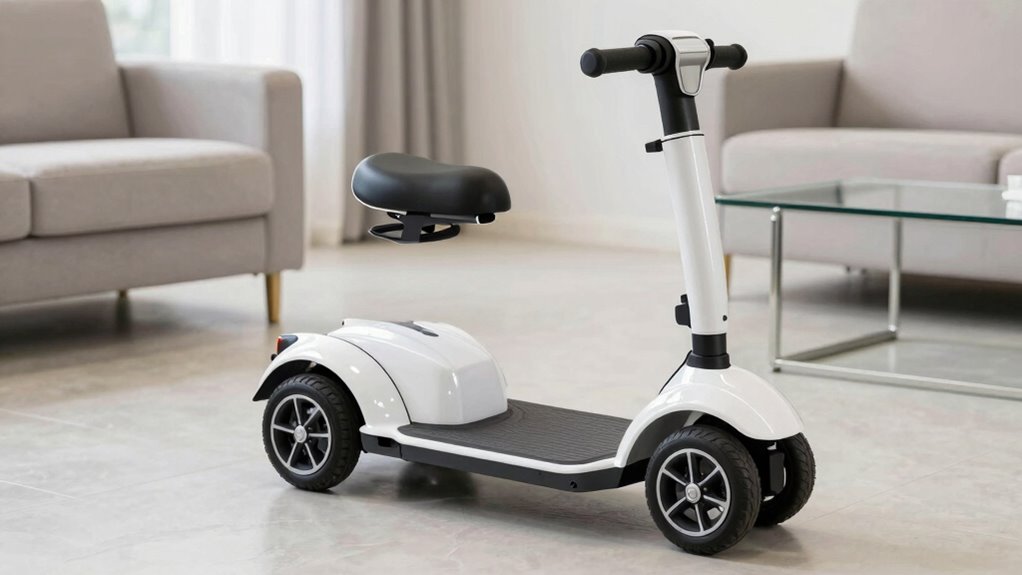
Indoor scooters come in compact designs that easily fit through tight spaces and doorways. They feature maneuverability options like tight turning radii and responsive steering to help you navigate your home confidently. These features guarantee you stay mobile and independent indoors. For example, some models are specifically designed to accommodate complex home layouts, ensuring smooth navigation even in challenging spaces. Understanding air-based cooking fundamentals can also inform how you organize your space for optimal scooter use and safety. Additionally, choosing a scooter with total-cost clarity ensures you can plan for maintenance and ongoing expenses effectively. Incorporating simple organizational strategies can further enhance your ability to maintain a clutter-free environment that supports safe scooter use. To maximize your indoor mobility, selecting a scooter with expert guidance can help you make informed decisions tailored to your specific needs.
Compact Design Options
When choosing a mobility scooter for indoor use, compact design options are essential for maneuvering tight spaces and narrow hallways. These scooters often feature a folding design, allowing you to easily collapse and store them when not in use. Lightweight materials make handling and transportation effortless, whether you’re lifting the scooter into a vehicle or traversing crowded rooms. You can select from various styles tailored for indoor environments, focusing on size and portability. Here’s a quick comparison:
| Feature | Benefits | Suitability |
|---|---|---|
| Folding design | Simplifies storage and transport | Travel and storage |
| Lightweight materials | Easier to lift and maneuver | Indoor use, portability |
| Compact size | Navigates tight spaces | Small apartments, hallways |
Additionally, considering compact design helps optimize your mobility within confined areas, ensuring safety and ease of use. Recognizing the importance of indoor maneuverability can further aid in selecting the most suitable scooter for your needs. Moreover, selecting a suitable turning radius is crucial for navigating sharp corners indoors effectively. Being aware of engineering and craftsmanship can also ensure you choose a durable and reliable model that meets your everyday needs.
Indoor Maneuverability Features
Choosing the right mobility scooter for indoor use means focusing on features that enhance maneuverability in confined spaces. Look for models designed with narrow turning capabilities to easily navigate tight corners and crowded rooms. These scooters typically have a small footprint, allowing you to maneuver through narrow aisles and doorways effortlessly. If your indoor space has a low ceiling, select a compact scooter with a low profile to avoid bumping into fixtures or lighting. Some models feature a tight turning radius, making them ideal for limited spaces. By prioritizing these indoor maneuverability features, you’ll gain better control and confidence while moving around your home. The right scooter will help you maintain independence without sacrificing comfort or safety in your indoor environment.
What Features Should I Look for in an Indoor Scooter?

To navigate tight spaces comfortably, you’ll want an indoor scooter with a compact design that’s easy to maneuver. Look for models with customizable seat options so you can find the most comfortable fit for your needs, especially if you’ll be sitting for extended periods. Terrain adaptability is also important; even indoors, uneven surfaces or thresholds can pose challenges. Choose a scooter with features like smooth suspension or adjustable height to handle different floor types and small obstacles. Consider ease of control, such as simple steering and responsive brakes, to enhance safety and confidence. Lightweight construction and a tight turning radius make indoor navigation more effortless. Prioritizing these features helps guarantee your scooter is both comfortable and practical for indoor use, supporting your ergonomic needs and overall well-being. Additionally, selecting a model with compact size can further improve maneuverability in confined spaces. For optimal safety, look for models with easy-to-use controls and reliable braking systems to prevent accidents. Ensuring the scooter has Terrain adaptability features also contributes to smoother indoor operation, especially on varied surfaces. Incorporating AI-assisted navigation features can further enhance safety and ease of use in complex indoor environments.
Which Indoor Scooter Size and Power Are Right for My Home?
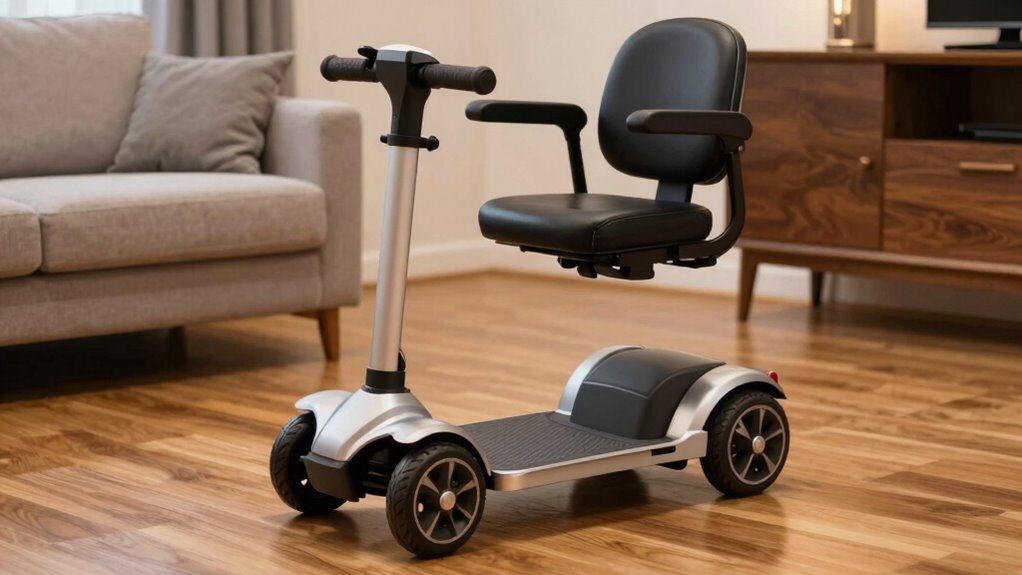
Finding the right indoor scooter size and power depends on your home’s layout and your mobility needs. Start by measuring your indoor spaces to determine suitable indoor scooter dimensions. Smaller scooters with compact frames easily navigate tight corners and narrow hallways, making them ideal for limited spaces. Consider the power requirements for small spaces—most indoor scooters have lower horsepower, which provides sufficient mobility without sacrificing maneuverability. If your home has wider doorways or open areas, you might opt for a slightly larger model with more power for added stability. Remember, a scooter that’s too large or underpowered can be cumbersome indoors, while one that’s too small might struggle with uneven floors or heavier loads. Match size and power to ensure smooth, safe indoor mobility. Understanding drone insights can also help you make informed choices about mobility device specifications, home terrain, and their suitability for your environment. Additionally, considering indoor terrain can improve your overall experience and safety. Being aware of indoor space constraints can help prevent choosing a scooter that’s difficult to maneuver in your specific environment.
How Do I Choose the Best Indoor Mobility Scooter for My Needs?
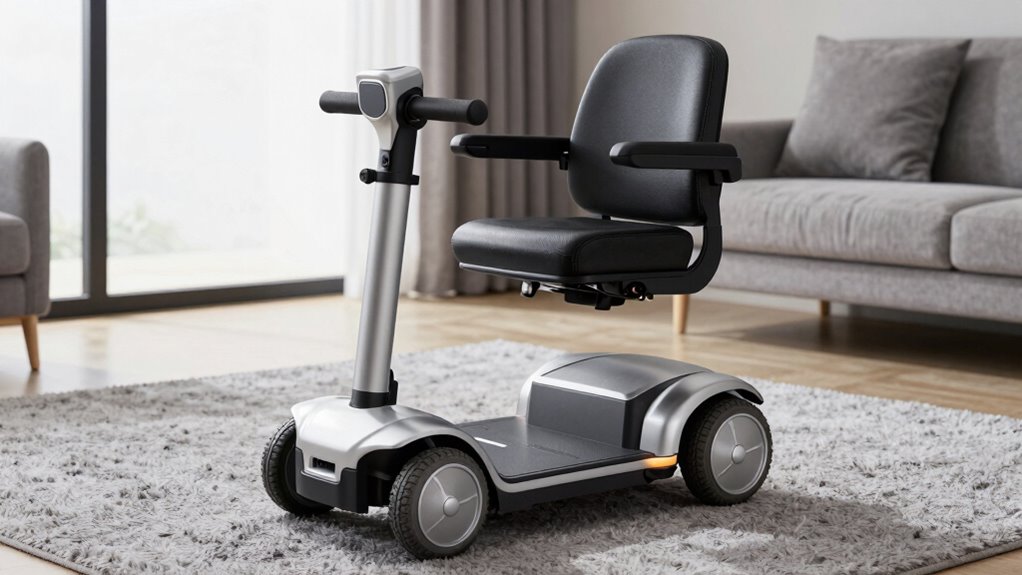
Selecting the right indoor mobility scooter involves evaluating your specific mobility needs and daily routines. Consider how you’ll use the scooter and what features matter most. For example, if you need easy parking solutions, look for models with compact designs and tight turning radius. Outdoor compatibility is also important if you plan to use it outside occasionally. To choose the best scooter, think about:
- Your daily activity level and mobility challenges
- The scooter’s size and maneuverability
- Battery life and charging needs
- Compatibility with your indoor space and outdoor use
- ergonomics and layout that support comfortable and efficient workspaces for daily use. Additionally, exploring modern mobility features can enhance your overall experience and usability.
Tips for Maintaining Your Indoor Scooter
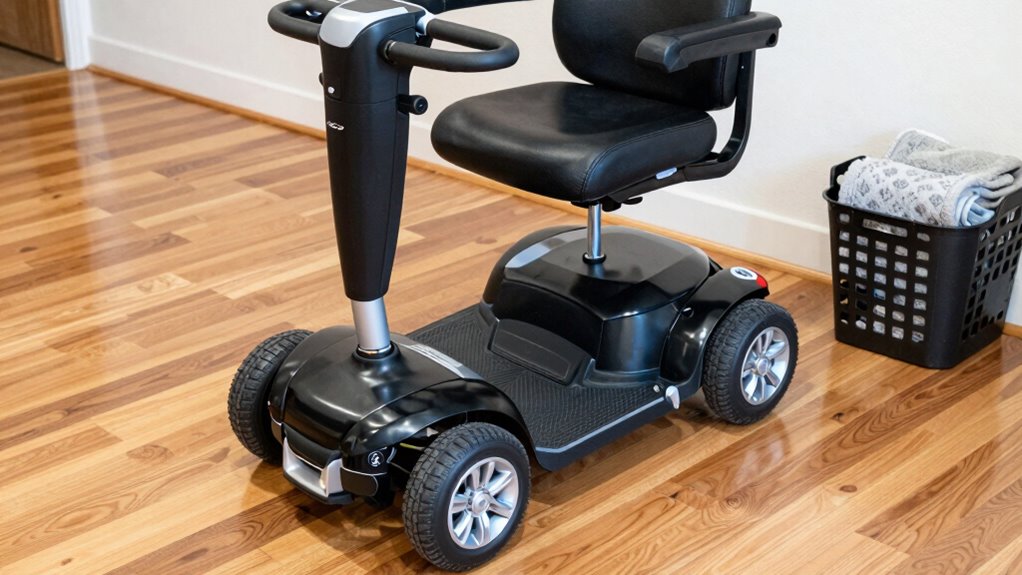
Keeping your indoor scooter in top shape is essential for safety and longevity. Make sure to regularly charge and inspect the battery, and clean the scooter to prevent dust buildup. These simple maintenance habits keep your scooter running smoothly and reliably.
Battery Maintenance Tips
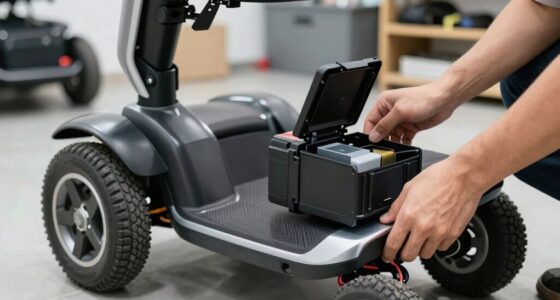
Proper battery maintenance is essential to guarantee your indoor mobility scooter performs reliably and lasts longer. To maximize battery longevity, follow charging best practices, such as charging fully before use and avoiding overcharging. Regularly inspect your battery for corrosion or damage, and keep terminals clean. Store your scooter in a cool, dry place to prevent excessive heat or cold from affecting the battery.
Remember these tips:
- Charge the battery after each use, even if it’s not completely drained
- Avoid letting the battery completely discharge before recharging
- Use the charger provided by the manufacturer for ideal results
- Check the battery’s condition periodically to catch issues early
Adhering to these practices helps extend your scooter’s battery life and ensures dependable performance.
Regular Cleaning Procedures
Regular cleaning is essential to keep your indoor mobility scooter in top condition and guarantee safe operation. Regularly wipe down the scooter with appropriate cleaning solutions to remove dust, dirt, and debris. Pay special attention to the floor surface, as dirt buildup can affect maneuverability. Use a soft cloth or mop suited for your flooring type, whether it’s tile, carpet, or hardwood. Avoid harsh chemicals that could damage surfaces or electronics. Here’s a quick guide:
| Floor Surface | Cleaning Solution | Tips |
|---|---|---|
| Tile | Mild soap & water | Rinse thoroughly |
| Carpet | Vacuum regularly | Use gentle cleaner if needed |
| Hardwood | Damp cloth | Dry immediately |
Consistent cleaning prolongs your scooter’s lifespan and ensures safe, smooth indoor rides.
FAQs About Indoor Mobility Scooters

Are indoor mobility scooters a practical solution for maneuvering tight spaces? Absolutely! They’re designed to navigate narrow hallways, small rooms, and crowded areas with ease. Many models offer excellent travel compatibility, making them convenient for trips indoors or even short outdoor excursions. When considering indoor use, ask about outdoor accessories that enhance versatility or storage options.
Here are some common FAQs:
- Can I use my indoor scooter outdoors? Yes, if it has suitable outdoor accessories.
- How easy is it to transport? Most are lightweight and foldable for travel.
- What’s the battery life? It varies, so choose one matching your daily needs.
- Are they comfortable for long periods? Many models include padded seats and adjustable features.
Frequently Asked Questions
How Long Do Indoor Mobility Scooters Typically Last on a Single Charge?
Indoor mobility scooters typically last around 8 to 12 miles on a single charge, depending on battery longevity and rider weight. You can expect the charging duration to be about 4 to 8 hours for a full recharge. To maximize battery life, avoid letting the battery fully deplete frequently and keep the charger plugged in when not in use. Proper maintenance guarantees your scooter stays reliable and ready whenever you need it.
Are Indoor Scooters Suitable for Users With Limited Upper Body Strength?
Are indoor scooters suitable if you have limited upper body strength? It depends. Some models are designed with enhanced maneuverability and easier controls, making them more accessible for users with weaker upper bodies. However, you might still struggle with certain maneuvers. If you want confidence and independence, look for a scooter with intuitive controls and lightweight design. Don’t settle—choose a model that truly matches your needs for seamless indoor navigation.
Can Indoor Scooters Be Easily Stored When Not in Use?
Indoor scooters are designed for easy storage thanks to their portability features. You can quickly fold or disassemble them, making storage solutions simple even in small spaces. Their lightweight construction allows you to carry or slide them into closets, corners, or car trunks without hassle. With these features, you won’t struggle to find a convenient spot for your scooter when it’s not in use, ensuring it stays protected and out of the way.
What Is the Typical Weight Capacity of Indoor Mobility Scooters?
Indoor mobility scooters typically have weight limits around 250 to 300 pounds, depending on the model. You should consider the battery life, as it impacts how long you can use the scooter without recharging. Make sure to choose a scooter that supports your weight comfortably and offers sufficient battery life for your daily needs, ensuring safe and reliable indoor mobility.
Are Indoor Scooters Safe to Use on Different Types of Flooring?
Imagine you’re maneuvering a sleek indoor scooter across hardwood and tile floors. Indoor scooters are generally safe on various flooring types if you consider flooring compatibility and safety considerations. They’re designed with smaller wheels and a tight turning radius, making them suitable for smooth surfaces. However, avoid thick carpets or uneven surfaces to prevent slipping or damage. Always check your scooter’s specifications and test it on different floors to guarantee safe, smooth rides indoors.
Conclusion
Choosing the right indoor mobility scooter is like finding the perfect key to unseal your independence. By understanding your needs, considering size and features, and maintaining your scooter, you’ll enjoy smoother journeys inside your home. Think of your scooter as a trusted companion, gently guiding you through daily adventures with confidence and ease. With the right choice, you’ll embrace each day with renewed freedom—your home’s aisles transforming into pathways of empowerment.