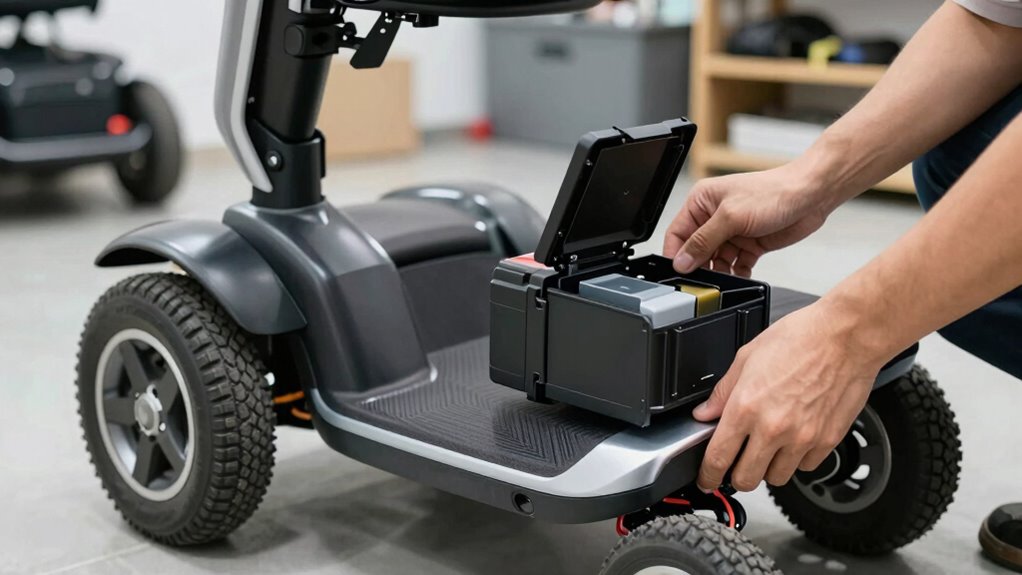

As a caregiver, it’s key to regularly check your scooter’s battery, tires, and electrical parts to guarantee safety and reliability. Keep batteries charged following manufacturer instructions, inspect tires for wear and proper inflation, and clean electrical components safely by turning off the scooter first. Stay vigilant for signs of trouble like unusual noises or power issues. By understanding proper maintenance routines, you can keep your scooter running smoothly—so continue exploring to learn more essential tips.
Key Takeaways
- Regularly check and clean batteries and terminals to ensure safety and longevity.
- Monitor tire pressure and tread depth to maintain optimal traction and prevent accidents.
- Turn off the scooter before inspecting electrical components; disconnect power to avoid shocks.
- Follow manufacturer guidelines for charging and avoid overcharging to preserve battery health.
- Schedule professional maintenance for complex issues like motor or electrical system repairs.
Getting Started: Essential Maintenance Tips for Your Scooter
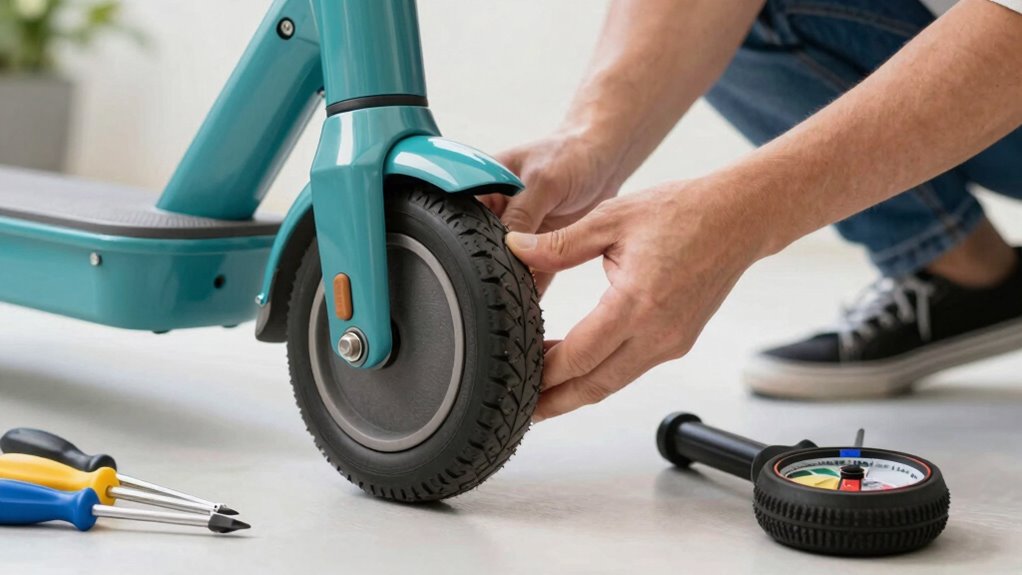
To keep your scooter running smoothly, it’s important to start with basic maintenance habits. Checking your battery health regularly ensures your scooter stays reliable, especially before long trips. Keep an eye out for corrosion or loose connections, and charge it according to the manufacturer’s instructions. Proper tire replacement is equally crucial; worn or under-inflated tires can compromise safety and efficiency. Inspect your tires routinely for signs of wear or damage, and replace them when necessary. Maintaining good tire condition improves stability and prolongs the life of your scooter. Establishing these simple routines helps prevent breakdowns and ensures your scooter remains dependable for everyday use. Consistent attention to battery health and tire condition forms the foundation of effective scooter maintenance. Additionally, understanding projector contrast ratio can help optimize your viewing experience, especially if you use your scooter for entertainment or presentations. Regularly checking your scooter’s manufacturer’s guidelines also helps ensure all components are functioning as intended and can extend the lifespan of your vehicle. Incorporating routine inspections and modern diagnostic tools can further identify potential issues early on, especially when combined with reliable maintenance practices that can detect hidden problems before they become serious.
How to Check and Keep Your Scooter’s Battery in Top Shape

Keeping your scooter’s battery in top shape requires regular checks to catch issues early. Start by inspecting the battery’s overall health, looking for signs of corrosion or loose connections. Confirm the terminals are clean and tight, which helps maintain ideal performance. Always follow charging safety guidelines—use the correct charger and avoid overcharging, as this can damage the battery. Check the battery’s water levels if it’s a flooded lead-acid type; keep them topped up with distilled water if needed. Regularly charging the battery before it fully discharges helps prolong its lifespan. Additionally, monitoring battery performance can help identify potential problems before they become serious. Proper battery maintenance includes cleaning terminals and inspecting for leaks, which can prevent unexpected failures. Incorporating preventative care practices can further extend the life of your battery and ensure consistent performance. Remember, a well-maintained battery not only improves your scooter’s reliability but also ensures safety during use. Practicing proper charging techniques can significantly extend your battery’s life and efficiency. Monitoring battery health and practicing charging safety are essential for smooth, dependable rides. Proper maintenance practices are key to extending your scooter’s battery life and ensuring safe operation.
Maintaining Tires: How to Keep Them Properly Inflated and Tread Healthy
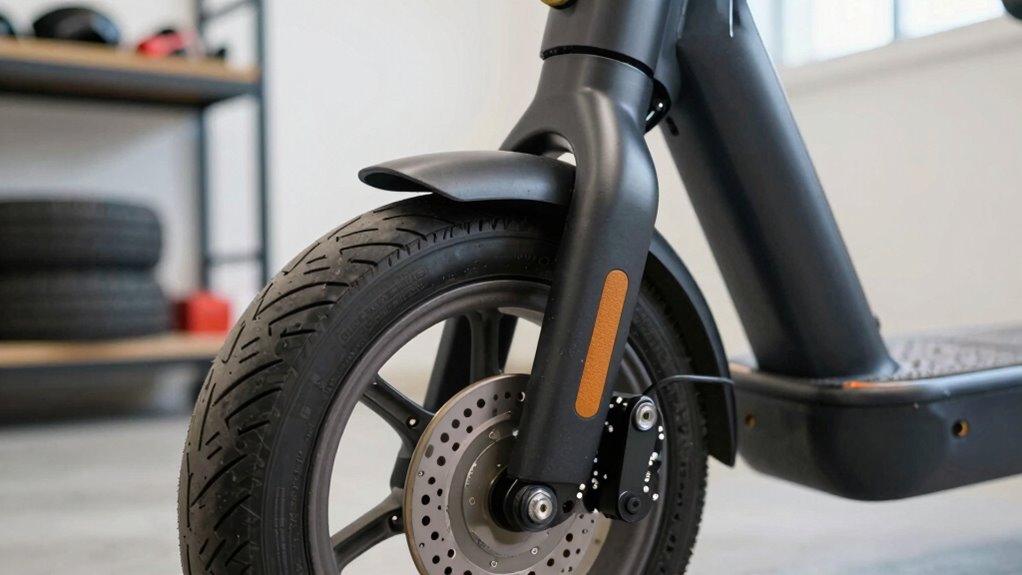
Keeping your scooter’s tires properly inflated is essential for safety and smooth rides. You should check the tire pressure regularly to prevent under- or over-inflation, which can cause damage or reduce efficiency. Additionally, inspecting the tread depth guarantees your tires have enough grip and are safe for use. Regular maintenance services can help identify issues early and keep your tires in optimal condition. Incorporating tire rotation into your routine can also promote even wear and extend the lifespan of your tires. For added safety, consider climate-specific tire checks, especially when traveling in extreme weather conditions. Using AI-powered tools to monitor tire health can further enhance safety and maintenance accuracy. Understanding tire science helps you choose the best tires for different environments and ensures proper care.
Checking Tire Pressure Regularly
Regularly inspecting your scooter’s tire pressure is essential to ensure a smooth and safe ride. Proper inflation pressure helps prevent uneven tire wear and maintains ideal handling. Use a reliable pressure gauge to check each tire’s pressure at least once a month, ideally before rides. If you notice any tires are under-inflated, add air to meet the manufacturer’s recommended pressure. Remember, tire rotation isn’t necessary for scooters, but keeping tires properly inflated extends their lifespan. Consistently monitoring tire pressure reduces the risk of flats and improves safety. Don’t forget to check pressure after long periods of inactivity, as tires can lose air over time. Staying on top of these basics keeps your scooter running smoothly and minimizes maintenance issues.
Inspecting Tread Depth
Since worn treads can compromise your scooter’s grip and safety, it’s important to inspect their depth regularly. Check the tread wear to see if it’s becoming shallow or uneven. Use a tread depth gauge or a simple coin test—insert a coin into the tread; if it’s difficult to see the design or the depth is less than 2/32 inch, it’s time to replace the tire. Proper tread depth guarantees maximum traction, especially on wet or uneven surfaces. Regular inspection helps you catch early signs of excessive tread wear before it affects performance or safety. Keep a routine to monitor tread wear, and don’t ignore shallow tread depth, as it can lead to slipping or loss of control. Maintaining proper tread depth keeps your scooter safe and reliable. Additionally, understanding tire maintenance practices can extend the lifespan of your tires and enhance overall safety. Being aware of reconditioning techniques can also help you make informed decisions about tire repairs or replacements, ensuring your scooter remains in optimal condition. Incorporating regular cleaning of tires can prevent the buildup of debris and deterioration, further prolonging tire life. Regularly practicing preventive maintenance can further improve your scooter’s longevity and performance.
How to Inspect and Clean Electrical Components Safely
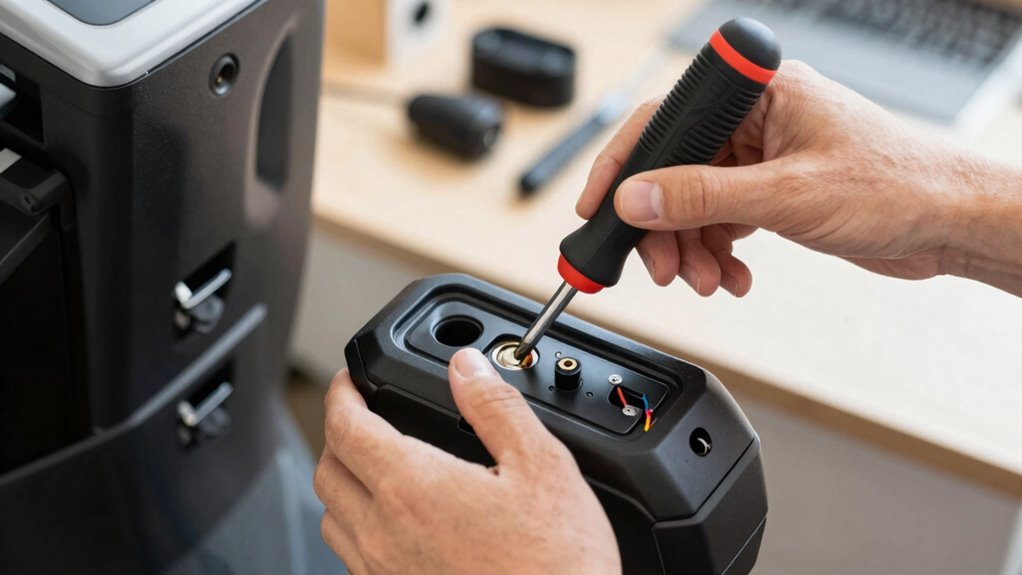
Before inspecting or cleaning your scooter’s electrical parts, make sure to turn it off completely. Use the right tools, like a soft brush or damp cloth, to prevent damaging sensitive components. Taking these steps helps keep you safe and ensures your scooter stays in good working order. Additionally, proper maintenance practices can help avoid costly repairs and extend the lifespan of your scooter. Incorporating smart home technology such as automated alerts or remote diagnostics can further enhance your maintenance routine. Regularly monitoring your scooter’s battery health can also prevent unexpected failures and optimize performance. Utilizing inspection techniques tailored for electrical systems can identify potential issues early and maintain your scooter’s reliability. Understanding the why behind maintenance steps can empower caregivers to perform effective upkeep and ensure safety.
Power Off Before Inspection
To safely inspect and clean electrical components on a scooter, always power it off first. Turning off the scooter is essential for battery safety and prevents accidental electrical shocks. Before beginning any electrical troubleshooting, disconnect the power to avoid short circuits or damage. Ensuring the scooter is completely powered down also minimizes the risk of moving parts causing injury. Remember to remove the key and wait a few moments for residual power to dissipate. This simple step protects both you and the scooter’s delicate electrical systems. Always follow manufacturer instructions for turning off your specific model. By taking this precaution, you create a safe environment for inspection and cleaning, reducing the risk of damage and ensuring your scooter remains in good working condition. Incorporating energy-efficient technologies can also enhance the safety and sustainability of your scooter’s electrical components. Additionally, understanding vetted maintenance practices can help prolong the life of your scooter and prevent costly repairs.
Use Proper Cleaning Tools
Using the right cleaning tools is essential for inspecting and maintaining electrical components safely. Proper cleaning supplies prevent damage and guarantee thorough disinfecting. Always use soft brushes or microfiber cloths to remove dust and dirt without scratching surfaces. For stubborn grime, a slightly damp cloth with gentle cleaning solutions works best—avoid excessive moisture. Disinfecting methods should include alcohol-based wipes or sprays, which kill germs without harming electronics. Remember to unplug the scooter before cleaning and never spray directly onto electrical parts. Keep tools like compressed air cans handy for blowing out debris in hard-to-reach areas. Regularly inspecting and cleaning electrical components with appropriate supplies helps prolong your scooter’s lifespan and assures safe operation.
Best Practices for Charging Your Scooter Without Worry
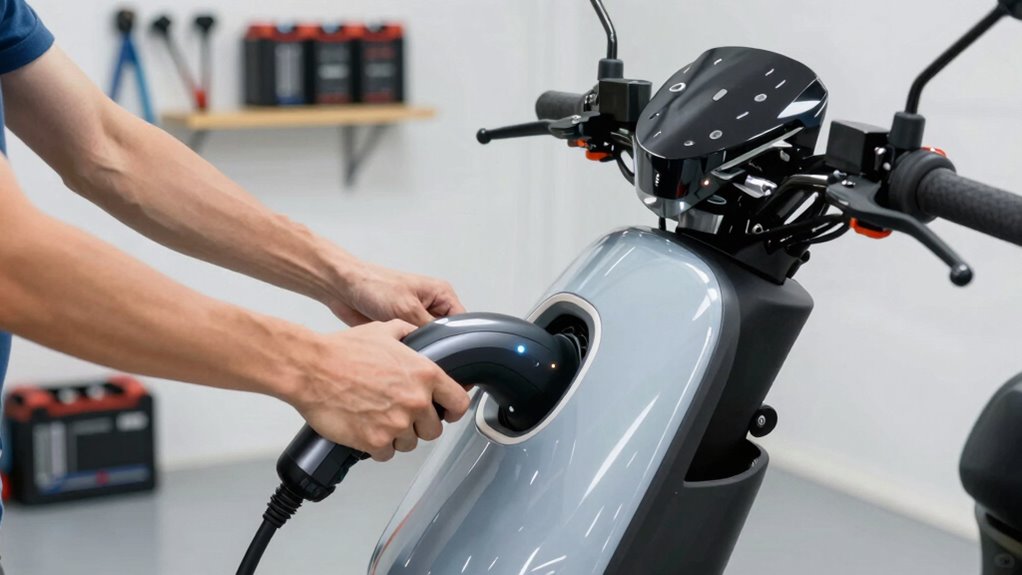
Charging your scooter properly is essential to make sure it remains reliable and ready when you need it. To guarantee battery safety, always follow the manufacturer’s recommended charging schedules. Avoid overcharging by unplugging the charger once the battery reaches full capacity, as this can damage the battery over time. Use the correct charger provided with your scooter to prevent voltage issues and potential hazards. Keep the charging area clean, dry, and well-ventilated to reduce risks. Regularly check the charging port for dirt or corrosion and ensure the power source is stable. By sticking to these best practices, you can extend your scooter’s battery life, maintain safety, and avoid unnecessary worries about charging mishaps.
When to Seek Professional Repairs and Troubleshooting Tips
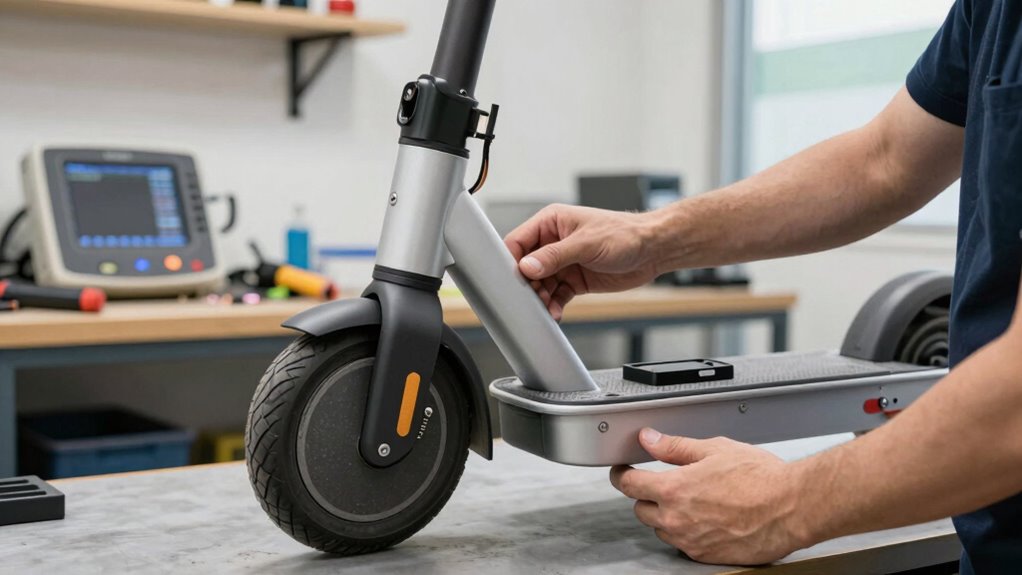
While routine maintenance can resolve many common issues, there are times when professional repairs become necessary. If your scooter shows persistent problems, don’t hesitate to seek expert help. Use troubleshooting tips to identify issues like unusual noises, loss of power, or difficulty steering. When these problems persist despite basic fixes, professional repairs are essential to prevent further damage and ensure safety. Keep an eye out for warning signs, such as rapid battery drain or inconsistent braking. Remember, attempting complex repairs without proper skills can cause more harm. Trust trained technicians to handle electrical issues, motor problems, or worn-out parts. Regularly consult troubleshooting tips to diagnose minor issues early, but know when to call in the pros for repairs beyond your expertise.
Frequently Asked Questions
How Often Should I Schedule Professional Scooter Maintenance?
You should schedule professional scooter maintenance every 3 to 6 months to guarantee peak performance. During these visits, the technician will check your battery health, tire pressure, and other essential components. Regular maintenance helps prevent unexpected breakdowns and keeps your scooter running smoothly. If you notice any issues like decreased battery life or low tire pressure, schedule an appointment sooner. Consistent care extends your scooter’s lifespan and keeps you safe on the road.
What Are Signs My Scooter Needs Immediate Repairs?
Ever wonder if your scooter is telling you it’s in trouble? If you notice a battery warning, strange noises, or sudden power loss, it’s time for repairs. Also, check for tire wear or uneven tread that could compromise safety. Don’t ignore these signs—prompt repairs keep your scooter running smoothly and safely. When in doubt, consult your professional for a quick inspection to prevent bigger issues down the road.
Can I Replace Parts Myself or Should I See a Technician?
You can handle simple DIY repairs like changing batteries or tightening loose parts, but for complex issues, it’s best to see a technician. Attempting major repairs yourself might void your warranty, so check your scooter’s warranty considerations first. When in doubt, consulting a professional guarantees safety and proper maintenance, preventing further damage and ensuring your scooter stays reliable for your loved one’s needs.
How Do I Store My Scooter During Long Periods of Inactivity?
When storing your scooter during long inactivity, picture a peaceful, dry space free from extreme temperatures. To safeguard the battery, fully charge it before storage and disconnect it if possible. Store your scooter in a cool, dry environment, away from direct sunlight and moisture. Regularly check the battery and clean the scooter to prevent corrosion. Proper storage ensures your scooter stays ready and reliable when you need it again.
What Safety Checks Should I Perform Before Each Ride?
Before each ride, you should perform a quick safety check. Start by inspecting the battery to make sure it’s fully charged and connections are secure. Check the tire pressure to prevent flats or instability. Also, examine the brakes for responsiveness and look for any loose parts or damage. Keeping these checks in mind helps guarantee a safe, smooth ride every time, reducing the risk of accidents or breakdowns.
Conclusion
Regular maintenance keeps your scooter running smoothly and safely. Think of it like caring for a pet — consistent check-ups prevent bigger issues down the line. Some believe that neglecting routine care can shorten your scooter’s lifespan, but with proper upkeep, it can serve you reliably for years. Stay proactive, follow these tips, and you’ll enjoy smooth rides while avoiding costly repairs. A little effort today keeps your scooter in top shape tomorrow.