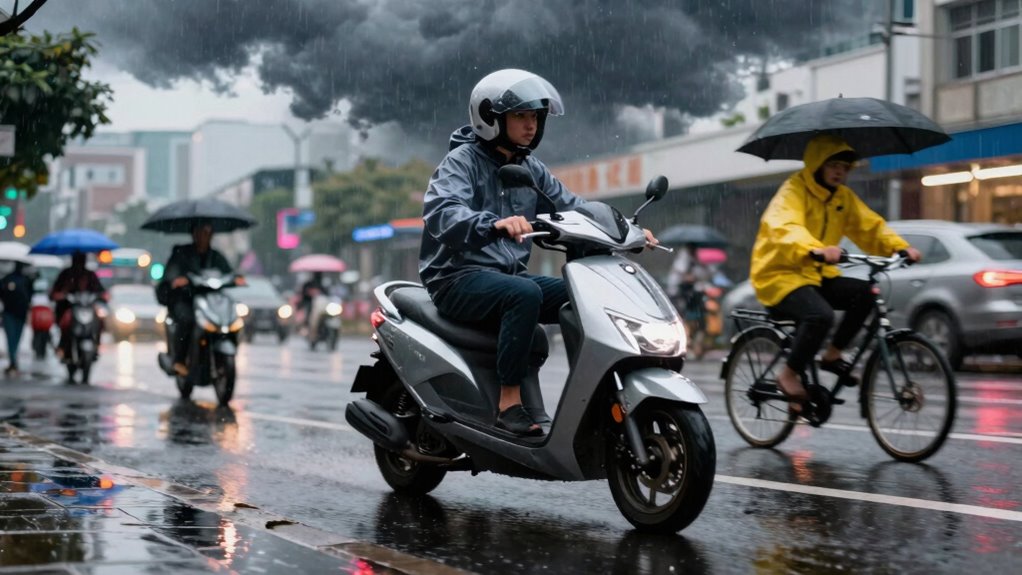
Weather greatly impacts your scooter’s safety, reliability, and comfort. Rain and wet surfaces increase slipping risks, while cold and icy conditions can cause control issues and reduce battery performance. Strong winds and snow can make riding dangerous or even impossible. To stay safe, check weather forecasts before rides, adjust your speed and routes, and use weatherproof gear. Staying prepared and vigilant helps you ride confidently in various conditions—discover how to adapt for every weather change.
Key Takeaways
- Weather conditions like rain, snow, and ice decrease tire grip and increase slipping risks, affecting safety and control.
- Extreme cold can reduce battery performance, limiting range and reliability during colder seasons.
- Wet surfaces and puddles require slower speeds and increased following distances for safer riding.
- Proper maintenance, weatherproof accessories, and safe riding adjustments help mitigate weather-related hazards.
- Monitoring weather forecasts and avoiding riding in severe conditions prevent accidents and mechanical issues.
How Weather Impacts Scooter Safety and Usage

Weather conditions play a crucial role in determining how safe and practical it is to ride a scooter. Seasonal riding affects your safety, as different weather patterns bring unique challenges. Cold temperatures can make surfaces slick and reduce your grip, while rain creates slippery conditions that increase your risk of slipping or losing control. Snow and ice are even more hazardous, often making riding impossible. To stay safe, practice weather preparedness by adjusting your riding habits according to the season. Check the forecast before heading out, and avoid riding in heavy rain, snow, or strong winds. Properly maintaining your scooter, like tire checks and ensuring good brakes, also helps you adapt to changing weather conditions and ride confidently throughout the year. Additionally, staying informed about regulatory changes can help you understand legal considerations during adverse weather conditions. Being aware of weather-related hazards can further help you make informed decisions and prevent accidents when conditions are less than ideal. It’s also beneficial to familiarize yourself with weather impact on scooter components, so you can proactively address potential issues caused by environmental factors. Weather can significantly affect battery performance, especially in extreme cold, which can reduce your scooter’s range and reliability if not properly managed. Understanding how environmental factors affect your scooter’s electrical system can help prevent unexpected breakdowns in adverse weather.
How to Spot Dangerous Weather Before You Ride

Before you hit the road, make sure to check weather reports regularly so you’re aware of any upcoming storms or rain. Keep an eye out for sudden changes in the forecast, like unexpected showers or wind shifts, that could catch you off guard. Recognizing hazardous conditions early helps you decide whether it’s safe to ride or better to wait. Monitoring weather conditions carefully can help you choose the right time to ride and avoid dangerous situations. Being aware of environmental factors like temperature and humidity can also influence your comfort and safety while riding. Understanding support breakfast options in your area could be helpful if you need a quick, nourishing stop before or after your ride. Additionally, staying informed about local weather alerts can provide early warnings of severe weather events that might impact your safety, and paying attention to seasonal changes can help you anticipate weather patterns that are typical for certain times of the year.
Check Weather Reports Regularly
Keeping an eye on weather reports is essential before you hop on your scooter, as conditions can change rapidly and pose safety risks. Use reliable weather apps to stay updated on current conditions and forecasts. Check reports regularly, especially if you plan to ride for an extended period or during uncertain weather. If rain or strong winds are predicted, consider adjusting your plans or wearing appropriate seasonal clothing to stay comfortable and protected. Pay attention to temperature drops, as they can affect your grip and control. Staying informed allows you to make smarter decisions, like postponing your ride or preparing extra gear. Regularly monitoring weather reports helps you anticipate hazards and ride more safely, no matter what Mother Nature throws your way. Additionally, understanding weather patterns can help you better predict and prepare for sudden changes. Being aware of weather-related hazards can also prevent accidents and ensure a safer ride in unpredictable conditions. For instance, knowing how wind speed influences scooter stability can help you adjust your riding style accordingly. Furthermore, awareness of precipitation types can help you choose the right gear and riding techniques to stay dry and maintain control.
Watch for Sudden Changes
How can you spot sudden changes in weather that might catch you off guard? Staying alert is key, especially when riding your scooter. Pay attention to storm alerts, which can warn you of approaching severe weather. Watch for sudden gusts of wind, as they can destabilize your ride unexpectedly. Keep an eye on the sky for darkening clouds or shifts in wind patterns. Listen for ominous sounds that signal an approaching storm. Be aware that weather can change quickly, so don’t ignore warning signs. Monitoring seasonal variations helps you anticipate weather changes that could impact your ride. Recognizing weather patterns can also help you prepare for unpredictable conditions before you start your journey. Additionally, understanding the health benefits of fruit juices can keep your energy levels up during long rides in varying weather conditions. Being familiar with weather forecasting techniques can further enhance your ability to prepare ahead of time. Developing a good sense of weather awareness can significantly improve your safety and riding experience.
Recognize Hazardous Conditions
Recognizing hazardous conditions before you ride can help you avoid dangerous weather surprises. Hazard identification starts with paying close attention to the forecast and observing the sky. Look for dark clouds, strong winds, or sudden drops in temperature, which signal worsening weather. Maintaining weather awareness means checking for signs of rain, snow, or ice that could make riding unsafe. It’s also helpful to note any changing conditions during your ride, such as increased wind or fog. Being proactive allows you to prepare or postpone your trip if needed. Using tools like weather alerts can further enhance your hazard detection skills. Developing early warning signs of hazardous weather can give you extra time to react and make safer choices. Recognizing changing weather patterns helps you anticipate upcoming hazards and adjust your plans accordingly. Staying informed about weather forecasting enables you to better anticipate potential dangers and plan safer routes. By sharpening your hazard identification skills, you can better anticipate weather hazards and make smarter riding decisions. Staying alert to weather cues keeps you safer and helps you avoid unexpected dangerous conditions on your scooter journey. Utilizing a world clock tool can also help you stay informed about weather patterns and time zone changes that may impact your riding plans.
Tips for Riding Safely in Rain and Wet Conditions
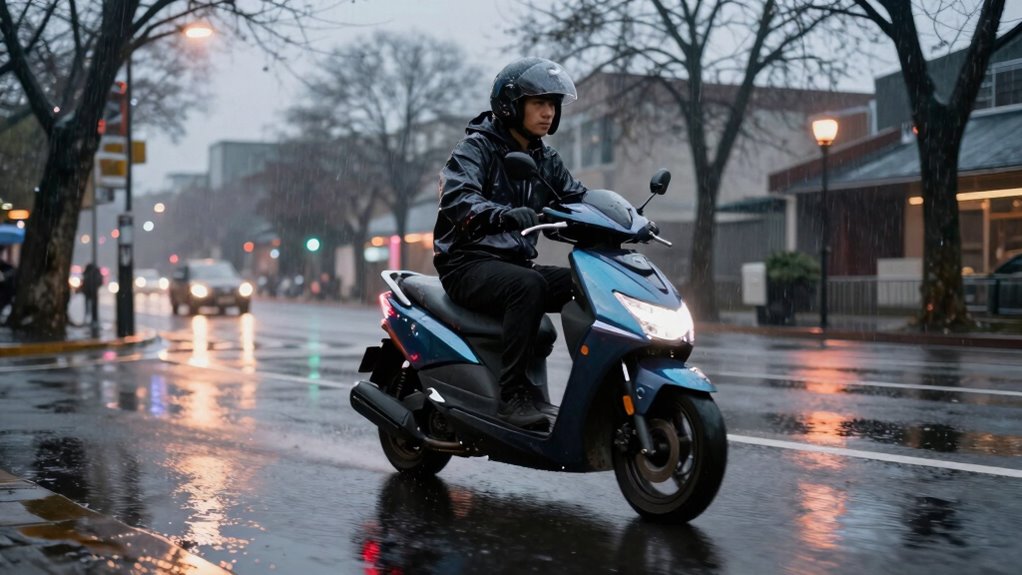
Riding a scooter in rain and wet conditions requires extra caution because roads can become slippery and unpredictable. To stay safe, wear proper rain gear that keeps you dry and enhances visibility. Reduce your speed to maintain control on slick surfaces, and increase your following distance to give yourself more time to react. Be especially careful around painted lines, metal grates, and puddles, which can be more hazardous when wet. Before riding, check your tires for adequate tread, as worn tires lose grip more easily. Also, ensure your brakes are functioning well, since stopping distances increase in the rain. Remember, staying alert and prepared helps you navigate wet conditions safely. Incorporating home fitness routines can also help you stay physically prepared for unpredictable riding conditions. Additionally, performing regular vehicle maintenance can improve your scooter’s safety and performance in adverse weather.
How Snow and Cold Weather Affect Scooter Performance
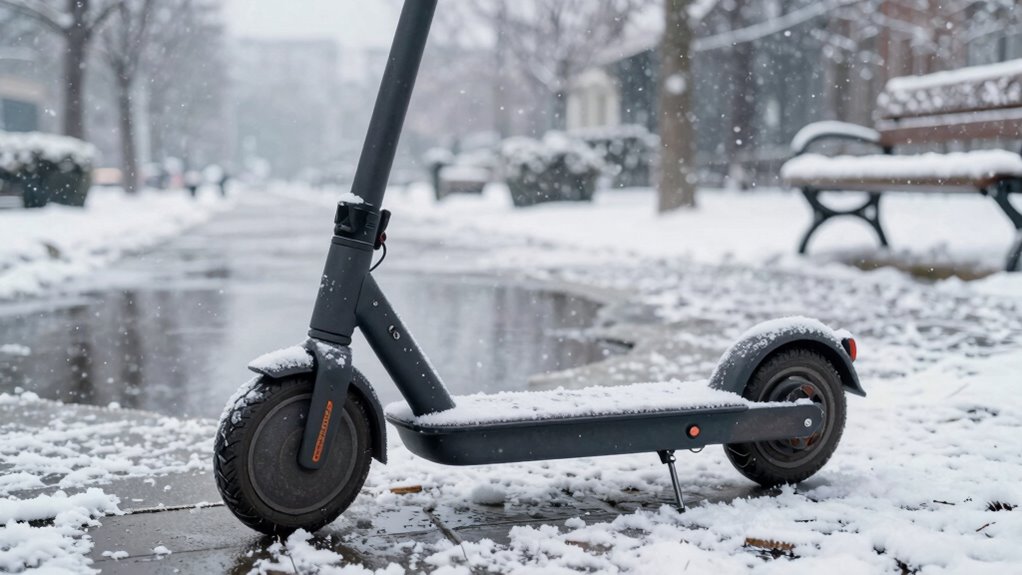
Cold weather and snow can considerably impact your scooter’s performance by reducing battery efficiency, decreasing tire traction, and affecting mechanical components. Snow accumulation can make riding slippery and dangerous, while cold engines struggle to start and run smoothly. When temperatures drop, your scooter’s battery loses power faster, limiting range. Tire grip diminishes on icy surfaces, increasing the risk of slips. Mechanical parts may freeze or stiffen, causing delays or breakdowns. To minimize issues, keep your scooter in a warm, dry place and regularly check tire pressure. Use antifreeze treatments if applicable.
| Effect | Solution |
|---|---|
| Reduced battery efficiency | Keep in warm storage and charge often |
| Slippery tires | Use tires with better traction |
| Mechanical stiffening | Regular maintenance and lubrication |
| Snow accumulation | Clear snow before riding |
What to Do When the Wind Gets Strong
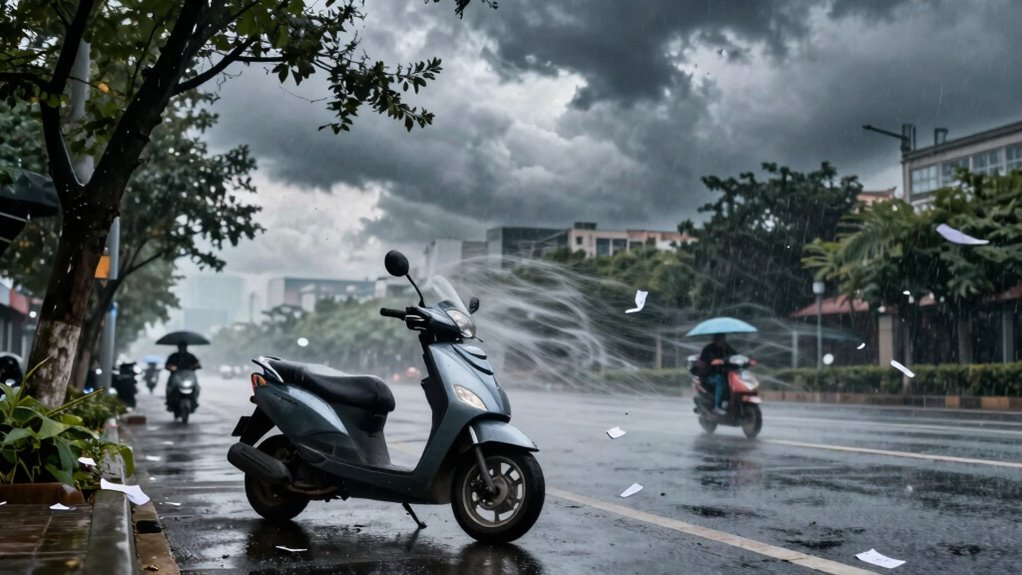
Strong winds can considerably challenge your scooter’s stability and safety. When wind warnings are issued, it’s vital to recognize the gust impact and adjust your riding accordingly. Sudden gusts can cause you to lose control or veer off course, so staying alert is essential. To stay safe:
- Slow down and reduce your speed to better handle gust impact
- Avoid riding close to open areas or bridges where winds are stronger
- Keep a firm grip on the handlebars to maintain stability during gusts
If the wind becomes too strong or gusts are unpredictable, it’s safest to find shelter and wait until conditions improve. Remember, safety always comes first when facing challenging weather conditions.
Adjusting Your Riding Habits in Hot and Cold Weather
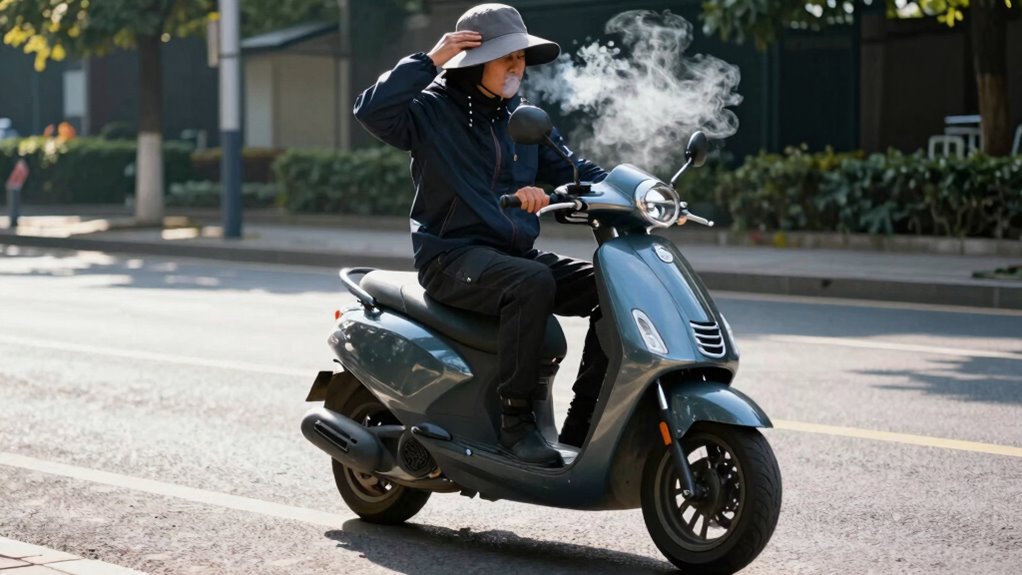
When the weather turns hot or cold, you need to adjust how you ride your scooter. Wear clothing suited to the temperature to stay comfortable and safe, and modify your riding time and speed accordingly. These changes help you stay protected and enjoy your ride regardless of the weather conditions.
Dress Appropriately for Weather
Adjusting your riding attire to suit hot and cold weather is essential for comfort and safety. When it’s hot, wear lightweight, breathable clothing and stay hydrated. In cold weather, layer up with thermal clothing to retain body heat without restricting movement. Don’t forget rain gear to stay dry during unexpected showers, which can be dangerous on slippery roads. Proper clothing helps you stay comfortable and alert, reducing fatigue and distraction. Consider ventilated gear for hot days and insulated options for cold rides. Always check weather forecasts before heading out so you can dress appropriately. Being prepared with the right gear ensures you can ride safely, no matter the temperature or weather conditions.
Adjust Riding Duration and Speed
Extreme temperatures can affect how long and how fast you should ride your scooter. In hot weather, you might need to reduce your speed adjustment to prevent overheating and stay alert. Limit your riding duration during peak heat hours to avoid exhaustion and dehydration. Conversely, cold weather requires slowing down to maintain control on icy or slick surfaces, and you may want to shorten your riding sessions to stay warm and safe. Adjusting your riding duration helps prevent fatigue in extreme temperatures, while speed adjustment ensures you remain in control and avoid accidents. Always listen to your body and the weather conditions, and don’t push yourself beyond safe limits. Properly adapting your riding habits keeps you safe and comfortable, regardless of the weather.
Maintaining Your Scooter for All Weather Conditions
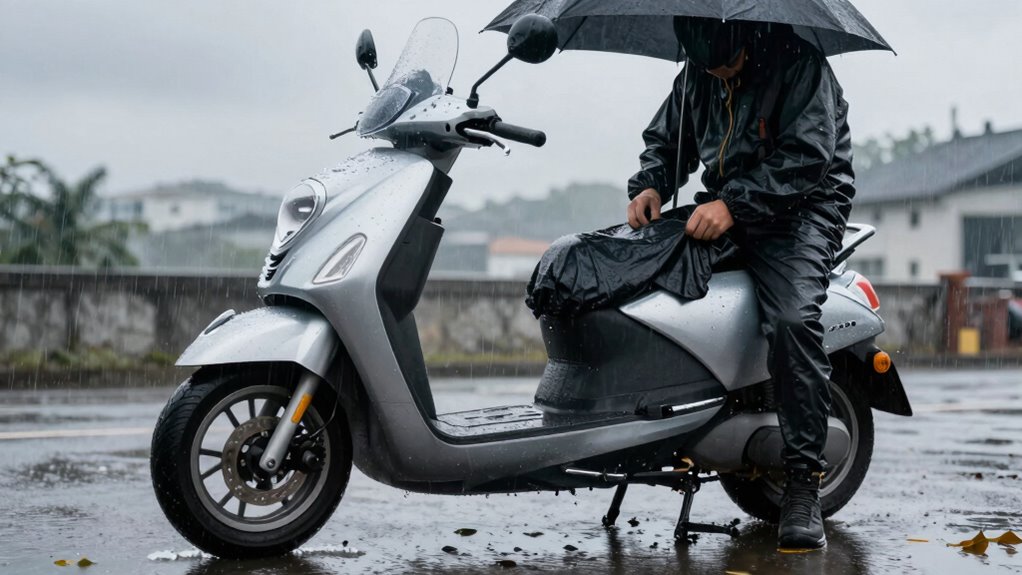
To keep your scooter reliable in all weather conditions, regular maintenance is essential. Proper care guarantees safe, efficient rides regardless of rain, snow, or heat. Focus on battery maintenance by checking connections and charging regularly to prevent failures in cold weather. Keep your tires at the correct pressure; underinflated tires reduce grip and can cause flats, especially on wet surfaces. Also, inspect and clean the scooter’s electrical components and brakes to prevent corrosion and ensure responsiveness. Regularly lubricate moving parts to prevent rust and wear. Using these maintenance habits, you’ll extend your scooter’s lifespan and enjoy worry-free riding.
Regular maintenance ensures your scooter stays safe, reliable, and ready for all weather conditions.
- Check tire pressure weekly, especially before bad weather.
- Keep the battery charged and clean terminals.
- Inspect brakes and electrical connections for corrosion.
What to Do If Weather Turns Bad While You’re Out

If bad weather suddenly catches you off guard while you’re riding your scooter, staying calm and acting quickly can prevent accidents and damage. First, reduce your speed to improve tire traction and maintain better control. Avoid sudden turns or braking that could cause slipping. Check your helmet visibility—if your visor fogs or gets dirty, pull over safely and clean it to keep clear sightlines. If visibility is poor or the rain worsens, consider finding a safe spot to wait out the storm. Keep both hands firmly on the handlebars and stay alert to changing road conditions. Remember, your safety depends on your ability to respond swiftly and wisely when weather turns bad. Prioritize stopping safely until conditions improve.
Alternatives to Scooter Riding in Bad Weather

When bad weather makes riding your scooter unsafe, exploring alternative transportation options can keep you moving without risking your safety. Consider switching to public transit, carpooling, or walking if conditions permit. These options eliminate exposure to rain, snow, or strong winds. To prepare for seasonal changes, perform seasonal maintenance on your scooter, ensuring it’s ready when the weather clears. Investing in weatherproof accessories, like waterproof bags and rain covers, can also protect your gear if you choose to ride during lighter rain. If riding isn’t feasible, using a reliable transit app helps you plan routes efficiently. Ultimately, having backup plans guarantees you stay mobile without compromising safety during adverse weather conditions.
Planning Your Rides Based on Weather Forecasts
You should check weather forecasts before each ride to stay safe and avoid surprises. Knowing common weather patterns helps you plan rides when conditions are favorable. Keep an eye on real-time updates so you can adjust your plans if the weather suddenly changes.
Weather Patterns and Riding Safety
Weather patterns can change rapidly, impacting your safety and riding experience. Staying alert to forecast shifts helps you plan safer trips and avoid dangerous conditions. Before riding, check for signs of changing weather, especially if storms or rain are predicted. Regular seasonal maintenance guarantees your scooter stays reliable in varying conditions, while weatherproof accessories protect you from rain, wind, and cold.
- Keep an eye on upcoming weather alerts and updates
- Adjust your route or schedule to avoid thunderstorms or icy patches
- Ensure your scooter’s tires and brakes are in top shape for slippery surfaces
Real-Time Forecast Adjustments
Monitoring real-time weather forecasts allows you to make immediate adjustments to your riding plans. By staying updated with accurate data, you can respond swiftly to changing conditions through real time forecast adjustments. Weather alert systems provide timely notifications about severe weather, enabling you to postpone or reroute your trips to stay safe. Checking updates before each ride helps you avoid riding in rain, strong winds, or thunderstorms that could compromise your safety. If a sudden storm appears, it’s best to delay your ride or seek shelter until conditions improve. Incorporating these tools and techniques ensures you remain proactive, reducing risks associated with unexpected weather changes. Staying vigilant with weather alerts lets you ride smarter and safer, no matter what the forecast predicts.
Frequently Asked Questions
How Does Humidity Affect Scooter Battery Life?
Humidity levels can accelerate battery degradation in your scooter, especially if exposed to high moisture for extended periods. When humidity is high, moisture can seep into the battery, causing internal corrosion and reducing its overall lifespan. To protect your scooter’s battery, store it in a dry place, avoid riding in heavy rain, and keep the battery dry. Proper care helps maintain ideal performance and prolongs your scooter’s battery life.
Can Weather Conditions Impact Scooter Brake Effectiveness?
Think of your scooter’s brake system as a delicate dance partner, sensitive to the weather conditions around it. When rain or humidity rise, brake performance can suffer, making stops less reliable. Moisture can cause rust or reduce friction, leading to sluggish response. To maintain ideal brake effectiveness, keep your brakes dry, clean, and check for any corrosion, especially during wet weather. Proper care ensures a smooth, safe ride regardless of the weather.
Are There Specific Weather Apps for Scooter Riders?
Yes, there are specific weather apps for scooter riders. These apps provide real-time weather forecasts and riding advisories tailored for scooter users, helping you plan safer rides. You can receive alerts about rain, wind, or hazardous conditions that might affect your safety. Using these apps guarantees you’re always informed about current weather conditions, allowing you to adjust your plans and ride more confidently and securely.
How Should I Store My Scooter During Extreme Weather?
Ever wonder how to protect your scooter during extreme weather? You should store it indoors or in a sheltered location, avoiding exposure to rain, snow, or intense sunlight. Use weatherproof covers and follow storage tips like disconnecting the battery and keeping it upright to prevent damage. Do you want your scooter to last? Proper storage during harsh weather keeps your ride safe and ready when you need it.
What Accessories Can Enhance Safety in Bad Weather?
To stay safe in bad weather, you should add rain gear to keep dry and visible. Investing in anti-slip mats for your scooter’s deck helps prevent slipping on wet surfaces. Wearing reflective clothing or accessories also boosts your visibility. These accessories work together to improve your safety, ensuring you’re better prepared for rain or slick conditions while riding your scooter. Stay cautious and always prioritize visibility and traction.
Conclusion
So, next time you blame your scooter’s performance on the weather, remember—you could’ve just checked the forecast. Ironically, staying safe and prepared might mean staying off your ride altogether. Weather’s unpredictable, but your choices aren’t. Embrace the inconvenience, and you’ll find that avoiding a fall or breakdown isn’t just smart—it’s the easiest way to stay upright. Sometimes, the best ride is the one you never take.