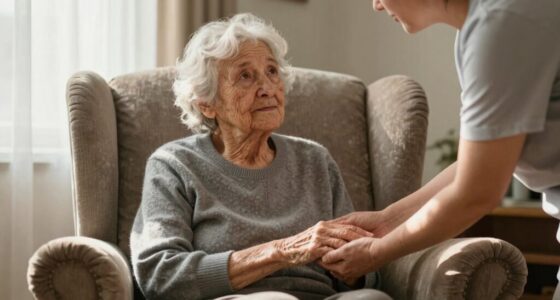
As a caregiver, you play a crucial role in preventing senior falls by spotting hazards in their environment, like loose rugs or poor lighting, and making safety modifications. You can encourage them to stay active with balance and strength exercises, manage medications carefully, and support regular health check-ups. Open communication about fall risks helps them feel confident and prepared. Keep exploring ways to protect your senior and help them live safely and independently.
Key Takeaways
- Caregivers conduct home safety assessments to identify and mitigate fall hazards.
- They assist with installing safety modifications like grab bars and improved lighting.
- Caregivers encourage and support seniors’ balance and strength exercises regularly.
- They monitor medication use and manage chronic health conditions to reduce dizziness risks.
- Caregivers foster open communication about fall risks, ensuring prompt action and emotional support.
Why Falls Are a Major Threat to Seniors’ Health and Independence
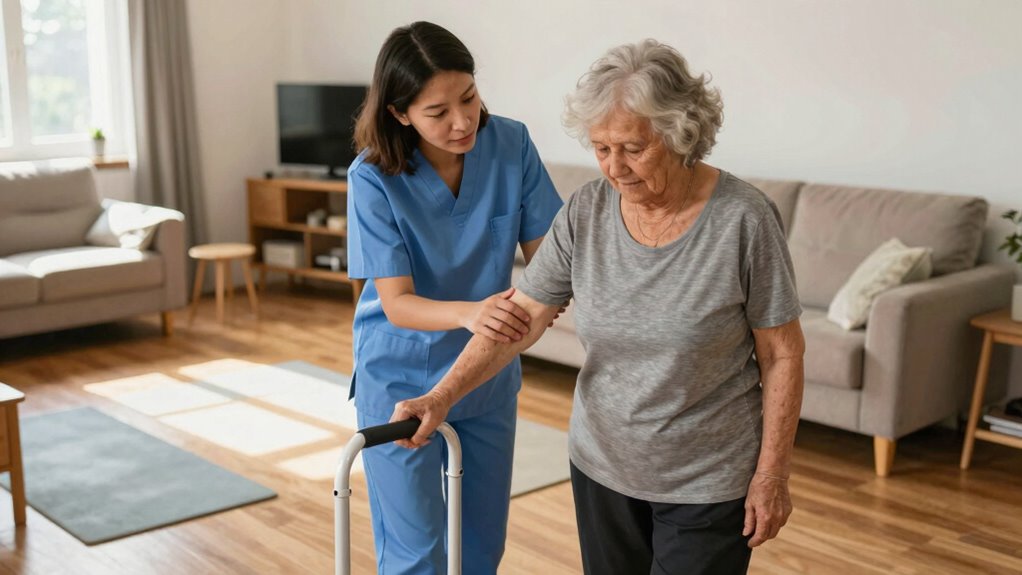
Falls pose a serious threat to seniors because they can lead to severe injuries, such as broken bones and head trauma. Environmental hazards like loose rugs, clutter, or poor lighting increase the risk of falls, making your home unsafe. These hazards not only cause physical injuries but also impact your emotional well-being, leading to fear of falling again and reduced confidence in daily activities. This fear can cause seniors to withdraw from social interactions or avoid movement altogether, which may result in further health decline. As a caregiver, understanding how environmental hazards contribute to falls is vital. Addressing these risks helps protect your loved one’s health, preserves their independence, and supports their emotional stability, enabling them to feel safer and more confident in their environment.
How to Make Your Home Safer to Prevent Falls

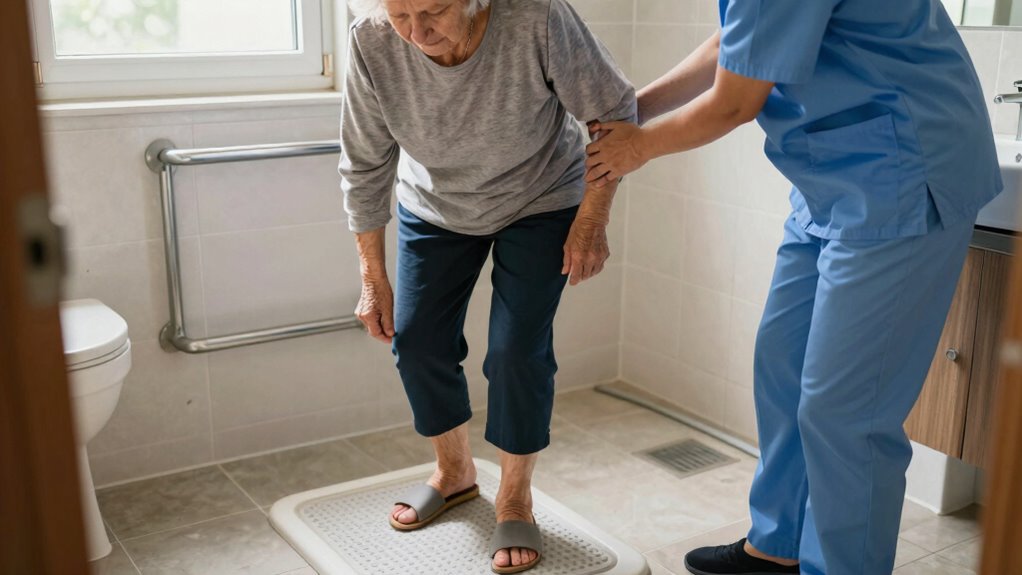
Creating a safer home environment can substantially reduce the risk of falls for your loved one. Start with simple home modifications, like adding grab bars in the bathroom, securing loose rugs, and improving lighting throughout the house. Remove clutter and make certain pathways are clear to prevent tripping hazards. Assistive devices, such as walkers or grab bars, provide additional support and stability, making daily activities safer. Install handrails on stairs and consider non-slip mats in the shower or bathtub. Regularly check and maintain these modifications to guarantee they remain effective. Being aware of Free Floating can help you understand how to create versatile and adaptable outdoor spaces that promote safety and relaxation. Incorporating smart home technology, such as motion sensors and automated lighting, can further enhance safety by alerting caregivers to unusual activity or hazards. Understanding home safety assessments allows caregivers to identify and address potential hazards proactively. Conducting risk evaluations in your home can help prioritize necessary safety improvements. Additionally, engaging in preventive strategies can empower caregivers to implement proactive measures that mitigate fall risks before incidents occur. By proactively making these adjustments, you help create a safer space that encourages independence and reduces fall risk. Your attention to home safety plays a vital role in protecting your loved one’s health and well-being.
What Exercises Help Seniors Improve Balance and Strength

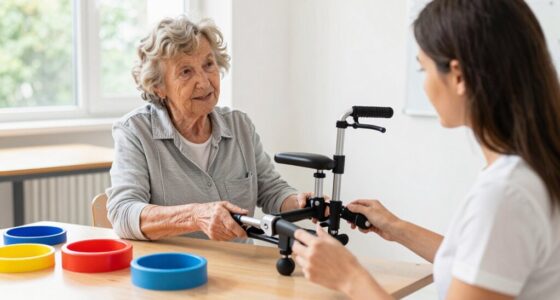
To help seniors improve their balance and strength, engaging in specific exercises can make a significant difference. Balance exercises, like standing on one foot or heel-to-toe walking, challenge stability and enhance coordination. Incorporate strength training by using light weights, resistance bands, or body-weight movements such as sit-to-stand exercises. These activities target key muscle groups, including legs, core, and hips, which are essential for fall prevention. Consistency is key; encourage seniors to perform these exercises regularly, ideally under supervision or with proper guidance. Remember, gradual progression helps prevent injury and builds confidence. Additionally, understanding the importance of contrast ratio in visual clarity can help create a comfortable environment that encourages regular activity. By integrating balance exercises and strength training into their routine, you can help seniors maintain mobility, boost confidence, and reduce their risk of falls. Incorporating exercise safety tips ensures that seniors perform these movements effectively while minimizing the risk of injury. Staying informed about Gold IRA rollovers can also provide seniors with secure options for retirement investments, contributing to their overall financial stability. Moreover, incorporating muscle activation techniques can further enhance exercise effectiveness and reduce injury risk. Incorporating proper warm-up methods can prepare muscles and joints for activity, decreasing the likelihood of strains or sprains.
Managing Medications and Health Conditions to Reduce Fall Risk

Managing medications and health conditions plays a vital role in reducing fall risk among seniors. Proper medication management ensures seniors take the right doses at the correct times, preventing side effects like dizziness or drowsiness that increase falling chances. Controlling chronic conditions such as diabetes or hypertension keeps symptoms stable, lowering the likelihood of falls. Regularly reviewing medications with healthcare providers helps identify potential interactions or unnecessary drugs. Monitoring health conditions allows you to spot changes that may affect balance and mobility. Staying informed about design principles can help create safer home environments that reduce fall hazards. Awareness of privacy policies and how personal data is managed can also contribute to a safer and more secure online experience for caregivers. Incorporating encryption solutions can safeguard sensitive health information shared with healthcare providers, enhancing overall data security. Additionally, utilizing telehealth tools can facilitate regular health monitoring and quick adjustments to treatment plans. Maintaining medication adherence through reminders or pill organizers can further reduce mistakes that lead to falls. By staying proactive, you can minimize fall risks and promote safety.
How to Talk About Fall Prevention With Your Senior and Support Their Safety

Talking openly with your senior about fall prevention is essential for their safety. Approach the conversation with empathy and patience, offering emotional support to help them feel comfortable. Use effective communication by listening carefully and validating their concerns. You might discuss potential hazards, like clutter or poor lighting, and suggest simple adjustments together. To visualize safety, consider this table:
| Risk Factors | Prevention Strategies |
|---|---|
| Slippery floors | Use non-slip mats and handrails |
| Poor lighting | Install bright, even lighting |
| Clutter | Keep walkways clear |
| Unsteady balance | Encourage balance exercises |
Creating a safe environment is a crucial part of fall prevention, and it can greatly reduce the risk of accidents. This collaborative approach shows you care, making your senior more receptive and confident in their safety. Incorporating organized routines can also help maintain a safer environment over time. Additionally, promoting regular health checkups ensures any underlying issues affecting balance are addressed promptly. Recognizing that environmental hazards are a major contributor to falls can further motivate proactive safety measures. Being aware of potential hazards allows you to identify and address risks before they lead to falls.
Frequently Asked Questions
How Can Caregivers Recognize Early Signs of Fall Risk in Seniors?
You can recognize early signs of fall risk by observing your senior’s home environment for hazards like loose rugs or clutter. Pay attention to their gait, balance, and coordination, and note if they experience dizziness or weakness. Regular medication reviews are essential, as side effects can increase fall risk. Staying vigilant and proactive helps you identify issues early, enabling timely interventions to keep your loved one safe.
What Are the Best Community Resources for Fall Prevention Programs?
You can access community programs and local workshops focused on fall prevention through your local health department or senior centers. These resources often include balance training, home safety assessments, and educational sessions. By participating in these programs, you’ll learn practical strategies to keep seniors safe and reduce fall risks. Stay proactive by exploring what your community offers, and encourage seniors to join these valuable fall prevention initiatives.
How Does Nutrition Impact a Senior’s Balance and Fall Risk?
Imagine a senior carefully maneuvering their home, but unseen nutrient deficiencies and poor dietary habits threaten their balance. Nutrition impacts muscle strength and bone density, directly affecting fall risk. When you guarantee they get enough calcium, vitamin D, and other vital nutrients, you help strengthen their bones and improve coordination. By promoting healthy eating, you actively reduce the chance of falls, keeping your loved one safer and more steady every day.
What Technology Aids Can Caregivers Use to Monitor Senior Safety?
You can use remote monitoring and wearable sensors to keep track of a senior’s safety. These devices alert you instantly if they fall, wander, or experience health issues. Wearable sensors monitor essential signs and movement patterns, helping you spot risks early. By leveraging this technology, you stay connected and proactive, ensuring your loved one’s environment remains safe and secure, even when you’re not physically present.
How Can Caregivers Handle a Fall Incident to Prevent Future Injuries?
Think of a fall as a storm you must weather together. When it happens, stay calm, activate emergency response if needed, and assess injuries carefully. Gently help your senior to a safe position, avoiding further harm. Afterward, implement environmental modifications like removing tripping hazards and installing grab bars to prevent future falls. Your quick, caring response creates a shield of safety, helping your loved one regain stability and confidence.
Conclusion
By taking these proactive steps, you can dramatically reduce your loved one’s risk of falls—possibly even saving their life. Your involvement as a caregiver isn’t just helpful; it’s a powerful force that can prevent accidents and preserve independence. Remember, a safe home and a supportive attitude can be the difference between a minor stumble and a life-altering fall. Stay vigilant, stay caring, and help your senior live confidently every day.