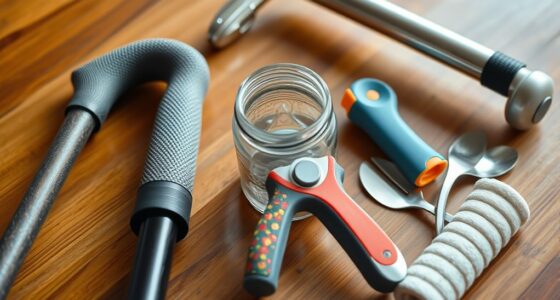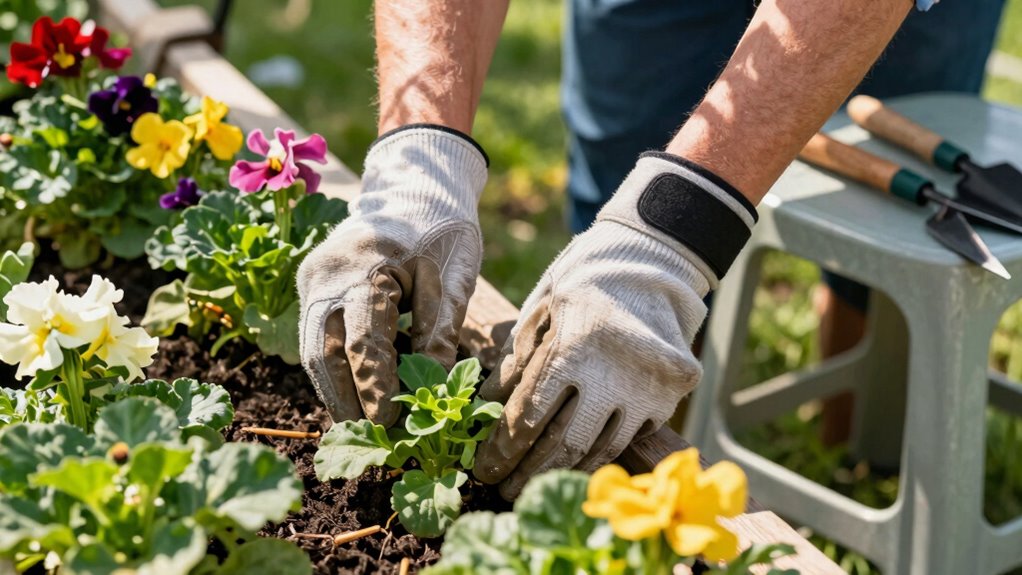

To garden with arthritis and keep the joy without pain, choose easy-care plants suited to your climate and use raised beds or containers to reduce bending and kneeling. Use ergonomic tools with padded handles, longer handles, or adjustable features to lessen joint strain. Break tasks into short sessions, take regular breaks, and wear supportive gloves for added comfort. Organize your workspace and pace yourself to enjoy gardening while protecting your joints—more helpful tips await as you explore further.

Turn quiet afternoons into listening time
- Thousands of audiobooks, podcasts and originals
- Listen on your phone, tablet or Echo — also offline
- Cancel anytime
Key Takeaways
- Use ergonomic tools with padded handles and longer shafts to reduce joint strain during gardening.
- Choose easy-care, climate-suited plants and incorporate raised beds or containers to minimize bending.
- Break activities into shorter sessions, take breaks, and maintain organized workspaces to prevent fatigue and injury.
- Wear supportive gloves and adopt gentle, controlled movements to protect hands and joints.
- Adjust routines to prioritize enjoyable, low-impact activities that connect with nature while safeguarding joint health.
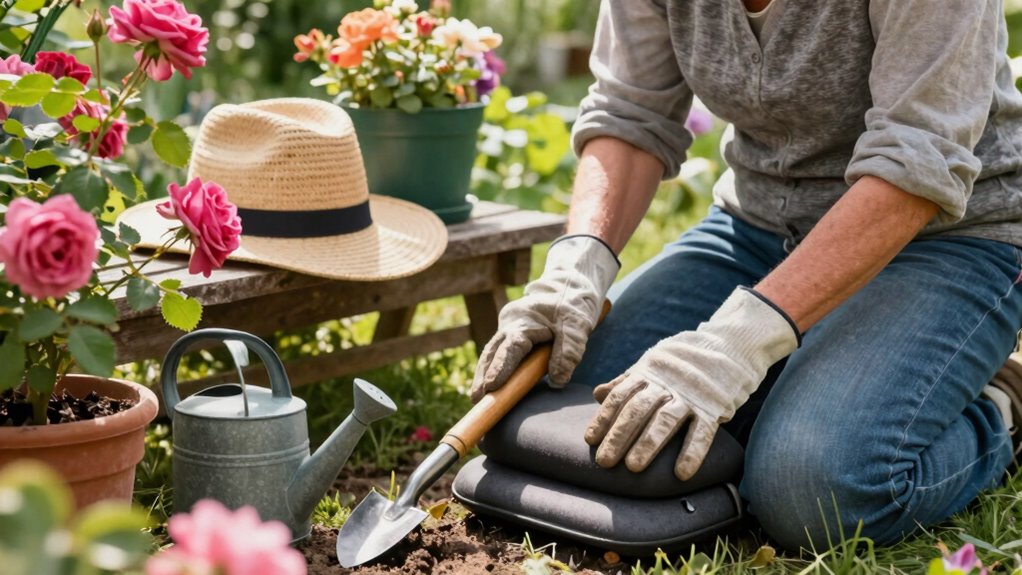
Gardening can be a rewarding activity, but if you have arthritis, it might seem challenging. The key is to adapt your approach so you can enjoy the outdoors without exacerbating your pain. One of the first steps is to focus on plant selection. Choose plants that are easy to care for and don’t require heavy pruning or frequent watering. Look for varieties that thrive in your climate and soil, and consider container gardening to minimize bending and kneeling. Opting for raised beds or planters can also reduce the strain on your joints, making garden tasks more accessible and less painful. Selecting plants with larger, softer leaves can lessen the effort needed for pruning, and flowers or herbs that require minimal maintenance will keep your garden vibrant without demanding too much from your joints. Incorporating biodiversity into your garden can also attract beneficial insects and promote a healthier, more sustainable outdoor space. Additionally, using lightweight, ergonomic tools can significantly decrease the physical effort required for gardening tasks.
Equally important is investing in ergonomic tools designed to reduce joint strain. Traditional gardening tools can be awkward and force you to grip tightly, which isn’t ideal if your hands are sore or stiff. Ergonomic tools are specifically crafted with padded handles, angled shafts, and lightweight materials to make gardening more comfortable. These tools allow you to maintain a natural wrist position, decreasing pressure on your joints and decreasing fatigue. For instance, a lightweight trowel with a soft grip can make planting small bulbs or herbs easier, while longer-handled tools help you reach into beds or pull weeds without bending over or straining your back. Using tools with cushioned grips also minimizes the impact on your finger joints, making repetitive tasks less painful. Moreover, incorporating ergonomic designs can help prevent fatigue and improve overall efficiency, making gardening more enjoyable. Furthermore, selecting tools with interchangeable heads can offer versatility and reduce the need for multiple tools, saving effort and space. Additionally, choosing tools with adjustable features can accommodate different tasks and user preferences, further enhancing comfort and ease of use.
In addition to choosing the right plants and tools, pacing yourself is essential. Break your gardening sessions into shorter intervals, and take frequent breaks to stretch and rest your joints. Wearing supportive gloves can provide extra grip and protect your hands from strain. Remember to keep your movements smooth and controlled—avoid sudden or forceful actions that can worsen joint pain. Incorporating raised beds and tools with ergonomic handles not only makes your gardening tasks more manageable but also helps you maintain a steady rhythm, reducing the risk of flare-ups. Keep your workspace organized to prevent unnecessary reaching or twisting, and don’t hesitate to ask for help when tasks become too strenuous. Proper garden ergonomics can further prevent joint discomfort and enhance your overall gardening enjoyment. With these adjustments, you’ll find gardening more enjoyable and less painful, allowing you to connect with nature while protecting your joints.
ergonomic gardening tools with padded handles
As an affiliate, we earn on qualifying purchases.
As an affiliate, we earn on qualifying purchases.
Frequently Asked Questions
Are There Specific Plants That Are Easier to Handle With Arthritis?
Yes, you can choose plants that are easier to handle with arthritis. Opt for low-maintenance, hardy plants like succulents, hostas, or ferns, which require less pruning and watering. Use ergonomic tools designed to reduce strain on your joints, making planting and maintenance easier. Proper plant selection combined with ergonomic tools helps you enjoy gardening without excessive pain, keeping the activity fun and accessible despite arthritis challenges.
How Can I Modify Tools for Better Arthritis-Friendly Gardening?
You can modify your gardening tools by adding ergonomic handles to reduce strain and improve grip, making them easier to use with arthritis. Opt for lightweight tools that lessen the effort needed, decreasing joint pain and fatigue. You might also consider attaching foam or padded grips for extra comfort. These adjustments help you garden longer and more comfortably, keeping the joy alive without the pain.
What Are the Best Times of Day for Gardening With Arthritis?
You should garden during the cooler parts of the day, like early mornings or late afternoons, to reduce strain and fatigue. Planning your watering schedule for these times helps prevent overexertion, and avoiding peak sunlight exposure minimizes discomfort. By choosing these best times, you protect your joints, stay energized, and enjoy gardening without pain or exhaustion. This approach makes gardening more accessible and enjoyable for arthritis sufferers.
Can Gardening Help Improve Arthritis Symptoms?
Gardening can be like a gentle medicine, helping to ease arthritis symptoms. You might notice improved joint flexibility and reduced pain over time. Incorporating hydrotherapy benefits, such as warm water exercises, can further soothe inflamed joints. Nutritional support, like anti-inflammatory foods, boosts your overall health and complements your gardening efforts. Regular, mindful gardening activities can keep your joints active without overexertion, making your gardening experience both joyful and beneficial.
Are There Any Safety Precautions to Consider When Gardening With Arthritis?
Yes, there are safety precautions to take into account when gardening with arthritis. You should use ergonomic tools to reduce strain on your joints and prevent discomfort. Wearing safety gear like gloves, knee pads, and supportive shoes can protect you from injury and provide extra comfort. Take regular breaks, avoid overexertion, and listen to your body. These steps help you garden safely while enjoying the activity and minimizing pain.
Conclusion
With a few adjustments, you can still enjoy gardening without letting arthritis dampen your spirit. By choosing the right tools, pacing yourself, and prioritizing comfort, you’ll find that gardening remains a rewarding activity. Remember, it’s not about pushing through the pain but working smarter, not harder. Keep in mind, where there’s a will, there’s a way—so don’t let arthritis plant the seed of doubt. Your green thumb can flourish, pain or not.
Halloween Picks
halloween
As an affiliate, we earn on qualifying purchases.