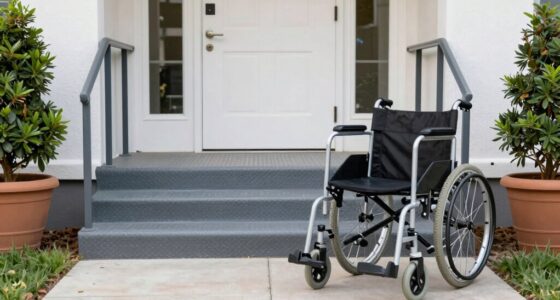

When choosing the right ramp width for power mobility devices, guarantee there’s enough space for safe and easy access. A wider ramp prevents congestion and allows your device to move smoothly without risk of falling or slipping. It also supports stability, especially in wet or icy conditions. Consider surface material and durability to maintain safety over time. To learn more about selecting the ideal width for your needs, keep exploring the key factors involved.

Turn quiet afternoons into listening time
- Thousands of audiobooks, podcasts and originals
- Listen on your phone, tablet or Echo — also offline
- Cancel anytime
Key Takeaways
- Ensure the ramp width allows easy maneuvering and turning of power mobility devices without congestion.
- Follow accessibility standards, typically a minimum of 36 inches, for safe and comfortable access.
- Consider the device’s width with users’ safety margins to prevent side-overhang or instability.
- Account for potential obstacles or additional features that may require extra clearance.
- Regularly assess and adjust ramp width based on device size updates or user needs.
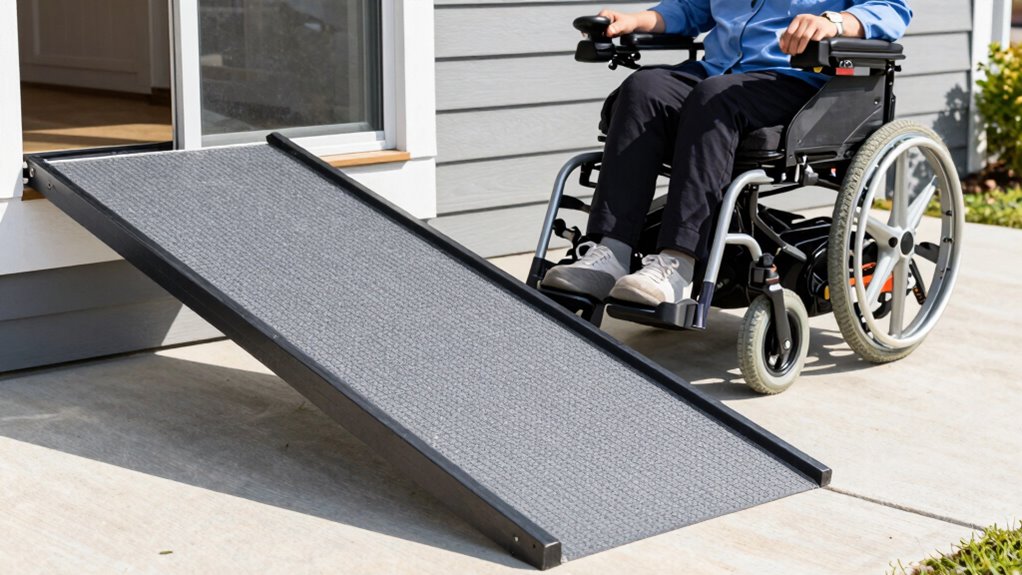
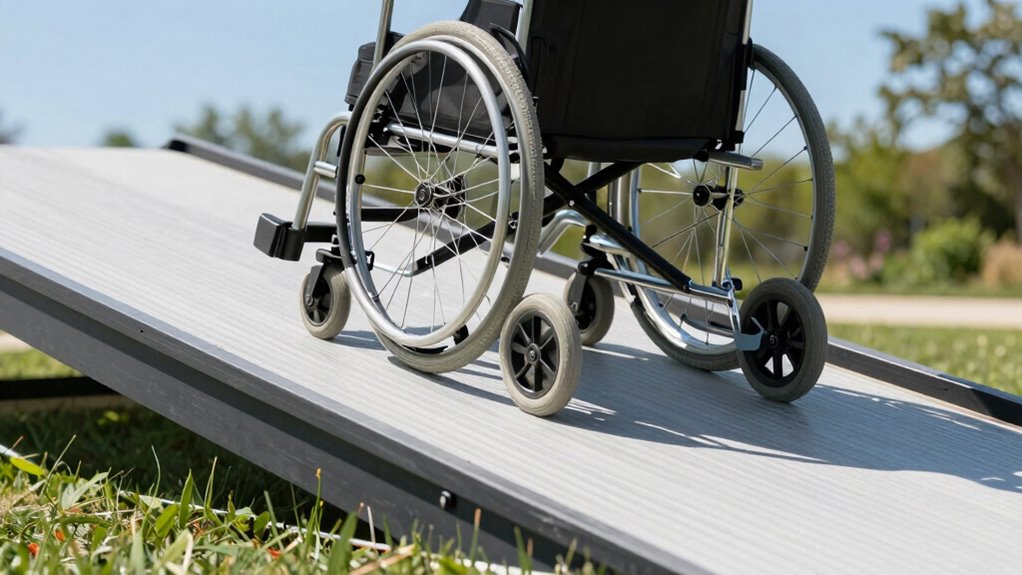
When planning for power mobility devices, considering the appropriate ramp width is essential to guarantee safe and easy access. A key aspect of this planning involves understanding how slope stability and surface materials influence overall safety and usability. You need to make sure that the ramp not only accommodates your device comfortably but also maintains stability under various conditions. You want to verify that the surface is stable and secure, which directly impacts slope stability. If the surface material isn’t chosen wisely, it can become slippery or uneven, compromising safety. For example, surfaces like textured concrete or rubberized mats provide better grip and stability than smooth, polished surfaces. When the surface materials offer good traction, they help prevent slipping, especially in wet or icy conditions, maintaining the stability of both the ramp and your device. Additionally, it’s important to consider how surface materials can impact the overall home security by preventing accidents and ensuring safe access. Proper surface selection can also help mitigate issues related to surface degradation over time, ensuring long-term safety and usability. Selecting durable and weather-resistant materials can further enhance the surface longevity, reducing the need for frequent repairs or replacements. Incorporating appropriate surface testing during installation can identify potential issues before they affect daily use. It’s also beneficial to evaluate how different surface materials perform in extreme weather conditions**** to prevent unforeseen safety hazards.
As an affiliate, we earn on qualifying purchases.
Frequently Asked Questions
What Are the Safety Regulations for Ramp Construction?
You need to follow safety regulations for ramp construction by ensuring ADA compliance and adhering to building codes. This involves designing ramps with a gentle slope, typically 1:12, and providing a width of at least 36 inches to accommodate power mobility devices. Make sure handrails are installed if the ramp exceeds a certain length, and use slip-resistant surfaces. Regular inspections help maintain safety and compliance standards.
How Does Incline Affect Ramp Width Requirements?
A steep incline is like a mountain in your path—challenging and dangerous. When considering incline impact, you must adjust ramp width based on slope calculations to guarantee safety and accessibility. A steeper slope requires a wider ramp to accommodate power mobility devices and prevent tipping or slipping. Always follow guidelines, and remember, a gentle slope makes the journey easier—think of it as paving a smooth path through the landscape.
Can Portable Ramps Be Used Indoors?
Yes, you can use portable ramps indoors, which greatly enhances indoor accessibility. Portable ramp benefits include easy setup, flexibility, and the ability to adapt to various spaces. Make sure the ramp’s weight capacity and dimensions suit your needs. Keep in mind that indoor ramps should be non-slip and stable to prevent accidents. Using portable ramps indoors makes maneuvering tight spaces more manageable, promoting independence and safety for power mobility device users.
What Materials Are Best for Durable Ramps?
Back in the day, you’d want to choose materials that stand the test of time. For durable ramps, asphalt, concrete, and aluminum top the list because of their material durability and weather resistance. Ramp material options like steel and composite materials also offer strength and longevity. You’ll want to weigh factors like weight, cost, and environment to pick the best material for your needs, ensuring safety and durability.
How Do Weather Conditions Influence Ramp Safety?
Weather impact can considerably affect ramp safety, so you need to stay alert. Rain, snow, or ice increase slip hazards, making ramps slippery and harder to navigate. Always check the weather before using a ramp, and consider anti-slip surfaces or mats during adverse conditions. In icy weather, you might need to delay travel or seek alternative routes to prevent accidents, ensuring you stay safe despite changing weather conditions.
Conclusion
When considering ramp width for your power mobility device, remember it’s better to be safe than sorry. Ensuring your ramp is wide enough not only makes your journey smoother but also keeps you out of hot water. Don’t cut corners—measure twice, cut once. By choosing the right width, you’ll avoid unnecessary headaches and keep your adventures on the right track. After all, a well-planned ramp is the foundation for freedom and independence.
Halloween Picks
halloween
As an affiliate, we earn on qualifying purchases.