
If your family manages heart or respiratory issues, a pulse oximeter helps you quickly monitor oxygen levels and pulse rates at home. It’s essential to place it correctly on your fingertip, earlobe, or toe to get accurate readings, and maintaining the device is key. Keeping oxygen saturation above 92% is recommended, but always follow your healthcare provider’s advice. Staying proactive with proper use and maintenance can make a big difference—discover more about making your monitoring effective.

Turn quiet afternoons into listening time
- Thousands of audiobooks, podcasts and originals
- Listen on your phone, tablet or Echo — also offline
- Cancel anytime
Key Takeaways
- Pulse oximeters enable quick, accurate home monitoring of oxygen levels and pulse rate, vital for heart family members.
- Maintain oxygen saturation above 92% to ensure respiratory health and detect early signs of issues.
- Proper device placement on fingertip, earlobe, or toe is essential for accurate readings.
- Regularly clean, calibrate, and maintain devices to ensure reliable and precise measurements.
- Monitoring helps in proactive health management and timely medical intervention for heart-related conditions.
Pulse oximeters have become vital tools for home health monitoring, allowing you to track your oxygen levels and pulse rate quickly and accurately. If your family includes someone with a heart condition or respiratory challenges, understanding how to use a pulse oximeter can make a notable difference in managing their health. These devices measure oxygen saturation, which indicates how well oxygen is being delivered to the blood, and provide real-time information about respiratory health. Maintaining ideal oxygen saturation levels is essential, especially for those with conditions like heart failure, COPD, or asthma, as it helps you catch potential issues early before they escalate.
When you use a pulse oximeter at home, you’re gaining a window into your loved one’s respiratory health. By regularly checking oxygen saturation, you can notice subtle drops that may suggest breathing difficulties or worsening health. This proactive approach allows you to act swiftly—whether that means adjusting medication, seeking medical advice, or heading to the emergency room. Knowing how to interpret these readings empowers you to be more engaged in your family’s health management. Additionally, understanding the significance of oxygen saturation levels can help you make informed decisions about your loved ones’ care. Proper device placement and consistent monitoring are key components in ensuring accurate readings and effective health management. Regularly cleaning and maintaining your pulse oximeter can also enhance its accuracy and longevity over time.
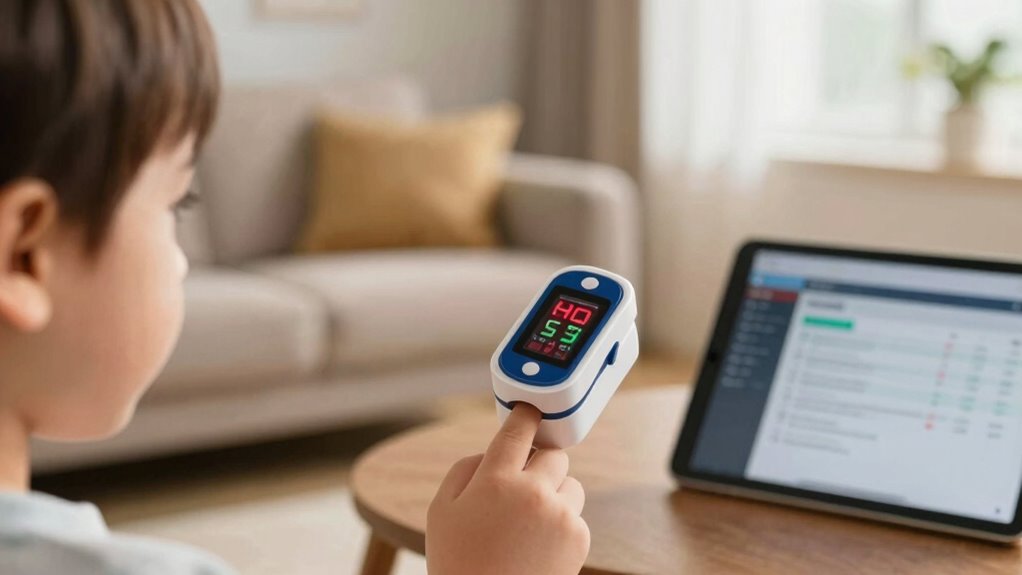
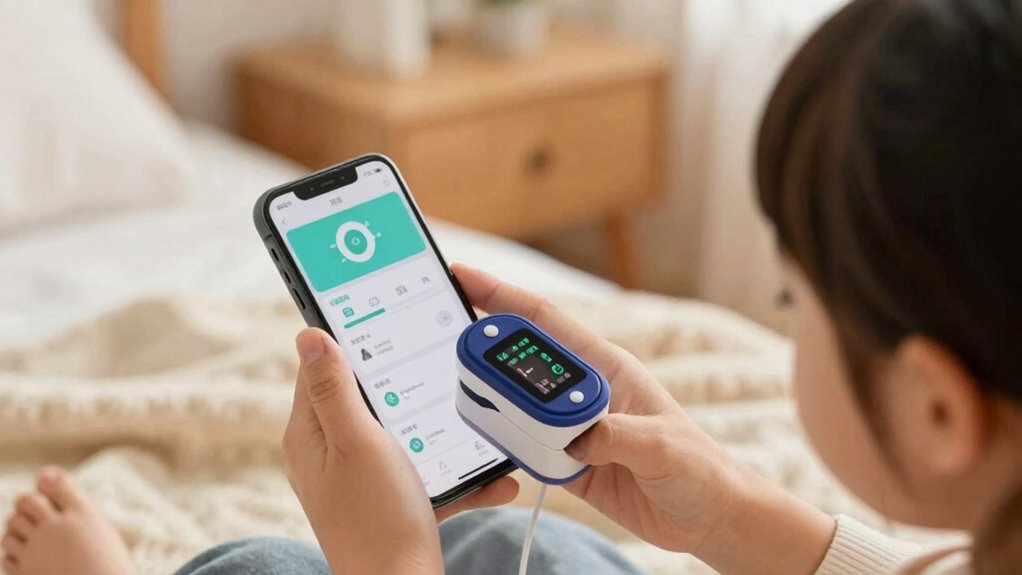
Using a pulse oximeter is straightforward, but it’s vital to follow proper procedure to guarantee accuracy. Typically, you’ll place the device on a fingertip, earlobe, or toe, ensuring it fits snugly but comfortably. Many models provide a digital display showing oxygen saturation levels, pulse rate, and sometimes perfusion index, which indicates blood flow quality. For those with respiratory issues, maintaining oxygen saturation above 92% is generally recommended, but you should always follow your healthcare provider’s specific advice. Monitoring oxygen levels consistently is crucial for effective health management. Additionally, being aware of proper device placement can significantly improve measurement accuracy and reliability. Regular maintenance and calibration of the device can also help ensure precise readings over time.
Frequently Asked Questions
How Often Should My Child Use a Pulse Oximeter Daily?
You should use the pulse oximeter for your child as recommended by their healthcare provider, typically multiple times a day or during specific activities. Regular use helps guarantee child safety by monitoring oxygen levels, but avoid overusing the device, as it can affect accuracy. Always follow instructions carefully, and check the device’s accuracy periodically. If you notice any concerns, consult your child’s doctor promptly.
Can Pulse Oximeters Detect Heart Arrhythmias?
Sure, pulse oximeters can’t directly detect heart arrhythmias, but they do monitor your child’s heart rate and oxygen saturation. For example, if your child’s pulse oximeter shows irregular heart rate patterns alongside drops in oxygen saturation, it could hint at an arrhythmia. Always remember, if you notice irregularities or concerns, consult your healthcare provider for a thorough evaluation and proper diagnosis.
Are There Specific Brands Recommended for Children?
Yes, there are recommended pediatric brands that feature child-friendly designs, making monitoring easier and less intimidating for kids. Brands like Masimo and Zacurate offer models with large displays, soft finger clips, and simple controls suited for children. These recommended pediatric brands prioritize safety and comfort, helping you monitor your child’s oxygen levels accurately at home. Selecting a device with child-friendly features guarantees your kid stays comfortable during their health checks.
How Do I Calibrate or Maintain the Device?
To guarantee device accuracy, regularly calibrate your pulse oximeter by following the manufacturer’s instructions, usually involving checking against a known accurate device or a healthy person’s finger. Keep the device clean and store it in a cool, dry place. Calibration tips include replacing batteries as needed and avoiding extreme temperatures. Consistent maintenance helps you trust the readings, making sure your child’s health is monitored accurately at home.
What Should I Do if Readings Are Consistently Abnormal?
If your readings are consistently abnormal, don’t ignore them—think of it as your device sounding a modern-day alarm bell. Check the device accuracy by re-positioning the sensor and ensuring it’s clean. If readings stay off, contact your healthcare provider immediately. In an emergency, don’t wait—call emergency response services. Always trust your instincts and keep a record of readings to share with your doctor for proper assessment.
Conclusion
Remember, a pulse oximeter is like a tiny lighthouse guiding your family’s health through stormy seas. It’s a symbol of vigilance and hope, illuminating subtle signs before they turn into storms. Keep it close, stay informed, and trust your instincts. With this small device, you hold a powerful beacon of safety—navigating each day with confidence, knowing you’re watching over your loved ones’ well-being, and steering them safely toward calmer waters.
Halloween Picks
halloween
As an affiliate, we earn on qualifying purchases.