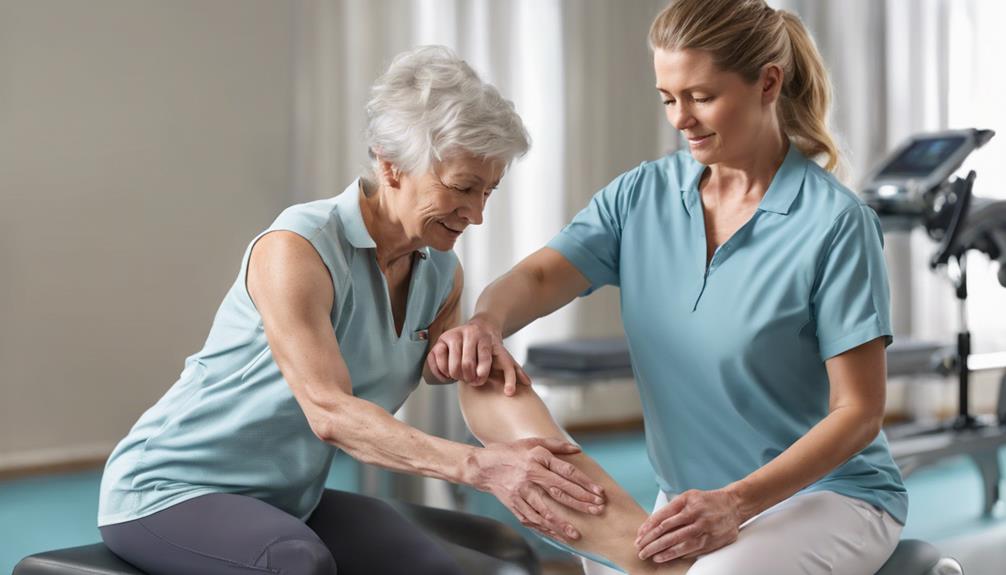

During stroke recovery, you’ll likely notice safety and mobility issues in the bathroom first. Tasks like using the toilet, bathing, and reaching fixtures become difficult, increasing the risk of falls. You might also see that poor lighting or slippery surfaces add to the hazards. Making adjustments like installing grab bars, lowering shelves, and improving lighting can help. Keep going to learn how these modifications can restore safety and independence for your loved one.

Turn quiet afternoons into listening time
- Thousands of audiobooks, podcasts and originals
- Listen on your phone, tablet or Echo — also offline
- Cancel anytime
Key Takeaways
- Difficulties maintaining balance and reaching fixtures increase fall risks during bathroom activities.
- Safety concerns about slipping or falling lead families to install grab bars and non-slip mats.
- Challenges with using the toilet safely often require raised seats or assistive devices.
- Limited space and poor lighting hinder mobility and increase accident risks.
- Indoor air quality and humidity levels impact comfort and recovery in the bathroom environment.
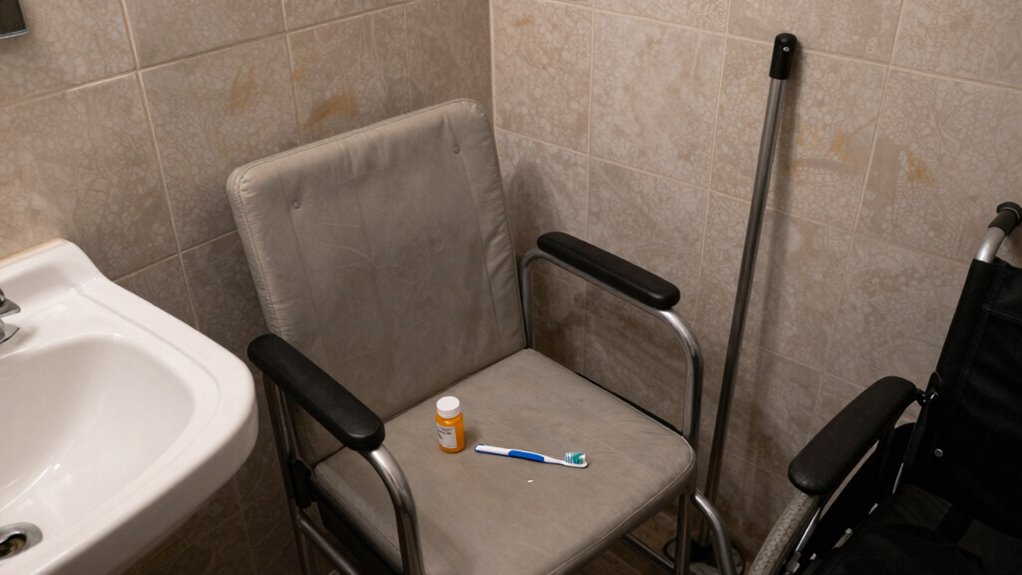
Recovering from a stroke can profoundly impact your ability to navigate everyday activities, especially in the bathroom. The bathroom is a space where safety is critical, and small challenges can become significant obstacles. As a family member, you might notice that routines once taken for granted now require careful planning. You may see your loved one struggling to maintain balance, reach for fixtures, or use the toilet safely. This shift highlights the importance of implementing assistive technology and safety modifications to prevent falls and injuries.
Assistive technology can make a huge difference in maintaining independence. Devices like grab bars, shower chairs, and raised toilet seats provide stability and reduce the risk of slips. You might also consider installing hand-held showerheads or voice-activated controls to make bathing easier and safer. These tools support your loved one’s mobility and confidence, allowing them to perform daily tasks with less assistance. The right assistive technology adapts the bathroom environment to their specific needs, promoting safety and dignity. Incorporating safety modifications into the bathroom can significantly enhance overall safety and help prevent accidents. Additionally, understanding how environmental factors like humidity and temperature affect recovery can guide you in creating a more comfortable bathroom space. Recognizing the impact of indoor air quality on health can help you make further adjustments to support recovery. Considering air circulation can also improve ventilation and reduce moisture buildup, which is beneficial for health.
Assistive devices like grab bars and shower chairs promote safety, independence, and dignity in the bathroom after a stroke.
Safety modifications are equally essential. Simple changes—such as removing loose rugs, installing non-slip mats, and ensuring proper lighting—can markedly reduce hazards. You might need to lower shelves or install accessible storage to prevent reaching or bending excessively. Making sure there’s enough space to move freely, especially if mobility aids are used, facilitates smoother transitions between activities. Additionally, understanding how ventilation impacts overall indoor air quality can help prevent issues like mold or odors that might affect recovery. These modifications aren’t just about preventing accidents; they’re about fostering a sense of security and independence. Proper ventilation also plays a role in maintaining a healthy environment that supports healing and recovery.
You’ll notice that family involvement plays a pivotal role in this process. Watching your loved one struggle with basic tasks can be distressing, but your proactive efforts can ease their discomfort. Regularly evaluating the bathroom for potential hazards and adapting it as their needs evolve will help maintain safety. Educating yourself about assistive technology options and safety modifications allows you to choose the best solutions tailored to their recovery stage. Your ongoing support and vigilance are crucial in creating an environment conducive to recovery and confidence.
Ultimately, the goal is to create a bathroom environment that feels secure yet empowering. By incorporating assistive technology and safety modifications thoughtfully, you help your loved one regain confidence and preserve their dignity. Your attentiveness and willingness to adapt the space make a tangible difference in their recovery journey. The bathroom might be one of the most challenging areas, but with the right adjustments, it can also become a place of reassurance and independence.
As an affiliate, we earn on qualifying purchases.
Frequently Asked Questions
How Can I Prevent Falls in the Bathroom After a Stroke?
To prevent falls in the bathroom after a stroke, focus on bathroom safety and fall prevention. Install grab bars near the toilet and shower, use non-slip mats on floors, and make certain good lighting is present. Consider a shower seat and a handheld showerhead for stability, and keep frequently used items within easy reach. Regularly check for hazards, and encourage slow, careful movements to reduce the risk of falls.
What Are the Best Daily Hygiene Routines for Stroke Survivors?
You should establish simple hygiene routines, including regular toileting assistance, to guarantee safety and comfort. Use grab bars, non-slip mats, and a shower chair to support independence. Encourage gentle handwashing and face cleaning, and assist with brushing teeth. Consistency helps build confidence, and always prioritize safety. By creating structured routines, you help stroke survivors maintain hygiene while reducing fall risks in the bathroom.
Are There Specific Bathroom Modifications Recommended for Safety?
You should install bathroom modifications like improved bathroom lighting and non-slip mats to enhance safety. Bright lighting helps you see clearly, reducing the risk of falls, while non-slip mats provide stability on wet surfaces. Consider grab bars near the toilet and shower for extra support. These adjustments make the bathroom safer and more accessible, giving you confidence during daily routines and helping prevent accidents.
How Do I Support Independence During Bathroom Use?
Did you know that nearly 60% of stroke survivors struggle with toileting independence? To support this, you can introduce assistive devices like grab bars and raised toilet seats, which help make bathroom tasks safer and easier. Encourage independence by allowing the person to perform as much as possible, offering support only when necessary. This approach boosts confidence and promotes a sense of control during bathroom use.
What Signs Indicate Bathroom-Related Health Issues Post-Stroke?
You’ll notice signs like persistent incontinence, difficulty with toileting, or discomfort during bathroom use, which indicate potential health issues. Watch for skin irritation or infections too. Providing emotional support helps your loved one feel safe and understood, easing anxiety around bathroom routines. Focus on effective incontinence management and encouragement, so they regain confidence and maintain dignity during recovery. Early detection and compassionate care make a significant difference.
Conclusion
In the bathroom, the challenge of stroke recovery can feel like a relentless villain, turning familiar routines into obstacles. But remember, with patience and the right adjustments, you can restore safety and independence. Like the steadfast knights of old, you’ll face each day with courage and hope. Don’t let these hurdles steal your joy—embrace the journey, knowing that brighter days are ahead. Your resilience is the real magic that will see you through, just as they did in fairy tales.
Halloween Picks
halloween
As an affiliate, we earn on qualifying purchases.