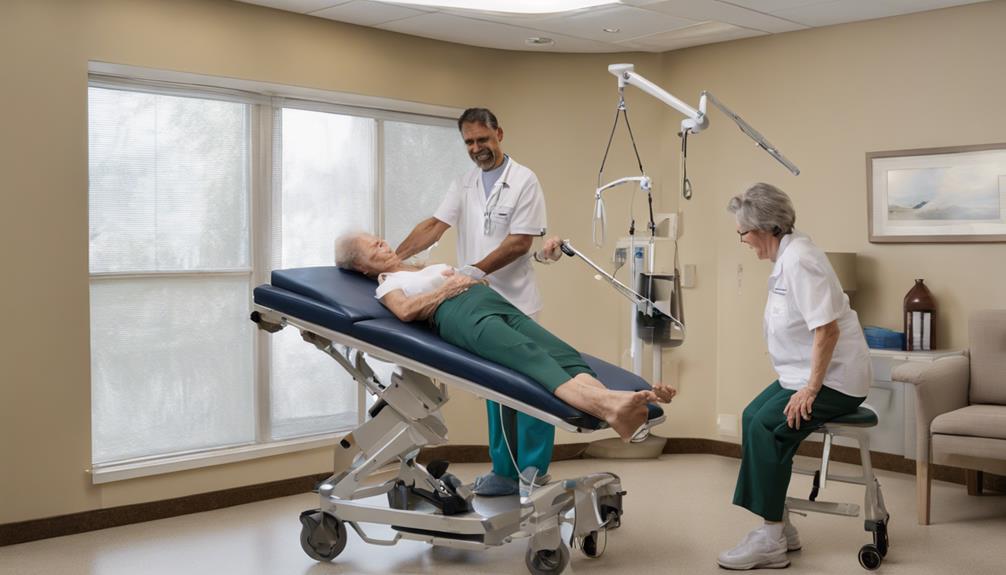

As a caregiver, you can support stroke rehab by staying emotionally encouraging, practicing communication techniques, and participating actively in therapy exercises at home. Be patient and listen with empathy to help your loved one feel understood and motivated. Collaborate closely with therapists to understand goals and adjustments needed, and monitor progress regularly. Your active involvement and positive attitude make a significant difference—continue exploring ways to effectively support your loved one’s recovery journey.
Key Takeaways
- Collaborate with therapists to understand the rehab goals and recommended exercises for consistent support at home.
- Practice therapy exercises and communication techniques regularly to reinforce progress and build confidence.
- Maintain open communication with therapists to monitor progress, address setbacks, and adjust support strategies as needed.
- Provide emotional encouragement, celebrate small victories, and create a positive environment to motivate ongoing therapy efforts.
- Stay informed about mental health resources and offer patience and understanding to support emotional well-being during recovery.

Recovering from a stroke can be challenging, but working closely with your therapists makes a substantial difference in your progress. As a caregiver or family member, your involvement plays a pivotal role in the rehabilitation process. One of the most important ways you can support your loved one is by providing consistent emotional support. Stroke recovery often involves frustration, confusion, and emotional ups and downs, so your encouragement and understanding help create a safe space for healing. Recognizing their feelings and celebrating small victories can boost their confidence and motivation, making therapy sessions more effective.
Providing emotional support and celebrating small victories boosts confidence and enhances stroke recovery progress.
Communication strategies are equally essential during stroke rehab. Depending on the severity of the stroke, your loved one may experience speech or language difficulties, which can lead to feelings of isolation or frustration. You can help by adapting your communication methods—using simple sentences, speaking slowly, and employing gestures or visual aids. Patience is key; give them time to express themselves without rushing or finishing their sentences. Listening attentively and showing empathy reassures them that their voice matters, which can profoundly improve their confidence and willingness to participate in therapy activities.
Working with therapists, you should also familiarize yourself with the specific goals of your loved one’s rehab plan. Therapists often recommend exercises and communication techniques that you can practice together at home. Your role is to reinforce these practices in daily life, maintaining consistency and encouragement. For example, if speech therapy involves practicing certain words or phrases, continue those exercises outside of sessions. Your active participation not only provides additional practice but also demonstrates that you’re invested in their recovery, which can motivate them to stay committed.
It’s essential to stay informed about your loved one’s progress and any setbacks. Regular communication with the therapy team helps you understand what’s working and what might need adjustment. This ongoing dialogue allows you to tailor your emotional support and communication efforts to their evolving needs, fostering a collaborative environment. Additionally, understanding the importance of mental health support can help you better address emotional challenges that may arise during recovery. Remember, your attitude can influence their outlook—remaining positive and patient helps them stay focused and hopeful during challenging moments.
Frequently Asked Questions
How Can Caregivers Motivate Stroke Survivors During Therapy?
You can motivate stroke survivors by using effective motivation strategies like setting small, achievable goals and celebrating progress. Offer consistent encouragement techniques, such as positive reinforcement and empathetic words, to boost their confidence. Stay patient and attentive, reminding them of their strengths. Your support helps create a motivating environment, making therapy feel less intimidating and more rewarding, which encourages continued effort and resilience during their recovery journey.
What Are Common Challenges Caregivers Face in Stroke Rehab?
You might face emotional support challenges as you see your loved one struggle, which can be draining. Care coordination can also be tough, juggling appointments and therapies. It’s normal to feel overwhelmed, but staying organized and seeking support helps. Remember to communicate openly with therapists and family members, so everyone stays on the same page. Your compassion and persistence are key in helping your loved one through recovery.
How Do I Communicate Effectively With Therapists?
Effective communication with therapists starts with active listening and clear, honest questions. Think of it as a partnership—your collaboration matters. Share your observations and concerns openly while respecting their expertise. Use specific examples to clarify instructions, and don’t hesitate to ask for updates or explanations. Remember, good therapist collaboration makes your loved one’s rehab smoother. Stay engaged, stay respectful, and always focus on working together for the best outcomes.
Are There Specific Exercises Caregivers Should Assist With at Home?
Yes, you should assist with home exercises and incorporate them into daily routines. Focus on simple activities like range-of-motion exercises, walking, or strength tasks recommended by the therapist. Consistency is key, so help your loved one stay committed, ensuring exercises are performed safely and correctly. Your involvement boosts recovery and promotes independence, making daily routines more manageable and encouraging progress between therapy sessions.
How Do I Handle Emotional Changes in Stroke Survivors?
Think of yourself as a lighthouse guiding a ship through stormy seas; you help the stroke survivor find emotional resilience. When they experience mood swings or frustration, offer gentle reassurance and listen actively. Encourage coping strategies like deep breathing or journaling, and celebrate small victories. Be patient and consistent, reminding them that emotional changes are normal. Your support helps them rebuild strength, both inside and out.
Conclusion
By working closely with your therapist, you become the guiding compass on your loved one’s recovery journey. Your support and encouragement are like steady anchors in turbulent waters, helping them stay motivated and resilient. Remember, your involvement isn’t just helpful—it’s essential. Together, you and the therapist form a powerful team, turning challenges into stepping stones. Keep the faith and stay engaged—your teamwork can turn setbacks into triumphant comebacks.