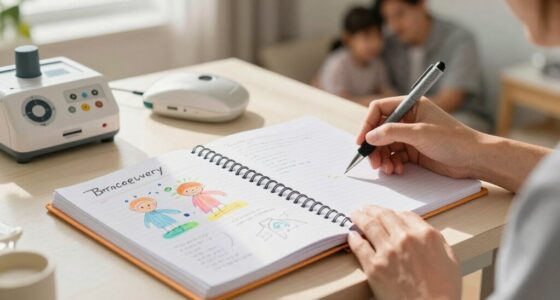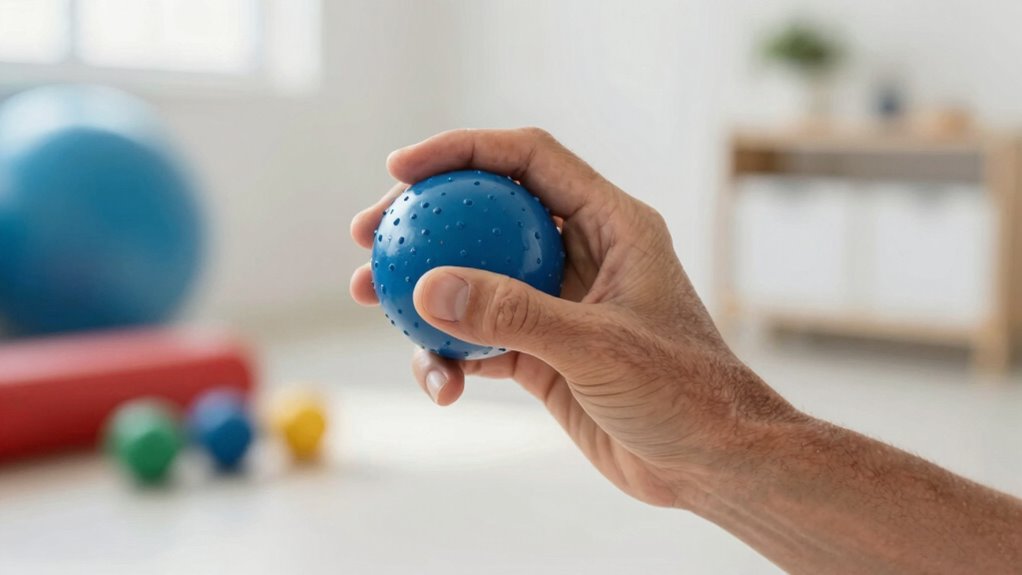
To recover fine motor skills after a stroke, focus on small wins like buttoning a shirt or holding a pen, as they boost confidence and build progress. Use assistive devices to support daily tasks and incorporate targeted exercises that challenge your coordination. Celebrate each milestone, stay patient, and adapt strategies as needed. Consistent practice and support accelerate healing, making small achievements meaningful. Keep going, and you’ll discover even more ways to regain your independence along the way.

Turn quiet afternoons into listening time
- Thousands of audiobooks, podcasts and originals
- Listen on your phone, tablet or Echo — also offline
- Cancel anytime
Key Takeaways
- Celebrating small milestones like buttoning or holding a pen boosts confidence and motivation in stroke recovery.
- Using assistive devices such as adaptive utensils and grip aids supports daily fine motor tasks.
- Mental rehearsal and breaking tasks into smaller steps enhance neural reorganization and skill reacquisition.
- Consistent, task-specific exercises like pouring water or picking up coins promote functional improvement.
- Patience, perseverance, and support from therapists facilitate gradual progress and skill retention.
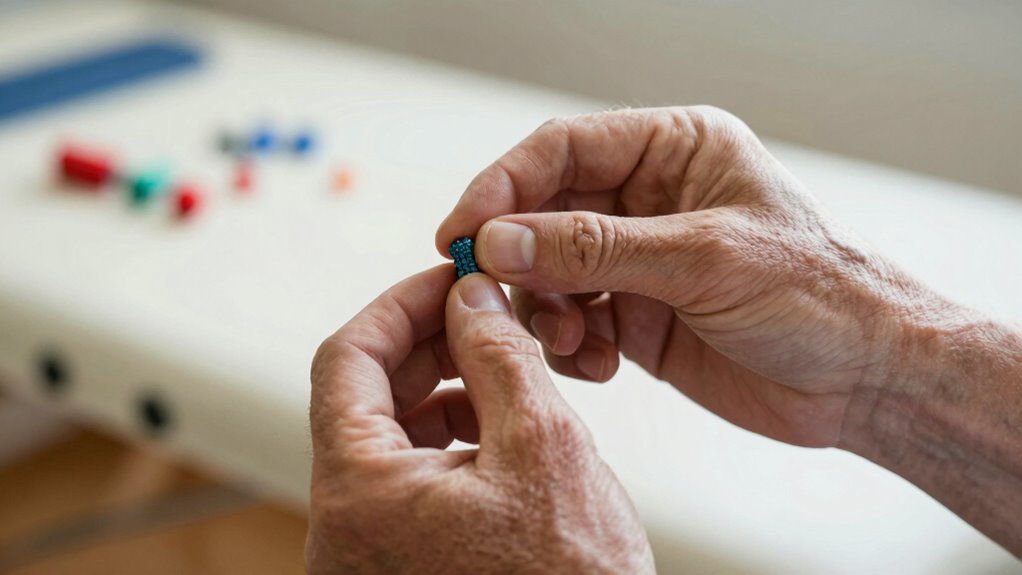
After a stroke, regaining fine motor skills is essential for restoring independence and daily functioning. You might find yourself frustrated by small tasks that once felt effortless, like buttoning a shirt or holding a pen. But don’t underestimate these small wins. They’re critical steps toward rebuilding your confidence and capabilities. Rehabilitation often involves the use of assistive devices, which can support your efforts and make everyday activities more manageable. These tools—such as adaptive utensils, grip aids, or button hooks—are designed to compensate for lost strength or coordination, helping you regain independence bit by bit. At first, it might seem challenging to incorporate these devices into your routine, but with patience and practice, they become powerful allies in your recovery.
In addition to physical tools, cognitive strategies play a fundamental role in fine motor recovery. Your brain needs to rewire itself, forming new pathways to compensate for damaged areas. Techniques like mental rehearsal, where you visualize performing a task, can reinforce motor patterns before actual practice. Breaking down complex movements into smaller, manageable steps also helps reduce frustration and build confidence. For example, instead of trying to button a shirt in one go, focus on grasping the button, aligning it with the hole, and then pushing it through. Over time, these incremental steps become more natural, and your coordination improves. Cognitive strategies also involve setting realistic goals and tracking your progress. Celebrating small milestones keeps you motivated and aware of your improvements, no matter how minor they seem. Additionally, understanding body piercing safety and proper jewelry care can prevent complications that might hinder your overall recovery process. Incorporating neuroplasticity principles into your practice can significantly enhance the effectiveness of your rehabilitation efforts. Moreover, engaging in targeted exercises tailored to your specific deficits can further accelerate progress by promoting neural reorganization. Research shows that task-specific training can maximize recovery outcomes and help you regain functional independence faster. Consistent practice, supported by neuroplasticity, helps reinforce new neural connections and optimizes recovery outcomes.
Remember, consistency is key in your recovery journey. Regularly practicing fine motor tasks, whether with or without assistive devices, accelerates progress. It’s important to be patient with yourself; recovery rarely happens overnight. Focus on small, achievable tasks daily, like picking up coins or pouring water, as these reinforce neural connections and build muscle memory. Incorporating body awareness exercises can also enhance coordination and help you better understand your movements. Remember, your efforts—no matter how minor they seem—are cumulative. Over time, these small wins will add up, leading to greater independence and confidence in daily activities. Be open to trying different strategies and tools, and don’t hesitate to seek support from therapists who can tailor approaches to your specific needs. Your perseverance and willingness to adapt are your greatest assets in reclaiming fine motor skills after a stroke.
adaptive utensils for stroke recovery
As an affiliate, we earn on qualifying purchases.
As an affiliate, we earn on qualifying purchases.
Frequently Asked Questions
How Long Does Fine Motor Recovery Typically Take After a Stroke?
Fine motor recovery after a stroke varies, but with consistent stroke rehabilitation and fine motor therapy, you may notice improvements within a few weeks to months. The timeline depends on the severity of the stroke and your dedication to therapy. Regular practice, patience, and professional guidance help maximize gains. Remember, small wins in fine motor skills are essential, and ongoing stroke rehabilitation supports gradual progress toward regaining control and independence.
Are There Specific Medications That Aid Fine Motor Skill Recovery?
While no medications specifically target fine motor recovery, some drug options, like neuroplasticity enhancers and antispasmodics, can support your progress. Their effectiveness varies, often depending on individual circumstances and timing. You might find these medications helpful alongside therapy, but they’re not miracle cures. Consult your healthcare provider to explore the best options for your recovery. Remember, medication is just one piece of the puzzle in regaining fine motor skills.
Can Fine Motor Skills Fully Return After a Severe Stroke?
You might wonder if fine motor skills can fully return after a severe stroke. While some recovery is possible, it often depends on the extent of brain damage. Focus on hand strength and coordination exercises to maximize your progress. Consistent therapy can help regain control and improve dexterity. Remember, small improvements matter, and with dedication, you can achieve meaningful gains in your fine motor abilities over time.
What Role Does Mental Health Play in Recovery Progress?
Your mental health plays a vital role in your recovery journey. Emotional resilience keeps you pushing through setbacks, while motivation enhancement fuels your progress. When you stay mentally strong, you’re more likely to engage fully in therapy and embrace small wins. This mental fortitude can make the difference between stagnation and breakthrough, transforming hope into tangible recovery. Stay resilient—your mind’s strength directly influences your fine motor recovery.
How Can Caregivers Best Support Fine Motor Rehabilitation?
You can support fine motor rehabilitation by encouraging the use of assistive devices, which help improve grip and dexterity. Additionally, guiding your loved one through therapeutic exercises tailored to their needs boosts their progress. Be patient, offer positive reinforcement, and create a consistent routine. Your encouragement and involvement make a significant difference, helping them regain independence step by step.
Conclusion
Every small step signifies significant strength. Celebrate the steady strides, savor the subtle successes, and stay steadfast in your fight. Remember, recovery is a journey of patience, persistence, and perseverance. With each gentle grasp and deliberate movement, you’re making mighty milestones. Keep pushing, keep believing—because these tiny triumphs truly transform your tomorrow. Your resilience reigns, and your recovery is a remarkable reminder that even the smallest wins can wield wonderful, life-changing results.
Cold & flu season Picks
humidifiers
As an affiliate, we earn on qualifying purchases.