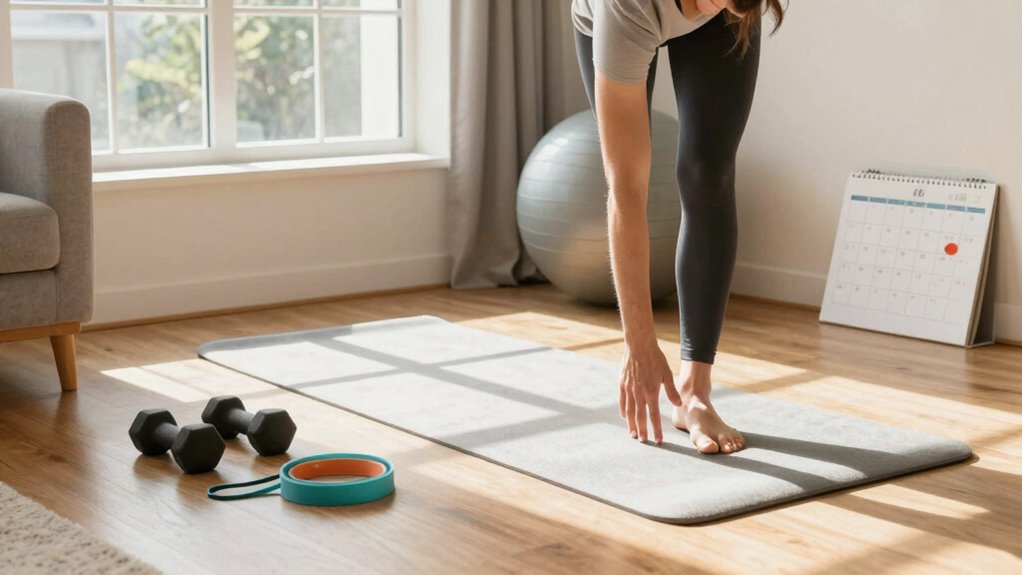
To build a home exercise schedule after a stroke that sticks, start small with manageable daily sessions—aim for just 10 minutes—and gradually increase as you gain confidence. Use adaptive tools like grab bars or handgrip aids to stay safe and maintain proper form. Stay motivated by tracking your progress, celebrating small victories, and mixing up exercises for variety. Focus on patience and flexibility, and you’ll find ways to keep moving forward. Keep going to discover more helpful strategies.

Get comfort and care essentials delivered free — and shop member deals
- Fast, free delivery on millions of items
- Access to Prime Big Deal Days deals on October 6–7
- Prime Video, Amazon Music and more included
Key Takeaways
- Start with short, manageable sessions (around 10 minutes) and gradually increase duration to build consistency.
- Incorporate adaptive equipment and safety measures to support independence and prevent injury.
- Use motivational techniques like tracking progress, celebrating small wins, and listening to favorite music.
- Vary exercises regularly to prevent boredom, challenge muscles, and promote engagement.
- Set realistic goals and milestones, adjusting routines based on progress and setbacks to maintain motivation.

Creating a home exercise schedule after a stroke is an essential step toward regaining strength and independence. When you set out to build this routine, it’s important to focus on consistency and motivation. One effective way to stay committed is by using motivational techniques that keep your spirits high and remind you of your progress. Celebrate small victories, like lifting your arm a bit higher or walking a few extra steps. Visual cues, such as progress charts or inspiring notes, can also boost your motivation on tough days. Remember, your mindset plays a pivotal role; staying positive and patient helps you push through setbacks.
In addition to motivation, incorporating adaptive equipment into your exercises can make a significant difference. Adaptive tools are designed to support your specific needs, making movements easier and safer. For example, grab bars, walkers, or handgrip aids can help you perform exercises with proper form and reduce the risk of injury. Using adaptive equipment also encourages independence, as you learn to rely on tools that assist rather than hinder your progress. Make sure your equipment is accessible and comfortable, and don’t hesitate to ask your healthcare team for recommendations tailored to your recovery goals.
When designing your schedule, start small and gradually increase the intensity. Consistency is more important than duration at first; even 10-minute sessions daily can build a strong foundation. Break your exercises into manageable segments, focusing on different muscle groups or movement types, such as stretching, balance, and strength training. Keep track of your workouts with a journal or app, which can serve as a visual reminder of your commitment and progress. This record also helps your healthcare providers adjust your plan as needed.
Mixing up your routine prevents boredom and challenges your body in different ways, which is essential for all-encompassing recovery. Incorporate motivational techniques like listening to your favorite music or practicing mindfulness during exercises to make the process more enjoyable. Remember, building a schedule that sticks requires patience and flexibility. If you miss a day or feel discouraged, don’t give up—adjust your goals and keep moving forward. Your dedication, along with adaptive equipment and motivational strategies, will help turn your home exercise routine into a sustainable part of your recovery journey. Additionally, understanding the importance of properly structured exercises can enhance your overall progress and safety. Including exercise variety can further promote muscle engagement and prevent plateaus in your recovery process. Being aware of recovery milestones can also serve as motivation and help you set realistic, achievable goals along the way.
adaptive handgrip aids for stroke recovery
As an affiliate, we earn on qualifying purchases.
As an affiliate, we earn on qualifying purchases.
Frequently Asked Questions
How Do I Stay Motivated to Exercise Regularly After a Stroke?
To stay motivated after a stroke, set clear, achievable goals that keep you focused and inspired. Use motivation strategies like tracking progress and rewarding yourself for small victories. Remember, celebrating each milestone boosts confidence and keeps you moving forward. Stay consistent by establishing a routine, and remind yourself of the benefits. Connecting with a support group or therapist can also provide encouragement and accountability, making your exercise journey more enjoyable and sustainable.
What Should I Do if I Experience Pain During Exercises?
Think of pain during exercises as a warning light on your car—don’t ignore it. Stop immediately and assess the pain. Focus on pain management and exercise safety by adjusting or pausing your routine. Consult your healthcare provider to identify the cause and get tailored advice. Remember, gentle progress is better than risking injury, and listening to your body helps build a safe, sustainable exercise habit after stroke.
How Can I Modify Exercises for Different Stroke Severity Levels?
You can adapt routines by making severity-specific modifications to suit your abilities. For milder strokes, focus on gentle stretches and balance exercises, gradually increasing intensity. For more severe cases, break exercises into smaller, manageable steps and use assistive devices if needed. Always listen to your body, and consult your healthcare team to guarantee your adaptations promote safety and progress, helping you stay motivated and consistent.
Are There Specific Exercises Beneficial for Cognitive Recovery?
Think of your mind as a garden needing careful tending. Engaging in cognitive exercises and mental stimulation acts as nourishing sunlight, fostering growth and resilience. Puzzles, memory games, and reading are powerful tools to sharpen your mental blades. These activities boost neural connections, helping your brain recover and adapt. Consistently incorporating them into your routine creates a thriving mental landscape, essential for rich cognitive recovery after stroke.
How Can Family Members Support My Home Exercise Routine?
Family members can support your home exercise routine by offering consistent encouragement and celebrating your progress. They should provide routine reminders to help you stay on track, making exercise a regular part of your day. Showing patience and understanding boosts your motivation, while participating with you can make sessions more enjoyable. Your loved ones’ active involvement and positive reinforcement help guarantee you stick to your routine and reach your recovery goals.
Conclusion
Building a home exercise schedule after a stroke is like planting a garden—you need patience, consistent care, and a touch of hope. When you nurture your routine daily, you’ll watch resilience bloom and strength grow. Remember, every small step is a seed that, over time, transforms into a thriving, vibrant life. Stay committed, and soon you’ll find your journey turning challenges into a flourishing story of recovery and renewal.
Fall Picks
fall essentials
As an affiliate, we earn on qualifying purchases.