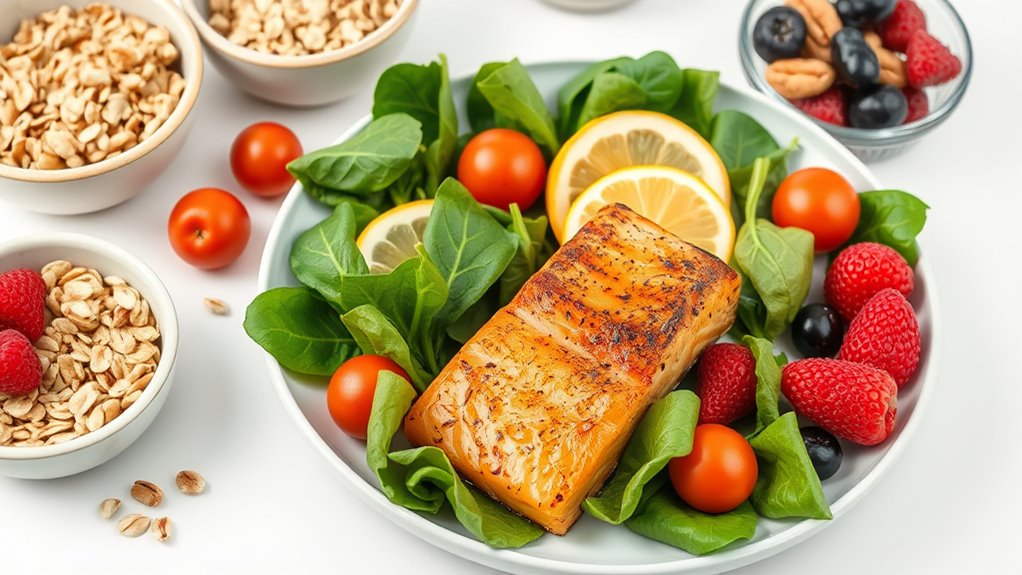

To support your stroke recovery, focus on staying well-hydrated by drinking plenty of water and herbal teas, while avoiding sugary drinks and excess caffeine. Incorporate nutrient-dense foods like fruits, vegetables, lean proteins, and whole grains to promote healing and reduce inflammation. Planning your meals helps you make healthier choices and manage portions. Small, consistent changes to your diet can markedly boost your recovery and overall health—continue to explore how to optimize your nutrition effectively.
Key Takeaways
- Prioritize hydration by drinking water, herbal teas, or diluted fruit juices, and monitor signs of dehydration.
- Plan balanced meals rich in fiber, lean proteins, healthy fats, and anti-inflammatory foods like omega-3s.
- Incorporate small, frequent meals with low-sodium options, herbs, and spices to support recovery and manage blood pressure.
- Use meal prepping tools and tracking apps to ensure consistent, nutrient-dense intake tailored to recovery needs.
- Avoid processed, salty, sugary, and unhealthy fats; focus on foods that promote brain health and reduce inflammation.

Recovering from a stroke requires more than just medical treatment; your diet plays a critical role in supporting healing and preventing future strokes. Staying properly hydrated is essential, as dehydration can impair brain function, slow recovery, and increase the risk of complications. Implementing effective hydration strategies means drinking plenty of water throughout the day, but also including other fluids like herbal teas or diluted fruit juices if preferred. Pay attention to signs of dehydration, such as dry mouth, dizziness, or dark urine, and aim for consistent fluid intake. Avoid sugary drinks and excessive caffeine, which can dehydrate you further. Developing hydration habits early on ensures your body remains balanced and supports overall recovery. Incorporating technology in health management like hydration tracking apps can help monitor your fluid intake more effectively.
Proper hydration supports stroke recovery and prevents complications by maintaining brain function and overall balance.
Meal planning techniques are equally important, helping you make healthier choices and manage your nutritional needs effectively. By planning your meals in advance, you can ensure each dish is rich in essential nutrients, such as fiber, lean proteins, healthy fats, and plenty of fruits and vegetables. Incorporate foods that help reduce inflammation and support brain health, like omega-3 fatty acids from fish or flaxseeds. When you plan ahead, it’s easier to avoid impulsive eating or relying on processed foods high in salt, sugar, and unhealthy fats, all of which can hinder recovery or increase stroke risk. Use meal prepping tools like containers, grocery lists, and simple recipes to stay organized and committed to your nutritional goals.
Balancing your meals is essential, so aim for smaller, more frequent servings if you find large portions overwhelming. This can help maintain steady blood sugar levels and prevent fatigue. When you’re cooking, focus on low-sodium options to help control blood pressure, a key factor in stroke prevention. Incorporate herbs and spices instead of salt to flavor your dishes. Additionally, consider incorporating fiber-rich foods such as oats, beans, and whole grains, which support digestive health and help regulate cholesterol levels.
Sticking to a consistent eating schedule can also enhance your recovery, providing your body with a steady supply of nutrients. Use meal planning techniques to create a weekly menu that aligns with your dietary needs and preferences, making shopping and cooking more manageable. Remember, small, consistent changes in your hydration habits and meal planning can make a significant difference in your healing process, reducing complications and supporting your journey toward better health.
Frequently Asked Questions
Can Certain Foods Help Prevent Future Strokes?
Yes, certain foods can help prevent future strokes. You should focus on eating antioxidant-rich foods like berries, dark leafy greens, and nuts, which fight inflammation. Additionally, maintaining healthy blood pressure is essential, so include low-sodium options and foods high in potassium, like bananas and sweet potatoes. These choices support vascular health, reduce the risk of blood clots, and promote overall cardiovascular well-being, lowering your chances of another stroke.
Are There Specific Dietary Restrictions Post-Stroke?
Yes, you should follow specific dietary restrictions after a stroke. Focus on food considerations like reducing sodium to control blood pressure and limiting saturated fats to prevent artery blockages. Avoid processed foods, excessive salt, and sugary drinks. Instead, choose fruits, vegetables, lean proteins, and whole grains. These dietary restrictions help manage risk factors and support your recovery, making it easier to regain strength and reduce the chance of another stroke.
How Does Hydration Affect Stroke Recovery?
Hydration plays a essential role in your stroke recovery by maintaining electrolyte balance and supporting overall health. Adequate fluid intake helps prevent dehydration, which can cause blood thickening and impair circulation. When you stay well-hydrated, your body can better manage swelling and promote healing. Make sure to consume enough water and electrolyte-rich drinks, especially if you’re on medication or experiencing symptoms like dry mouth or fatigue.
What Are Healthy Snack Options During Recovery?
Think of healthy snacks as small treasures fueling your recovery journey. Opt for fruits, nuts, or yogurt in healthy portion sizes, which serve as your nourishing allies. Practice mindful eating by savoring each bite, helping you stay in tune with your body’s needs. These choices keep your energy steady and support healing, turning snack time into a mindful ritual that empowers you to take control of your recovery.
Can Supplements Replace a Balanced Diet After Stroke?
Supplements can’t replace a balanced diet after a stroke because their efficacy varies, and they often lack the full range of nutrients your body needs. You should focus on getting most of your vitamins and minerals from whole foods, like fruits, vegetables, and lean proteins. Dietary supplements can support your recovery but shouldn’t be relied upon alone. Always consult your healthcare provider before adding any supplements to your routine.
Conclusion
Remember, what you eat can either support your recovery or hold you back. While focusing on nutritious, balanced meals fuels your body, neglecting your diet can lead to setbacks. Think of your plate as a tool—you have the power to choose foods that heal and strengthen. So, embrace healthy eating habits with the same determination as you approach your recovery. Your future self will thank you for the choices you make today.